Olivia Wilde puts two couples in one flat for one night and lets four good actors go at each other. It is funny, often sharply so, and Seth Rogen has never been better. It also feels like a play, and its middle sags.
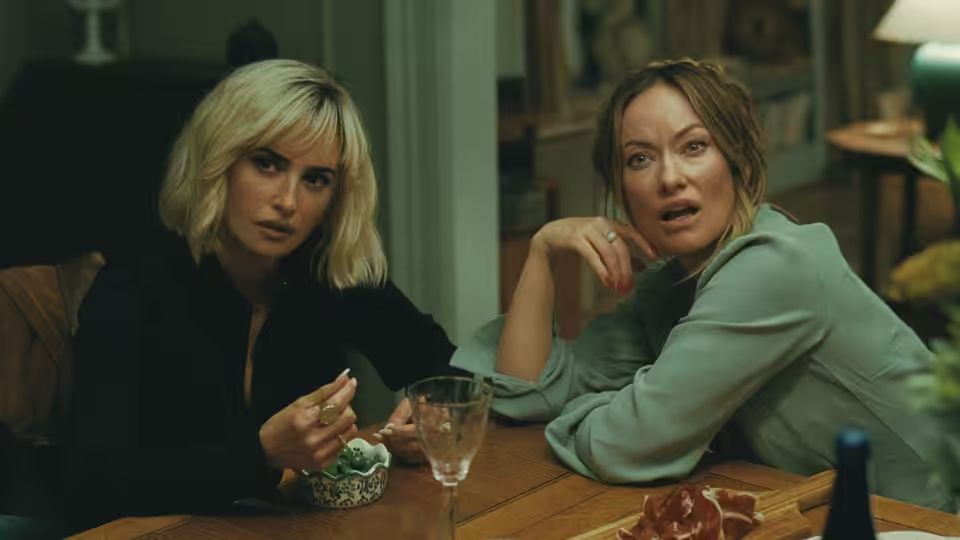
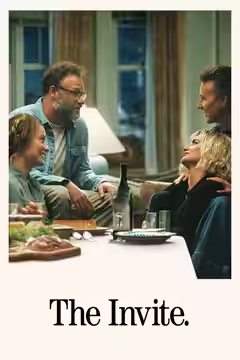
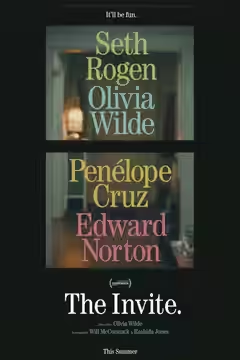
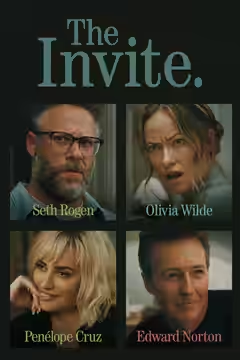
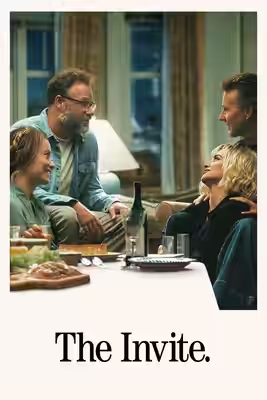
Olivia Wilde’s third film as director is a dinner party. Joe (Seth Rogen) and Angela (Wilde) have invited the neighbours over: Hawk (Edward Norton) and Piña (Penélope Cruz), who are glamorous, relaxed about sex and everything else, and rather better at being a couple than their hosts. The wine goes round, the talk gets looser, and before the evening is done a proposition is on the table that we will leave there. It is one flat, one night and four people, and it is good: funny, sharp about marriage, and carried by the best work Rogen has done. It also feels, more often than it should, like a play that has been filmed, and the middle stretch sags. We recommend it, with that said.
Rashida Jones and Will McCormack’s script comes from a Spanish stage play and has been moved to San Francisco. The joins hardly show. What Jones and McCormack do well is the grievance that has been rehearsed for years and comes out in a single sentence, and the film has a great many of these. People talk over each other, interrupt, correct each other’s anecdotes, and the laughs come from recognition as often as from jokes. We laughed a great deal in the first hour, and some of the lines stayed with us afterwards for less comfortable reasons. Almost all of it happens across a dining table and a sofa.
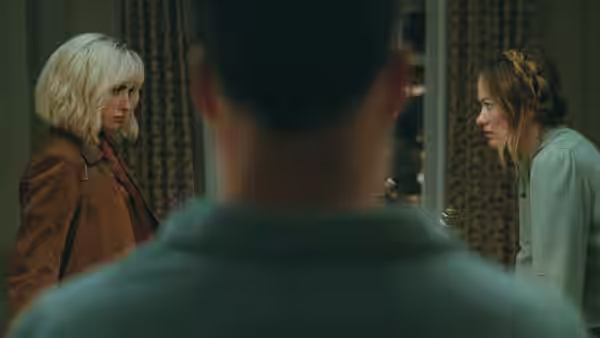
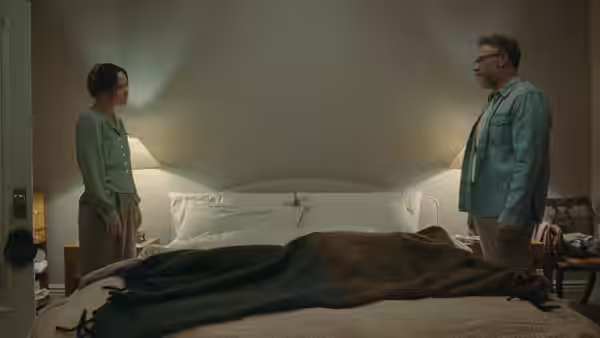
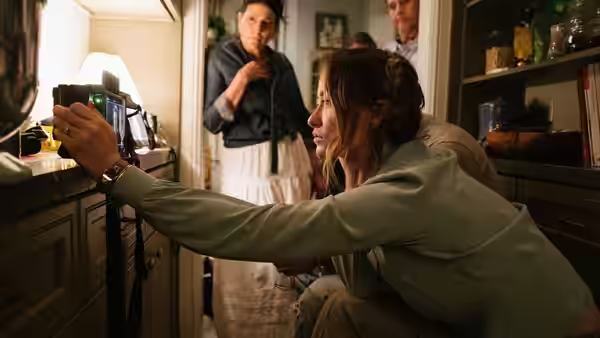
Wilde has learned to leave things alone. Adam Newport-Berra keeps the camera inside the flat and mostly at the height of someone sitting down, and he frames the four of them in twos and threes so that you can always see who is not being looked at, which in this film matters. Jade Healy’s flat looks like somewhere people live rather than a set for arguing in. Arianne Phillips dresses the neighbours for a better evening than the one their hosts have planned. Yorgos Mavropsaridis and Anthony Boys cut to the rhythm of the talk and hold on faces after the joke has landed. Devonté Hynes’s music is used sparingly, and the evening mostly runs on voices.
Rogen is the reason to see it. Joe is tired, self-involved and grumpy without ever being a monster, a man who stopped listening to his wife at about the point she stopped saying anything he wanted to hear. Rogen has played the amiable slob for a long time; this is the first time we have watched one and believed he had a mortgage and a bad back. He gets most of the laughs, and he gets them by looking put-upon while being, plainly, the problem. Norton plays Hawk as a man so at ease that the ease becomes a kind of aggression, and he is funny about it in a way that never asks for the laugh.
Cruz’s Piña is a psychotherapist, which the film uses as a joke and then as a weapon. For most of the evening she is warm, amused and slightly too interested. Late on she is given a long speech, and it stopped us. We had been laughing steadily for an hour and we stopped, and the quiet in the cinema went on for some while after she finished. Wilde has the sense to give the scene to the actor and step back, and the camera stays on Cruz for most of it.
The flaws are the ones the set-up invites. It feels like a play because it is one, and there are passages in the second half where the four of them are moved about the flat for no reason except to give the camera something new, and 107 minutes starts to feel longer than that. A couple of critics have called the whole thing calculated, and in places it is, though in most places it is alive. Wilde the director is better served than Wilde the actor: Angela is the one character whose grievances sound written rather than felt, and there are a few line readings where you can see the performer deciding what the scene is about.
Most critics have gone further than we will, and the pleasure of watching this cast explains why; we kept noticing the joins. Set against Booksmart and Don’t Worry Darling, this is the film where Wilde seems least anxious to impress. Booksmart had energy to spare; Don’t Worry Darling had a look and lost its nerve. The Invite has four people at a table for 107 minutes.
See it with someone you have been with for a long time, and do not discuss it on the way home. Or see it alone, which is safer.