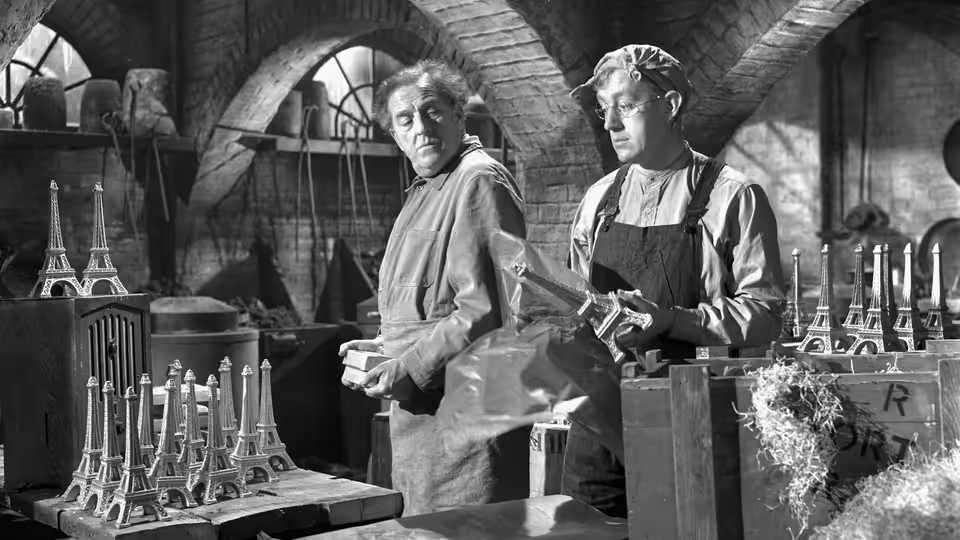
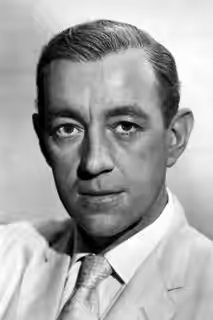
Charles Crichton’s crime comedy gets considerable pleasure from Alec Guinness’s quiet comic precision. We would welcome a sharper edge to the satire, but the acting and the brisk 78-minute running time make this an easy recommendation.
The Lavender Hill Mob is a funny, finely acted crime comedy whose chief pleasure is the care Alec Guinness brings to playing Henry ‘Dutch’ Holland. Charles Crichton directs with an appreciation of how little an actor sometimes needs to do. We recommend it warmly, with a reservation about the mildness of its satire. There is something slightly too comfortable about its view of respectable people and criminal behaviour, though the comedy is persuasive enough to make that complaint sound ungrateful.
T. E. B. Clarke’s screenplay understands the comic possibilities of taking crime seriously without making the people involved grand. The writing gives the actors something worth being precise about, and Charles Crichton allows their different comic temperaments to count. We laughed at Alec Guinness’s solemnity as Henry ‘Dutch’ Holland. He takes the character’s self-importance seriously enough to make it funny. There is no wink asking us to congratulate the actor for spotting the joke.
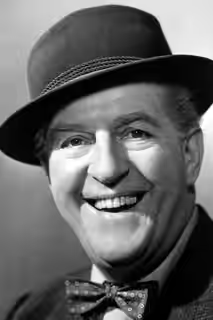
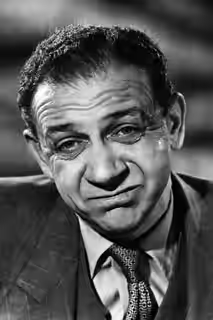
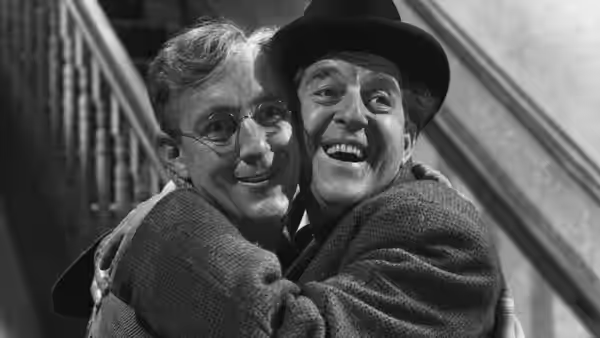
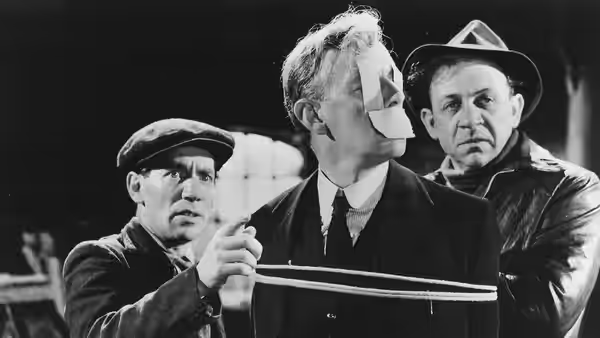
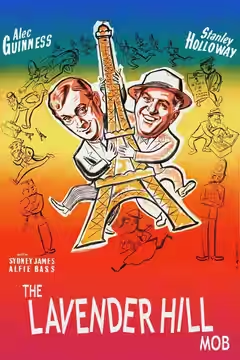
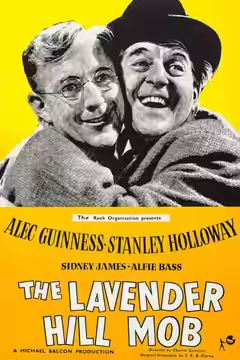
Stanley Holloway, as Albert Pendlebury, gives the comedy a welcome alternative to that reserve. The two actors are good company together, and neither needs to seize control of every exchange. Sid James plays Lackery Wood and Alfie Bass plays Shorty Fisher, strengthening an ensemble whose company is a large part of the attraction. We would happily spend longer with the supporting players, though there are moments when their comic usefulness matters more than their individuality.
Douglas Slocombe’s photography lets us look closely at the performances without making them feel fussed over. We are free to notice how much of the comedy comes from the actors’ seriousness. Seth Holt’s editing is attentive to that restraint, and the jokes seldom feel hurried. The 78-minute running time is welcome, but the film does not seem anxious to finish.
Georges Auric’s music is a smaller part of our pleasure. It helps the comedy along, although we remember the actors much more clearly than the score. That is hardly a fatal objection in a film with this cast. Charles Crichton gets enough from the differences between his performers to keep their scenes interesting without demanding a fresh comic flourish every few seconds.
Against the crime-comedy genre’s taste for elaborate cleverness, the film feels pleasingly attentive to people. Its satire is the weaker part. The treatment of class and respectability is funny, but we wanted more discomfort underneath the amusement. T. E. B. Clarke leaves us a little too content to like everybody, and that gentleness reduces the force of the jokes.
We would not choose it for an evening that calls for savage comedy. The actors make us glad to be in their company, and that is a substantial achievement in a genre where ingenuity can become tiring. Alec Guinness rewards close attention without making the business of being funny look strenuous. Give it an evening when quiet comic skill sounds more appealing than another noisy demonstration of it.