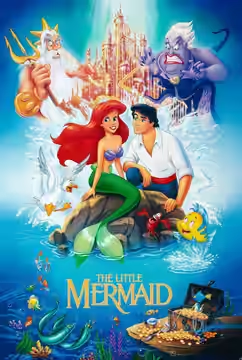
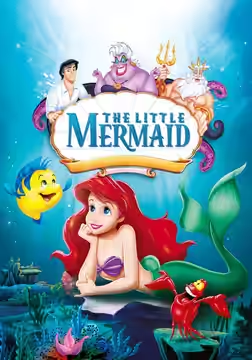
John Musker and Ron Clements turn Andersen’s sad little story into a Broadway musical with fins, and Alan Menken’s songs are good enough to carry a plot that does not bear looking at. The sea witch steals it; the prince barely turns up.
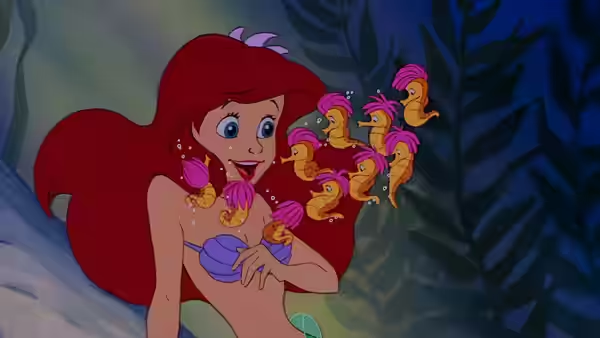
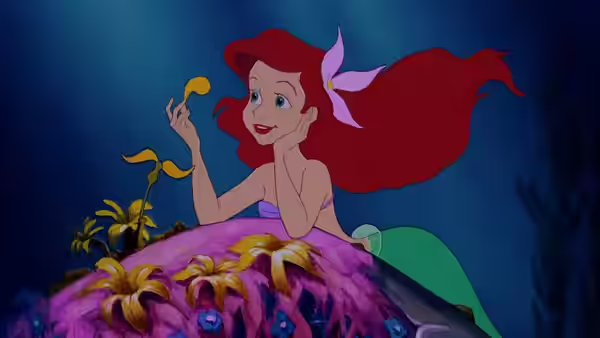
John Musker and Ron Clements, who wrote and directed, took Hans Christian Andersen’s story of a mermaid who gives up her tail for a man and made it a Broadway musical with fins. Andersen’s version ends badly. This one does not, and we will say no more about that than the U certificate already does. The shape is the thing: a heroine who sings what she wants before the first quarter-hour is up, a comic sidekick with a number of his own, a villain with the best tune. It reached British cinemas on 12 October 1990. It is a good film with a great score and a prince who barely exists, and we recommend it for the songs and the sea witch, and in spite of the story.
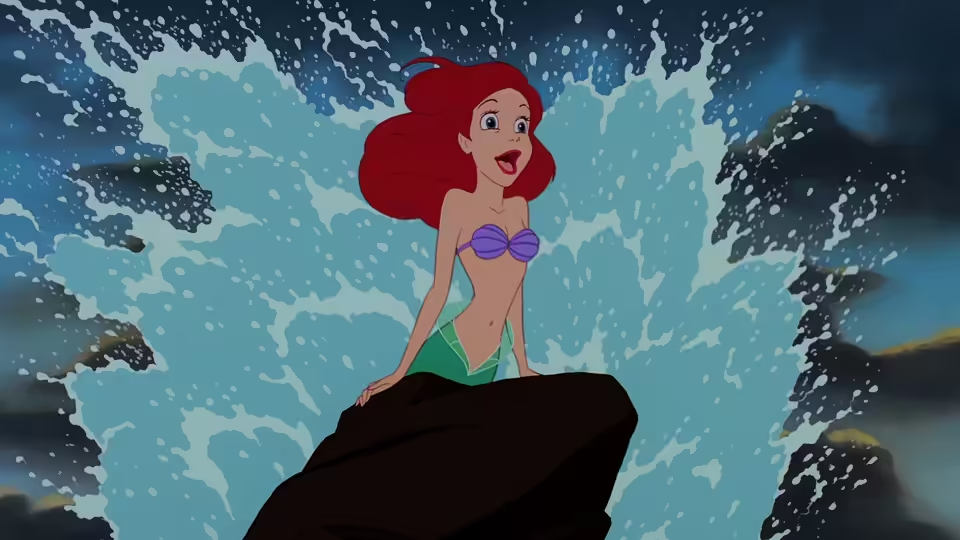
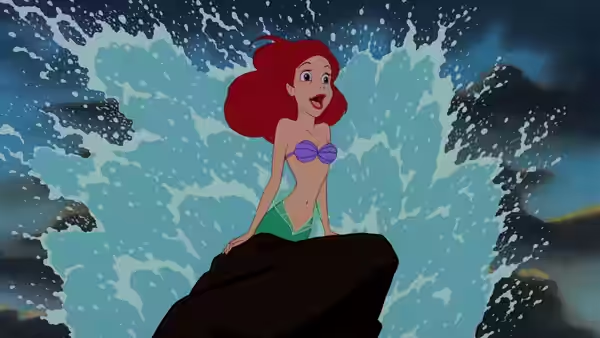
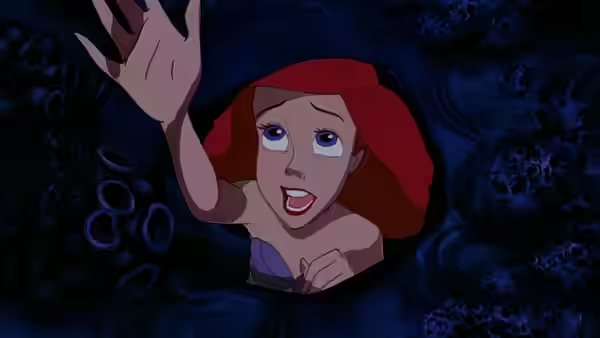
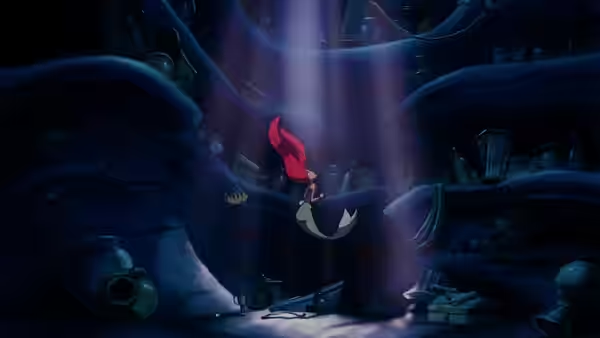
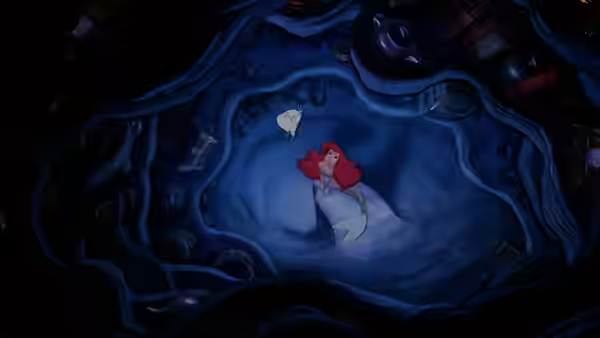
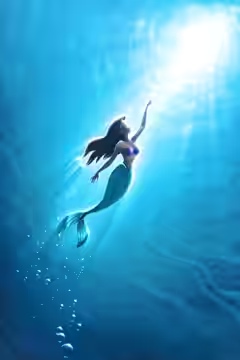
Alan Menken wrote the music and Howard Ashman, who also produced, wrote the lyrics, and between them they treat a cartoon fairy tale as though it had a matinee to sell. ‘Part of Your World’ comes early. Ariel sits in a grotto full of forks and candlesticks she cannot name and sings about wanting to stand on legs, and the animators drift her up towards a hole in the rock where the daylight comes through, red hair fanning out behind her. We had expected to be indulgent. We were moved instead, more than a film about a singing fish girl has any business managing, and it was the hair that did it: it never stops moving, so she is never quite at rest and never quite heavy, and the wanting looks physical. Jodi Benson sings it straight, and the film has its heroine.
‘Under the Sea’ is the one people remember and it earns that. Samuel E. Wright’s Sebastian, Triton’s court composer, tries to talk Ariel out of the surface by way of a calypso, and by the second chorus every creature on the reef has become an instrument. Mark A. Hester cuts it to the beat and gets out before the joke wears thin. Then Ursula gets ‘Poor Unfortunate Souls’, and the film changes temperature.
Pat Carroll plays the sea witch as a cabaret singer after closing time, all purr and sudden bellow, and the drawing matches her: a big woman to the waist, a heap of black tentacles below it, moving slowly in the way heavy things move under water. Her lair is lit green and violet. Her eels, Flotsam and Jetsam (both voiced by Paddi Edwards), have one glowing yellow eye apiece and finish each other’s sentences. The song is a sales pitch for a bad contract, and Carroll sells it. We laughed at the verse advising that men prefer a girl who keeps her mouth shut, then remembered that the film was about to make that true for three days, and the laugh went a little sour. The film does not seem to have noticed.
Christopher Daniel Barnes voices Eric, and it is not his fault that Eric is a jawline with a dog. He is looking for a girl whose voice he heard once, which means the heroine spends most of the film trying to be recognised by a man who is searching for someone else, namely her. Musker and Clements know how thin that is, which is why Sebastian, Scuttle (Buddy Hackett) and Flounder (Jason Marin) are wheeled in for a joke whenever the two leads are left alone. René Auberjonois has one scene as a chef chasing Sebastian round a kitchen with a cleaver, and it is funnier than anything Eric says. The finale goes big and goes fast, in a way we will not describe, and at 83 minutes the film could have used five more of them; one or two changes of heart happen because the running time says so.
Set against the studio’s own history, this is the film that reminded Disney what its features were for. Beauty and the Beast, two years later, took the same recipe and did the story better. The recipe was written here, and every Disney heroine since has been handed a song like Ariel’s.
Watch it with a child if there is one about. Watch the child during ‘Part of Your World’, watch yourself during ‘Poor Unfortunate Souls’, and see which of you is having the better time.