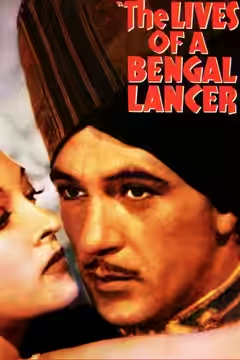
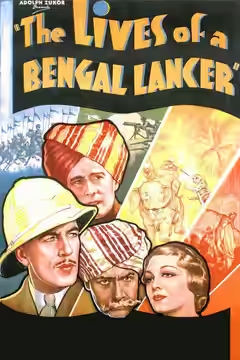
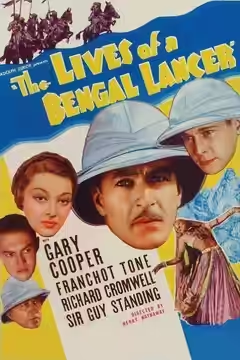
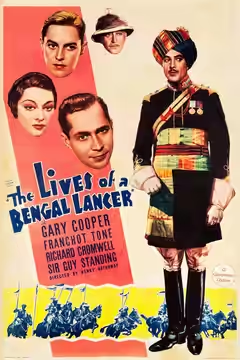
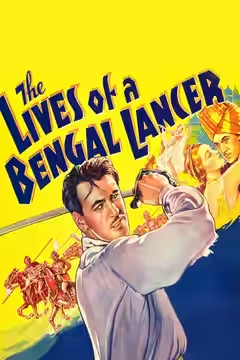
Hathaway’s frontier adventure is handsome, brisk and well acted, with a pair of squabbling officers in Cooper and Tone who are worth the evening on their own. It is also the British Empire seen entirely from the officers’ mess, and it never once looks out of the window.
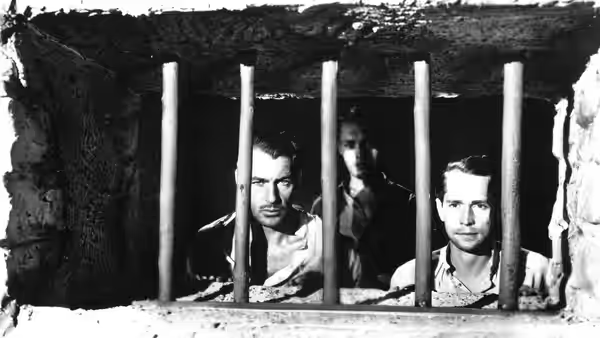
Henry Hathaway’s film takes its title and not much else from Francis Yeats-Brown’s book about soldiering on the North-West Frontier. Five credited writers have made something simpler: three officers in a fort, a father who will not speak to his son, and a chieftain in the hills who wants their ammunition. It is a Hollywood picture of the British Empire, made by Americans with an American in the lead, and a good one of its kind.
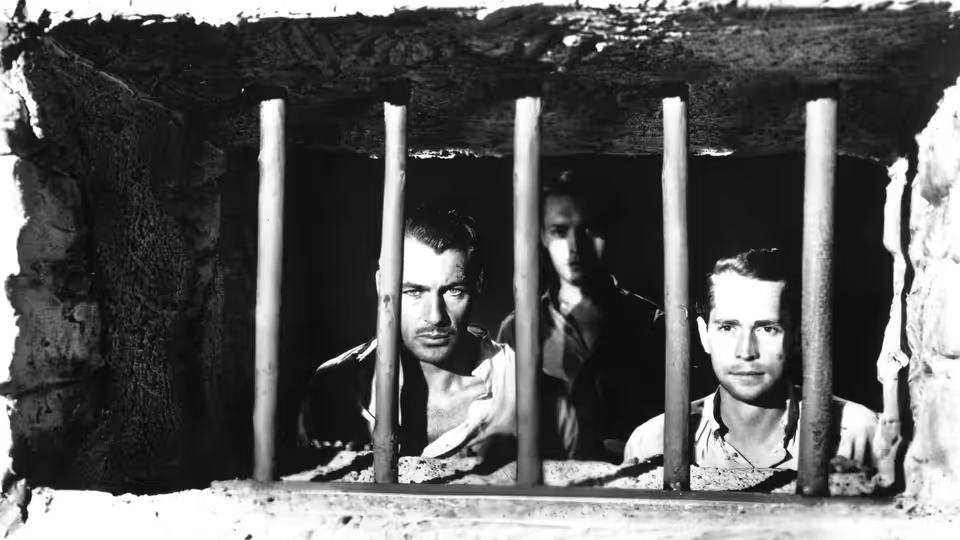
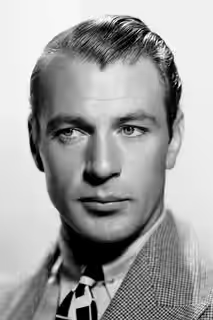
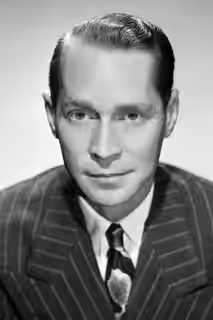
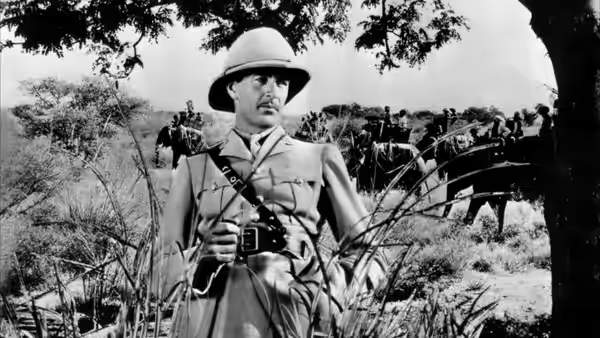
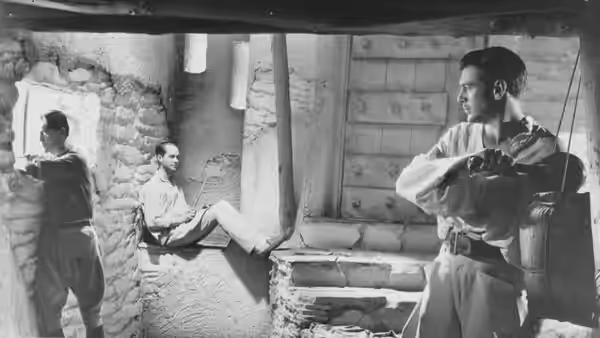
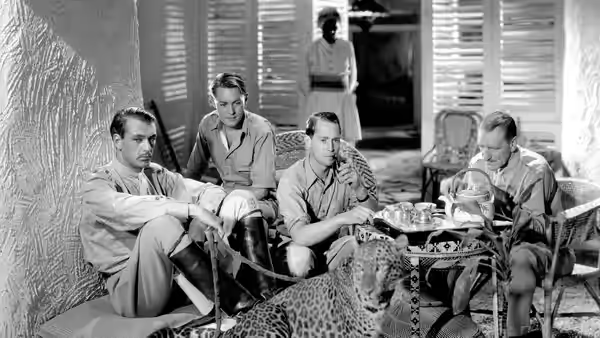
The pleasure of it is two men who cannot stand each other and cannot stop talking. Gary Cooper’s McGregor is the frontier veteran, slow of speech and quick to act, a Canadian so nobody has to explain the accent. Franchot Tone’s Forsythe arrives from a fashionable regiment with a drawl and a wounding remark for everything he sees. Tone is the surprise. He plays Forsythe as a man who mocks because he is bored, and lets the boredom drop away by degrees; a running joke about his snake-charming flute pays off with a live cobra and the best laugh in the film. Cooper, who never appears to be doing anything, does the reacting; together they are why the picture still moves.
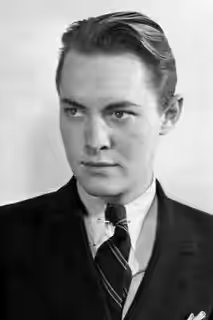
The plot is built around the third officer. Richard Cromwell’s Donald Stone has come out to serve under a father he barely knows. Guy Standing’s Colonel Stone receives him in his office, calls him Mr Stone, and dismisses him. Cromwell overplays the hurt; Standing does not play it at all, which is why the scene works. C. Aubrey Smith’s Major Hamilton, all whiskers and patience, tells the boy that the regiment is the only family the colonel has left. We were moved more than we expected, and by the father rather than the son. Standing lets you see a man deciding, each time he looks at the boy, not to feel anything.
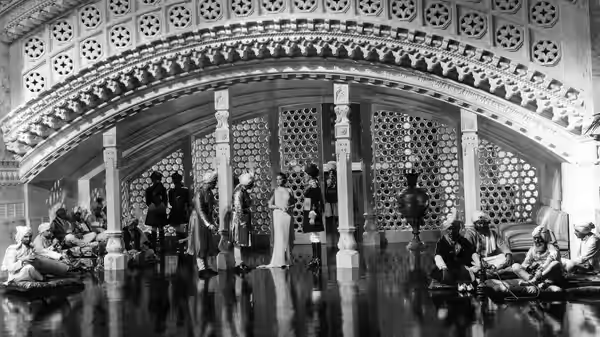
Charles Lang shoots the fort and the parade ground in hard, flat sunlight, and the hill country in long shots full of dust and horsemen. Some of it was filmed in India and some in a studio; the joins show in the change of light, and we did not mind. Travis Banton dresses the Lancers in turbans, cross-belts and improbably clean whites, and the tribesmen in dark cloth, which tells you who is meant to be looked at. Ellsworth Hoagland cuts the pig-sticking and the skirmishes fast and the mess scenes slow, which is the right way round. Four composers share the music credit and have produced bugles, drums and a march you will not leave humming.
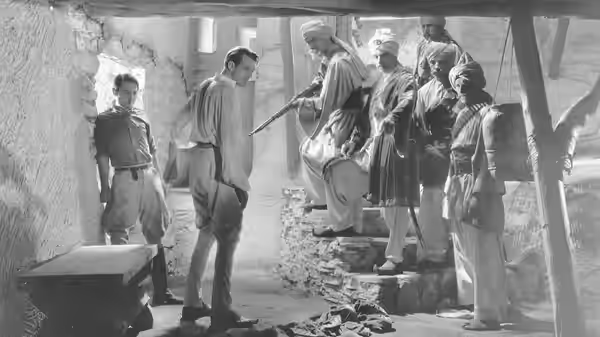
Then the other side of the frontier. Douglass Dumbrille’s Mohammed Khan has an English education and perfect manners, and the film uses both only to make his cruelty tidier. His line about having ways of making men talk is the one everybody remembers, spoken by a Hollywood character actor in brown make-up, as are all the tribesmen, from Monte Blue’s Hamzulla Khan to Akim Tamiroff and J. Carrol Naish at the Emir’s court. None of them is given a character, and no officer asks what the regiment is doing there. A 1935 adventure need not hold a seminar on colonial policy, and we were more bothered than we expected all the same. It is not the make-up. It is that the film gives Khan wit and schooling and cannot imagine him wanting anything except the rifles. Kathleen Burke appears at court as Tania Volkanskaya in Banton’s best gowns, and we will say nothing more about her.
The film set a pattern that Gunga Din would follow four years later: the fort, the three friends, the raid, the rescue. This is the more relaxed, with a better idea of how men talk when they have nothing to do. At 109 minutes it is a long sit for its day, and the middle stretch, between the fort and the hills, could lose ten without anyone noticing.
Watch it for Cooper and Tone, and for Guy Standing not looking at his son. The tagline promised glittering mosques and nautch dancers. The best of it happens in a bare room with a flute and a snake.