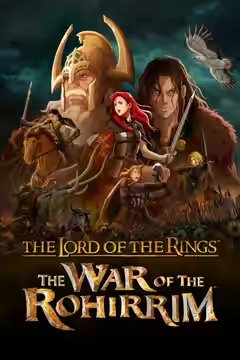
Kenji Kamiyama’s hand-drawn prequel has a good king, a decent daughter and a siege that runs out of things to do in the snow. Handsome in stretches, borrowed in others, and not enough of a film to send anyone to on its own.
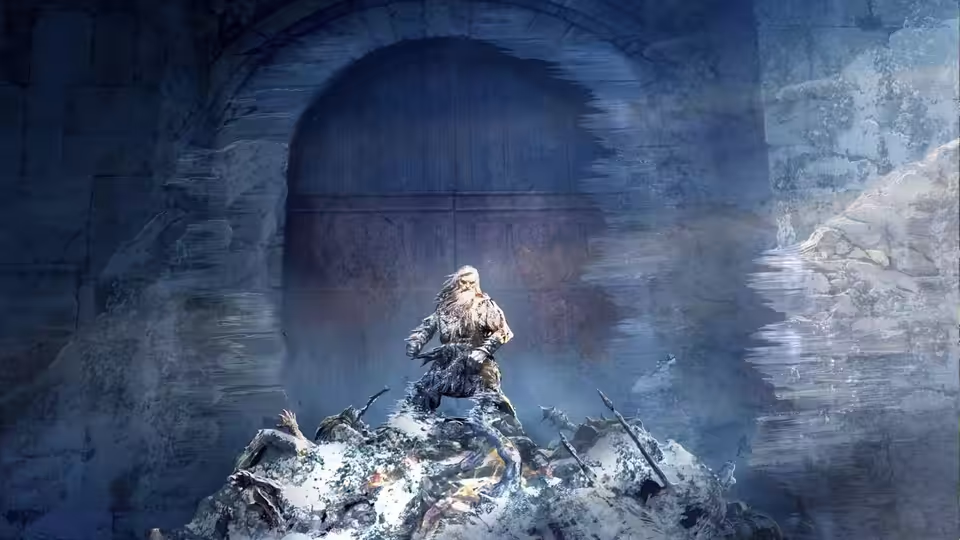
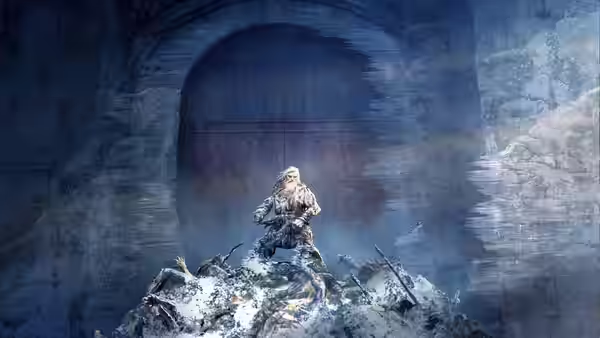
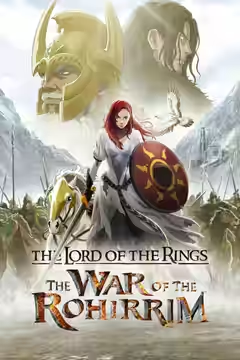
Kenji Kamiyama has made a 134-minute film out of a few paragraphs. Helm Hammerhand gets a page in the appendices to The Lord of the Rings: a quarrel, a death, a hard winter, a fortress that took his name. Philippa Boyens, credited with the story and as producer, has stretched that into a full-length animated feature, and the stretching shows. There is a good ninety-minute film in it. The rest is spent looking at a wall, and at the snow on the wall.
Brian Cox is the reason the first act moves. His Helm is a bull in a crown, a man who greets a marriage proposal with an insult and then with a punch that ends the conversation. Cox gives him a rasp that sounds like a man who has never once been told no, and the animators draw him as he sounds, all shoulders. Shaun Dooley gives Freca enough swagger that the punch feels provoked. When it lands we flinched, and we mean that as a compliment; it is the one moment where a drawn body seems to weigh something.
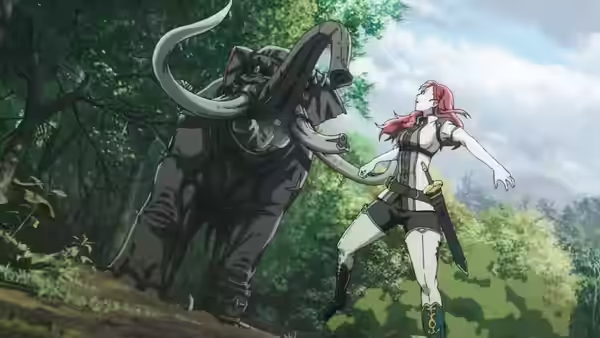
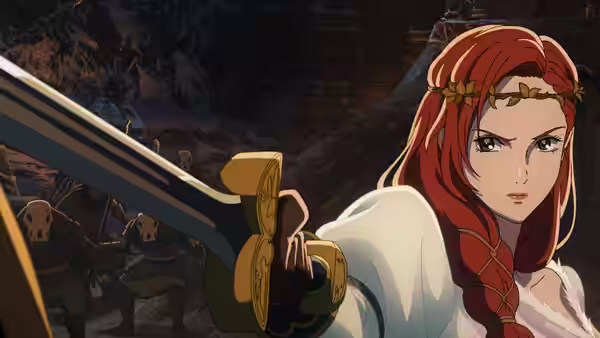
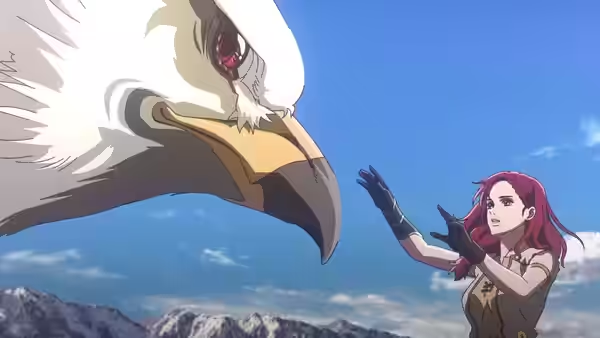
Gaia Wise plays Héra, the daughter, with a plainness we came to like. She rides, she argues, she climbs a cliff after an eagle, and when the film asks her to lead she does it as someone working it out as she goes. It is a sound idea, a shieldmaiden long before Éowyn, and Miranda Otto is brought back to narrate. The trouble is that four credited screenwriters, Will Matthews, Jeffrey Addiss, Arty Papageorgiou and Phoebe Gittins, have given Héra a stock of speeches about hope and little else to say, and the narration keeps explaining what the pictures have shown us.
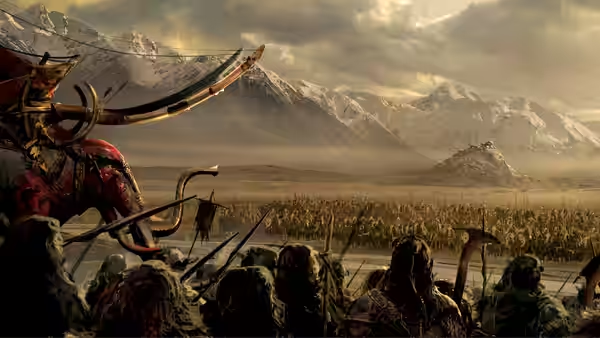
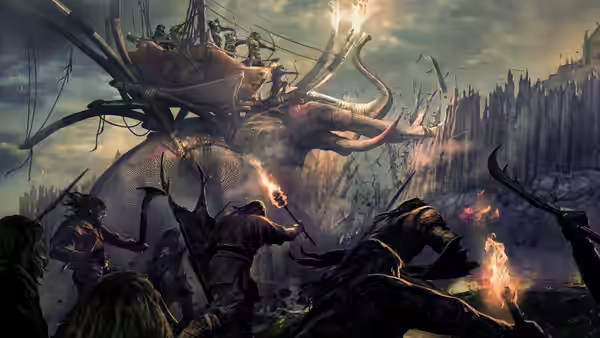
The look is split down the middle. The backgrounds are painted with real care: Edoras with its thatched roofs and gilded horse-heads, a grey sky over the Hornburg, torchlight on wet stone. The people in front of them are drawn flatter and move on fewer frames, so that a horse at the gallop looks fine and the rider looks like a paper figure being pushed across the scenery. Mouths drift from the words. Faces hold one expression too long. In a quiet scene this reads as stillness. In a battle it reads as cheapness, and there are more battles than quiet scenes.
Luke Pasqualino voices Wulf as a boy who has been wronged and knows it, and for one scene, when he is thrown out of the hall, there is something in him. The script then makes him a sneer with an army. Michael Wildman’s General Targg stands beside him and doubts him, which is the whole of the part. Once the Rohirrim are inside the Hornburg the film settles into a long winter, and so did we. Snow falls. The horn sounds. Someone counts the food. We were bored for a good half hour, because we could see the film reaching for moments from Jackson’s The Two Towers, sometimes shot for shot, and we knew how each would go before it did.
Stephen Gallagher’s score is honest work and it plays one trick we resented. Mostly it is drums and low strings. Then, at chosen moments, it lets in the fiddle theme Howard Shore wrote for Rohan, and we felt it go through us as intended, and then felt cross, because the feeling had been fetched from another film and set down here unearned.
Kamiyama’s Ghost in the Shell: Stand Alone Complex was patient, talky and sure of what it thought. This is patient and talky. It is shorter and less cluttered than Jackson’s Hobbit films, but that is a low bar. Most critics have landed near where we have, split between those glad to see Middle-earth drawn by hand and those who could not stop noticing the tracing.
See it if a painted Edoras is enough for you; it was nearly enough for us for an hour. The 12A allows more blood than you may expect from a cartoon. At home the backgrounds shrink and the shortcuts in the drawing show, so a big screen helps this one more than most.