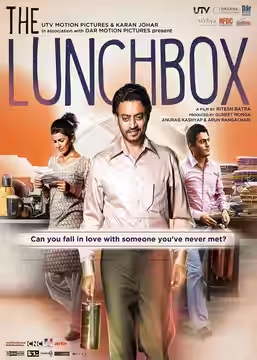
Ritesh Batra’s romance is worth seeing for Irrfan Khan, whose restraint makes its tenderness persuasive. The careful handling can also feel overcautious, leaving a good film a little less affecting than it ought to be.
The attraction of The Lunchbox is the care Ritesh Batra takes with feelings that could easily become embarrassing on screen. As writer and director, he makes a romance that asks for patience and generally earns it, though we sometimes wanted him to be less careful. It is a good film, especially for those who prefer their romantic drama without a great deal of insisting. Irrfan Khan gives that quietness a human interest it might otherwise lack.
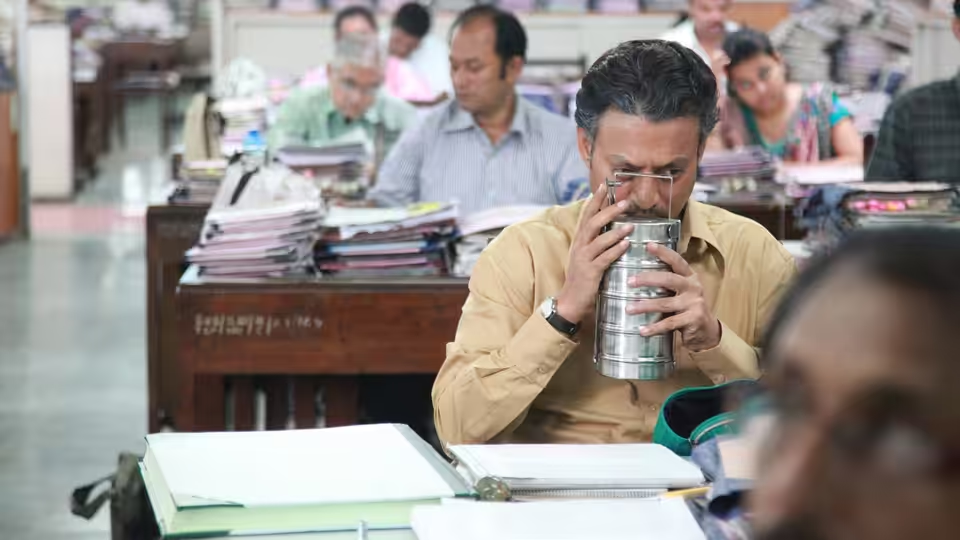
We were moved by the restraint of Irrfan Khan’s performance. He gives Saajan Fernandes enough reserve to make the smallest suggestion of warmth worth our attention, without turning quietness into a display of acting. The pleasure lies in how much interest he creates while apparently doing so little. We have to stay attentive, and that seems a fair request when a performance gives us this much reason to care.
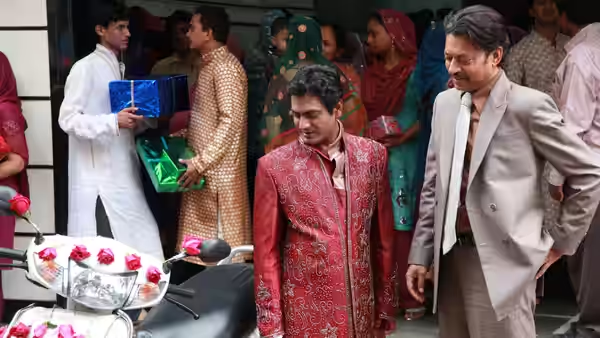
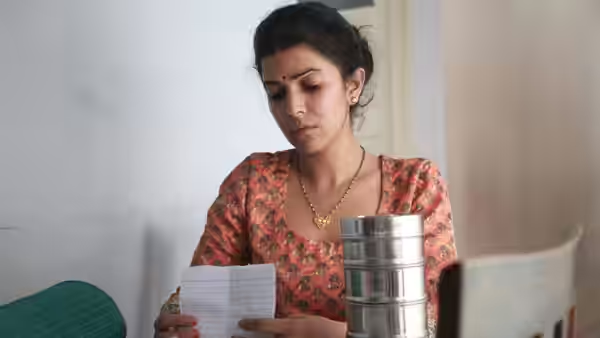
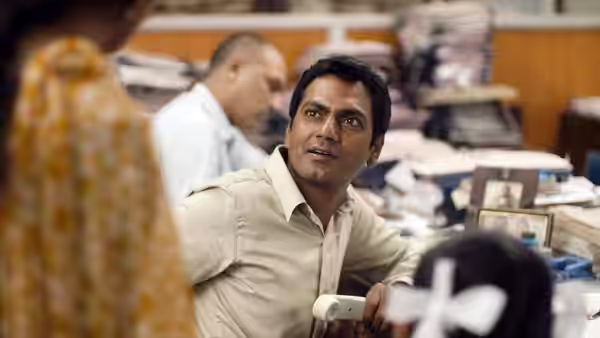
Nimrat Kaur gives Ila enough weight to make her worth watching independently of the romance. She deserves attention beside a leading performance that could easily dominate our memory of the film. Nawazuddin Siddiqui, as Shaikh, is welcome company too, although the writing can make its wish to please a little too apparent. The acting is persuasive enough for us to wish Ritesh Batra would risk letting these people be less agreeable.
Michael Simmonds’s cinematography makes good use of space, giving the characters’ separation an importance that dialogue need not underline. Shruti Gupte’s production design feels suitably unshowy beside it. We can attend to the people without having to admire the surroundings first, and the images reward that attention. This is well-judged work, although the visual restraint sometimes reinforces the feeling that the film is being a little too careful with us.
John F. Lyons’s editing shares that preference for giving a feeling time to settle. For much of the film, the pace suits the performances; occasionally we became too conscious of being asked to wait. Max Richter’s music belongs to the same gentle approach, and we would have welcomed less reassurance from it. The combined effect is pleasing, but it can make a slight uncertainty feel more important than the writing has managed to make it.
That is the main reservation about Ritesh Batra’s screenplay. It is so tactful about romantic feeling that it sometimes seems reluctant to risk an awkward response. Within the genre, restraint is welcome, but it should still leave room for people to be tiresome, unreasonable or difficult to like. We wanted more of that difficulty, because the actors are capable of sustaining our interest without so much encouragement to be fond of them.
At 104 minutes, The Lunchbox asks for a modest amount of patience, and the acting usually repays it. Irrfan Khan can hold our attention even when the film feels slight. Choose it for a quiet evening with a romance, provided quietness itself is part of the appeal.