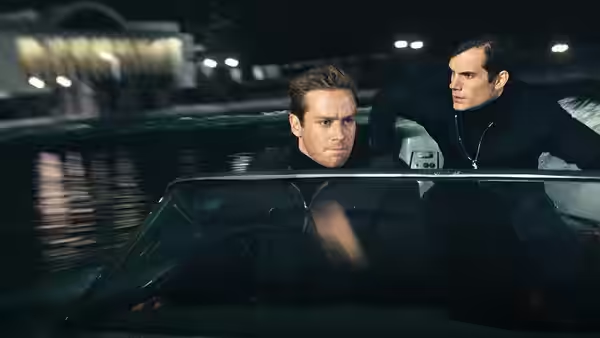
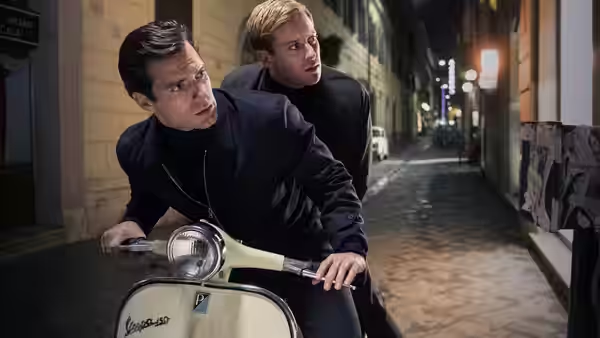
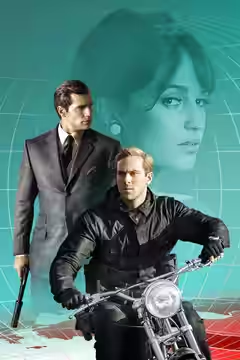
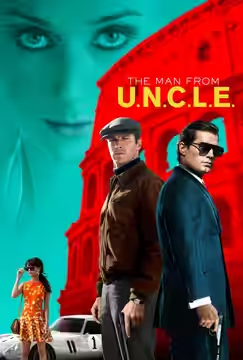
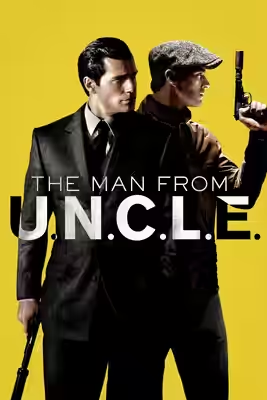
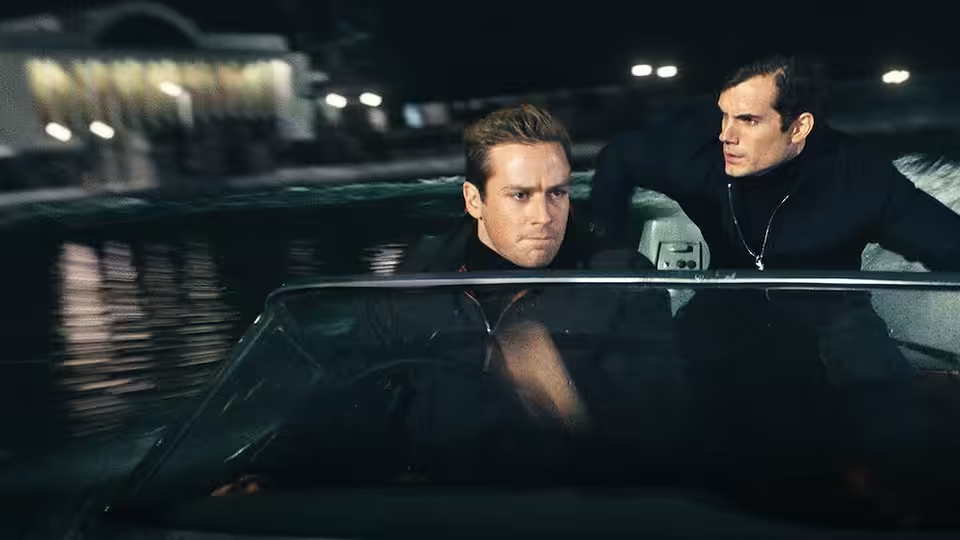
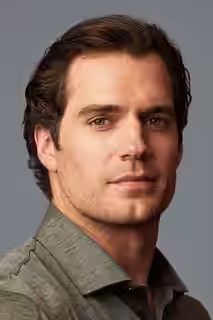
Napoleon Solo (Henry Cavill) and Illya Kuryakin (Armie Hammer) ride through the night in a car
Film review

The Man from U.N.C.L.E.

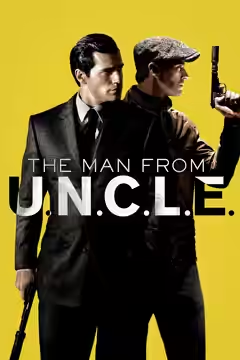
2015 · Directed by Guy Ritchie · 1h 56m · RTÜK 13A

In a sentenceEverybody is immaculately dressed and nobody is ever in the slightest danger

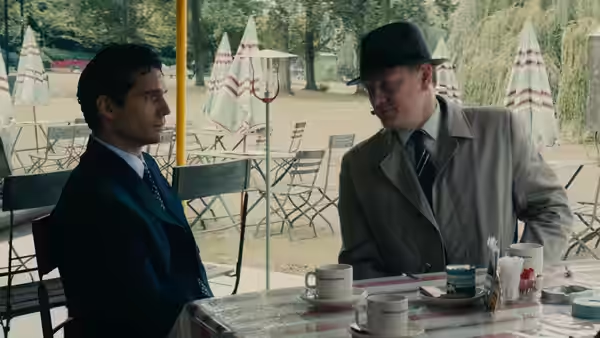
East Berlin, 1963. Napoleon Solo (Henry Cavill), a thief working off his sentence for the CIA, crosses into the East to collect Gaby Teller (Alicia Vikander), a car mechanic whose father, a missing nuclear scientist, both sides want back. On their tail is KGB agent Illya Kuryakin (Armie Hammer), who chases their car through the streets on foot and nearly tears it apart. The next morning their handlers, Sanders (Jared Harris) and Oleg (Misha Kuznetsov), order the two men to work together. They are sent to Rome, where Gaby’s Uncle Rudi (Sylvester Groth) works for the Vinciguerra shipping family, Victoria (Elizabeth Debicki) and her husband Alexander (Luca Calvani), who may be building a bomb. Gaby poses as Kuryakin’s fiancée, Solo as an antiques dealer, and nobody trusts anybody.

Plays from YouTube when you press play; nothing loads from them until then.

Fi1m review

Guy Ritchie’s spy caper is lovely to look at and there is not much under the suits. The clothes, the cars and Daniel Pemberton’s score do most of the work; the plot and the two leads stand around looking expensive.

Guy Ritchie has taken the 1960s television series back to its beginning, in 1963, with the Berlin Wall still new: an American thief on loan to the CIA and a KGB enforcer end up on the same job. What it wants to be is the early Bond films, with more jokes and better tailoring, and what it manages is the tailoring. The Man from U.N.C.L.E. is 116 minutes of handsome people being cool at one another, and we enjoyed about half of it.

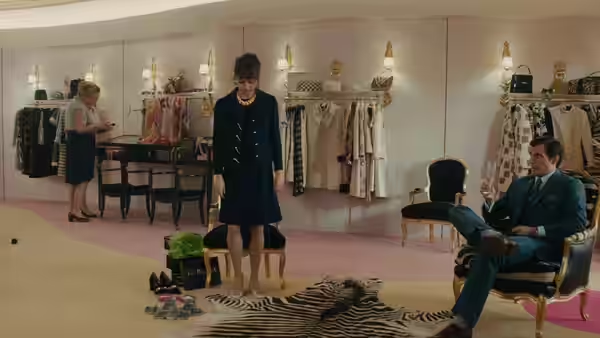
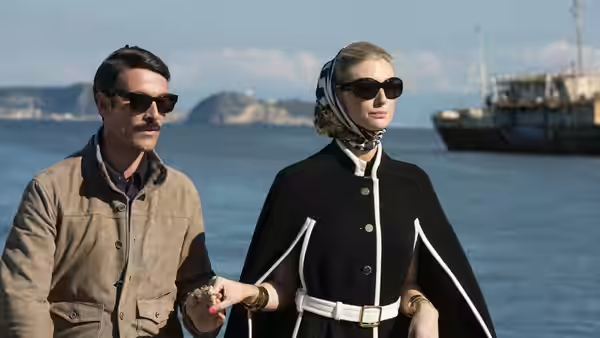
The Berlin opening is the film’s most confident stretch. Oliver Scholl builds the East in wet grey and rubble, John Mathieson lights it in sodium orange and gun-metal blue, and Hammer’s Kuryakin chases a car on foot and tears the boot off it. Then Rome, which Mathieson shoots in honey-coloured stone and blue water, and where Joanna Johnston dresses everyone as if a magazine were waiting outside: Vikander in short shifts and big sunglasses, Debicki in white with a helmet of blonde hair, Cavill in suits that never crease. We could have watched the clothes for an hour.

Daniel Pemberton’s score is the best thing in the film. Harpsichord, flutes, a bossa nova shuffle and a drum kit that sounds recorded in a stairwell: it is pastiche, openly, with more swagger than anyone on screen. It carries the one sequence people will remember. Kuryakin is being hunted across a harbour by boats with searchlights, and James Herbert cuts away to Solo, who has fallen off a speedboat, climbed into a parked lorry, found a sandwich and a bottle of wine in the cab, and is eating his supper while the chase goes on through the windscreen behind him. We laughed out loud, properly; it was the one time the film’s cool was a joke at its own expense rather than a pose.

The leads are the trouble, and not because they are bad. Cavill plays Solo with his voice slowed to a drawl, an impression of a leading man; a spy who is never in danger or in want is hard to follow. Hammer has the better part, a Russian with a temper the state has told him to sit on and hands that shake before he hits someone, and a fine line in silent exasperation at Vikander, who is the only one of the three playing a person. The script, by Ritchie and Lionel Wigram, keeps telling us the two men are rivals turning into partners and forgetting to show it. Their best scene together is an argument in a boutique about belts. It is funny, and it is about belts.

Elizabeth Debicki is the other asset. She plays Victoria Vinciguerra with almost no movement, a cigarette, a stare and a voice that has never been raised in its life, and she is more frightening sitting still than the film is when it blows things up. Hugh Grant drifts through as Waverly like a man who has read the script and decided to enjoy himself anyway. The plot concerns a missing scientist, a warhead and a shipping company, and nobody on screen cares about it, so neither did we. The last half hour goes bigger, with jeeps and motorbikes and a fortress, and gets worse. We lost track of who was chasing whom and found we did not mind. Herbert’s trick of replaying each set piece in flashback is sharp twice and a tic by the fourth.

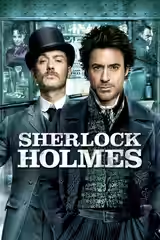
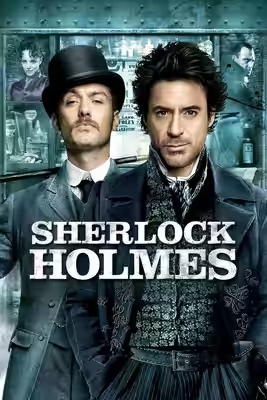
Ritchie has done this before. Sherlock Holmes (2009) used the same tricks, and the pairing underneath had warmth. Here the suits are better and the temperature is lower. The early Bond films it is imitating had something nasty under the glamour; From Russia with Love (1963) is a film in which people get hurt. This is a film in which people get dressed.

We had a pleasant time and had forgotten most of it by the bus stop. That is not nothing; a 12A a parent and a teenager can both laugh at is rarer than it should be. Watch it with the sound up for Pemberton and do not expect to remember the plot.
Critical consensus AI synthesised

55
Positive
8
Mixed
9
Negative
7
Vulture
14 August 2015 · David Edelstein
90*

Edelstein finds the film absolutely delightful, praising its breezy, elegant style and playful choreography. He especially singles out Guy Ritchie’s carefully arranged action and visual comedy, while noting that the story is formulaic and emotionally slight.

Read the full review →
Slant Magazine
22 July 2024 · ★★★★ · Kenji Fujishima
80

Fujishima finds the film pointless but breezy and engaging. He praises its stylish, comic action, especially Solo’s detached perspective during the motorboat chase.

Read the full review →
The AV Club
13 August 2015 · B · Jesse Hassenger
77

Hassenger finds the film entertaining and stylish, though its plot and late action sequence weaken the experience. He praises the playful characterization and visual details, especially the actors’ performances and comic offscreen action.

Read the full review →
Empire
14 August 2014 · Helen O'Hara
70*

The review finds the film funny and stylish, though its plot and action do not always sustain its charm. It especially praises the chemistry between Cavill and Hammer and the bright period look.

Read the full review →
Evening Standard
14 August 2015 · Guy Lodge
65*

Lodge finds the film smoothly entertaining, though its storytelling is indifferent and its plot hard to follow. He singles out the immaculate costumes and Elizabeth Debicki’s stylish villain for praise.

Read the full review →
Time Out
12 August 2015
64*

The available text does not reveal the critic’s verdict. It provides no specific praise or complaint to summarize.

Read the full review →

Straight answers AI written, from our review

Is The Man from U.N.C.L.E. worth watching?
The Man from U.N.C.L.E. is worth watching for the clothes, the cars and Daniel Pemberton's score, and we scored it 64. The plot is forgettable and the two leads stand around looking expensive, but it is a pleasant two hours for anyone who wants a sixties spy caper that never gets nasty. Do not expect to remember it the next morning.
How long is The Man from U.N.C.L.E., and what is it rated?
The Man from U.N.C.L.E. runs 1h 56m and is rated 13A by the RTÜK in Türkiye. It is a comedy and action film.
Where can I watch The Man from U.N.C.L.E. in Türkiye?
The Man from U.N.C.L.E. is streaming on Amazon Prime Video and Netflix in Türkiye. Availability is checked daily; the links above go straight to each service.
How violent or frightening is The Man from U.N.C.L.E., and is it suitable for children?
The Man from U.N.C.L.E. is a 12A and about as gentle as spy action gets: car chases, boats, explosions and a punch or two, with nobody ever in any real danger. Elizabeth Debicki's villain is more chilling than anything that blows up. It suits teenagers and most children of secondary-school age, and a parent can laugh at it alongside them.
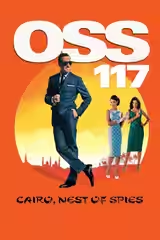
How does The Man from U.N.C.L.E. compare to OSS 117: Cairo, Nest of Spies?
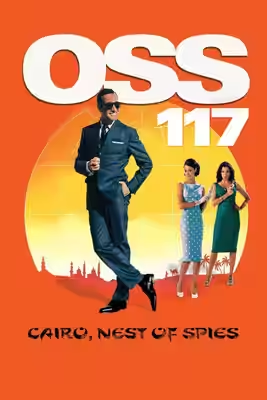
The Man from U.N.C.L.E. and OSS 117: Cairo, Nest of Spies both rebuild the sixties spy film, but the French one commits to the joke all the way down and the Ritchie one mostly poses. OSS 117 is the sharper, funnier film, built around Jean Dujardin's fool. U.N.C.L.E. is better dressed and has the finer score, and is the easier pick for a family evening.
What should I watch after The Man from U.N.C.L.E.?
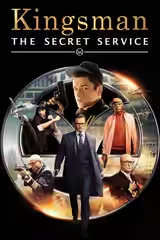
After The Man from U.N.C.L.E., try OSS 117: Cairo, Nest of Spies (2006, Fi1m 76): French sixties spy pastiche that commits to the joke all the way down. Then Sherlock Holmes (2009, Fi1m 65): Ritchie’s same box of tricks, with a central pairing that actually likes each other; and Kingsman: The Secret Service (2014, Fi1m 66): Gentleman spies with sharper suits and a far nastier sense of humour.

Cast

If you liked this, try…

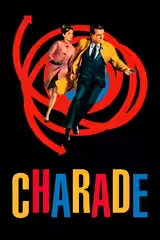
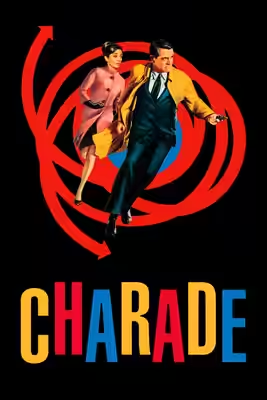
  1. Charade (1963) · not reviewed yetThe real thing: Grant and Hepburn in Paris, light, lethal and properly witty.

  2. OSS 117: Cairo, Nest of Spies (2006, Fi1m 76)French sixties spy pastiche that commits to the joke all the way down.

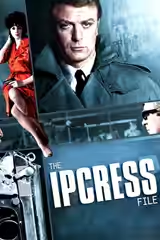
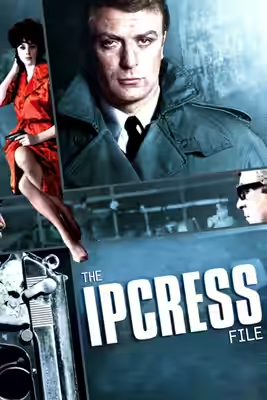
  3. The Ipcress File (1965) · not reviewed yetMichael Caine, bad glasses and the Cold War done on a budget with real menace.

  4. Sherlock Holmes (2009, Fi1m 65)Ritchie’s same box of tricks, with a central pairing that actually likes each other.

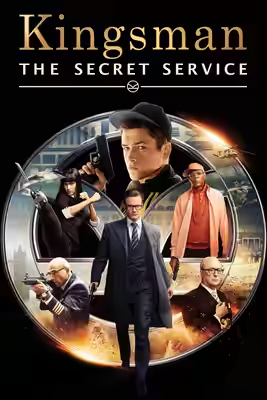
  5. Kingsman: The Secret Service (2014, Fi1m 66)Gentleman spies with sharper suits and a far nastier sense of humour.

Free account

Know what to watch tonight

Two lists that know where things are streaming, collections you can share, your own score beside ours, and Discover that remembers what you have seen.

  • Want to see, sorted by what is streaming now
  • Seen, with your score out of ten
  • No adverts, ever