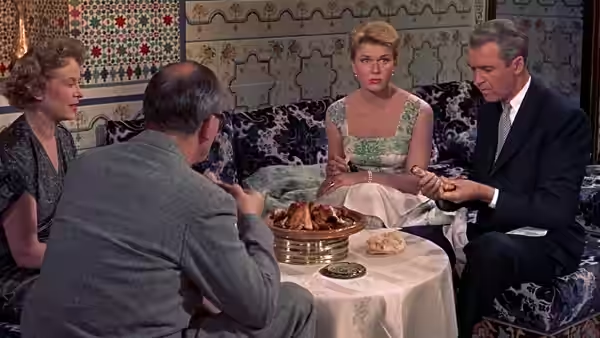
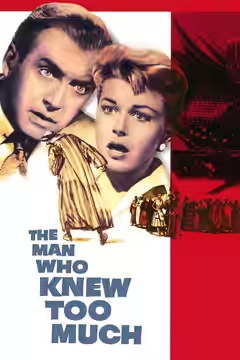
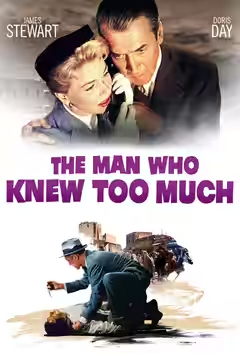
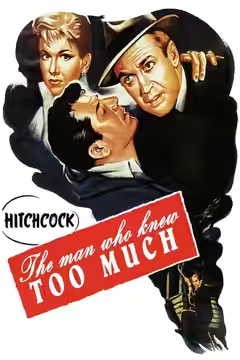
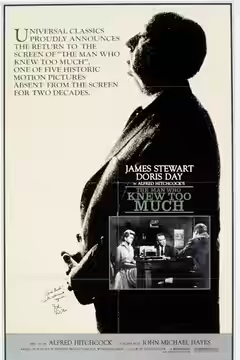
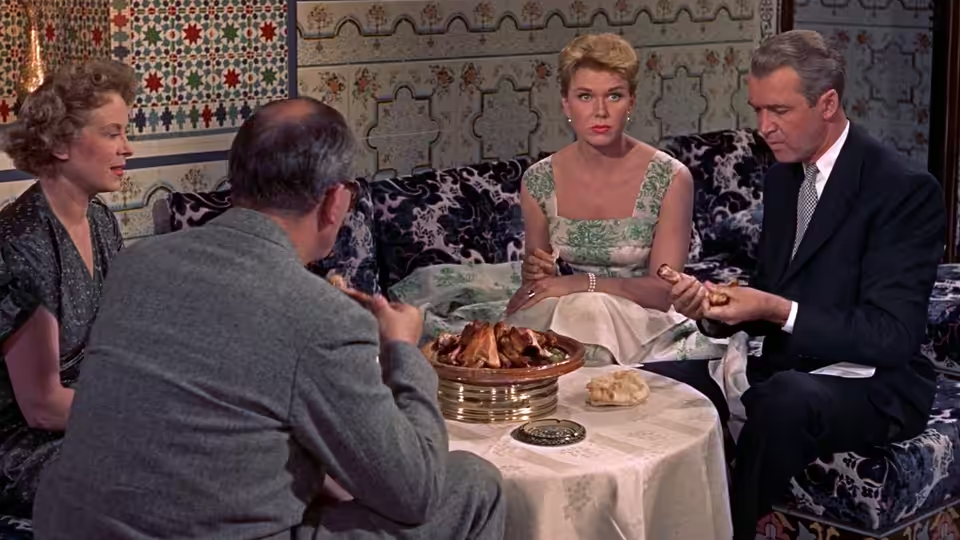
Jo McKenna (Doris Day) and Ben McKenna (James Stewart) sit at a restaurant table with other diners
Film review

The Man Who Knew Too Much

1956 · Directed by Alfred Hitchcock · 2h 01m

In a sentenceWe would happily lose a little sightseeing and keep every anxious second of the concert

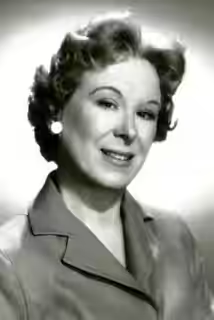
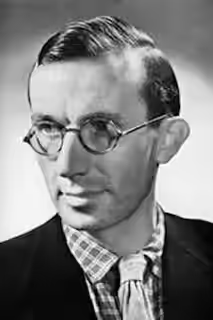
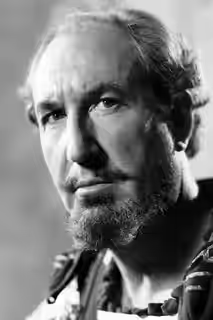
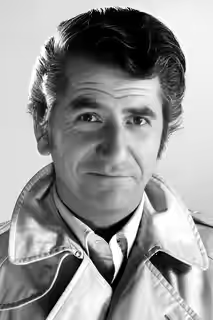
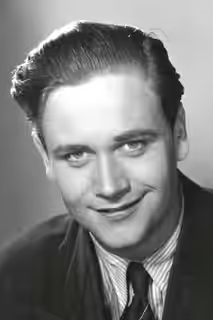
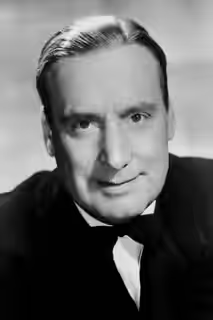
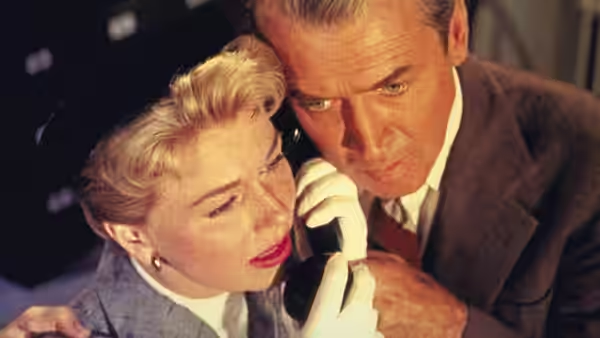
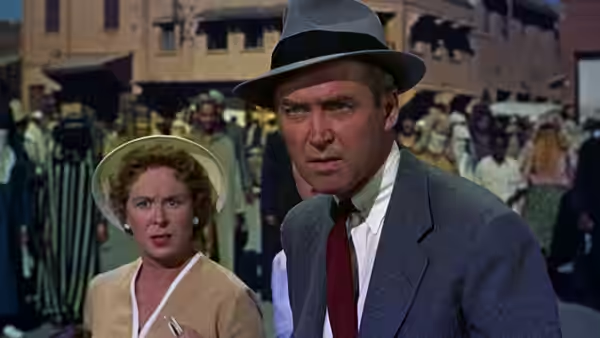
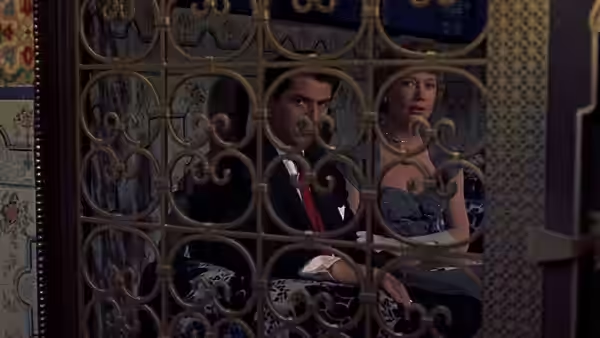
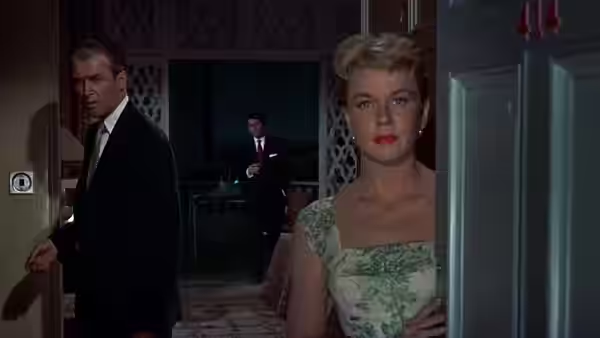
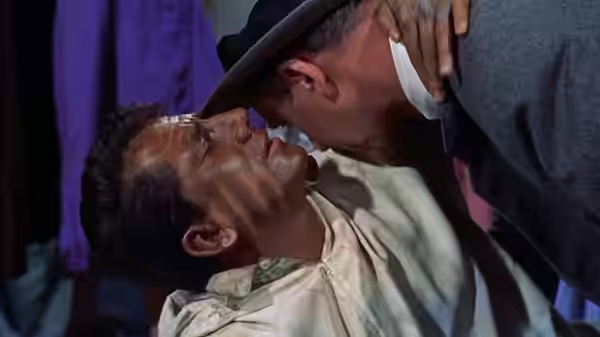
Marrakech is the setting as Ben McKenna (James Stewart) and Jo McKenna (Doris Day) face a mystery that puts their family under pressure. Hank McKenna (Christopher Olsen), Louis Bernard (Daniel Gélin), Lucy Drayton (Brenda De Banzie) and Edward Drayton (Bernard Miles) also figure in the story. Ben and Jo’s concern is for their family, and the danger around them leaves both parents distressed. Their predicament brings family drama into a thriller whose suspense rests on the fear of people with something personal to lose.

Plays from YouTube when you press play; nothing loads from them until then.

Fi1m review

Alfred Hitchcock’s family thriller is worth the slow stretches for James Stewart, Doris Day and the sustained tension of its concert sequence. The pacing needs tightening, but the parents’ distress gives us reason to stay with it.

The Man Who Knew Too Much is a good thriller that takes longer than it needs to become a gripping one. Alfred Hitchcock gives the McKenna family enough room to be recognisable as people, then asks us to share the parents’ anxiety. At 121 minutes, the film also gives us time to wonder whether every pause is necessary. The answer is no, but the performances and the handling of suspense make the slower passages worth tolerating.

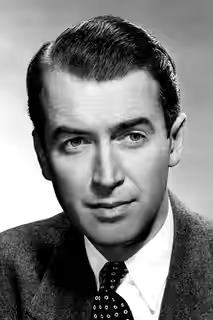
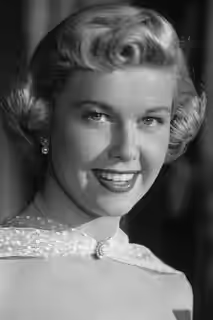
James Stewart plays Ben McKenna with a convincing effort to keep fear under control. We can read the strain of trying to remain capable when there is little comfort in doing so. Doris Day’s Jo McKenna gives the family distress its strongest emotional pull, and her performance deserves attention beyond the question of how well she suits a thriller. Their anxiety is believable enough to keep the film from becoming a succession of carefully arranged dangers.

Robert Burks’s cinematography makes Marrakech worth looking at, though attractive surroundings do not by themselves keep a thriller moving. The sense of space gives the family drama some welcome breathing room, and the location never feels like an interchangeable backdrop. Yet there are stretches when we register the view more readily than the pressure on the parents. These images are pleasurable, and the film sometimes seems too content to let that pleasure account for the time.

The weakness lies in how long the film spends between its strongest stretches. Editor George Tomasini cannot make all that waiting feel necessary, and the screenplay by John Michael Hayes could reach its points with less preparation. The family material gives the suspense something to work on, so stripping it away would be a mistake. Even so, the film occasionally continues to establish concern that the two leading performances have already made clear.

At Albert Hall, that patience starts to pay. The concert sequence builds its suspense without dialogue, using the progress of the music to make waiting almost unbearable. We were properly tense here, because the film would not give us the relief of a conversation or an explanation. The cutting directs our attention with a firmness missing from some of the earlier passages, and for once we would not ask George Tomasini to remove a second.

With Bernard Herrmann responsible for the music, listening becomes an essential part of watching, rather than something we do while following the plot. The gentler Que Sera, Sera is less persuasive as a reason to interrupt the thriller, however welcome Doris Day’s singing may be. We understand the appeal, but the film has already asked for a fair amount of patience. Her acting does more to secure our concern than the song does.

As a family thriller, this works because the parents remain interesting enough to make us care about the danger. It is less consistently absorbing when it expects preparation alone to hold our attention, and its strongest sequence makes the loose pacing elsewhere harder to overlook. Still, the two leads give the suspense an emotional force that precise cutting and handsome photography could not supply by themselves. Choose it for an evening when nobody is in a hurry.
Critical consensus AI synthesised

60
Positive
3
Mixed
3
Negative
1

The reviews lean towards qualified approval, with praise clustering around Hitchcock’s suspense sequences and technical control rather than the film’s pacing. Several critics find the tension sustained despite the leisurely approach, and James Stewart and Doris Day receive praise for their performances as distressed parents. The Hollywood Reporter singles out the Albert Hall concert sequence for its inventive buildup without dialogue, while other favourable notices find the remake compelling despite its slower pace than the original.

Length is the recurring reservation, shared even by critics who otherwise enjoy the thriller: passages linger, and the extra running time does not always earn its place. The spread is wide, however, rather than uniformly lukewarm. The New Yorker supplies the sharpest dissent, finding the family and performances irritating and the remake inferior to Hitchcock’s earlier film; its limited praise for the Marrakech scenery does little to soften that judgement.

The Hollywood Reporter
1 May 1956 · Don Gillette
80*

Gillette finds Hitchcock’s thriller suspenseful and engaging throughout, despite saying some passages linger too long. He singles out the Albert Hall concert sequence for its inventive, dialogue-free buildup and dramatic climax.

Read the full review →
Empire
1 March 2007 · Kim Newman
75*

Newman finds Hitchcock’s remake an equally compelling thriller, despite its slower pace than the original. He praises the sustained suspense and the performances of James Stewart and Doris Day.

Read the full review →
Variety
31 December 1955 · Variety Staff
70*

Variety considers the film a good thriller, though it says the footage runs a little long. It praises the sustained suspense and the strong performances, especially James Stewart and Doris Day as distressed parents.

Read the full review →
The New York Times
17 May 1956
65*

The URL identifies a New York Times review of Hitchcock’s 1956 film. The article text is inaccessible, so its verdict and specific praise or complaint cannot be determined.

Read the full review →
Radio Times
★★★ · David Parkinson
60

Parkinson finds the remake more technically accomplished than Hitchcock’s earlier version, though its extra length is not always well spent. He praises the finale’s added suspense and criticizes the inclusion of “Que Sera, Sera” as a concession to Doris Day fans.

Read the full review →
Slant Magazine
2 December 2010 · John Lingan
55*

The critic finds the 1956 film uneven and overlong, despite its technical brilliance. The Marrakesh visuals and suspenseful set pieces are singled out as especially effective.

Read the full review →

Straight answers AI written, from our review

Is The Man Who Knew Too Much worth watching?
The Man Who Knew Too Much is worth watching for its believable family distress and sustained concert suspense, and we score it 74 out of 100. James Stewart and Doris Day make the parents’ anxiety matter, though the leisurely sightseeing and loose pacing suit an evening when nobody is in a hurry.
How long is The Man Who Knew Too Much, and what is it rated?
The Man Who Knew Too Much runs 2h 01m. It is a thriller and mystery film.
Where can I watch The Man Who Knew Too Much in Austria?
The Man Who Knew Too Much is available to rent from Amazon Prime Video from €2.99. Availability is checked daily; the links above go straight to each service.
How violent or frightening is The Man Who Knew Too Much, and is it suitable for children?
The Man Who Knew Too Much has a UK PG certificate, but its distressed parents and sustained suspense may unsettle younger or sensitive children. The concert sequence makes waiting intensely tense; we would treat the parental-guidance rating as a reason to consider a child’s tolerance for anxiety, rather than assume an easy family watch.
How does The Man Who Knew Too Much compare to The Lady Vanishes?
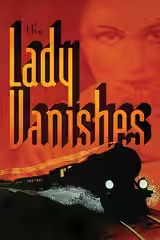
The Man Who Knew Too Much is the slower, more family-centred thriller; we recommend The Lady Vanishes ahead of it for brisk suspense and humour. Stewart and Day give the former’s danger emotional weight, while the latter’s railway mystery stays urgent despite some fussy plotting, making it the better choice when patience is limited.
What should I watch after The Man Who Knew Too Much?
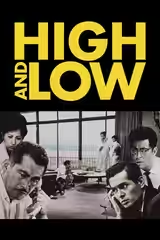
After The Man Who Knew Too Much, try The Lady Vanishes (1938, Fi1m 88): More briskly paced suspense, with everyday politeness proving a poor safeguard. Then High and Low (1963, Fi1m 90): A family’s fear receives closer scrutiny, with every practical decision carrying weight.

Cast

If you liked this, try…

  1. The Lady Vanishes (1938, Fi1m 88)More briskly paced suspense, with everyday politeness proving a poor safeguard.

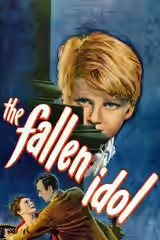
  2. The Fallen Idol (1948) · not on Fi1m yetA child’s limited understanding makes adult behaviour both puzzling and frightening.

  3. High and Low (1963, Fi1m 90)A family’s fear receives closer scrutiny, with every practical decision carrying weight.

  4. Tell No One (2006) · not on Fi1m yetFamily attachment keeps an elaborate mystery urgent, even when the complications multiply.

  5. The Ear (1970) · not on Fi1m yetDomestic friction becomes political terror inside rooms that no longer feel private.