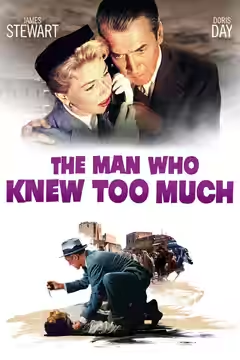
Alfred Hitchcock’s family thriller is worth the slow stretches for James Stewart, Doris Day and the sustained tension of its concert sequence. The pacing needs tightening, but the parents’ distress gives us reason to stay with it.
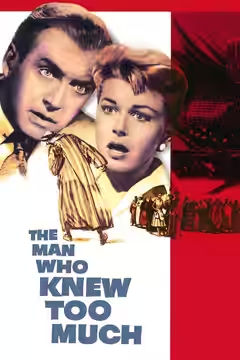
The Man Who Knew Too Much is a good thriller that takes longer than it needs to become a gripping one. Alfred Hitchcock gives the McKenna family enough room to be recognisable as people, then asks us to share the parents’ anxiety. At 121 minutes, the film also gives us time to wonder whether every pause is necessary. The answer is no, but the performances and the handling of suspense make the slower passages worth tolerating.
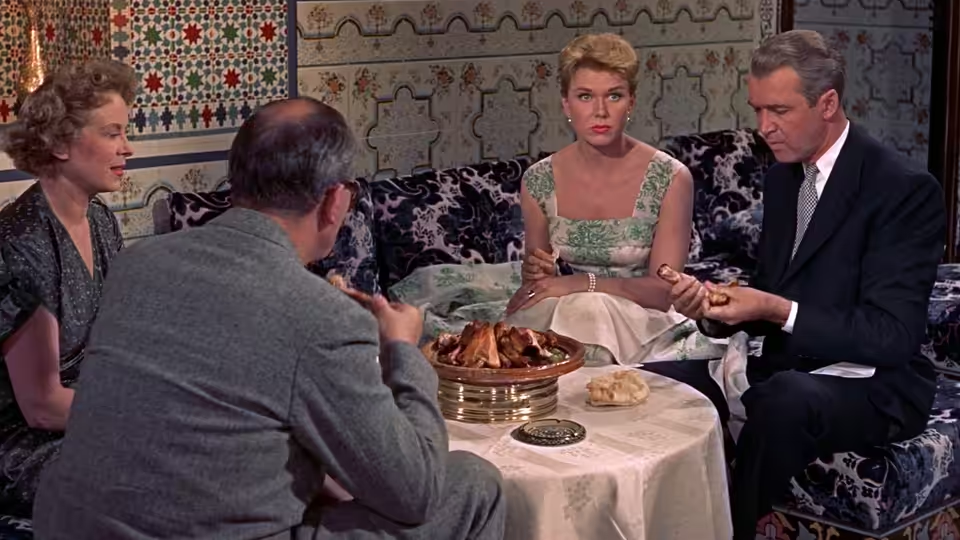
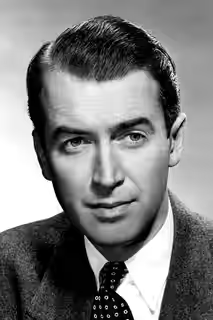
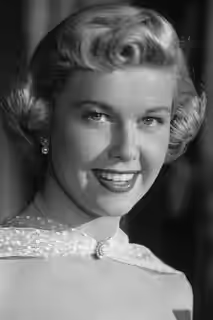
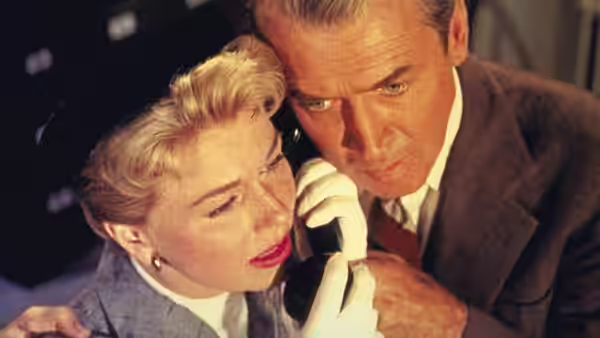
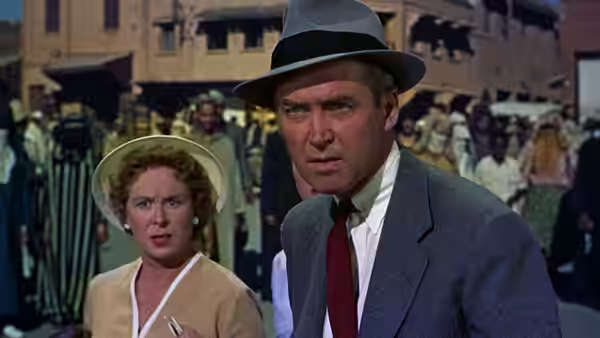
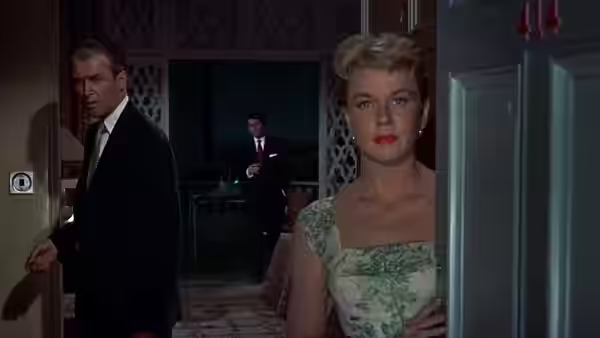
James Stewart plays Ben McKenna with a convincing effort to keep fear under control. We can read the strain of trying to remain capable when there is little comfort in doing so. Doris Day’s Jo McKenna gives the family distress its strongest emotional pull, and her performance deserves attention beyond the question of how well she suits a thriller. Their anxiety is believable enough to keep the film from becoming a succession of carefully arranged dangers.
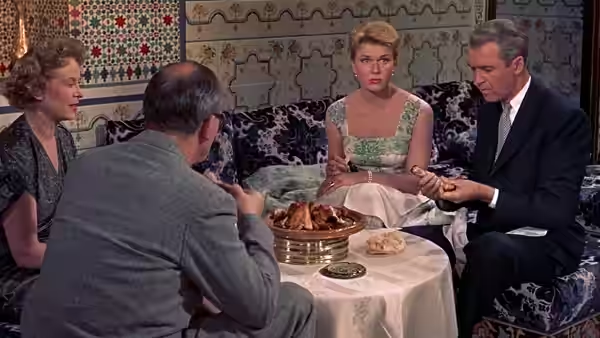
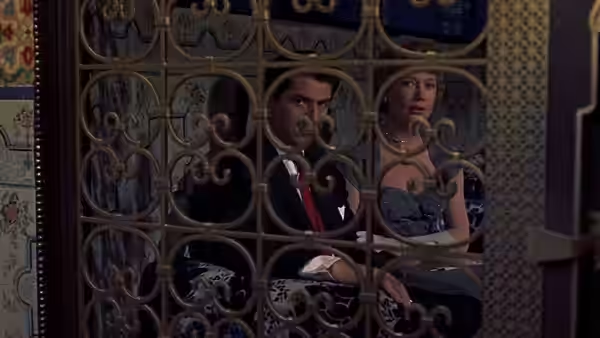
Robert Burks’s cinematography makes Marrakech worth looking at, though attractive surroundings do not by themselves keep a thriller moving. The sense of space gives the family drama some welcome breathing room, and the location never feels like an interchangeable backdrop. Yet there are stretches when we register the view more readily than the pressure on the parents. These images are pleasurable, and the film sometimes seems too content to let that pleasure account for the time.
The weakness lies in how long the film spends between its strongest stretches. Editor George Tomasini cannot make all that waiting feel necessary, and the screenplay by John Michael Hayes could reach its points with less preparation. The family material gives the suspense something to work on, so stripping it away would be a mistake. Even so, the film occasionally continues to establish concern that the two leading performances have already made clear.
At Albert Hall, that patience starts to pay. The concert sequence builds its suspense without dialogue, using the progress of the music to make waiting almost unbearable. We were properly tense here, because the film would not give us the relief of a conversation or an explanation. The cutting directs our attention with a firmness missing from some of the earlier passages, and for once we would not ask George Tomasini to remove a second.
With Bernard Herrmann responsible for the music, listening becomes an essential part of watching, rather than something we do while following the plot. The gentler Que Sera, Sera is less persuasive as a reason to interrupt the thriller, however welcome Doris Day’s singing may be. We understand the appeal, but the film has already asked for a fair amount of patience. Her acting does more to secure our concern than the song does.
As a family thriller, this works because the parents remain interesting enough to make us care about the danger. It is less consistently absorbing when it expects preparation alone to hold our attention, and its strongest sequence makes the loose pacing elsewhere harder to overlook. Still, the two leads give the suspense an emotional force that precise cutting and handsome photography could not supply by themselves. Choose it for an evening when nobody is in a hurry.