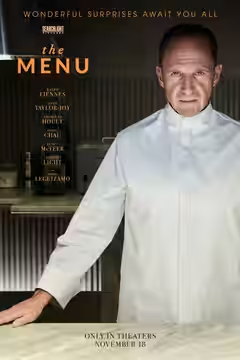
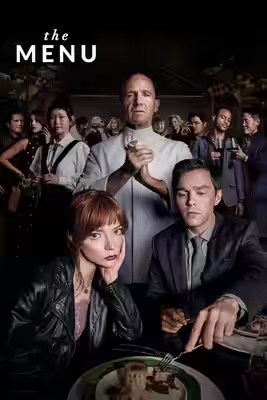
Mark Mylod’s horror comedy about a tasting menu gone wrong is sharply cast, often funny and never dull, and it has one point to make about rich diners and their chef, which it makes and then makes again. Fiennes and Hong Chau are worth the trip.
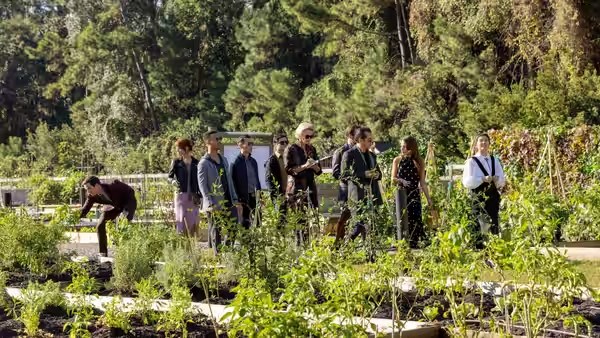
A small boatload of rich people pay a great deal of money to be ferried to an island, seated in a dining room with a view of the sea, and fed by a chef who has stopped enjoying his work. That is the whole of The Menu, and Mark Mylod, working from a script by Seth Reiss and Will Tracy, gets a sharp and funny hour out of it before the film starts repeating itself. It is well cast, well built and about the right length for one idea told twice.
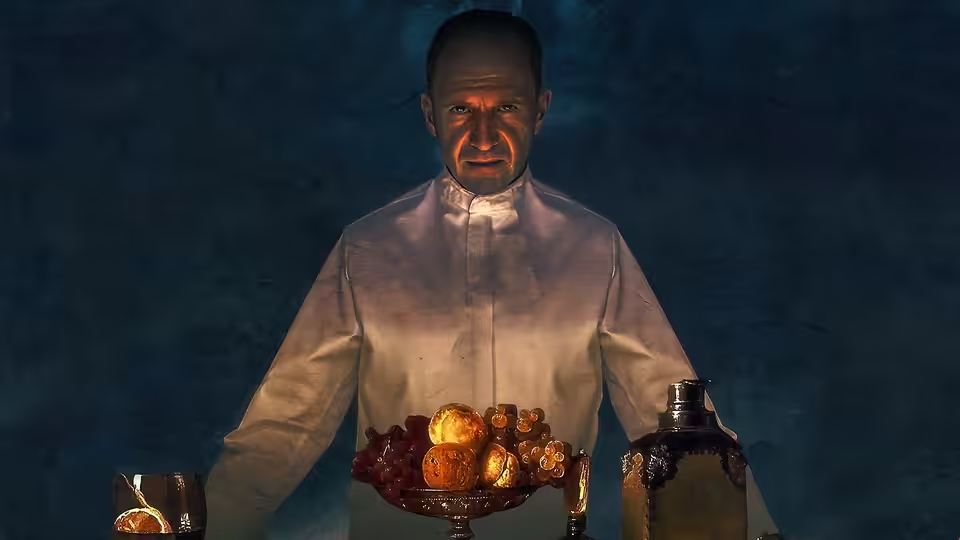
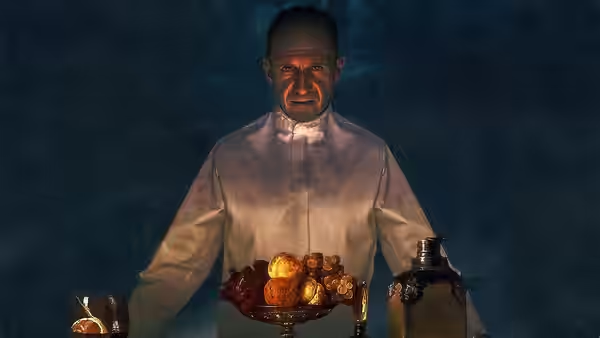
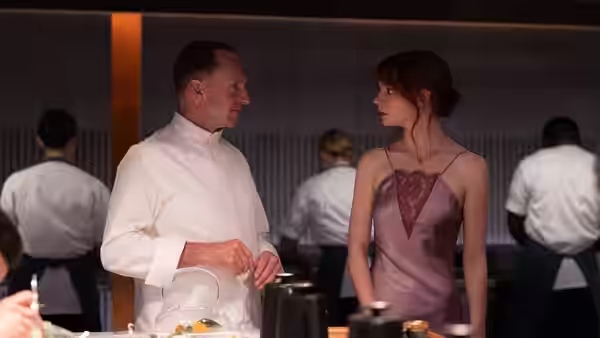
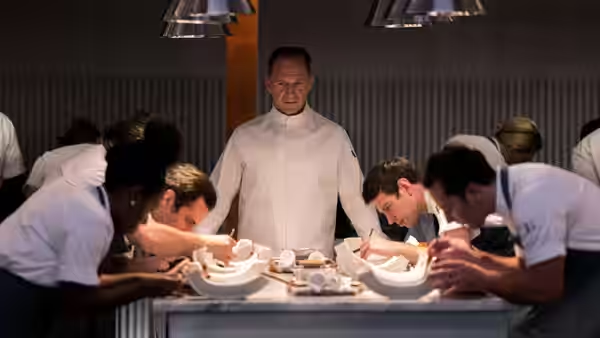
Ralph Fiennes plays Chef Slowik as a man who has been applauded for so long that he has gone deaf to it. He introduces each course with a single clap, the kitchen answers in one voice, and then he talks, quietly and at length, about what is on the plate and why it is there, in the tone of a magistrate reading out sentence. It is a patient, closed, unnerving performance, and the film’s best scenes are the ones where he stands at the pass and looks at the dining room. Hong Chau’s Elsa, the maître d’, is nearly as good: polite, immovable, and plainly on the chef’s side rather than the guests’. Her welcome speech sounds like hospitality the first time and like a warning the second.
Ethan Tobman builds the restaurant as one long timber room with the kitchen open at the end of it, so the diners can see the staff and the staff can see the diners and nobody can see a way out. Peter Deming shoots the courses from directly above, each plate alone under a title card giving the name and the ingredients, the way the cookery programmes do, and Christopher Tellefsen cuts the film to that rhythm, course by course, so the evening keeps a shape even when the plot loses one. Colin Stetson’s score is mostly low reeds and breath, closer to something inhaled than played, and it does the quiet dread the dialogue is too busy for.
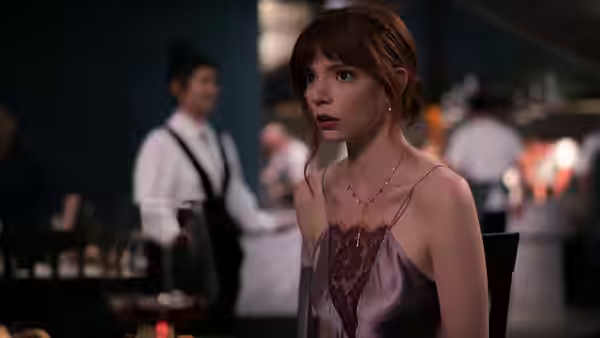
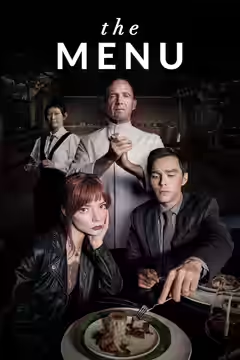
Nicholas Hoult’s Tyler is the most precisely observed thing in the film: a fan who photographs every plate, corrects his date on the name of a technique, and would rather be humiliated by the chef than ignored by him. We laughed at him often, and then felt slightly sorry for him, which is more than the script bothers to feel. Anya Taylor-Joy plays Margot as the only diner not performing, watching the others the way we are, and the film’s tension lives in whether anybody has noticed. Janet McTeer, as the critic Lillian, is a good sketch of a woman who has praised too many restaurants. John Leguizamo’s film star gets one good line and spends the rest of the evening looking for another.
The trouble is that once the evening turns, at a course the menu calls The Mess, the film has only one thing to say and keeps saying it. The guests are each guilty of something and each will be told what. The chef is guilty too, of having made beautiful food for people who did not deserve it. Reiss and Tracy take turns despising the diners and despising the man who serves them, and by the later courses the speeches have replaced the jokes. The Mess itself made us flinch, properly, in the dark. Forty minutes on we found we no longer cared which table the next blow landed on, and were waiting instead to be told what it all meant. We were told.
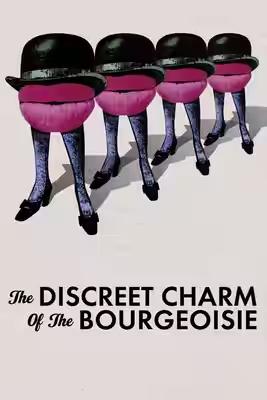
The dinner party that turns on its guests is an old form. Buñuel’s The Discreet Charm of the Bourgeoisie (1972) never let its diners reach the food and said more about them in the trying than this manages in a full tasting menu. The Menu is closer to a good first draft of a stage play, with the set and the cast in place and the second act still to be argued over.
Go for Fiennes, who gives the chef a sadness the writing never quite earns, and for the first hour, which is as funny about fine dining as anything we have seen. Eat beforehand. The food looks marvellous and nobody on screen gets to enjoy it, and after a while neither did we. It runs 107 minutes and carries a 15.