Nicolas Winding Refn’s fashion-world horror has enough colour, music and unease to interest patient horror viewers. Elle Fanning gives it some feeling, but thin dialogue and sluggish scenes make this a qualified pleasure.
The Neon Demon makes being looked at seem like a reasonable thing to fear. Nicolas Winding Refn takes the fashion world’s preoccupation with beauty and makes a horror film from it, with considerable attention to appearances and considerably less to conversation. We would recommend it to the patient and visually minded, with reservations about how much patience it asks for. There is enough unease here to justify the film’s coldness, though not every lengthy pause.
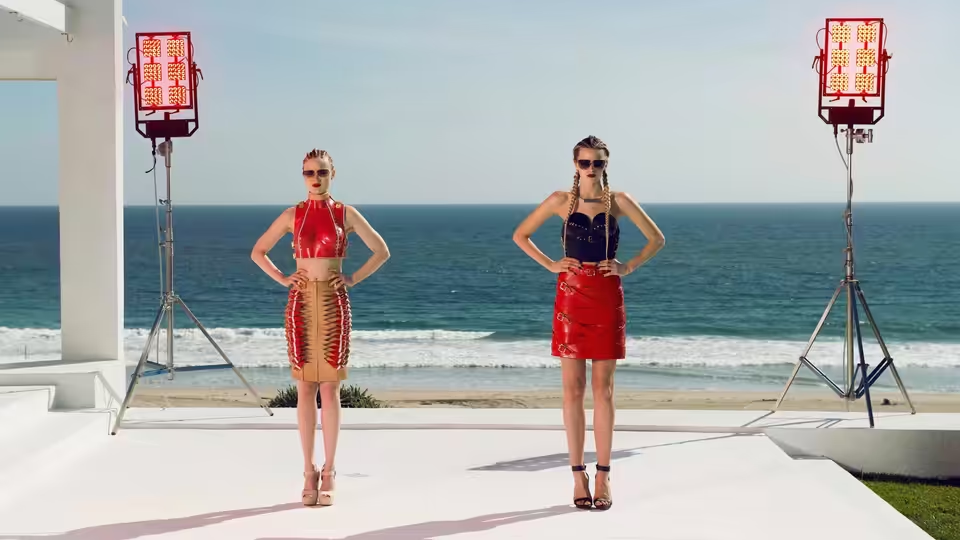
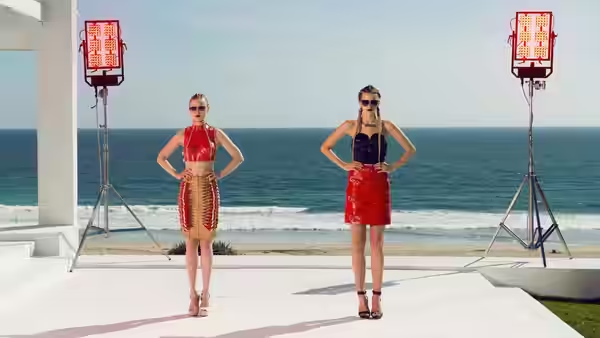
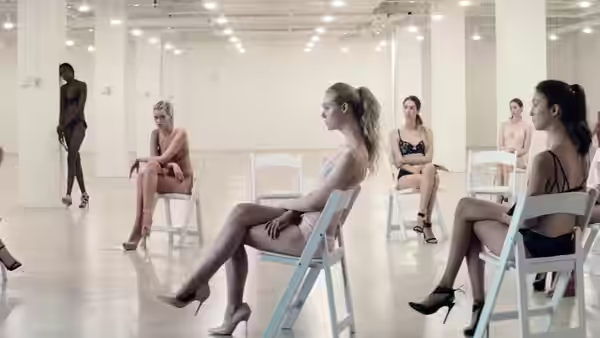
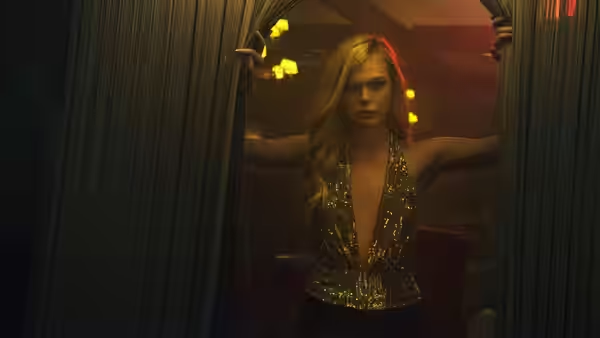
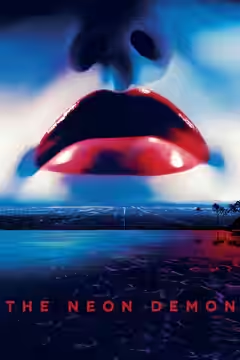
Natasha Braier’s cinematography does the most persuasive work. Saturated colour makes the Los Angeles settings look seductive and unsafe, so that even the pleasure of looking carries a little discomfort. Elliott Hostetter’s production design keeps the fashion-world imagery conspicuously arranged, and that control helps establish a threat before the story has developed much of one. The limitation is that we register some compositions quickly, then spend a long time waiting for someone inside them to do something.
Cliff Martinez’s electronic score gives these images a pulse that the dialogue often lacks. Its insistence helps sustain the tension, particularly when the film seems content to keep us looking without telling us anything new. Matthew Newman’s editing makes room for the music and the compositions, but the lingering rhythm becomes a problem in the static exchanges. Pauses initially make the glances uncomfortable; after enough of them, we start wishing the next line would arrive.
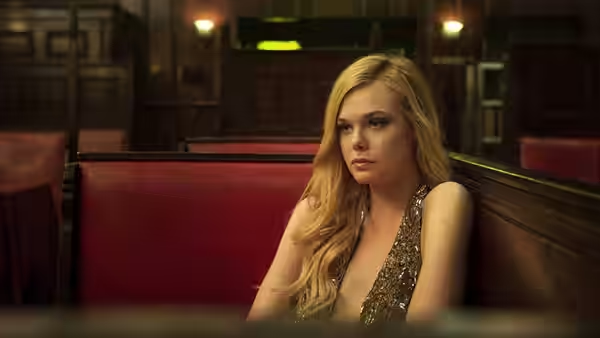
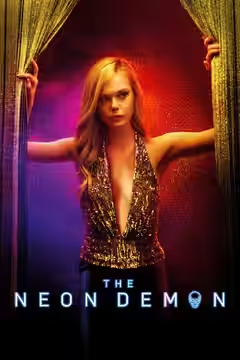
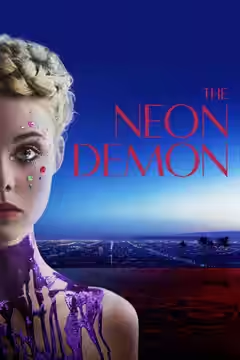
Elle Fanning, as Jesse, gives us a reason to keep watching the people. Her performance allows for uncertainty and self-awareness without making every change conspicuous, and she supplies feeling where the writing can seem determined to exclude it. Jena Malone, as Ruby, provides a stronger sense of danger, making the exchanges among the women feel less safely decorative. Neither performance makes these characters fully knowable, but both suggest thoughts and feelings that the dialogue does little to develop.
The screenplay, credited to Nicolas Winding Refn, Polly Stenham and Mary Laws, is much less assured. We were bored by the women’s static conversations, because the stiff dialogue keeps confirming the same hostility without making their relationships more interesting. Deliberate artificiality is a reasonable choice for this setting, but it does not make every awkward line expressive or every silence tense. The sharper exchanges offer some relief, yet the film too often treats the women’s lack of warmth as sufficient characterisation.
As a horror film, it works best when it allows its own excess to become funny. The contrast between immaculate images and grotesque material has a useful absurdity, and the film has the nerve to risk looking ridiculous. But the shifts in tone sometimes feel like a search for another way to provoke us when the previous one has stopped working. The more extreme material does not make its familiar observations about beauty and cruelty any more perceptive.
The 18 certificate is worth taking seriously; the fashion setting does not make this a gentle evening. It is also a slow one, with stretches that will test anyone waiting for the next plot development. Try it if colour, sound and a patient build-up can hold your attention when the story cannot.