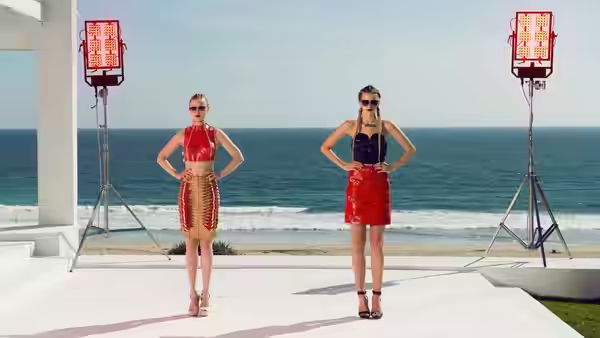
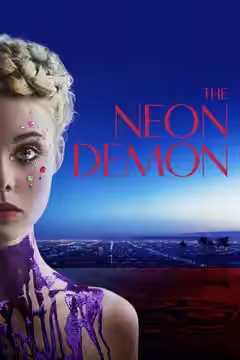
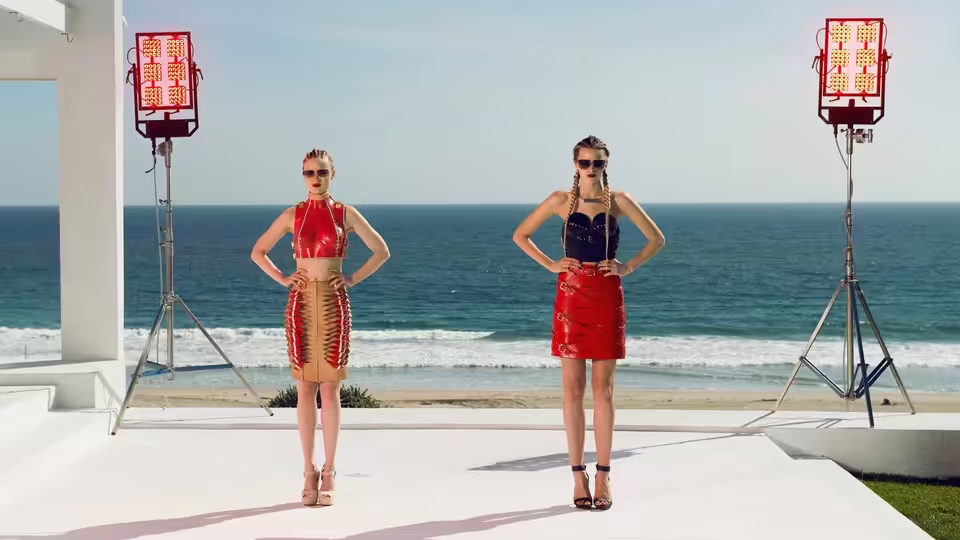
Two fashion models pose before a beach backdrop between studio lights
Film review

The Neon Demon

2016 · Directed by Nicolas Winding Refn · 1h 58m

In a sentenceEveryone looks ready for a photograph and slightly less ready for a conversation

In Los Angeles, Jesse (Elle Fanning) is caught up in a fashion world that judges people by their appearance. Ruby (Jena Malone), Gigi (Bella Heathcote) and Sarah (Abbey Lee) are among the women around her, and their exchanges mix attention with hostility. Beauty determines who draws the eye, but being noticed brings unease as well as admiration. Familiar places in the city take on a threatening appearance as Jesse navigates a world where the way people look at one another is difficult to separate from what they want.

Plays from YouTube when you press play; nothing loads from them until then.

Fi1m review

Nicolas Winding Refn’s fashion-world horror has enough colour, music and unease to interest patient horror viewers. Elle Fanning gives it some feeling, but thin dialogue and sluggish scenes make this a qualified pleasure.

The Neon Demon makes being looked at seem like a reasonable thing to fear. Nicolas Winding Refn takes the fashion world’s preoccupation with beauty and makes a horror film from it, with considerable attention to appearances and considerably less to conversation. We would recommend it to the patient and visually minded, with reservations about how much patience it asks for. There is enough unease here to justify the film’s coldness, though not every lengthy pause.

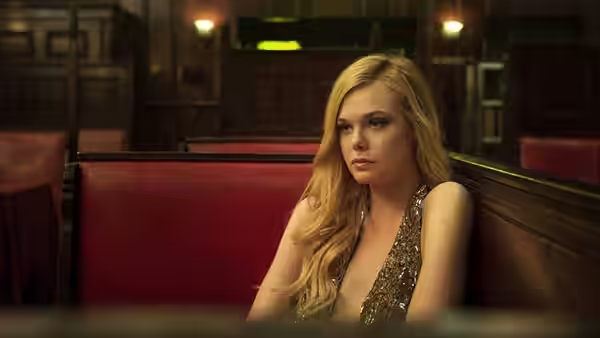
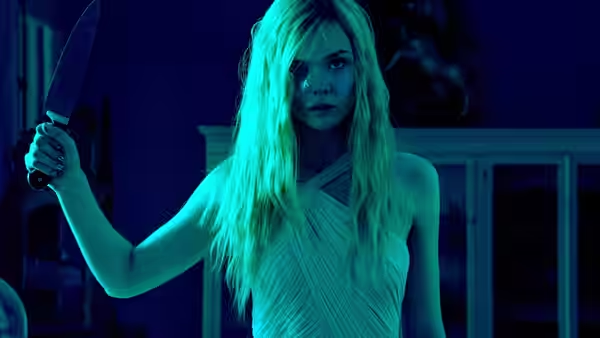
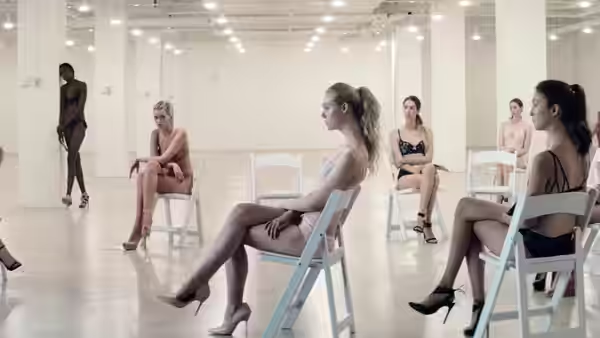
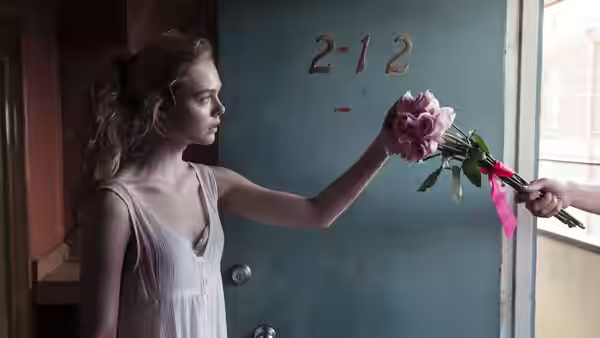
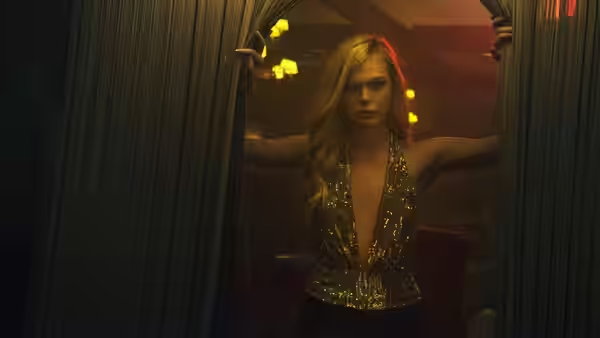
Natasha Braier’s cinematography does the most persuasive work. Saturated colour makes the Los Angeles settings look seductive and unsafe, so that even the pleasure of looking carries a little discomfort. Elliott Hostetter’s production design keeps the fashion-world imagery conspicuously arranged, and that control helps establish a threat before the story has developed much of one. The limitation is that we register some compositions quickly, then spend a long time waiting for someone inside them to do something.

Cliff Martinez’s electronic score gives these images a pulse that the dialogue often lacks. Its insistence helps sustain the tension, particularly when the film seems content to keep us looking without telling us anything new. Matthew Newman’s editing makes room for the music and the compositions, but the lingering rhythm becomes a problem in the static exchanges. Pauses initially make the glances uncomfortable; after enough of them, we start wishing the next line would arrive.

Elle Fanning, as Jesse, gives us a reason to keep watching the people. Her performance allows for uncertainty and self-awareness without making every change conspicuous, and she supplies feeling where the writing can seem determined to exclude it. Jena Malone, as Ruby, provides a stronger sense of danger, making the exchanges among the women feel less safely decorative. Neither performance makes these characters fully knowable, but both suggest thoughts and feelings that the dialogue does little to develop.

The screenplay, credited to Nicolas Winding Refn, Polly Stenham and Mary Laws, is much less assured. We were bored by the women’s static conversations, because the stiff dialogue keeps confirming the same hostility without making their relationships more interesting. Deliberate artificiality is a reasonable choice for this setting, but it does not make every awkward line expressive or every silence tense. The sharper exchanges offer some relief, yet the film too often treats the women’s lack of warmth as sufficient characterisation.

As a horror film, it works best when it allows its own excess to become funny. The contrast between immaculate images and grotesque material has a useful absurdity, and the film has the nerve to risk looking ridiculous. But the shifts in tone sometimes feel like a search for another way to provoke us when the previous one has stopped working. The more extreme material does not make its familiar observations about beauty and cruelty any more perceptive.

The 18 certificate is worth taking seriously; the fashion setting does not make this a gentle evening. It is also a slow one, with stretches that will test anyone waiting for the next plot development. Try it if colour, sound and a patient build-up can hold your attention when the story cannot.

Critical consensus AI synthesised

61
Positive
11
Mixed
11
Negative
6

The reviews lean towards qualified admiration, with praise and mixed verdicts equally common and a substantial minority unconvinced. The clearest agreement concerns the imagery: even detractors admire Refn’s saturated colours, carefully arranged fashion settings and sinister vision of Los Angeles, while Cliff Martinez’s electronic score draws repeated praise. Elle Fanning and Jena Malone receive particular attention from supporters, who find menace, black comedy and a pointed critique of beauty worship beneath the polished surfaces.

The spread is wide, and the central dispute is whether that polish serves anything substantial. Reservations cluster around slow pacing, thin characterisation, stilted dialogue and shocks that some find excessive rather than disturbing. Den of Geek embraces the film as a dark fairy tale and provocative black comedy; the Evening Standard finds it self-indulgent and pompous. Even favourable reviews sometimes question the screenplay, so admiration for the craft does not necessarily mean the drama convinces.

Los Angeles Times
23 June 2016 · Justin Chang
85*

Chang finds the film a hypnotically beautiful, corrosive fashion-world nightmare, and says Refn’s style finally serves its subject. He especially praises the lavish visuals and the sharp interplay among the women, while noting the finale’s deliberately extreme imagery.

Read the full review →
Little White Lies
19 May 2016 · 5/4/5 · Adam Woodward
80

The critic calls it Refn’s best film yet, a gorgeous and unsettling work that critiques image-obsessed culture. Elle Fanning’s transformative performance is singled out as the film’s lifeblood.

Read the full review →
The Guardian
10 July 2016 · ★★★★ · Mark Kermode
80

Kermode finds the film a provocative, lurid fable whose guilty pleasures make it both alluring and excessive. He singles out Jena Malone’s fearless performance as its dark heart.

Read the full review →
The Independent
6 July 2016 · ★★★★ · Geoffrey Macnab
80

Macnab finds the film stylish, jarring, and sharply satirical, though its shifts between elegance and juvenile shock are striking. He singles out its eerie transformation of familiar Los Angeles settings, heightened by Cliff Martinez’s hypnotic score.

Read the full review →
The AV Club
23 June 2016 · B · A.A. Dowd
77

Dowd finds the film’s visual style and atmosphere mesmerizing, but argues that they overwhelm substance. The praise centers on its opulent, dreamlike mood and depiction of Los Angeles as a seductive, predatory force.

Read the full review →
IndieWire
19 May 2016 · B- · Eric Kohn
70

Kohn finds the film an amusingly twisted, visually assured ride, though its stilted dialogue and superficial gestures keep it from fully coming together. He praises Refn’s striking visuals and shock-driven third act.

Read the full review →

Straight answers AI written, from our review

Is The Neon Demon worth watching?
The Neon Demon is worth considering for patient horror viewers drawn to colour, music and unease; we score it 61 out of 100. Elle Fanning gives the film some feeling, but stiff dialogue and sluggish conversations make this a qualified recommendation, especially if a developing story matters more to you than carefully arranged images.
How long is The Neon Demon, and what is it rated?
The Neon Demon runs 1h 58m. It is a horror and thriller film.
Where can I watch The Neon Demon in Austria?
The Neon Demon is streaming on Amazon Prime Video in Austria, and it is also available to rent from Amazon Prime Video and Apple TV from €2.99. Availability is checked daily; the links above go straight to each service.
How violent or frightening is The Neon Demon, and is it suitable for children?
The Neon Demon has a UK 18 certificate and is not suitable for children, with grotesque material and an unsettling atmosphere that make its fashion setting far from gentle. We would urge caution for squeamish adults too: the review identifies extreme material without detailing it, while the slow build means the unease comes with long stretches of stillness.
How does The Neon Demon compare to Perfect Blue?
The Neon Demon shares Perfect Blue’s interest in the terror of being watched, but we recommend Perfect Blue more strongly for its sharper treatment of fame and more intimate fear. Refn’s film offers saturated colour, electronic music and a slower fashion-world nightmare; Kon’s animated thriller favours disorientation, though we have reservations about its final explanation.
What should I watch after The Neon Demon?
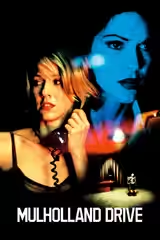
After The Neon Demon, try Perfect Blue (1997, Fi1m 82): A performer’s public image becomes a source of increasingly intimate terror. Then Mulholland Drive (2001, Fi1m 92): Los Angeles ambition turns frightening, with tenderness that makes the cruelty hurt.

Cast

If you liked this, try…

  1. Suspiria (1977) · not on Fi1m yetColour and music make an enclosed female institution feel dangerously unreal.

  2. Perfect Blue (1997, Fi1m 82)A performer’s public image becomes a source of increasingly intimate terror.

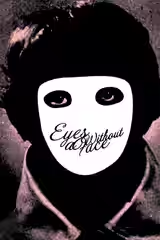
  3. Eyes Without a Face (1960) · not on Fi1m yetBeauty becomes a surgical obsession, handled with restraint that makes the horror worse.

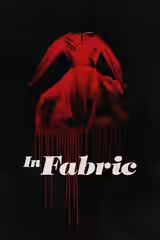
  4. In Fabric (2018) · not on Fi1m yetClothes become threatening, while the absurdity of selling them gets its due.

  5. Mulholland Drive (2001, Fi1m 92)Los Angeles ambition turns frightening, with tenderness that makes the cruelty hurt.