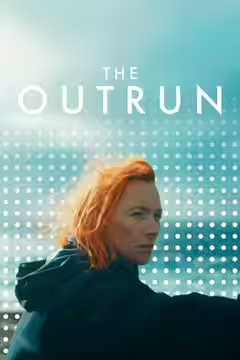
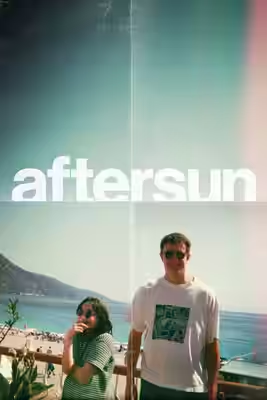
Nora Fingscheidt’s film of Amy Liptrot’s memoir is fractured, wind-blasted and built almost entirely around Saoirse Ronan, who carries it without visible strain. The cutting is bold; the voiceover explains too much, and the last half hour repeats itself. Worth your evening.
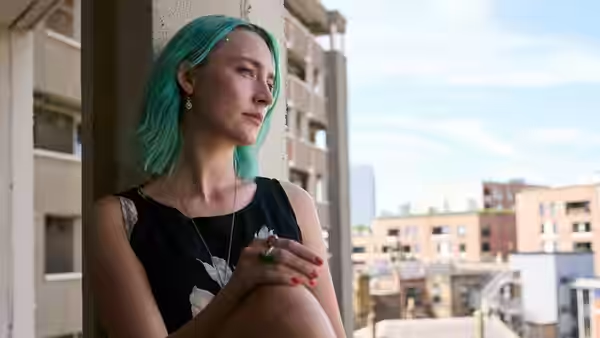
Rona (Saoirse Ronan) has come home to Orkney from London with her drinking a few weeks behind her and nothing yet in front of it. Nora Fingscheidt’s film, written with Daisy Lewis and Amy Liptrot from Liptrot’s memoir, does not tell this in order. It cuts between the clubs and flats of London, the rehab ward and the fields where Rona is now trying to stay well, and trusts us to sort them. For the first hour the trust is repaid. The film is good, Ronan is better than the film, and the voiceover keeps getting between us and her.
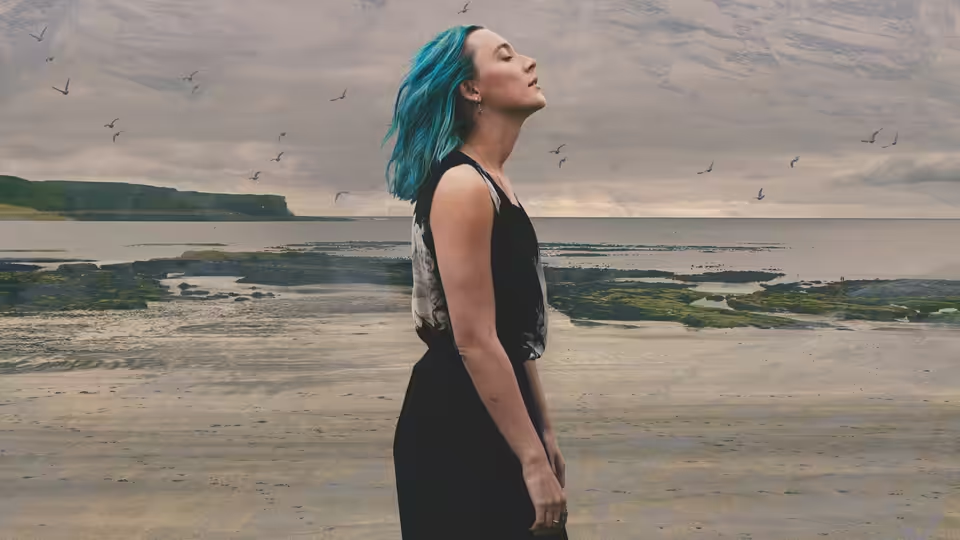
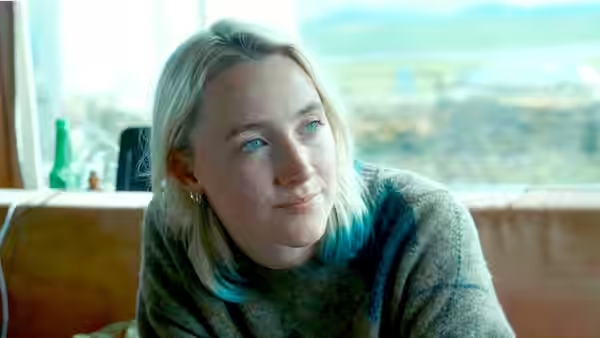
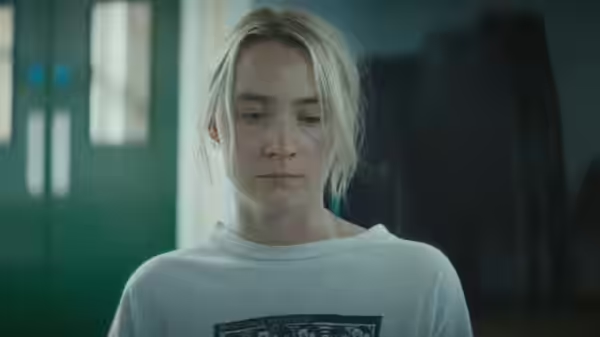
Ronan plays Rona with her whole body. Drunk, she is loose and loud and quick to turn; sober, she walks as if the ground might tilt, hands in pockets, shoulders up against a wind she has stopped noticing. Ronan also produced, with Jack Lowden and Dominic Norris, and the film is built around her. There is nobody else here to carry it and she does not put it down.
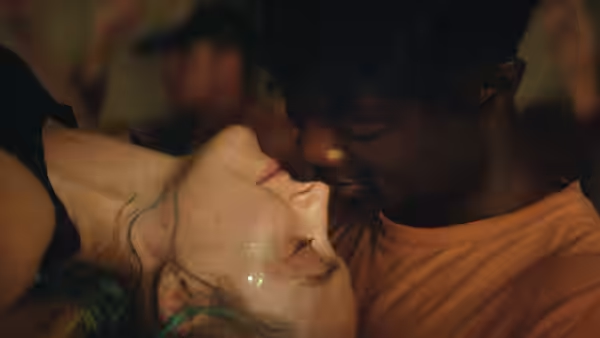
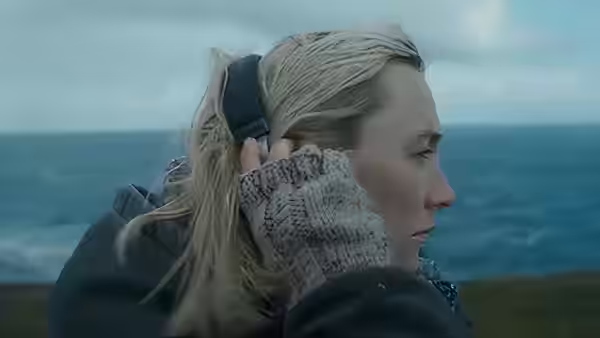
Two cinematographers are credited, Yunus Roy Imer and Raymond Besant, and the film looks like it. London is handheld, strobed and close: faces in club light, the grey of a morning after through a dirty window. Orkney is wide and level and mostly grey-green, with the sea taking a cliff apart at the edge of the frame and seals hauled out on the rocks, filmed by someone who plainly waited for them. Stephan Bechinger cuts between the two on a feeling rather than a date, and early on this is exactly how memory behaves when you are trying not to think about something. Andy Drummond gives the island a caravan fitted out by a man who has stopped caring and a cottage with almost nothing in it, and Grace Snell puts Rona in jumpers a size too large that she seems to be hiding inside.
Then the narration starts to get in the way. It is not the weather or the island lore that bothers us; it is the habit of saying aloud what the picture has just shown. By the last half hour the film has settled into a loop of field, shore, phone call, field, and we were bored, and then cross, because the images had been trusted for an hour and were now being second-guessed by the people who wrote them.
The people around Rona are thinner than she is. Stephen Dillane, as her father Andrew, swings between wild high spirits and a bed he cannot leave, and Dillane is good in both, but the film uses him as weather too. Saskia Reeves gives her mother Annie a steadiness the script treats with more patience than we expected. Paapa Essiedu, as Daynin in London, is warm and hurt and gone too soon; the film knows what he is for and does not much wonder who he is.
Here is what got us. Early on, Bechinger cuts from a London night, close and loud and going wrong, straight to a grey Orkney morning with the wind up and nothing in the frame but Rona and the sea. The two are not compared; they are simply put next to each other, and the gap between them is where the drinking went. John Gürtler and Jan Miserre’s score sits low under the wind and the birds and lets the cut do the work. We were moved more than we expected by a woman standing still, because we had just been shown what it cost her to get there.
Fingscheidt’s System Crasher (2019) had the same nervous cutting, and it was the better film because the child at its centre could not explain herself. Most films about drinking are about the fall; this one is about the long dull business of staying stopped, and it is honest about how little happens and how much that costs. See it in a cinema, for the sea and the sound. At home, in a quiet room, the voiceover gets louder. It runs 118 minutes and carries a 15.