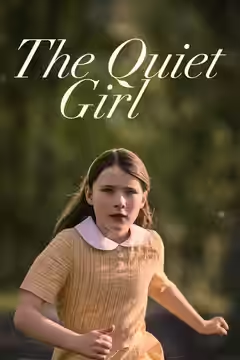
Colm Bairéad’s Irish-language debut sends a neglected child to a farm for one summer and watches kindness arrive one small act at a time. It is patient, exact and quietly devastating, and only occasionally as pretty as a postcard.
Cáit (Catherine Clinch) is the child nobody in her house has time for. Her mother (Kate Nic Chonaonaigh) is pregnant again and worn thin, her father (Michael Patric) drinks and gambles, and her sisters treat her as a nuisance to be stepped around. She wets the bed, hides in the long grass and reads aloud at school so slowly that the class laughs. So she is driven for the summer to Eibhlín (Carrie Crowley) and Seán (Andrew Bennett), relations of her mother’s who farm on their own, and her father drives off without taking her suitcase out of the boot. Colm Bairéad’s first feature, adapted from Claire Keegan’s short novel Foster, is about what happens to a child when somebody finally feeds her, washes her and looks at her. We recommend it warmly, with one reservation we will come to.
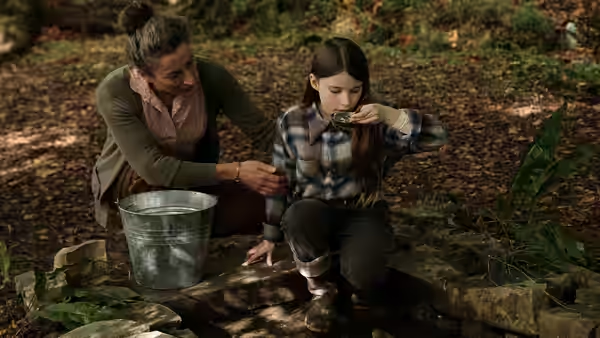
The scene that decided it for us comes on the first evening. Eibhlín runs a bath, lifts Cáit into it and brushes out her hair afterwards, counting the strokes under her breath. Nothing is said about why the child is dirty or why she flinches. Crowley plays it as routine, as if any house would do this, and that is exactly why it moved us more than we were ready for. Cáit has never been touched like this, and Clinch shows us that with nothing more than the way her shoulders come down.
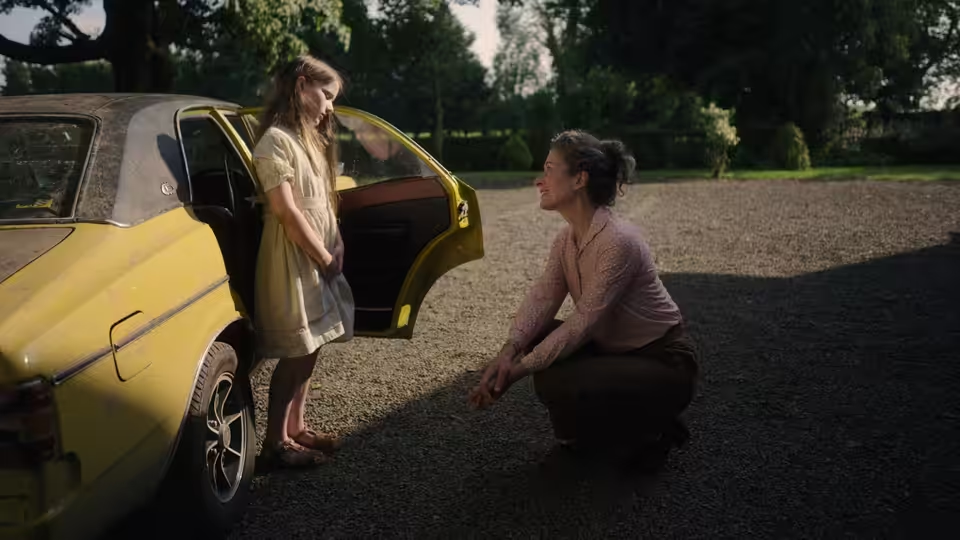
Kate McCullough shoots in a boxy, almost square frame and keeps the camera at Cáit’s height, so adults are mostly torsos and hands until they crouch to speak to her. Emma Lowney’s production design does a good deal of the storytelling: the house Cáit leaves and the house she arrives at are furnished so differently that we understand what has changed for her before anyone says a word. When Cáit has nothing to wear, Eibhlín takes trousers and a jumper from a wardrobe, and Louise Stanton lets the clothes sit a little wrong on her, which turns out to matter. Stephen Rennicks’s score is mostly piano and single sustained strings, and it has the tact to stay out of the kitchen.
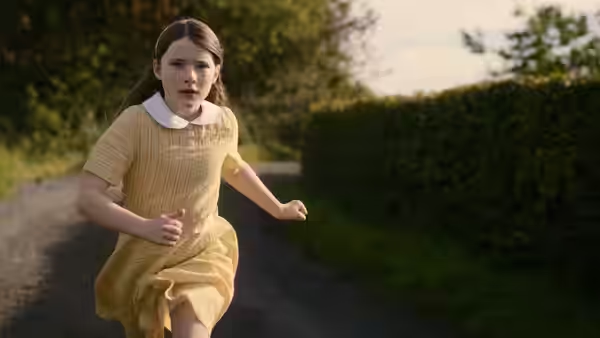
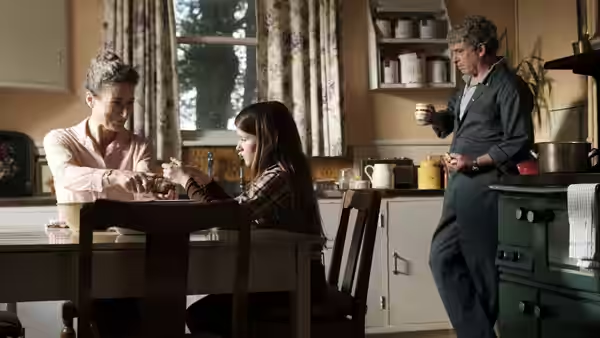
Bennett has the harder part. Seán barely speaks to the girl for the first stretch, and Bairéad lets that silence run long enough that we started to fear him. Then one morning there is a biscuit left on the table beside her, unexplained, and a few days later he times her running to the postbox at the end of the lane. John Murphy cuts these scenes without hurry and without underlining them; the biscuit is simply there, and we are trusted to notice it. We did, and we felt something loosen in our chest. It is a film that understands kindness as a series of small, deniable acts.
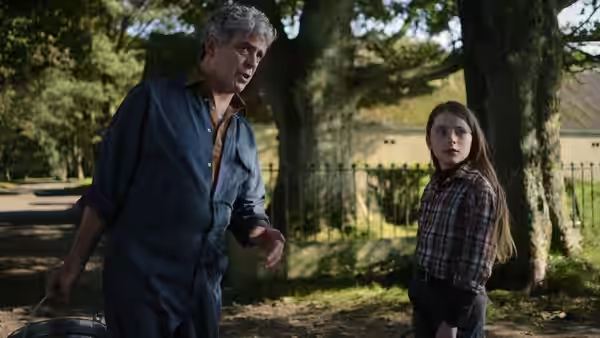
Our reservation is that McCullough’s images sometimes tip from clear into lovely. Cáit standing in the light, the fields at dusk, sun on water: a handful of shots would not look out of place selling butter, and Sight and Sound’s phrase about advertising-style sentiment is not unfair. The second half also turns on something a neighbour, Úna (Joan Sheehy), lets slip, and we will not describe it, except to say that an attentive viewer will have guessed the shape of it well before she does. Da is drawn with a thick pencil throughout. He is a type, and the film is otherwise careful never to deal in types.
None of that spoils it. Most critics have been kind to the film, and on this occasion we think they are right, though we would put it a little higher than the consensus, because we cannot remember a recent debut so sure of how much to leave out. It is spoken mostly in Irish, with English kept for the people who have least to say to the child, and the subtitles are not a burden; half the dialogue is looks.
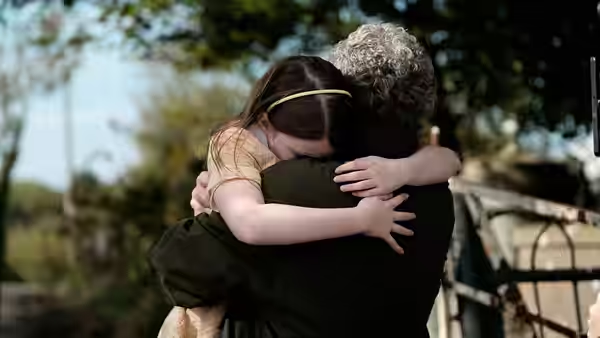
At 95 minutes it is short and does not feel it. It is a 12 certificate, and there is nothing in it a sensible ten-year-old could not sit through, though they may find it slow. You will not. Have a handkerchief within reach for the last five minutes, and do not let anyone tell you why.