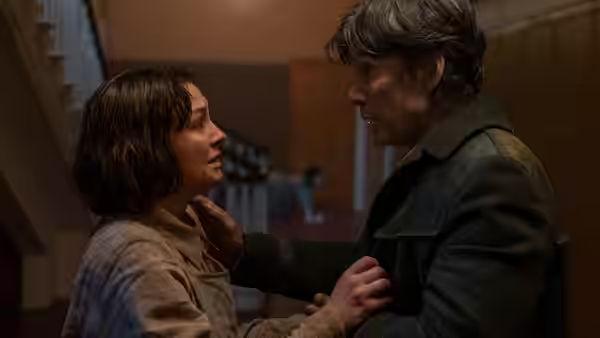
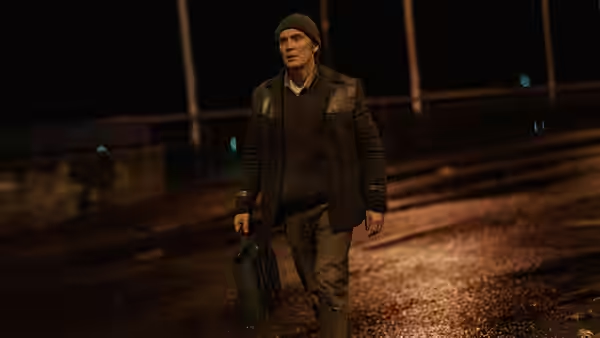
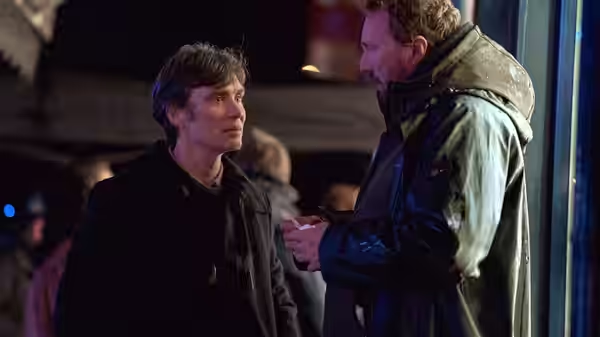
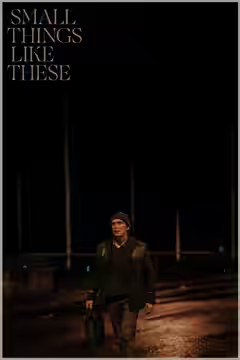
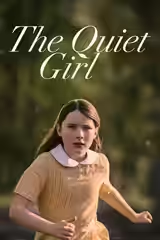
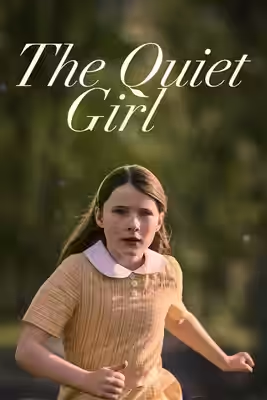
Cillian Murphy barely speaks in Tim Mielants’s adaptation of Claire Keegan’s novella, and he does not need to. The film around him is cold, careful and well built, though it explains his past more often than Keegan did, or than we needed.
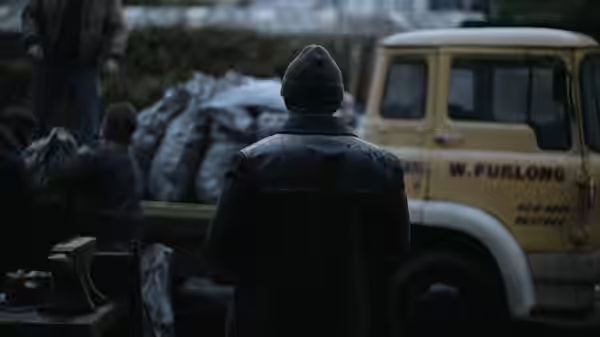
Bill Furlong (Cillian Murphy) sells coal. He gets up in the dark, loads the lorry, drives it round a small Irish town in the 1980s, and comes home to scrub the black out of his hands while his wife Eileen (Eileen Walsh) and their daughters get on with the evening. One of his customers is the convent above the town. The nuns there run a laundry, and the girls who work in it are not discussed. Tim Mielants’s film, written by Enda Walsh from Claire Keegan’s novella, is about what happens when a man who has spent his life not discussing them finds he cannot keep it up.
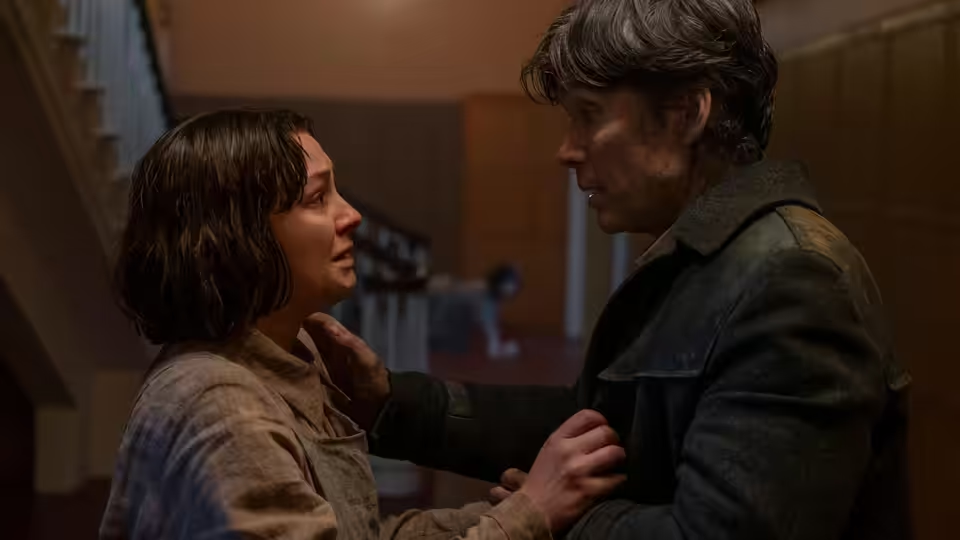
Murphy carries it almost without dialogue. He plays Bill as a man who has learned to be small: cap down, shoulders in, eyes on the coal. In the first act he pulls up at the convent gate as a mother drags her screaming daughter through it, and the camera stays on Murphy in the cab, not moving and not looking away either. We were shaken by that scene, and what shook us was not the girl but the fact that Bill’s hands stayed on the wheel. The town has decided, and you can only see the decision in what nobody does.
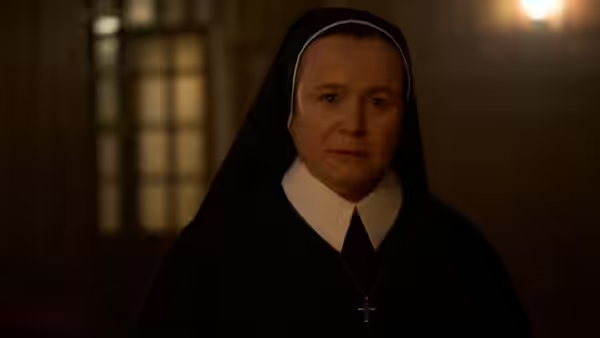
Frank van den Eeden photographs all of it in brown and grey, in the sort of winter light that gives up by four in the afternoon. Interiors are lit by fires and single bulbs, so faces come out of the dark and go back into it. Paki Smith’s production design gives the Furlongs a kitchen too small for the people in it, and gives the convent a parlour with polished wood, good china and nothing out of place, which is the more frightening room. Alison McCosh puts Bill in a coat that looks as if it weighs as much as he does, and the nuns in habits that photograph as blocks of black against whitewash. Senjan Jansen’s score is mostly low held notes and long silences, and it has the sense not to tell us how to feel in scenes where Murphy is already telling us.
Emily Watson has one long scene as Sister Mary, and it is the best thing here. Bill is brought into the parlour, given tea, asked after his girls, and Watson never raises her voice or drops the smile. The threat is all in what she knows about his family and how casually she lets it slip. We found ourselves not breathing. Nothing in the scene is louder than a teaspoon, and it is more menacing than most horror films manage with a knife.
Where the film goes wrong is in how much it explains. It cuts repeatedly back to Bill as a boy in the big house of Mrs Wilson (Michelle Fairley), the widow who kept his unmarried mother on as a servant when other women in her position were sent away. Keegan gave this a few sentences and let the reader do the sum. The film does the sum for us, more than once, and Alain Dessauvage’s cuts to the past soon fall into a pattern: Bill looks pained, and here comes the boy. Each return costs the present something. Eileen Walsh, who is good, gets one real scene, at the kitchen table, where Eileen says that if you want to get on in life there are things you have to ignore. We wanted more of her and fewer flashbacks.
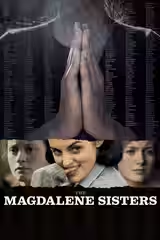
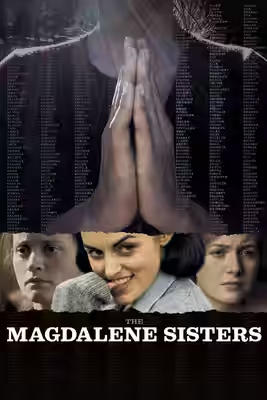
The obvious comparison is Peter Mullan’s The Magdalene Sisters from 2002, which went inside the laundry and was furious. Mielants stays outside, at the gate and in the yard, and his film is about the town rather than the nuns. That is the right choice for this material, and it makes for a quieter film than some will want. The second half turns on a locked door and what Bill does about it, and we will leave it there.
It runs 99 minutes and does not feel short, because almost nothing in it is hurried. Watch it in a quiet room with the phone face down. The performance is built out of things you can miss, a hand that stops moving, a breath before a word, and if you miss them there is not much else to see.