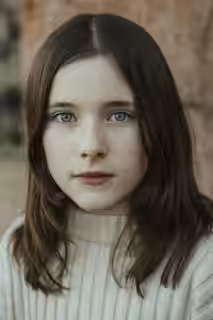
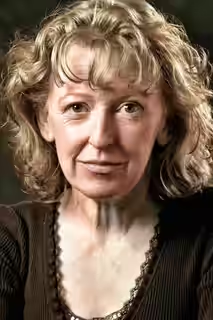
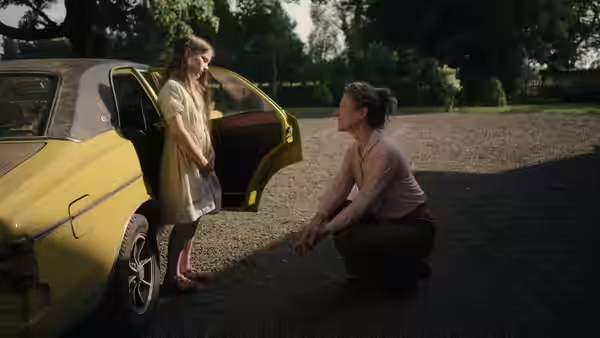
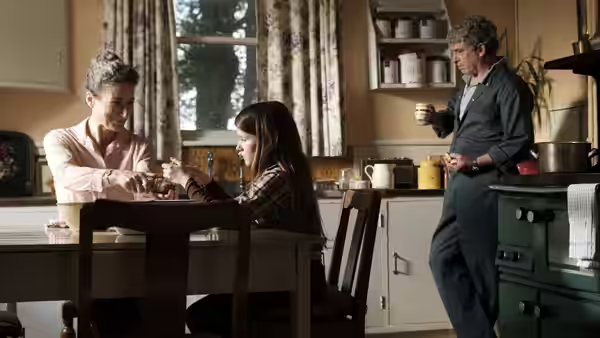
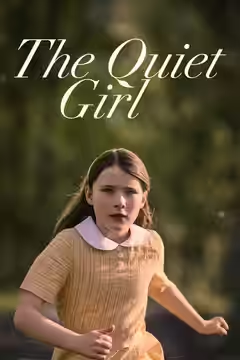
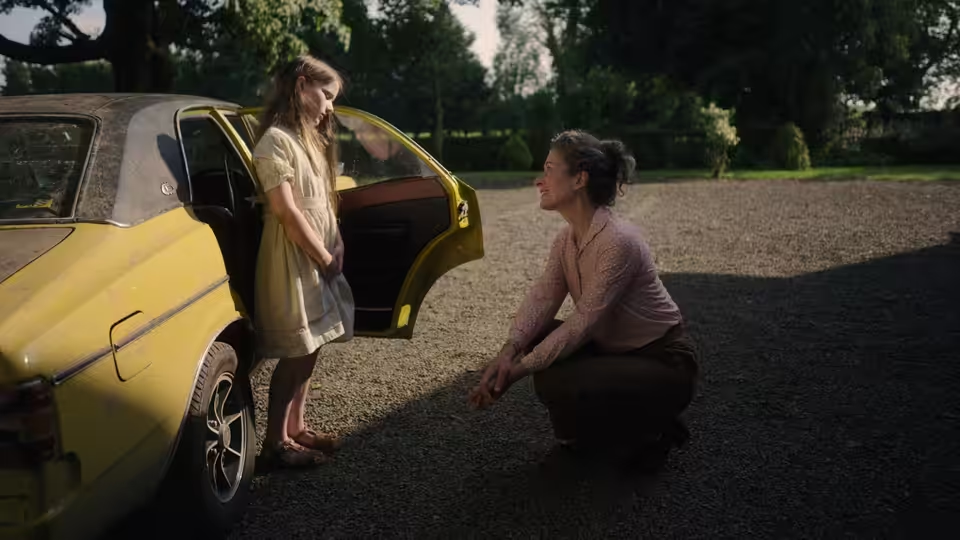
Cáit (Catherine Clinch) stands beside a yellow car as Eibhlín (Carrie Crowley) crouches to speak with her
Film review

The Quiet Girl

2022 · Directed by Colm Bairéad · 1h 35m

In a sentenceA film in which being handed a clean towel counts as a plot twist, and it undid us anyway

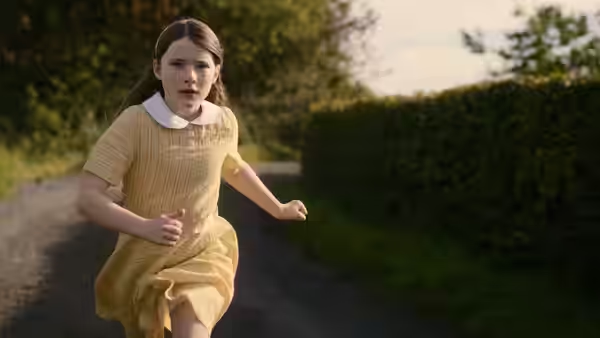
Ireland, 1981. Cáit (Catherine Clinch) is one of too many children in a crowded, run-down farmhouse. Her mother, Mam (Kate Nic Chonaonaigh), is pregnant again and exhausted; her father, Da (Michael Patric), drinks and gambles and has no interest in her. She hides in the long grass, wets the bed and reads so haltingly at school that the class laughs. With the baby due, she is driven for the summer to a relation of her mother’s, Eibhlín (Carrie Crowley), and Eibhlín’s husband Seán (Andrew Bennett), a couple who farm on their own some hours away. Da leaves without taking her suitcase out of the boot. Eibhlín bathes her, brushes her hair and puts her to bed. Seán says almost nothing.

Plays from YouTube when you press play; nothing loads from them until then.

Fi1m review

Colm Bairéad’s Irish-language debut sends a neglected child to a farm for one summer and watches kindness arrive one small act at a time. It is patient, exact and quietly devastating, and only occasionally as pretty as a postcard.

Cáit (Catherine Clinch) is the child nobody in her house has time for. Her mother (Kate Nic Chonaonaigh) is pregnant again and worn thin, her father (Michael Patric) drinks and gambles, and her sisters treat her as a nuisance to be stepped around. She wets the bed, hides in the long grass and reads aloud at school so slowly that the class laughs. So she is driven for the summer to Eibhlín (Carrie Crowley) and Seán (Andrew Bennett), relations of her mother’s who farm on their own, and her father drives off without taking her suitcase out of the boot. Colm Bairéad’s first feature, adapted from Claire Keegan’s short novel Foster, is about what happens to a child when somebody finally feeds her, washes her and looks at her. We recommend it warmly, with one reservation we will come to.

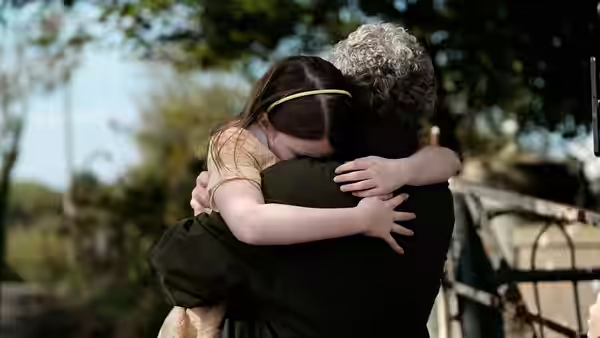
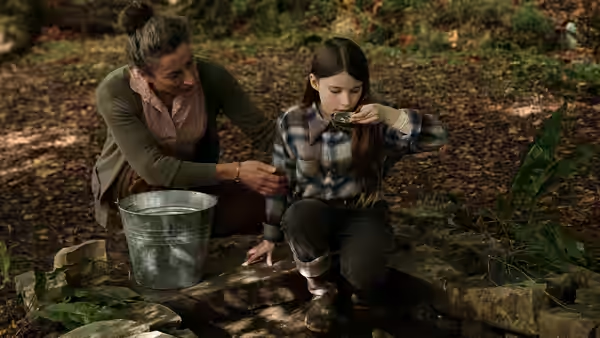
The scene that decided it for us comes on the first evening. Eibhlín runs a bath, lifts Cáit into it and brushes out her hair afterwards, counting the strokes under her breath. Nothing is said about why the child is dirty or why she flinches. Crowley plays it as routine, as if any house would do this, and that is exactly why it moved us more than we were ready for. Cáit has never been touched like this, and Clinch shows us that with nothing more than the way her shoulders come down.

Kate McCullough shoots in a boxy, almost square frame and keeps the camera at Cáit’s height, so adults are mostly torsos and hands until they crouch to speak to her. Emma Lowney’s production design does a good deal of the storytelling: the house Cáit leaves and the house she arrives at are furnished so differently that we understand what has changed for her before anyone says a word. When Cáit has nothing to wear, Eibhlín takes trousers and a jumper from a wardrobe, and Louise Stanton lets the clothes sit a little wrong on her, which turns out to matter. Stephen Rennicks’s score is mostly piano and single sustained strings, and it has the tact to stay out of the kitchen.

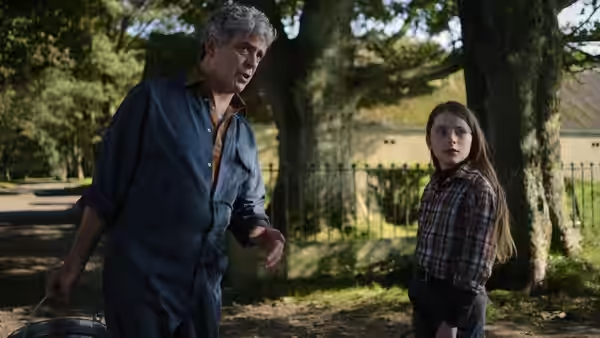
Bennett has the harder part. Seán barely speaks to the girl for the first stretch, and Bairéad lets that silence run long enough that we started to fear him. Then one morning there is a biscuit left on the table beside her, unexplained, and a few days later he times her running to the postbox at the end of the lane. John Murphy cuts these scenes without hurry and without underlining them; the biscuit is simply there, and we are trusted to notice it. We did, and we felt something loosen in our chest. It is a film that understands kindness as a series of small, deniable acts.

Our reservation is that McCullough’s images sometimes tip from clear into lovely. Cáit standing in the light, the fields at dusk, sun on water: a handful of shots would not look out of place selling butter, and Sight and Sound’s phrase about advertising-style sentiment is not unfair. The second half also turns on something a neighbour, Úna (Joan Sheehy), lets slip, and we will not describe it, except to say that an attentive viewer will have guessed the shape of it well before she does. Da is drawn with a thick pencil throughout. He is a type, and the film is otherwise careful never to deal in types.

None of that spoils it. Most critics have been kind to the film, and on this occasion we think they are right, though we would put it a little higher than the consensus, because we cannot remember a recent debut so sure of how much to leave out. It is spoken mostly in Irish, with English kept for the people who have least to say to the child, and the subtitles are not a burden; half the dialogue is looks.

At 95 minutes it is short and does not feel it. It is a 12 certificate, and there is nothing in it a sensible ten-year-old could not sit through, though they may find it slow. You will not. Have a handkerchief within reach for the last five minutes, and do not let anyone tell you why.

Critical consensus AI synthesised

77
Positive
14
Mixed
4
Negative
1

Most critics like The Quiet Girl, and they like it for the same things. The praise settles first on Catherine Clinch, whose performance as Cáit is repeatedly described as understated and expressive, carrying the girl’s changing moods without a word of explanation. Kate McCullough’s cinematography draws nearly as much notice, particularly the way the frames open up once Cáit arrives at the Kinsellas’ farm. Several reviews also single out the film’s stillness and its attention to small acts of kindness as the source of its emotional force.

The reservations are mild and mostly concern the same quietness the admirers praise. A few critics find the film precious in places, the ending predictable, or some of its images close to sentimental. The AV Club calls it well made but slight, with scenes left emotionally unclear. The spread is narrow, with one real outlier: The Wrap finds it padded and slow, its impact blunted by repetition.

The Guardian
11 May 2022 · Peter Bradshaw
95*

Bradshaw calls the film beautiful, compassionate and already classic, praising its deeply moving story. He singles out the painterly cinematography and production design for creating a vivid world around Cáit.

Read the full review →
Slant Magazine
19 February 2023 · ★★★½/4 · Steven Scaife
88

The critic finds the film emotionally powerful and perceptive in its reserved approach. He praises how its compositions open up as Cáit experiences warmth and care at the Kinsellas’ home.

Read the full review →
The Hollywood Reporter
24 October 2022 · David Rooney
86*

Rooney calls the film an accomplished, affecting drama whose emotional rewards exceed its modest scale. He particularly praises Catherine Clinch’s expressive performance and the film’s quiet depiction of kindness.

Read the full review →
Variety
12 February 2022 · Critics Pick · Jessica Kiang
85*

Kiang finds the film deeply moving, despite occasional preciousness and a predictable ending. She especially praises Catherine Clinch’s nuanced performance and the attentive cinematography that gives Cáit’s silences emotional depth.

Read the full review →
Empire
12 May 2022 · John Nugent
80*

Nugent finds the film quietly moving, generous to its characters, and ultimately invigoratingly sweet. He particularly praises Catherine Clinch’s understated performance and the film’s artful stillness.

Read the full review →
Little White Lies
10 May 2022 · 3/4/5 · Alicia Haddick
80

Haddick finds the film an empathetic, affecting exploration of grief and love. She particularly praises its intimate child’s-eye view and the warm Irish countryside.

Read the full review →

Straight answers AI written, from our review

Is The Quiet Girl worth watching?
The Quiet Girl is worth watching, and we scored it 84. It is a patient, precise Irish-language drama about a neglected child who spends a summer with a couple who feed her, wash her and look at her, and it moved us more than we were ready for. Viewers who need incident will find it slow; everyone else should have a handkerchief within reach.
How long is The Quiet Girl, and what is it rated?
The Quiet Girl runs 1h 35m. It is a drama film.
Where can I watch The Quiet Girl in Slovakia?
The Quiet Girl is not on any streaming or rental service in Slovakia at the moment. It is available in 22 other countries; change your country at the top of the page to see where. Availability is checked daily.
How violent or frightening is The Quiet Girl, and is it suitable for children?
The Quiet Girl is a 12 certificate, and there is no violence or horror in it, though it is sad in ways that linger. The child is neglected rather than beaten, her father drinks and gambles, and a long stretch of silence from the farmer briefly made us fear him. A sensible ten-year-old could sit through it, but may find it slow.
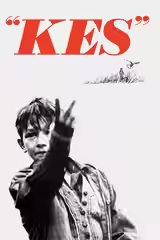
How does The Quiet Girl compare to Kes?
The Quiet Girl and Kes both watch a child nobody bothers to look at until one adult finally does, and both are worth your evening. Loach's film is rougher, funnier and more bruising, and its edges occasionally distract; Bairéad's is quieter, more exact and prettier, sometimes too much so. Choose Kes for grit and humour, The Quiet Girl for stillness and tact.
Is The Quiet Girl based on a true story or a book?
The Quiet Girl is not a true story; it is adapted from Foster, a short novel by Claire Keegan. Colm Bairéad moves the story to Irish and keeps English for the people who have least to say to the child. You do not need to have read the book, and the film's habit of leaving things unsaid works better if you come to it fresh.
What should I watch after The Quiet Girl?
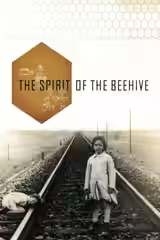
After The Quiet Girl, try Kes (1970, Fi1m 88): Another child nobody bothers to look at, and one adult who finally does. Then The Spirit of the Beehive (1973, Fi1m 87): A girl in a silent Spanish house learns the world from what adults will not say; and Ratcatcher (1999, Fi1m 88): Glasgow, a bin strike and a boy watching everything; Ramsay’s debut, as exact as this one.

Cast

Awards

International Submission to the Academy Awards, 2023

Nominated
International Submission to the Academy Awards

Crystal Bear, 2022

Won
Crystal Bear

European Film Award for Best Cinematographer, 2022

Won
European Film Award for Best Cinematographer

If you liked this, try…

  1. Kes (1970, Fi1m 88)Another child nobody bothers to look at, and one adult who finally does.

  2. The Spirit of the Beehive (1973, Fi1m 87)A girl in a silent Spanish house learns the world from what adults will not say.

  3. Ponette (1996) · not on Fi1m yetA four-year-old works out grief on her own; the lead is astonishing and never cute.

  4. Ratcatcher (1999, Fi1m 88)Glasgow, a bin strike and a boy watching everything; Ramsay’s debut, as exact as this one.

  5. Small Things Like These (2024, Fi1m 79)Claire Keegan again, a coal merchant in 1985, and the same faith in what goes unsaid.

The Quiet Girl (2022) review: small kindnesses that land hard (Slovakia) | Fi1m