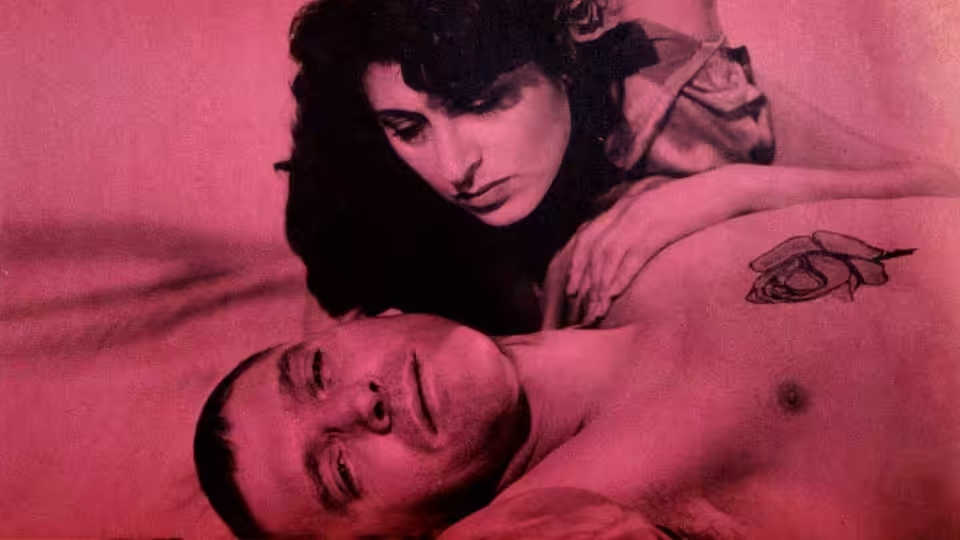
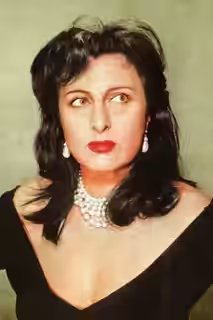
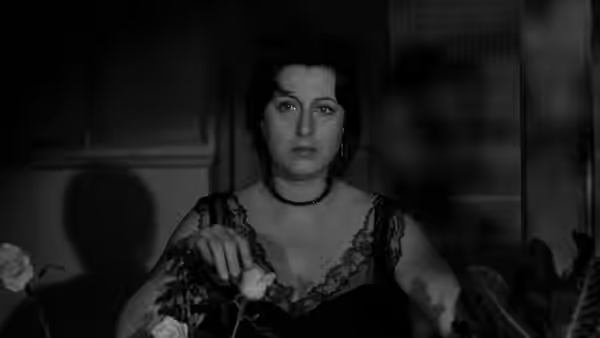
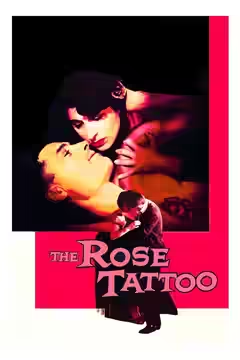
Anna Magnani’s widow, three years into her grief and still in her slip, is the whole reason to see this. Daniel Mann’s film of the Tennessee Williams play mostly points the camera at her and gets out of the way, which is the right call.
Tennessee Williams wrote The Rose Tattoo for Anna Magnani, and the film Daniel Mann made from it in 1955 is, before anything else, the record of her playing the part. Magnani is on screen for most of the 117 minutes and there is not a dull one among them. Around her, Mann has staged Williams’s play in a small house with a camera in the corner, and it shows. It is worth your evening if a woman shouting at a priest in her underwear sounds like your kind of evening. It was ours.
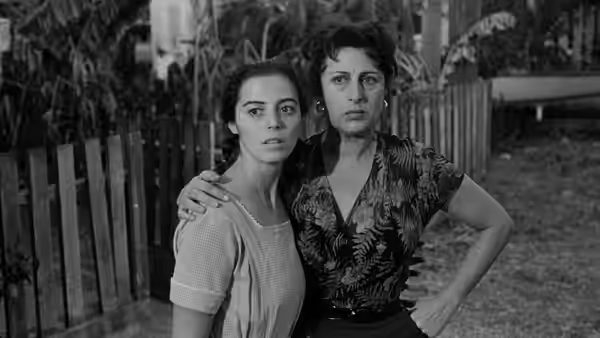
Serafina Delle Rose is a seamstress in a Sicilian community on the Gulf Coast, and when her husband dies she stops. She keeps his ashes on a shelf against the wishes of Father De Leo (Sandro Giglio), wears the same stained slip for three years, and fights her daughter Rosa (Marisa Pavan) for wanting to leave the house. Magnani plays all of this at full pitch and never seems to be reaching for it. Watch her hear the gossip about her husband from Flora (Florence Sundstrom) and Bessie (Jo Van Fleet), two customers who have come to collect a blouse: she goes still, then throws them out, then goes to the urn and speaks to it. We were braced for a display and were moved instead, because she is not grieving a saint. She is grieving a marriage she will not let anyone else describe.
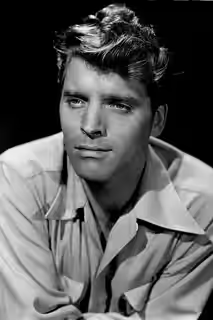
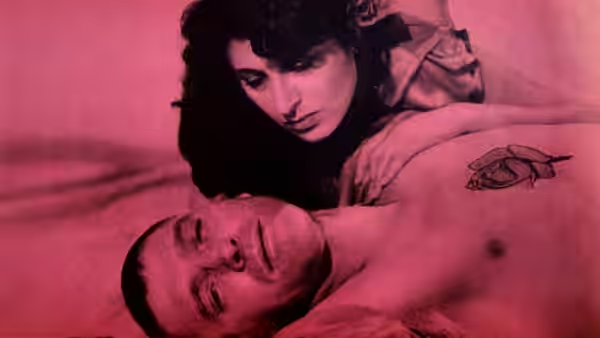
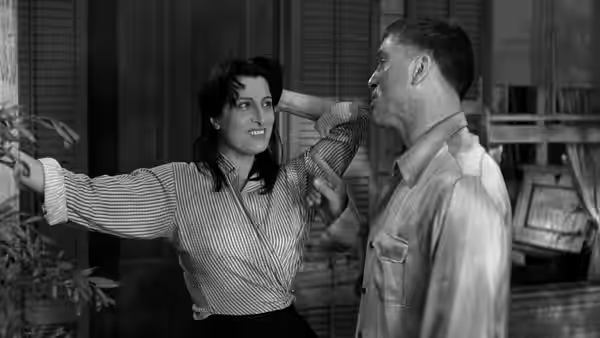
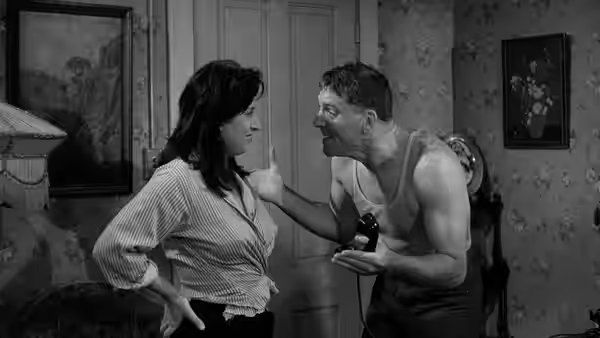
Burt Lancaster arrives about halfway through as Alvaro Mangiacavallo, a truck driver with, as the play has it, the body of her husband and the face of a clown. On paper he is badly miscast, an American athlete doing an Italian accent opposite the real thing. In practice he knows it, and plays Alvaro as a large, hopeless child, weeping on her doorstep after a row with a salesman, breaking things, showing off his arms. Their first long scene together, the two of them crying in her front room among the dressmaker’s dummies, made us laugh out loud, and then, somewhere in the middle of it, stop laughing. Lancaster gives her something to push against and does not try to win the scene. That is all the part needs.
James Wong Howe shoots it in black and white and mostly indoors, in the low, cluttered front room where Serafina works, dummies in half-finished dresses standing about like guests. He lights Magnani’s face hard from one side so that every change registers, and lets the outside, the road and the neighbours’ yards, look flat and hot. Edith Head does her best work here by keeping it plain: Serafina’s slip, Rosa’s white graduation dress, Alvaro’s sweated-through work shirt. Alex North’s score leans on the mandolin and on the big moments, and there are stretches where the music is telling us what Magnani has already told us. Warren Low cuts fast for a film that is mostly two people in a room, and it does move.
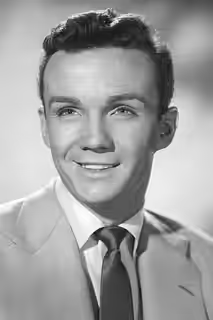
The trouble is the direction. Mann treats the play as a text to be delivered rather than a film to be found; scenes start when someone comes in the door and end when someone goes out of it, and the house never stops feeling like a set. The strand with Rosa and her sailor, Jack Hunter (Ben Cooper), is meant to set young love against Serafina’s, and Pavan is sharp and quick, but Cooper is stiff and the writing gives him little beyond good manners. The gossips are drawn as caricature. And the frankness the publicity promised, a widow with appetites and a husband who was no better than he should be, was strong stuff in 1955 and is mild now. What has lasted is the acting.
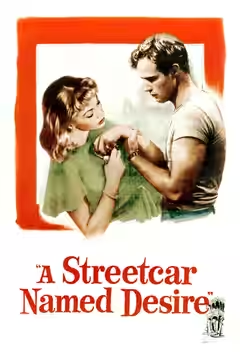
Among the Williams films of the decade this is the comedy, and Williams meant it as one. A Streetcar Named Desire, four years earlier, had Marlon Brando and a director in Elia Kazan who could make a room feel dangerous. This has Magnani and a director who knows to keep out of her way. It is the less complete film and the one we would more happily sit through again, because it is not asking us to suffer with anyone. It is asking us to watch a woman come back to life.
Hal B. Wallis produced it, and you can feel a producer’s hand in the brisk running time. Watch it in one sitting and do not worry about the plot, which Williams did not worry about much either. Every scene is the same scene: Serafina deciding whether to open the door.