Richard Linklater’s classroom comedy gives Jack Black room to be ridiculous without making fools of the children. The story holds few surprises, but the laughs and the affection are earned.
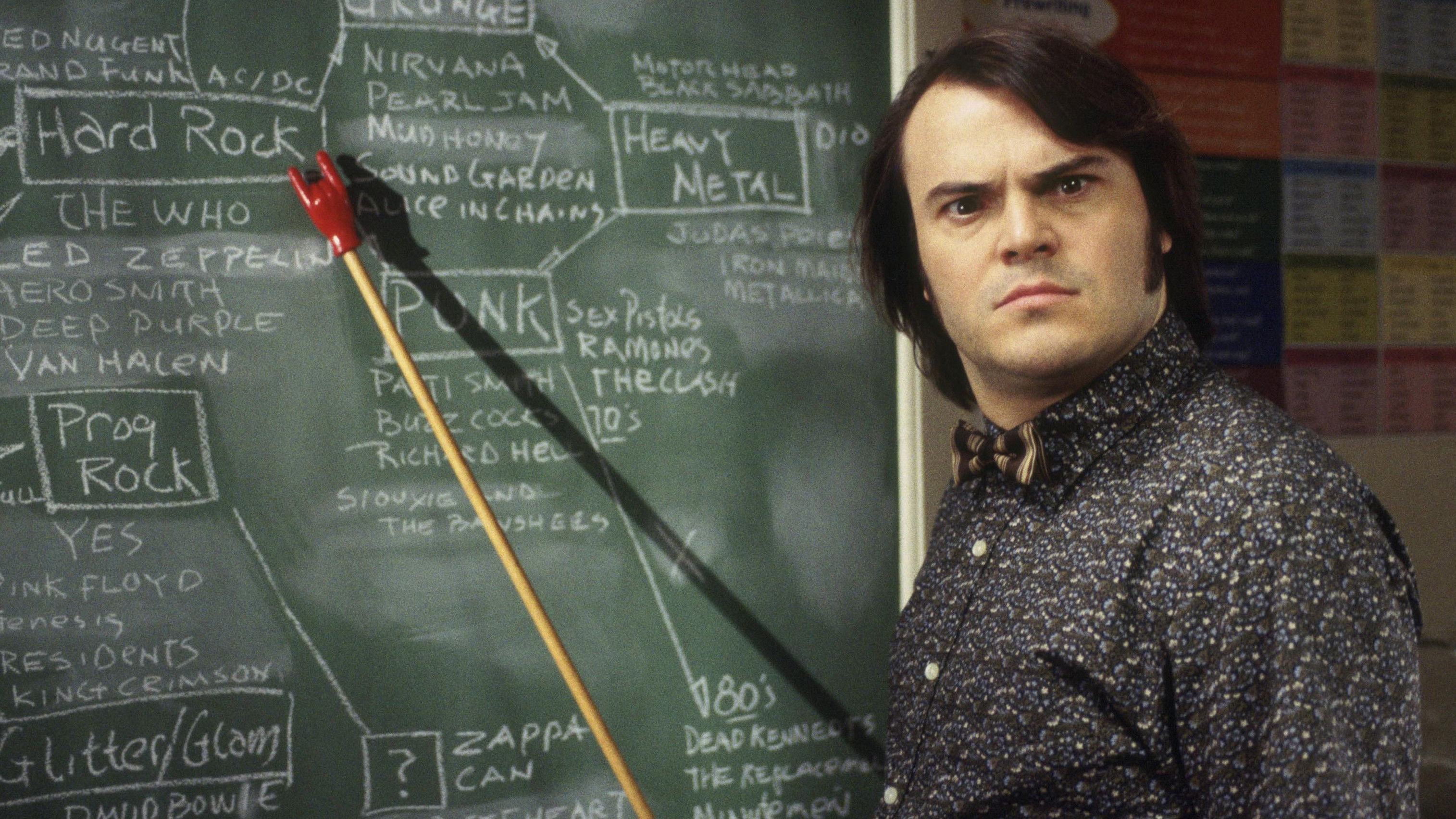
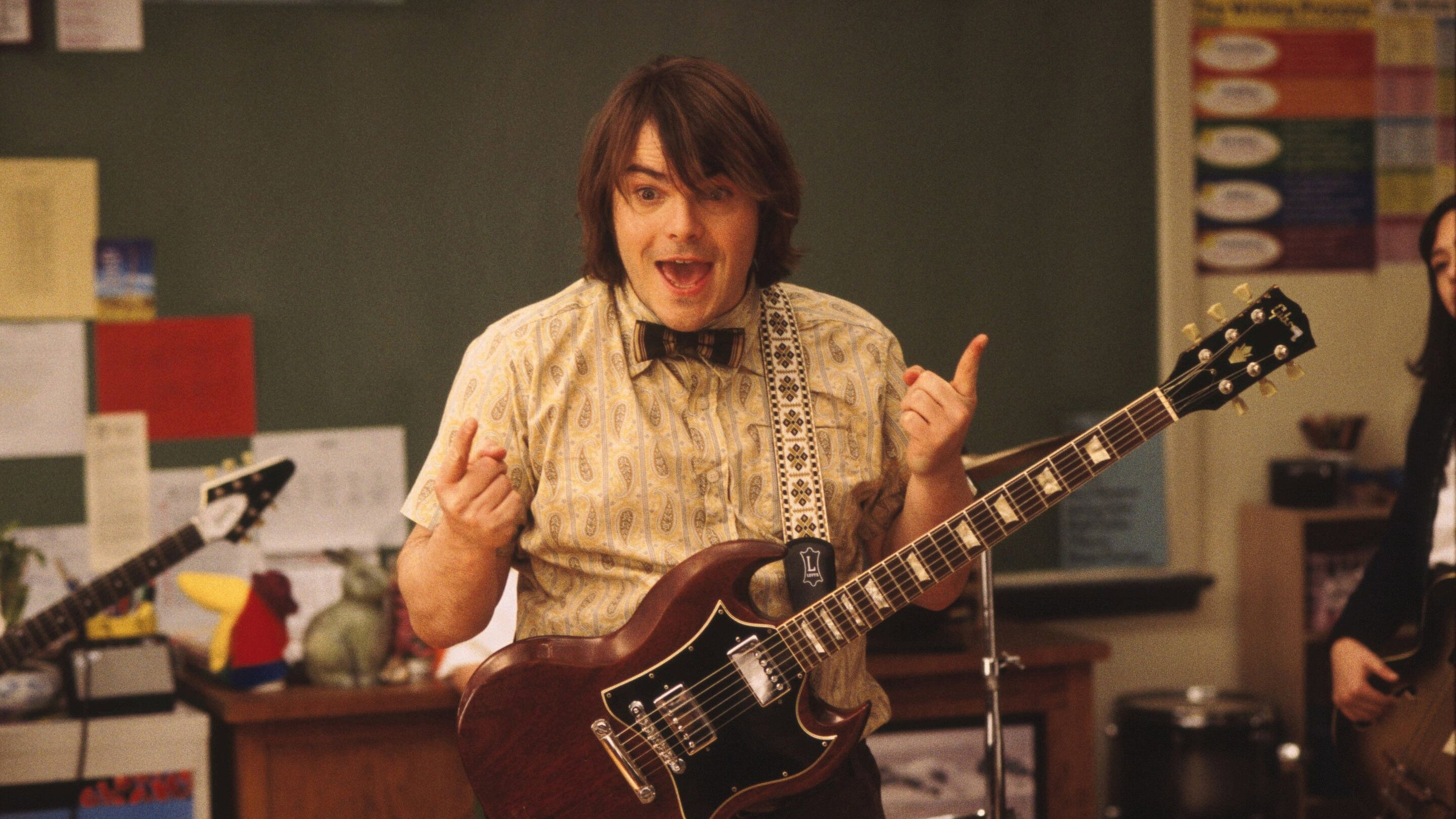
The School of Rock is a funny, generous family comedy with a story we can see coming and a leading performance that makes us happy to follow it. Richard Linklater gives Jack Black’s Dewey Finn, a musician posing as a supply teacher, considerable freedom to behave badly. He also makes room for the children who have to put up with him. The pleasure is in watching this unsuitable adult take music seriously enough to become useful to somebody else.
Black makes Dewey’s passion convincing even when his conduct is indefensible. His headbanging made us laugh; his seriousness about sharing the music moved us more than we expected. He has found something he thinks the children ought to hear, and Black lets that excitement come through without tidying away the self-importance. We can enjoy his company while remaining relieved that he is not responsible for our education.
Linklater’s direction of the young cast matters just as much as Black’s willingness to be ridiculous. Miranda Cosgrove’s Summer Hathaway has enough presence to hold our attention alongside him, and the children’s restrained reactions make his excess funnier. Joan Cusack, playing Rosalie Mullins, brings a welcome sharpness to the adult cast. There is kindness in the way these performances are handled, but nobody seems to have been told that appearing in a family comedy means looking delighted all the time.
Rogier Stoffers’s cinematography serves the comedy by keeping our attention on Black’s physical performance and the children’s responses. Jeremy Conway’s production design makes the classroom feel sufficiently orderly for Dewey to seem all the more out of place. That contrast does useful comic work without needing much explanation. Neither contribution asks to be admired separately, which is sensible in a film whose central performer already wants everybody looking at him.
Sandra Adair’s editing gives the children’s reactions their share of the joke instead of making the film a continuous demonstration of Black’s energy. There is enough breathing space to notice how differently the pupils respond to him. Craig Wedren’s score wisely avoids competing with the music Dewey wants the children to love. The film is already quite capable of telling us how much music matters to him, and the restraint is welcome.
Mike White’s screenplay has fewer surprises than the performances. The promise that a classroom will find new confidence through an unsuitable teacher is familiar enough to leave little suspense about the film’s direction. At 110 minutes, the repeated insistence on rock as an answer to life’s difficulties begins to feel a little overextended. We could have used more doubt about Dewey’s assumption that his favourite music is precisely what everybody else needs.
What we ask of a comedy like this is that the children have some dignity and the adults provide something worth laughing at. Linklater understands that arrangement, and Black is willing to do the undignified work without treating Dewey as a contemptible idiot. The affection survives some fairly appalling behaviour because the performance makes his excitement so convincing. Watch it with somebody who remembers taking a favourite band this seriously, and resist the temptation to explain the lesson afterwards.