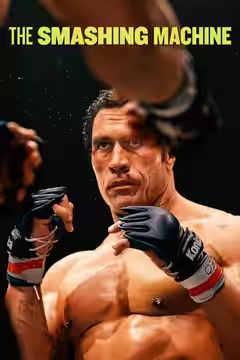
Benny Safdie’s portrait of the fighter Mark Kerr is quiet, careful and better acted than we had any right to expect, with Dwayne Johnson unrecognisable and good. It is also slower than it needs to be, and more ordinary than its manner lets on.
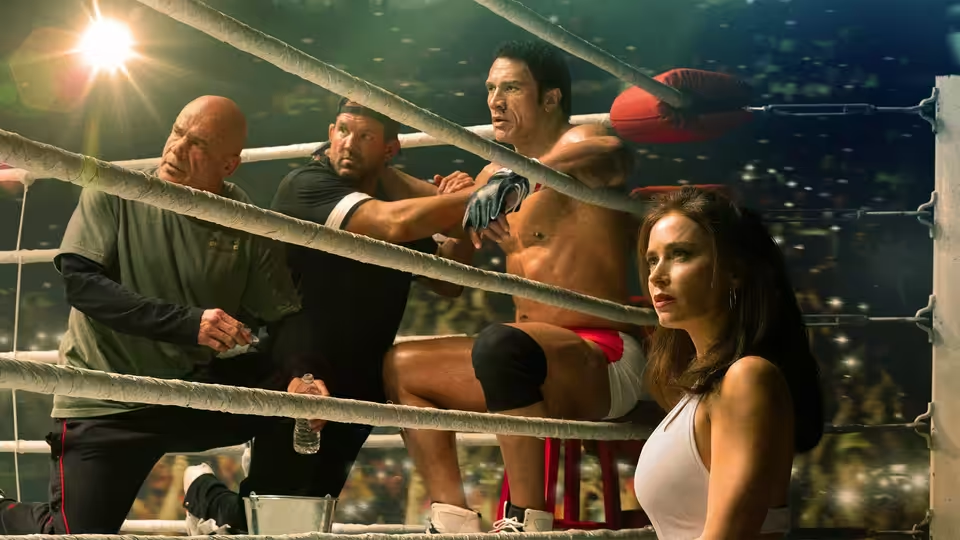
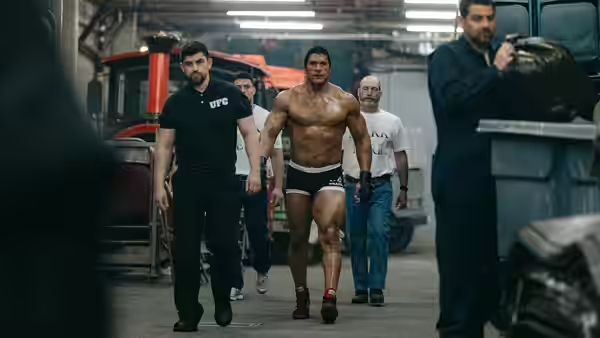
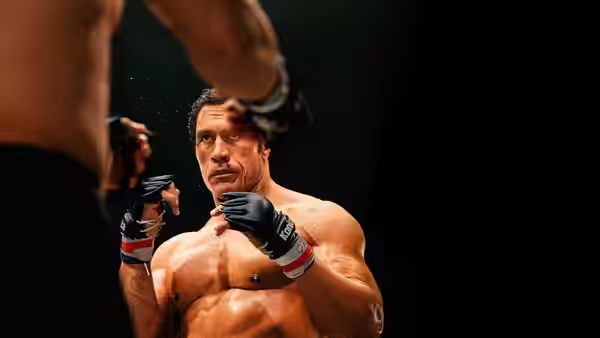
Benny Safdie, directing alone for the first time, has made a film about a fighter that hardly cares who wins. Mark Kerr (Dwayne Johnson) is a heavyweight in the first years of mixed martial arts, a wrestler who has never lost, and the film follows him through fights in Japan, a painkiller habit he does not think of as a habit, and a relationship with Dawn Staples (Emily Blunt) that is louder than anything in the ring. It is a good film with a fine performance, and it is slower than it needs to be. Worth your evening if you can take a sports film that keeps walking away from the sport.
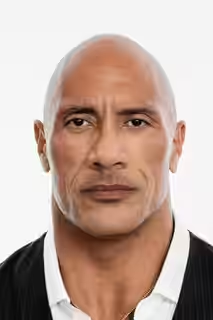
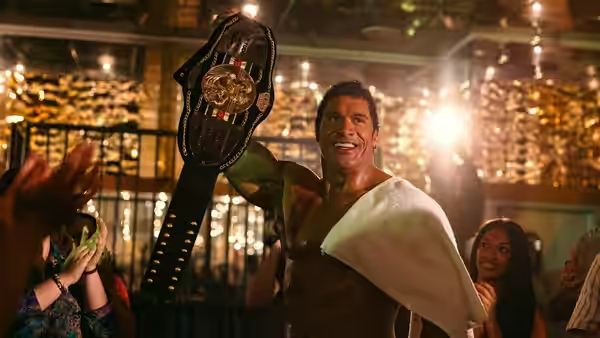
Johnson is the reason to go. Under prosthetics, with his voice pitched soft and high, he plays Kerr as a large, polite boy who is puzzled that anyone should mind being hit by him. He thanks referees. He tells an interviewer he does not want to hurt anybody and only wants to win, and he seems to think those are the same sentence. Johnson has coasted through a decade of films in which he plays himself; here he stands still, listens, and we kept forgetting who we were looking at.
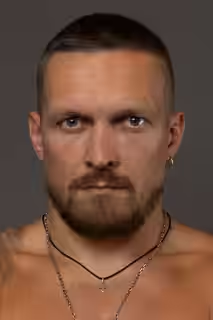
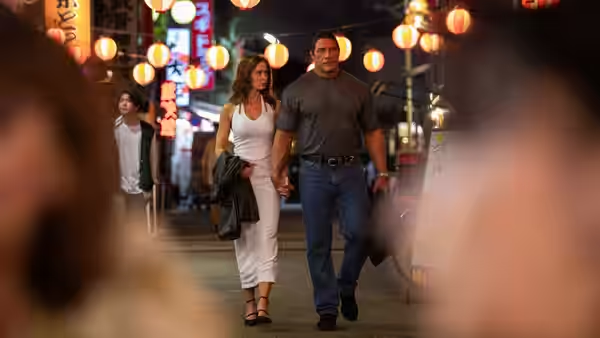
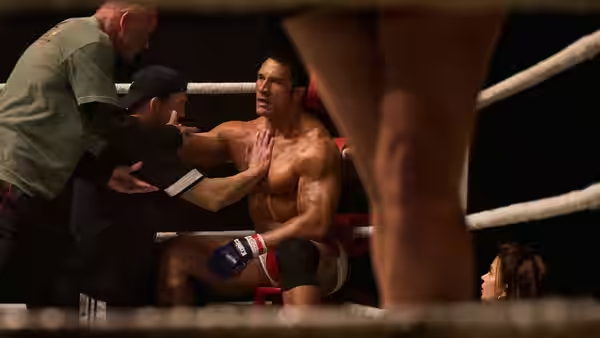
Blunt is the film’s noise. Dawn has decided to be furious before she knows what about, and the rows in the couple’s kitchen have a pitch the fights never reach. It is a big performance in a small film and it does not always fit; twice Safdie lets her go on past the point where we believed her. Ryan Bader, a fighter rather than an actor, plays Coleman with an ease trained actors would envy, and the two men talking nonsense in hotel corridors give the film its warmest minutes. Usyk, as Vovchanchyn, gets the same courtesy the film gives Kerr.
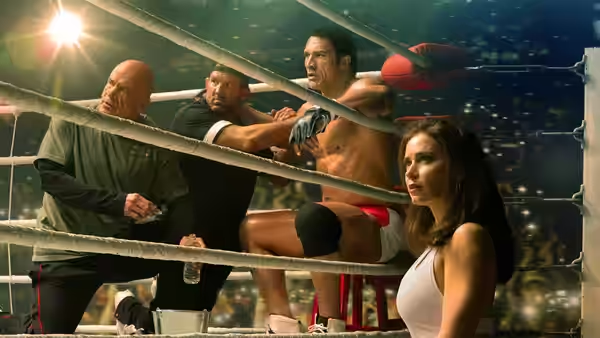
Maceo Bishop shoots the bouts from where a cameraman at the event would stand: outside the ropes, handheld, a half-second late, so that we hear the crowd before we see the knee land. There is no slow motion and nothing under the punches but the punches. James Chinlund’s arenas are lit flat and white like a trade fair and the hotel rooms are hotel-room beige. Heidi Bivens puts the men in tracksuits and singlets that look slept in. Safdie cuts his film so that scenes begin late and end early, and yet nothing hurries; the film drifts.
The oddest choice is the music. Nala Sinephro’s score is soft and warm and close to drowsy, laid over training and grief alike, and one training sequence is set to an Elvis ballad. This is the film saying what it thinks of Kerr: that he is a gentle man in a violent trade and the violence is the least of him. We liked it, and we can see why some have found it sends them to sleep.
Here is what got us. Early on, Kerr describes to a camera what it feels like to have another man give up beneath him, and his face is the face of a child describing a birthday. We were unsettled, then sad, because the film has already shown us his bathroom drawer, and we knew what that pleasure would cost. Johnson does it without raising his voice. It is the best scene he has ever played.
The trouble is the middle. Once the film has established that Kerr is quiet and Dawn is not and the pills are a problem, there are forty minutes in which it says so again. The domestic scenes take the same shape: he goes still, she escalates, somebody leaves a room. The film refuses the usual biopic furniture, the big speech, the montage with drums, and ends up where a biopic goes anyway. Uncut Gems (2019), which Safdie made with his brother, never let us sit still. This one asks us to sit still and does not always give us a reason.
See it for Johnson, whom we did not know could do this, and for the fights, which are the calmest scenes in the man’s life. Do not expect to be gripped; expect to be kept company. It runs 123 minutes and carries a 15.