Raja Gosnell drops six Smurfs into Manhattan and finds one joke, one committed villain and a great deal of product to sell. Hank Azaria and his cat are worth watching; the blue people they are chasing are not, and the children deserved more care.
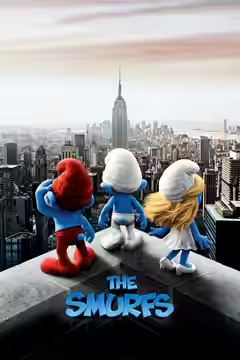
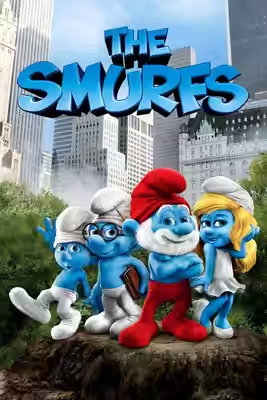
Raja Gosnell has taken the blue people Peyo drew in 1958 and dropped six of them into Manhattan for 103 minutes. A storybook village meets the real city, and the comedy comes from the gap. Here it does not work, because the film has no interest in the gap beyond a dozen jokes about the word smurf, and because the city it lands in is less a place than a shop window. It is poor, and we can see who it was made for, and they were owed more thought than this.
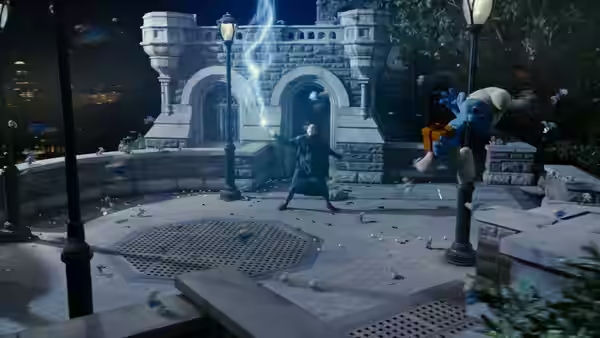
Hank Azaria is the reason to keep watching. He plays Gargamel in a bald cap and a false nose, hunched inside Rita Ryack’s patched brown robe, and he has decided to play it enormous: every line a proclamation, every stumble a tragedy. His only equal is Azrael, the cat, a real animal given an animated face that can register weariness. We laughed twice, both times at the cat, and felt a little low about it afterwards, because a cat rolling its eyes was the only thing on screen anyone had timed properly.
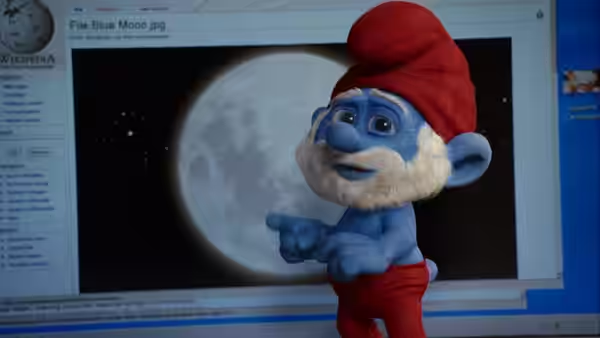
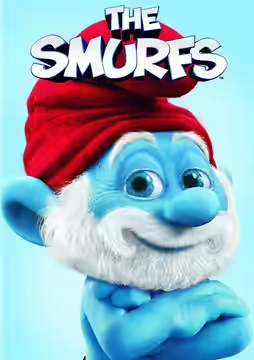
The Smurfs are harder to like. Jay Scherick, David N. Weiss, J. David Stem and David Ronn share the screenplay credit, and between them they have come up with one joke: Smurfs say smurf in place of other words. Patrick asks them to stop. It carries on for another hour. Jonathan Winters gives Papa Smurf a gentle, tired warmth that belongs in a better film. Katy Perry’s Smurfette gets the liveliest material and a wink at one of her own songs aimed over the children’s heads. Anton Yelchin’s Clumsy is the one with a story, and it is the story every family film has: the one who gets things wrong will, at the critical moment, get one thing right.
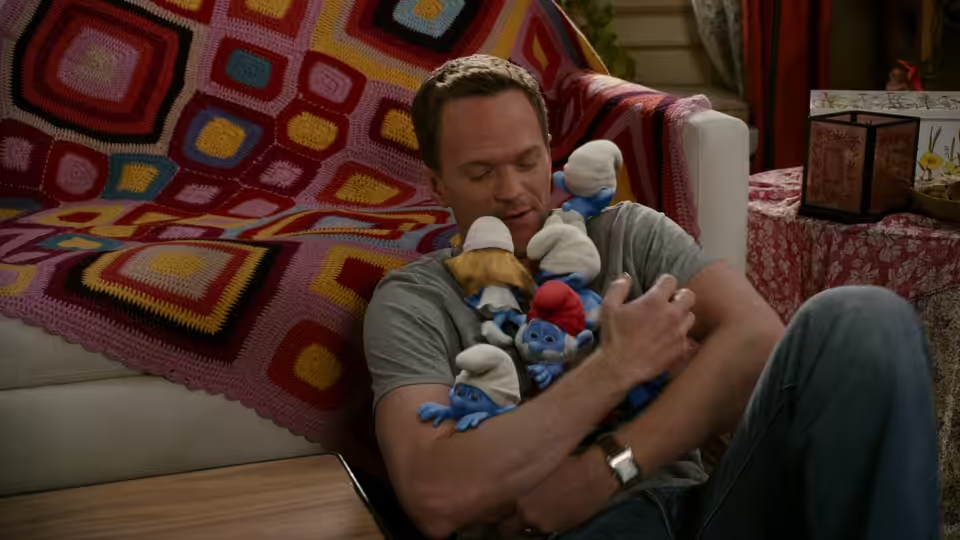
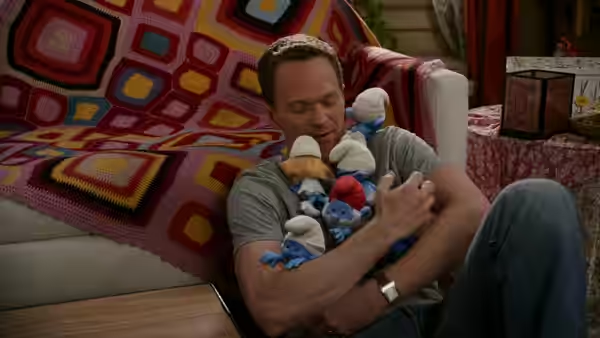
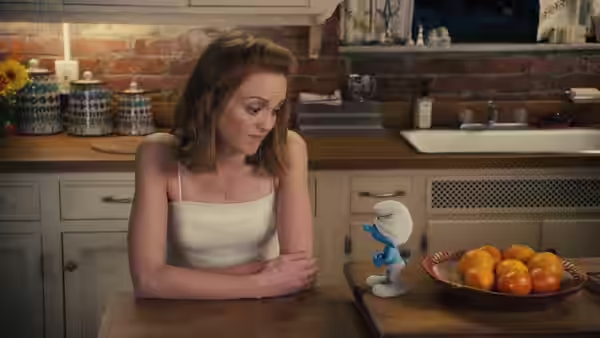
Neil Patrick Harris works hard as Patrick Winslow, an advertising man with a campaign due and a baby on the way, and he does what good comic actors do with weak material, which is to react as though it were strong. Jayma Mays is given nothing but kindness to play and plays it. Sofía Vergara’s Odile is written as a monster of a boss and then forgotten.
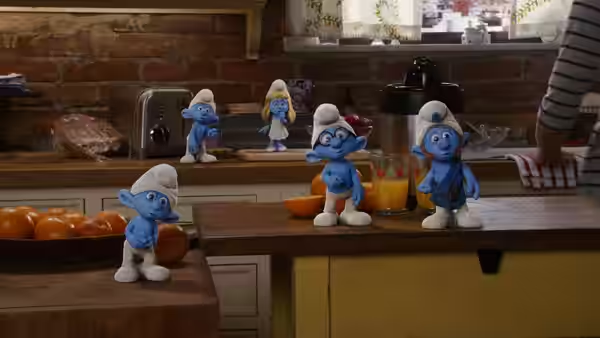
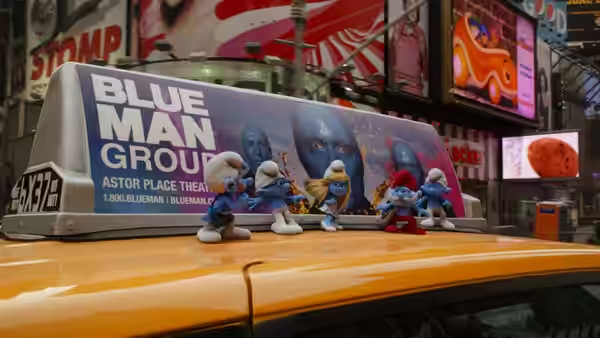
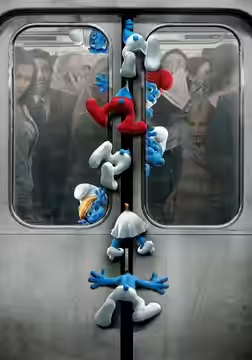
The craft lets everyone down. The village, which Bill Boes designed, is the one thing made with care: tiny doors, thatched caps on the mushroom houses, moss on the steps. Once the Smurfs reach New York, Phil Meheux shoots them in flat daylight, and they stop being characters and become blue plastic figures held up in front of a street. Their feet never quite meet the pavement. Sabrina Plisco cuts the chases as a series of near misses in traffic, and because nothing on screen has weight, nobody is ever in danger. Heitor Pereira’s score bounces along underneath, cheerful and unspecific.
Then there is the selling. Patrick works in advertising, and the film seems to have taken the hint. Scenes are set in shops whose names fill the frame, the Smurfs discover a games console and play it at length, and New York is a run of landmarks with the people removed. We were bored by the middle hour, and then we were irritated, because a U certificate is a promise to parents that the film is for their children and not for whoever paid for the toy shop.
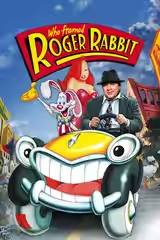
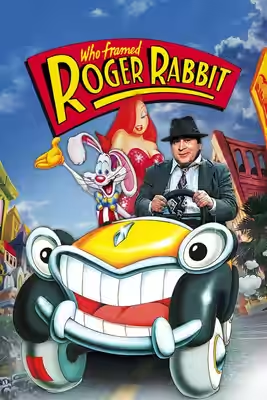
Gosnell has done this before, with Scooby-Doo in 2002, and he is competent at it: the film is coherent and nobody gets lost. The genre’s standard is Who Framed Roger Rabbit, from 1988, where drawn figures stood on real floors and cast real shadows, and next to it this one looks careless. Most critics have landed near where we have, the kinder ones calling it harmless and the harsher ones painful. We are closer to harmless, just.
If you have a child under six who loves the blue people, this will keep them still for an hour and a half, and Azaria will give you something to watch while it does. Anyone older will be checking the clock around the time the cat does.