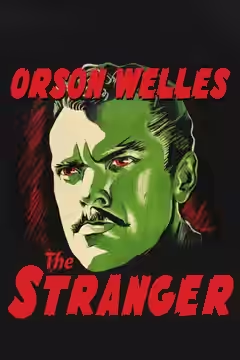
Orson Welles directs a tense, carefully built thriller, and Edward G. Robinson gives it a quietly unsettling centre. The screenplay settles for familiar plotting, but the performances make it worth an evening.
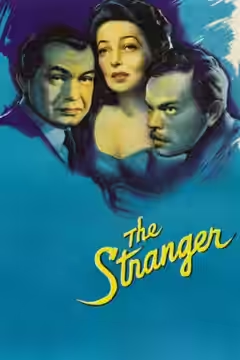
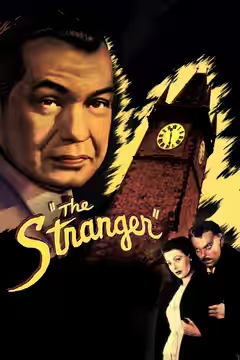
The Stranger is a good crime thriller whose conventional story gives its actors something firm, if sometimes restrictive, to work with. Orson Welles directs with enough confidence to make the pursuit feel dangerous, without depending entirely on uncertainty about what happens next. The pleasure lies in watching people assess one another, especially when Edward G. Robinson is doing the assessing. We recommend it to anyone who enjoys suspense built around the way people behave under observation.
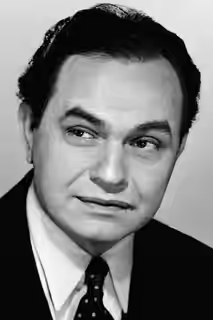
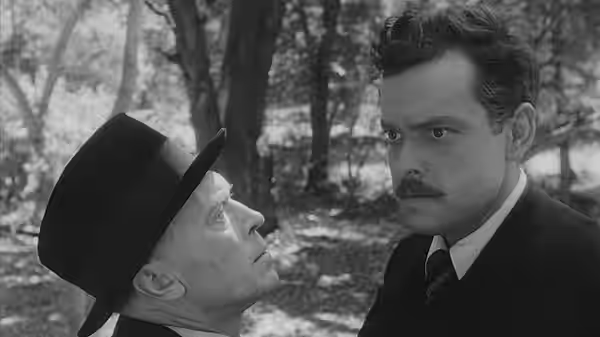
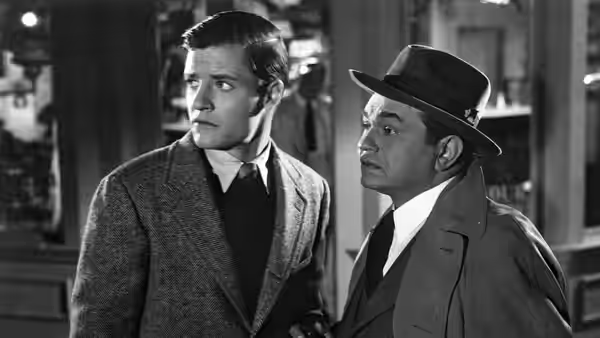
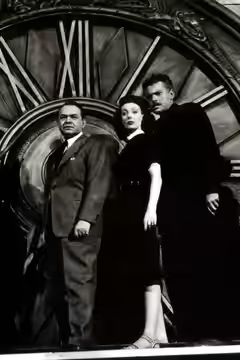
Edward G. Robinson plays Federal Agent Wilson with a patience that makes the pursuit uncomfortable. He does not need to seem the most forceful person in the film; his sustained attention makes everyone else appear increasingly exposed. We were unnerved by that patience, by the sense that the agent can afford to wait while someone else cannot. It is an economical performance, and the tension would be poorer for a more demonstrative investigator.
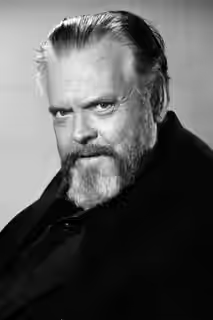
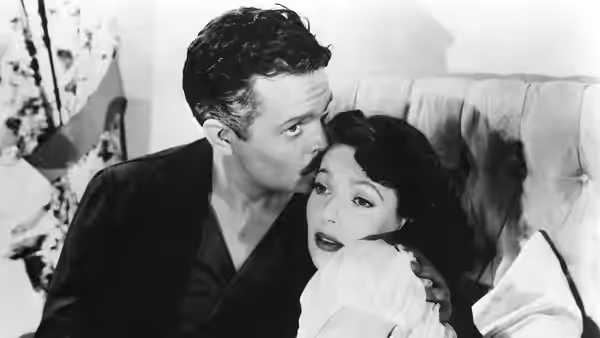
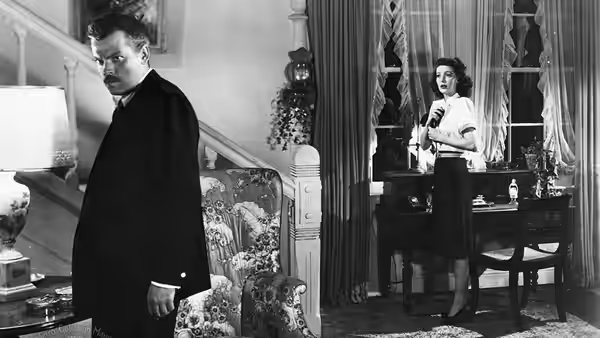
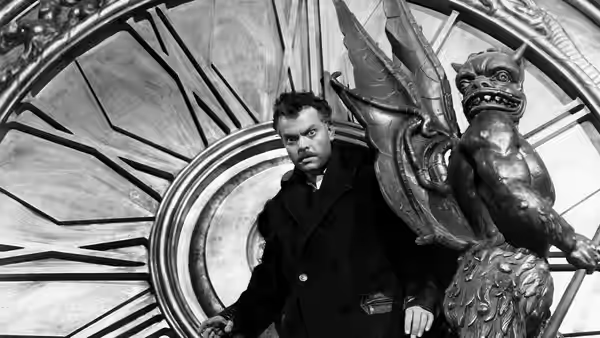
Orson Welles, as Prof. Charles Rankin, supplies a more emphatic presence, and the contrast is productive. His performance occasionally puts so much weight on an exchange that there seems little left for us to discover, but its force remains persuasive. Loretta Young’s Mary Longstreet gives the film a welcome change of emphasis from the two leading men. Her performance also makes us wish the writing allowed its people more room to be difficult to understand.
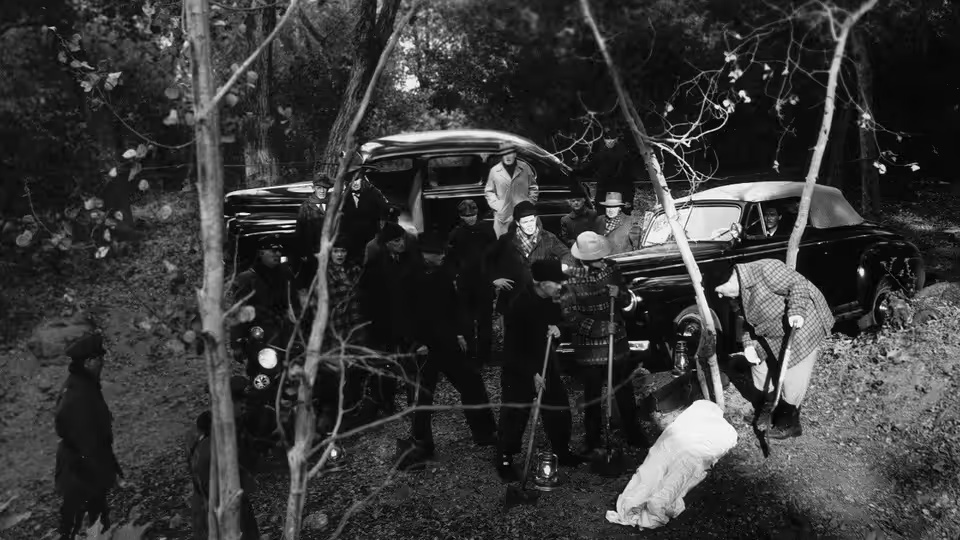
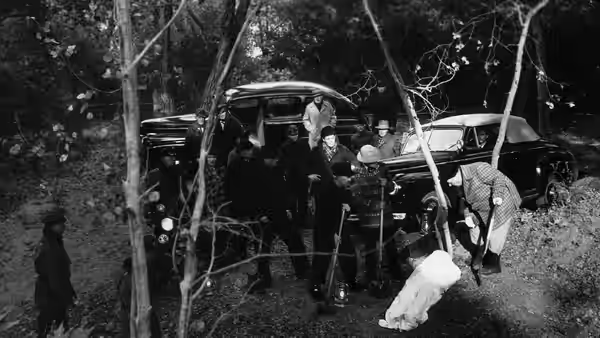
Russell Metty’s cinematography and Perry Ferguson’s production design contribute substantially to the unease. The photography keeps our attention on the actors without making their surroundings seem incidental, while the town feels sufficiently settled for its complacency to matter. That gives the pursuit a setting worth thinking about, rather than somewhere merely convenient for the plot. The direction is strongest when it lets us examine the people and the place without pressing too hard for a response.
Ernest J. Nims’s editing keeps the pursuit moving without making the investigator’s restraint feel like a delay. In a film running 95 minutes, that balance matters: waiting must remain interesting, and for the most part it does. Bronislau Kaper’s music is less discreet, sometimes giving the suspense an insistence it does not need. The actors have already supplied enough cause for concern, and the extra emphasis can make their work feel unnecessarily explained.
The chief reservation is Anthony Veiller’s screenplay, which follows a familiar thriller structure when the setting suggests possibilities for something sharper. Its criticism of small-town complacency is persuasive, though the people remain easier to understand as participants in a pursuit than as inhabitants of a community. This is hardly a fatal limitation in a crime film, but the care taken elsewhere encourages greater expectations. The story does its job, then leaves the performances to provide much of what makes it interesting.
There is enough control here to reward an evening, provided familiar plotting is not a barrier. The stronger passages make sustained attention exciting, which is a useful reminder that suspense need not mean constant activity. Watch it for Edward G. Robinson, and allow him to take his time.