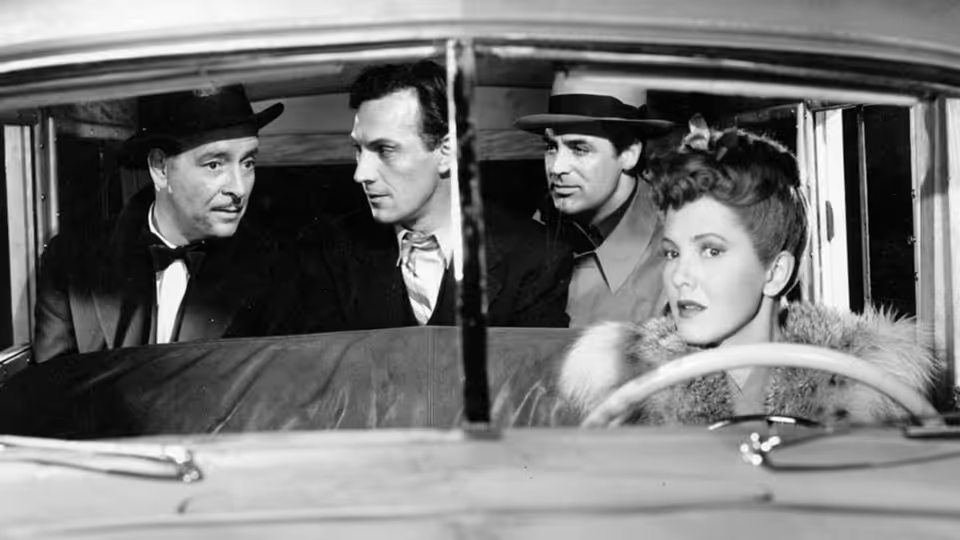
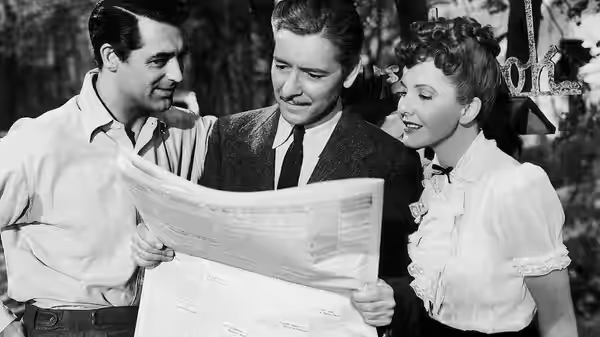
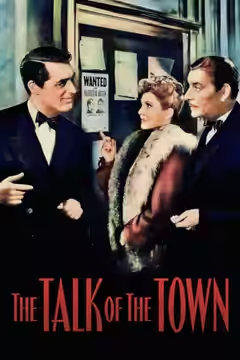
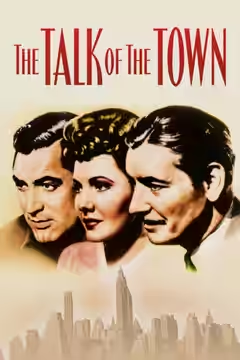
George Stevens’s comedy puts a fugitive, a professor and a schoolteacher in one house and lets them talk. The talk is good, the three of them are better, and the film only stumbles when it stops being a farce and starts being a lecture.
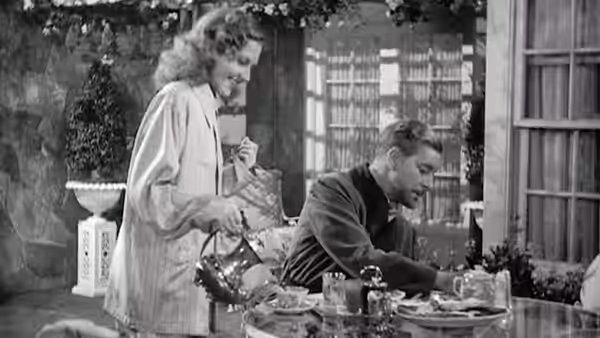
The Talk of the Town wants to be two films at once: a bedroom farce about a wanted man hiding in the attic of a house that has just been let to a judge, and a wartime argument about what the law is for and who it is for. It manages both for most of its 118 minutes. Sidney Buchman and Irwin Shaw, working from a story by Sidney Harmon, write the argument as dinner-table bickering rather than speeches, and George Stevens directs it as if the fate of American justice could reasonably be settled between a man frying eggs and a man reading a newspaper. For a long stretch it can.
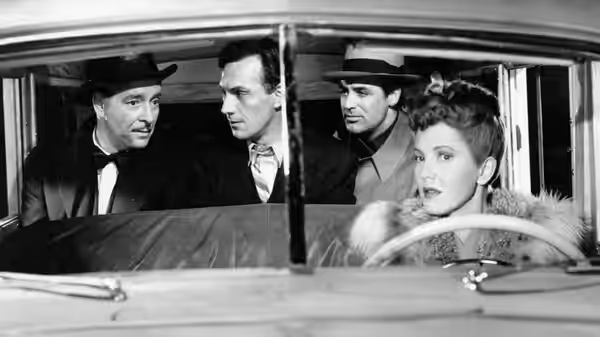
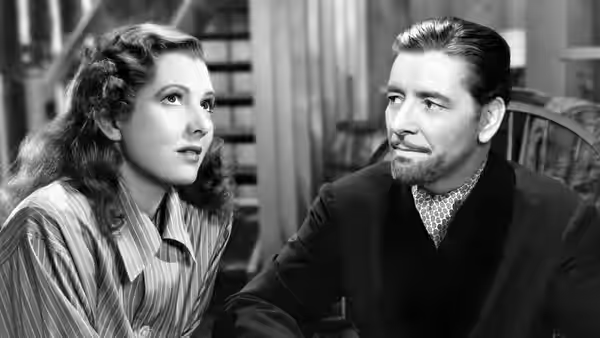
The setup is dispatched fast. The mill burns, the trial begins, the accused is gone before the first reel is properly under way, and Otto Meyer cuts the escape and the storm so that Grant is already dripping on Jean Arthur’s floor before we have quite worked out what he is supposed to have done. From then on the film lives in the house. Cary Grant plays Leopold Dilg as a man who cannot stop being amused by his own predicament, eyebrow up, stealing toast, and Ronald Colman plays Michael Lightcap as his exact opposite, a man for whom the law is a set of clean sentences and people are an interruption. The beard is a running joke and Colman knows it.
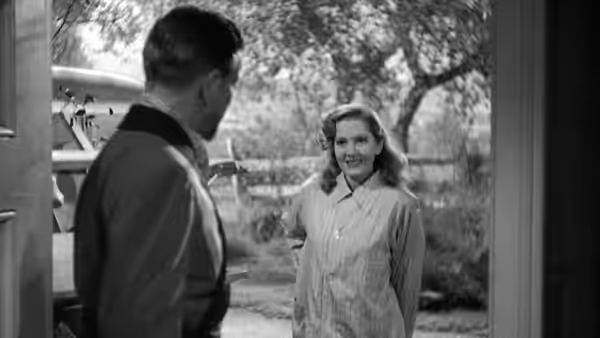
We laughed, properly and more than once, and nearly all of it was at the breakfast table, where the gardener corrects the professor’s view of a murder trial and the professor, without knowing who he is talking to, starts to enjoy being corrected. Colman’s face during these exchanges does the film’s real work: a man discovering that he likes an argument he is losing. Jean Arthur runs between them at speed, hiding a fugitive from a judge, a judge from a fugitive and both of them from the police chief, and she plays panic as a form of efficiency. She is the reason the farce works. Without her the two men would simply sit and talk, and pleasant as that is, it is not a film.
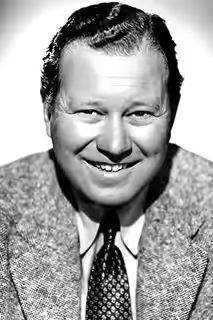
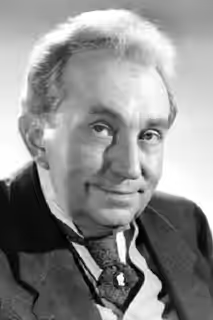
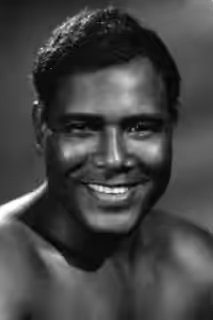
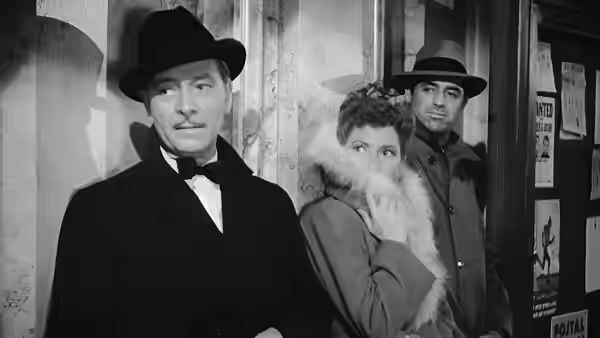
Ted Tetzlaff shoots the house in soft daylight, curtains and lawn and a kitchen you could live in, and keeps the hard shadows for the town: the courthouse, the mill, the streets at night where Charles Dingle’s Andrew Holmes and his friends decide what justice ought to look like this week. Friedrich Hollaender’s score stays out of the way, which is the right decision for a film built on dialogue, and comes forward only when the picture wants us to notice that things have turned serious. Edgar Buchanan, as Dilg’s lawyer Sam Yates, mumbles through his moustache and lands every line. Rex Ingram, as Lightcap’s valet Tilney, is given more dignity than most Black actors were allowed in 1942 and takes all of it.
The trouble is that the film’s two halves do not weigh the same. The comedy is played at a fast walk; the civics is played at a standstill. Every so often someone stops the scene to say what the law means, and although Colman says it beautifully, we could feel the picture waiting for him to finish. Grant, top billed, spends a good deal of the second half off screen or lying low, and the story finds less for him to do than his name promises. There is also a moment late on when the town turns up in a crowd, and it is uglier than anything the comedy has prepared us for. We were startled by it, and then unsettled at how quickly the film asked us to laugh again.
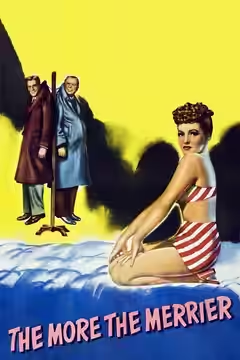
Stevens made this between Woman of the Year (1942) and The More the Merrier (1943), the last of his light comedies before he went to war and came back a graver director, and you can see the seriousness arriving early. It gives the film a weight most romantic triangles of the period do not have. It also gives it about fifteen minutes it does not need.
As for the triangle, the script keeps its choice open longer than you expect and we will not say where it lands. See it for the house, the eggs and the three people in the kitchen. When the speeches start, put the kettle on; they will still be going when you get back.