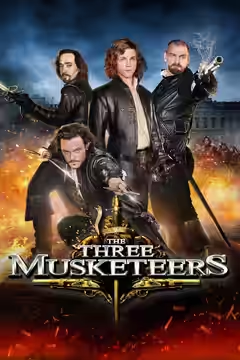
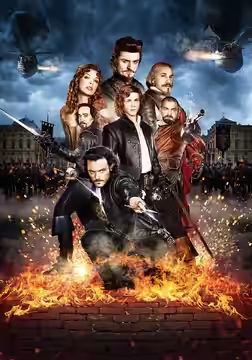
Paul W. S. Anderson turns Dumas into a heist picture with flying galleons, and for a cheerful half hour it works. Then the script runs out of things for anyone but Christoph Waltz to say, and a film about four friends forgets to be about friendship.
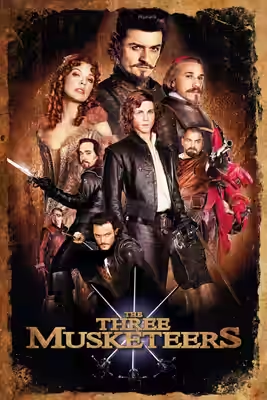
Paul W. S. Anderson has made The Three Musketeers as if the novel were a treasure map he had been given permission to doodle on. Andrew Davies and Alex Litvak’s screenplay keeps the names, the Cardinal and the diamonds, and adds a heist, a double-cross and a pair of warships that fly. It is a 12A and it runs 110 minutes. Taken on those terms it is a bright, silly, forgettable afternoon, and the trouble is that the brightness comes in bursts, with a lot of corridor in between.
The airships are the reason to be here: wooden galleons slung under canvas bags, with cannon in the gunports and men on the rigging. The first time one of them swung into frame over the rooftops we laughed out loud, with the film rather than at it. It is a daft image and Anderson knows exactly how daft, which is more than can be said for a good deal of what follows. When two of them meet in the air and the fighting spills on to a cathedral roof, the picture briefly becomes the thing Anderson wanted it to be, a boys’ adventure annual that has learned to move.
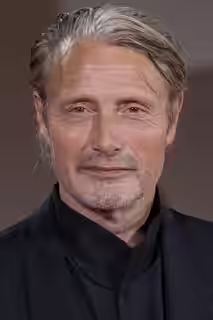
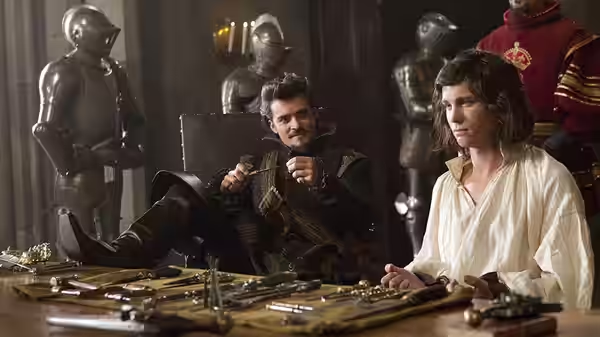
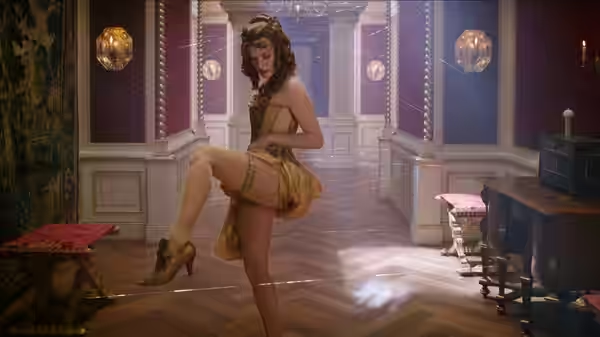
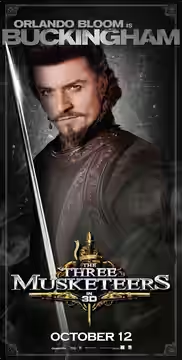
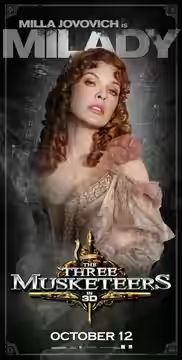
Milla Jovovich is the best thing in the film with a pulse, and she is barely in the middle hour. She plays Milady as a woman who finds everyone around her slightly slow, and the script gives her the only double-cross that is allowed to land. Christoph Waltz plays Richelieu as a man who would rather talk than fight and is a little bored by both; he lowers his voice when everyone else raises theirs, and each of his scenes is the quietest and the most watchable in the film. Mads Mikkelsen gets a sneer and not much else. Orlando Bloom’s Buckingham arrives by airship and plays it as a man who has been told the film is a comedy.
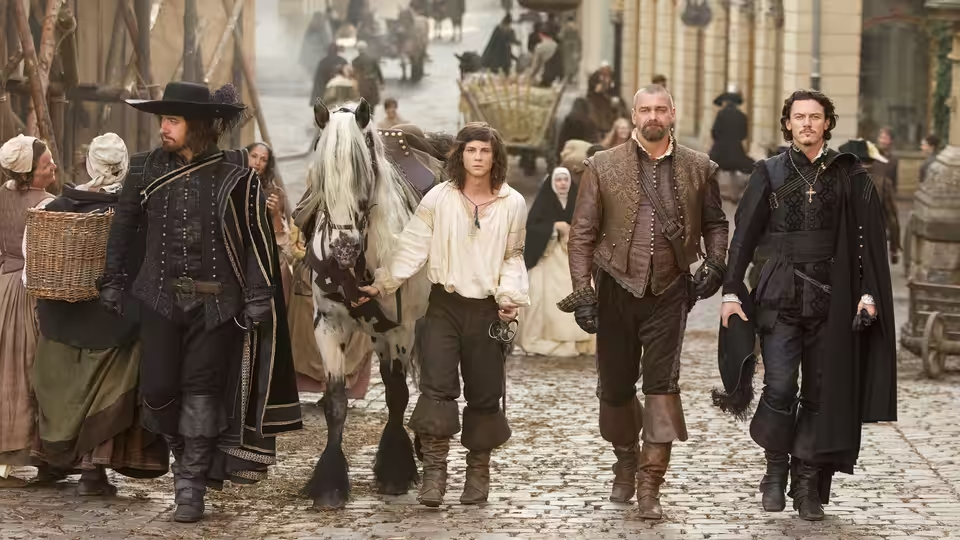
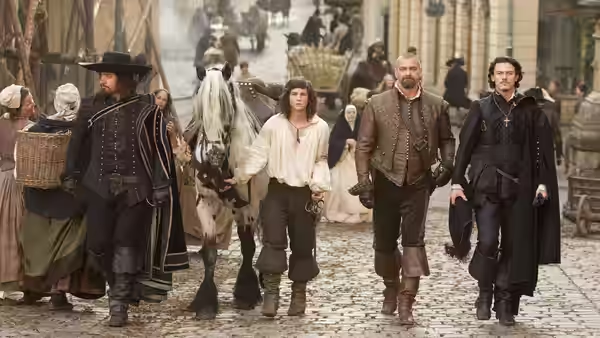
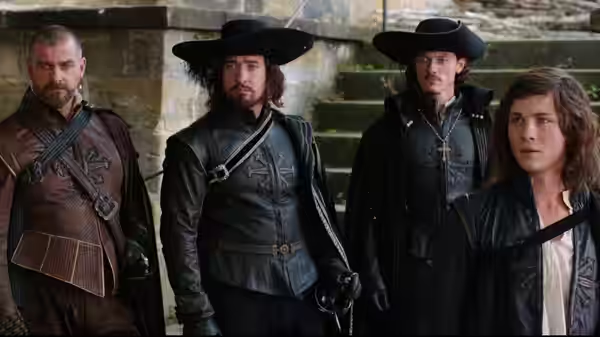
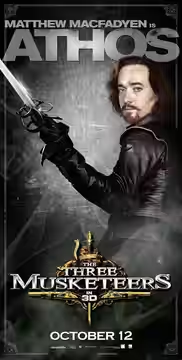
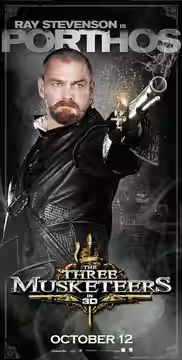
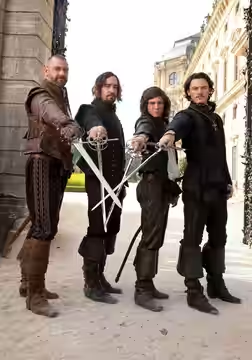
The musketeers themselves are the problem, and it is a structural one. Matthew Macfadyen does his best with Athos as a drunk nursing an old wound, Ray Stevenson is cheerfully loud as Porthos and Luke Evans gives Aramis a certain reserve, but the script never puts the three of them in a room long enough for us to believe they like each other. Logan Lerman’s D’Artagnan talks like a boy from a modern high school who has been dropped into a costume drama and decided to tough it out. He fences well enough. He does not, for one scene, seem to want anything badly, and the film is supposed to be about his wanting.
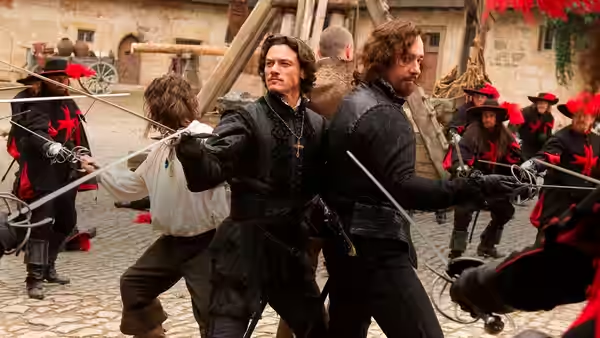
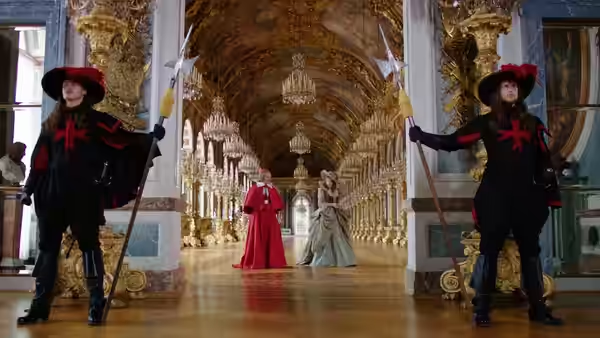
The craft around them is handsome and oddly anonymous. Paul Denham Austerberry’s palaces are vast and gilded, Pierre-Yves Gayraud dresses the court in silks that look as if they cost a fortune, and Glen MacPherson’s camera keeps gliding past both as though late for something. Claus Wehlisch and Alexander Berner cut the swordfights cleanly, so we can mostly tell who is standing where, which puts the film ahead of many of its contemporaries. Paul Haslinger’s score pounds along underneath without once producing a tune we could hum on the way out.
The second half takes turns we will not describe, except to say that the film is more interested in setting up a sequel than in finishing the story it has, and that we felt the pull of the exit ten minutes before the credits did.
As a Dumas adaptation it is a cartoon; as a Paul W. S. Anderson film it is one of his more good-natured, with the same taste for clean geometry in the action and the same indifference to what anyone is feeling while it happens. Most critics were colder than we are, and we can see why: the middle hour is slack and the lead is a blank. But the airships, Jovovich’s smirk and Waltz’s murmuring Cardinal are real pleasures, and a film that gives you three is not nothing.
For a rainy Sunday with children who have never heard of Dumas, it will do. Adults who have will find themselves reaching for the 1973 version afterwards, and that is probably the right instinct.