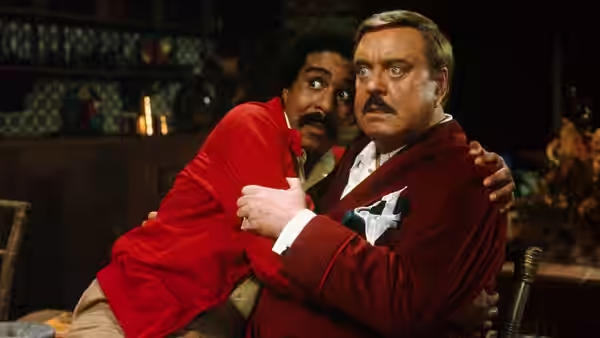
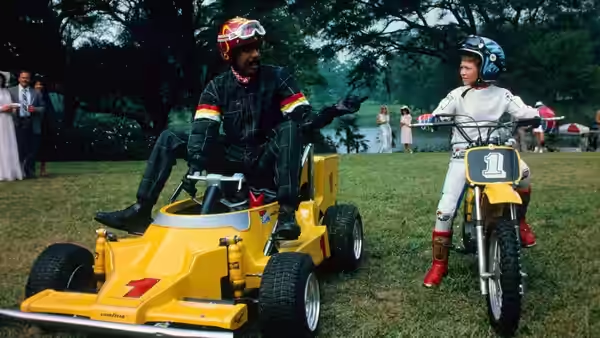
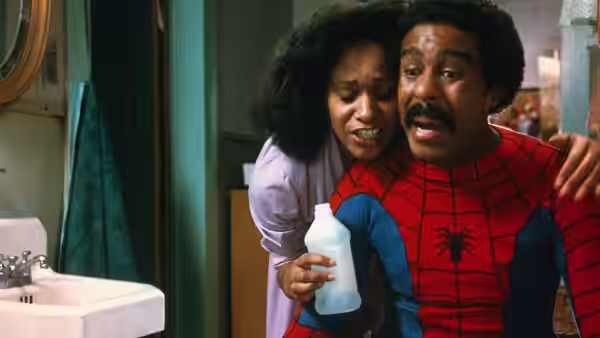
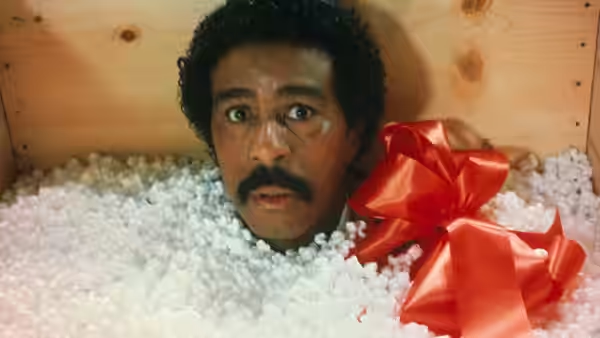
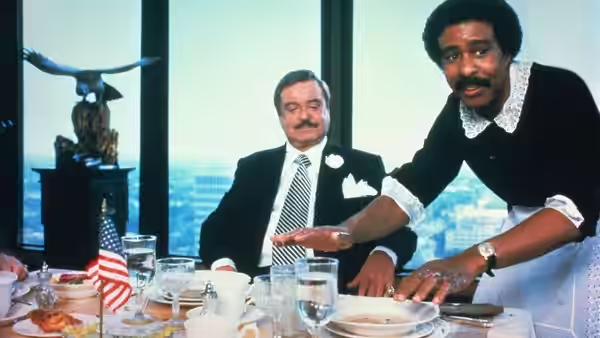
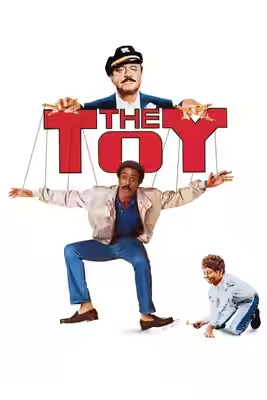
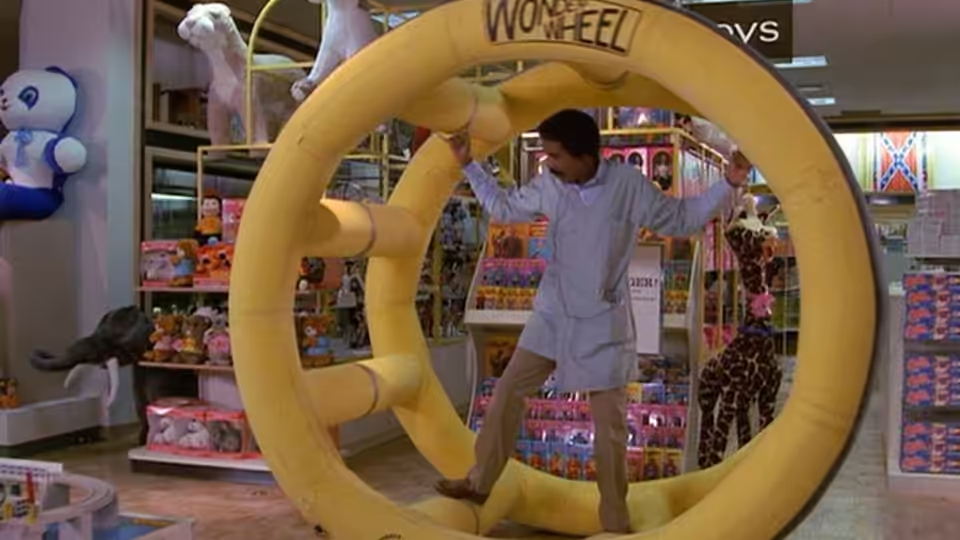
Jack Brown (Richard Pryor) stands inside a giant yellow toy wheel in a toy store
Film review

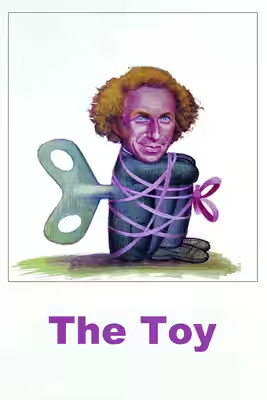
The Toy

1982 · Directed by Richard Donner · 1h 42m

In a sentenceRichard Pryor is the present, but somebody has decided the child would also like a lecture

Ulysses Simpson ‘U.S.’ Bates (Jackie Gleason) promises his son any present he wants. Eric Bates (Scott Schwartz) chooses Jack Brown (Richard Pryor). The promised gift is a person, placing Jack Brown at the centre of an agreement between father and son. Eric Bates has been offered a free choice, and he takes the offer literally. His father now has to deal with what that promise means for someone who was never a present to begin with, while Jack Brown finds himself treated as the answer to a child’s request.

Fi1m review

Richard Pryor does what he can with a premise the film never examines: a child chooses a man as his present. The opening has some good comedy, but the later insistence on a message makes it difficult to recommend.

Richard Donner’s The Toy has a premise it never looks at squarely. Carol Sobieski’s script takes a child choosing a person as a present and turns it into an excuse for earnest instruction. It spends 102 minutes making sure we understand that there is a lesson here, without adequately examining the choice that starts the story. There are things to admire in the opening, and we cannot recommend the rest.

Richard Pryor is the reason it is watchable at all. His early comic work has the energy the film needs, and he makes Jack Brown worth attending to even when the writing seems more interested in the point it hopes to make. The opening gives us enough pleasure to keep watching, which makes the later change of tone especially disappointing. We want more room for his comedy, and fewer reminders that we are supposed to take something useful away from it.

Jackie Gleason plays Ulysses Simpson ‘U.S.’ Bates, with Scott Schwartz as Eric Bates, the son whose choice starts the trouble. The promise of any present he wants is enough to set a comedy going; the difficulty is finding a way to continue without making the person chosen seem incidental. Carol Sobieski’s screenplay never finds a satisfactory answer. Once the message becomes more pressing, the characters seem to exist chiefly to help deliver it.

The craft is competent and anonymous. László Kovács’s photography keeps the comedy easy to follow, but does little to make the arrangement feel as unsettling as it sounds. Charles Rosen’s production design provides a workable setting for the performers without adding much comic force of its own. These are not departments we would blame for the film’s larger problems, though neither supplies much reason to linger when the writing stops being funny.

Michael A. Stevenson and Richard A. Harris give the early comedy room to work, then let the sentiment slow everything down. Patrick Williams’s score is too ready to encourage the warmer response the screenplay wants from us. The trouble is the accumulated insistence: we have understood that the film means to become touching before it has finished asking us to be touched. Richard Donner needed to be harder on these passages, particularly when the opening has already shown how much more agreeable a lighter approach can be.

We were uncomfortable with a child choosing Jack Brown as a present, and the later reassurance made that discomfort worse. The premise invites us to think about how the chosen man might feel, so the move towards a comforting message seems especially ill-judged. A family comedy can tackle an awkward subject without settling every difficulty it raises. Here, the sentiment makes the central situation harder to accept, and the laughs become harder to enjoy.

The consensus of the available reviews is similarly doubtful, with some credit for the opening and little enthusiasm for what follows. That seems fair, though Richard Pryor’s work deserves to be distinguished from the film built around it. For committed admirers, the early stretch offers a reason to consider it. Everyone else can reasonably decline a present that comes with this much instruction.
Critical consensus AI synthesised

2 of 6
Positive
0
Mixed
1
Negative
1
Time Out
· GB
52*

The available excerpt suggests disappointment with Richard Pryor’s successive comedies. It notes the high expectations created by his talent, but the full review is unavailable to establish a specific point of praise or complaint.

Read the full review →
Radio Times
★★ · Dick Fiddy
40

The review says the film starts with some fine moments but soon becomes a mawkish message movie. It singles out the opening stretch for praise before criticizing the film’s later turn.

Read the full review →

Straight answers AI written, from our review

Is The Toy worth watching?
The Toy is difficult to recommend beyond committed Richard Pryor admirers, and we score it 46 out of 100. His early comedy gives us some pleasure, but the later sentiment slows the film down, replacing laughs with lessons while leaving its uncomfortable premise—a child choosing a person as a present—poorly examined.
How long is The Toy, and what is it rated?
The Toy runs 1h 42m. It is a comedy and family film.
Where can I watch The Toy in Lithuania?
The Toy is not on any streaming or rental service in Lithuania at the moment. It is available in 4 other countries; change your country at the top of the page to see where. Availability is checked daily.
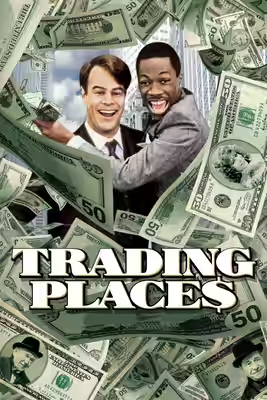
How does The Toy compare to Trading Places?
The Toy is the weaker comedy beside Trading Places, which we recommend for its sharper handling of rich men meddling with a poorer man’s life. Trading Places recognises the cruelty behind its jokes, despite timid politics and a slack middle; The Toy retreats into reassuring lessons that give Pryor too little room to be funny.
What should I watch after The Toy?
After The Toy, try Trading Places (1983, Fi1m 80): Rich men play with a poor one’s life; the comedy knows it is cruel. Then Paper Moon (1973, Fi1m 86): A grown-up and a child who should not get on, travelling through grey Depression dust.

Cast

If you liked this, try…

  1. Le Jouet (1976) · not reviewed yetA sharper comedy about the indignities of treating people as possessions.

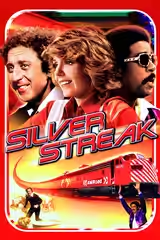
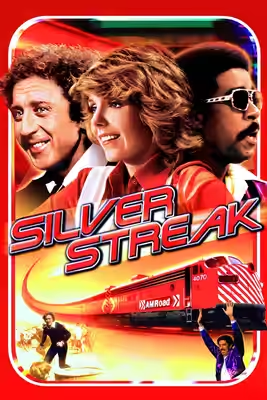
  2. Silver Streak (1976) · not reviewed yetAnother chance to enjoy Richard Pryor when the comedy gives him room.

  3. Trading Places (1983, Fi1m 80)Rich men play with a poor one’s life; the comedy knows it is cruel.

  4. Paper Moon (1973, Fi1m 86)A grown-up and a child who should not get on, travelling through grey Depression dust.

  5. Kikujiro (1999) · not reviewed yetTakeshi Kitano stuck with a small boy for a summer, and quietly undone by him.

Free account

Know what to watch tonight

Two lists that know where things are streaming, collections you can share, your own score beside ours, and Discover that remembers what you have seen.

  • Want to see, sorted by what is streaming now
  • Seen, with your score out of ten
  • No adverts, ever