George Sluizer’s thriller tells you who took Saskia almost at once and lets you watch him rehearse. It is calm, exact and more frightening than any amount of shouting. The middle years drag; the last twenty minutes are not to be read about first.
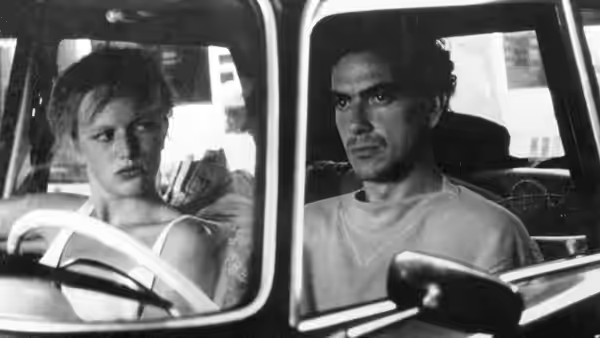
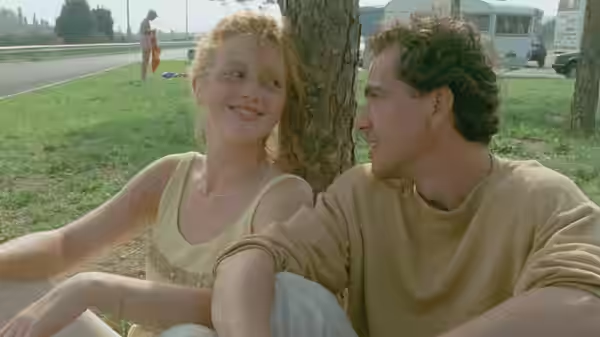
George Sluizer’s The Vanishing tells you who did it inside the first twenty minutes, and that is the whole trick. Rex Hofman (Gene Bervoets) and Saskia Wagter (Johanna ter Steege) are driving down to France on holiday. They stop at a motorway service station, she goes into the shop for drinks and she does not come out. We are not asked to wonder who took her, because we have already met him. We have watched him rehearse. The question the film puts in place of the usual one is what a man like that thinks he is doing, and it is a far more frightening question.
The man is Raymond Lemorne, and Bernard-Pierre Donnadieu plays him as an ordinary husband first and a monster a long way second. He has a wife, Simone (Bernadette Le Saché), two daughters (Tania Latarjet and Lucille Glenn) and a car he sits in and practises. He is not good at it to begin with, and he keeps at it. We were more horrified by the practising than by anything he does in earnest, because a man who practises has a method, and a man with a method will get there in the end.
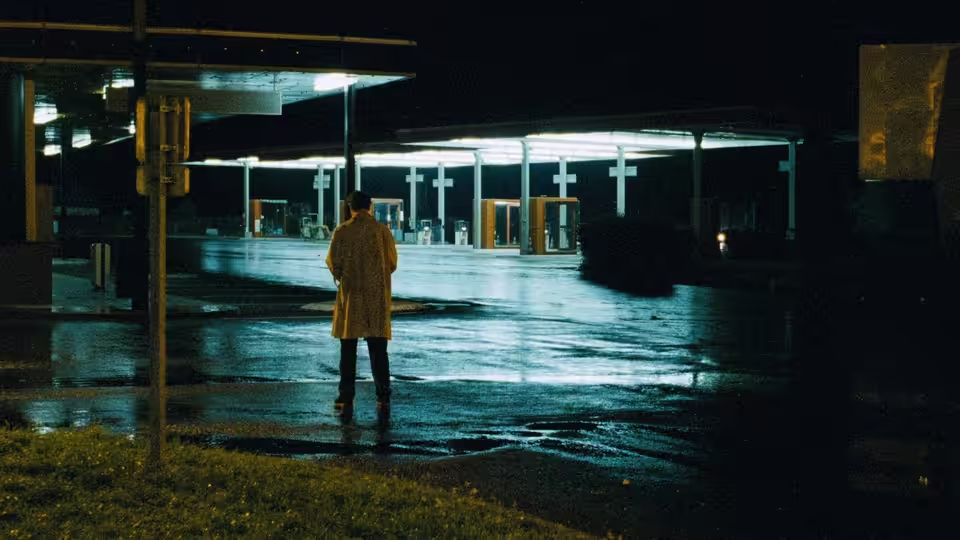
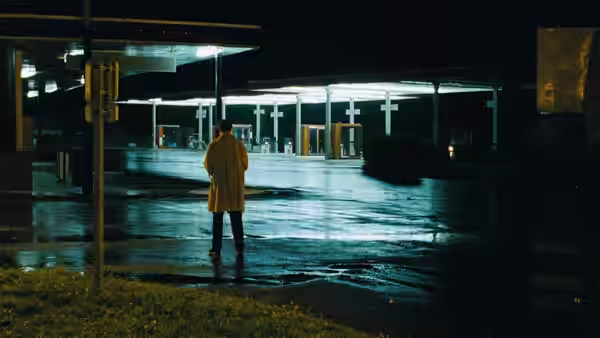
Toni Kuhn shoots the service station in flat, hard summer light, with cars and coaches and families milling about, and nothing in the frame tells you anything is wrong. Sluizer, who edited with Lin Friedman, refuses the usual cut. There is no shot of a hand on a shoulder or a van door sliding shut. There is only Rex, waiting by the car, looking at the doors, then at his watch, then at the doors again. We watched those doors with him for what felt like a quarter of an hour, and by the end of it we had stopped breathing properly. It is the best scene of its kind we can think of, and it works because Sluizer does nothing.
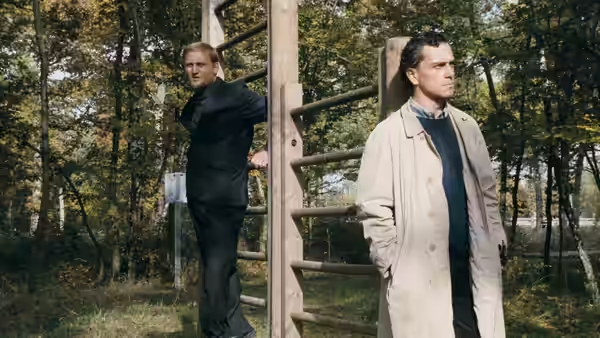
Years pass. Bervoets plays Rex’s obsession as something dull and administrative: posters, television appeals, a new partner, Lieneke (Gwen Eckhaus), who is patient until she isn’t. This middle stretch is the film’s flattest. Rex is not an interesting man, which is the point, but it is a point that takes a while to make, and we found our attention drifting towards Raymond’s scenes and away from Rex’s. Henny Vrienten’s score does not help. It is thin electronic stuff of its period, and every so often it tells you that something is sinister when Kuhn’s pictures had already made that plain.
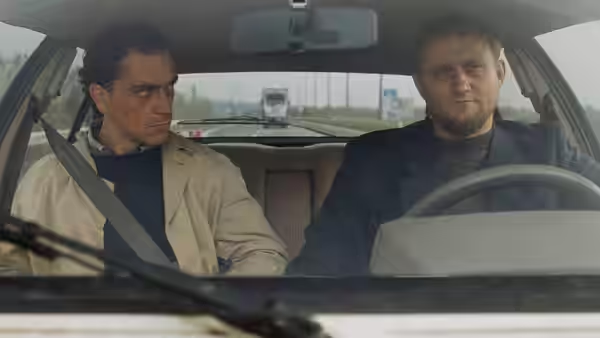
Sophie Dussaud dresses Raymond in cardigans and open collars, the clothes of a man nobody has ever looked at twice, and it matters, because the film wants you to see that this is what such a man looks like. Sluizer and Tim Krabbé, adapting Krabbé’s own novel, give him a long account of why he does it, delivered in a car on a long drive, and we will say only that Donnadieu makes every word of it sound reasonable and that we did not want him to stop.
The last twenty minutes we will not describe. They follow from everything before them with the logic of a proof, and they have been argued over since the film came out. Most critics rate the film highly and so do we. Where we part company with the warmest of them is on the middle hour, which does more waiting than a 106-minute film can quite afford.
Sluizer remade it in America in 1993 and changed the ending. Watch this one. Do not read about it first, and do not stop for petrol on the way home.