The real voice of a child trapped in a car in Gaza runs through Kaouther Ben Hania’s drama. See it, though its first half hour is as hard to watch as anything we have seen, and the actors are less sure than she is.
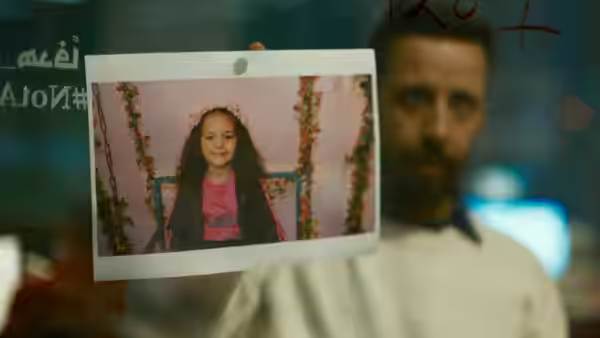
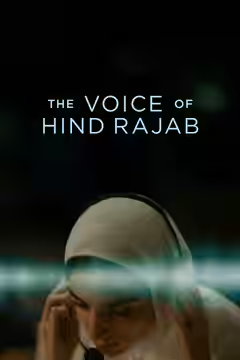
A Red Crescent dispatch office in Gaza took a call from a car. A young girl called Hind Rajab was alive inside it. The operators kept her on the line while they tried to get an ambulance to her, and the calls were recorded. Kaouther Ben Hania’s film plays those recordings into a reconstruction of that office, with actors as the people who spoke to her. The girl’s voice is real. The office is a set.
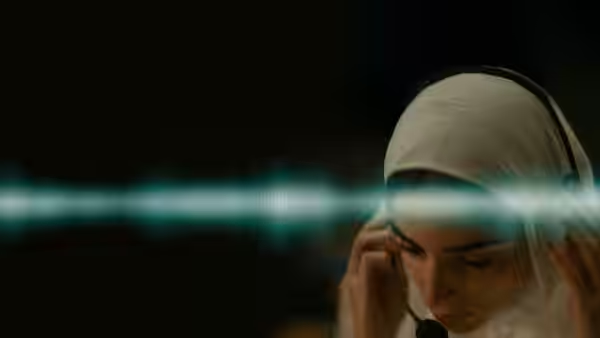
The first half hour is the film. Phones ring, operators pick up, and a small voice asks whether anyone is coming. Rana (Saja Kilani) is given the job of keeping her talking, and Kilani plays it as work: keep your own voice level, ask about the car, ask about school, do not let the silence grow. We were horrified, and nothing on screen did it. It was the sound of the child breathing between sentences while grown adults looked at a map and waited. Juan Sarmiento G. keeps the camera inside the office, close on faces and handsets, and never cuts to Gaza. The car is only a voice and a point on a screen.
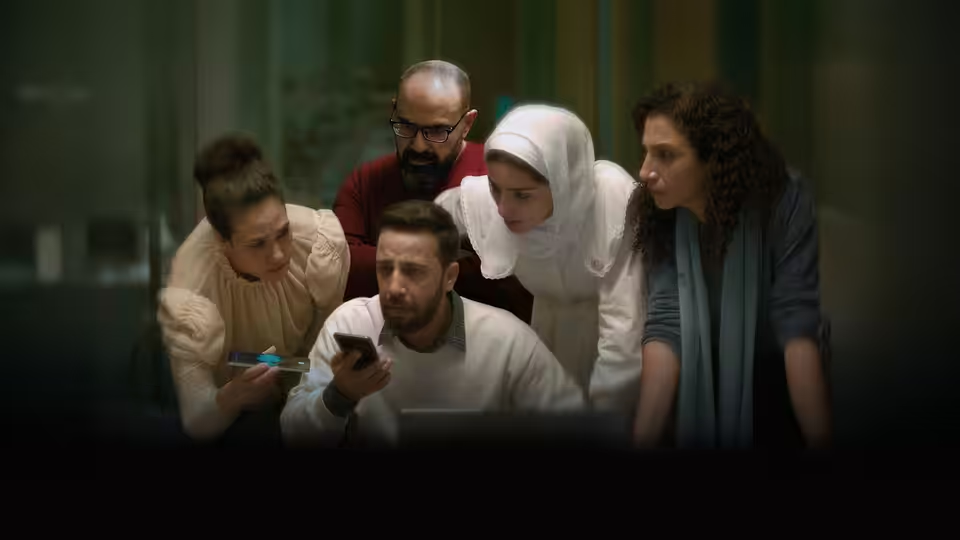
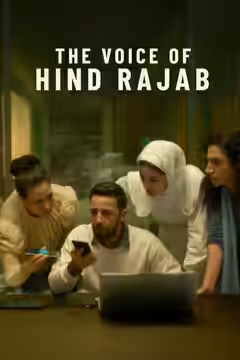
Around Rana the film builds a small argument about what can be done. Omar (Motaz Malhees) wants the ambulance sent whatever the risk. Mahdi (Amer Hlehel), the man in charge, has to secure clearance for it to travel through a war zone and spends most of the film on hold. Nisreen (Clara Khoury) looks after the colleagues who are coming apart. Bessem Marzouk’s production design gives them an ordinary open-plan office of desks and screens, and the ordinariness is the point: this is a workplace, and the work today is a dying child. Malhees is the strongest of the four because he is allowed to be angry and Ben Hania lets the anger stand without comment.
What does not work is the thriller. Ben Hania, editing with Maxime Mathis and Qutaiba Barhamji, cuts the middle stretch like a countdown, with raised voices and Amine Bouhafa’s strings coming in under the confrontations. The recording does not need any of it. Every time the music rose under the actors we felt the film reaching for something the telephone had already given us, and there is at least one shouting match across the office that plays like a hospital serial. Most critics have forgiven this. We nearly do. The alternative, 89 minutes of a child’s voice over an empty office, would be unwatchable, and Ben Hania has to give us somewhere to put our eyes.
There is also the question of whether the voice should be in a drama at all. A dead child is the soundtrack to scenes in which actors weep, and several critics have asked where witness ends and spectacle begins. We think the charge is fair and that the film survives it. Ben Hania hides nothing about what she is doing; the tagline says the voices on the phone are real, and the last minutes leave the fiction behind in a way we will not describe. She wants this recording heard by people who would otherwise never hear it. That is a defensible reason.
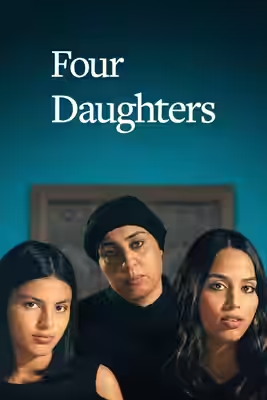
Ben Hania has worked this ground before. Four Daughters (2023) put real women alongside actors playing their missing relatives, and Beauty and the Dogs (2017) followed a young woman through one night of being passed from desk to desk. This is her plainest film and her most confined, and she is better at the confinement than at the drama. The shots that hold on Kilani’s face while the line goes quiet are worth more than any scene in which the script tells us what everyone feels.
It is a 15 certificate and 89 minutes long, and it feels longer, which for once is a compliment. Watch it without a phone in reach. You will not want to hear one ring for a while.