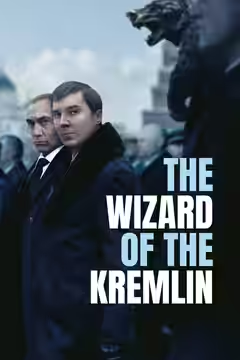
Olivier Assayas turns Giuliano da Empoli’s novel into a 136-minute lecture on how Russia was managed, with Jude Law’s Putin the one thing in it that does not need explaining. Fascinating in patches, inert for long stretches, and never as sharp as its subject.
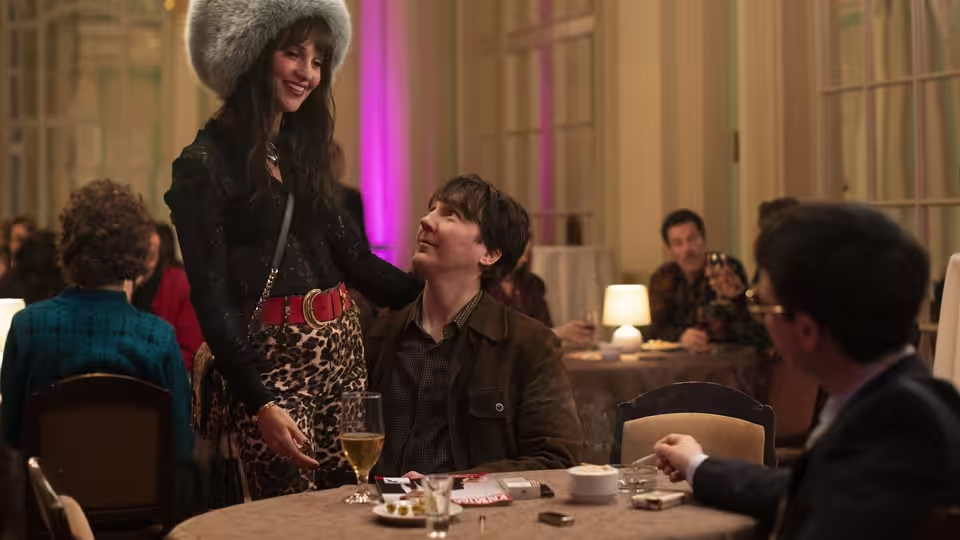
Vadim Baranov (Paul Dano) is the man who ran the show, and The Wizard of the Kremlin is his account of it. Olivier Assayas and Emmanuel Carrère have adapted Giuliano da Empoli’s novel into a film built almost entirely from Baranov’s voice: he sits in his country house, pours a drink for a visiting American writer, Rowland (Jeffrey Wright), and talks for 136 minutes about how he took a grey official from the security services and made him president. The idea underneath is a good one. Russian politics after Yeltsin was produced like television, and Baranov was the producer. The film says this in its first quarter of an hour and then keeps saying it, with dates.
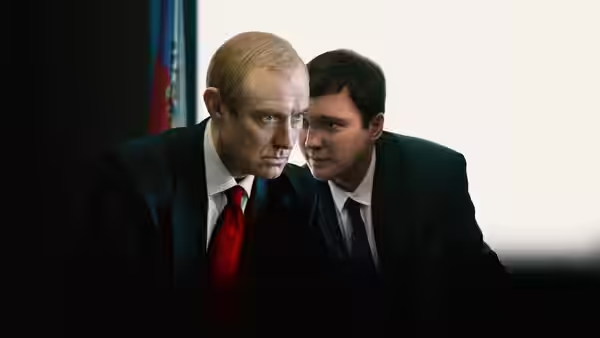
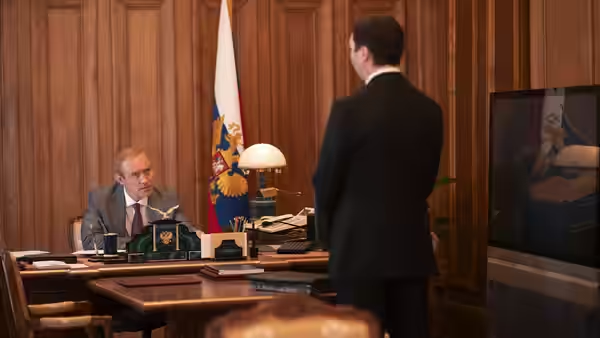
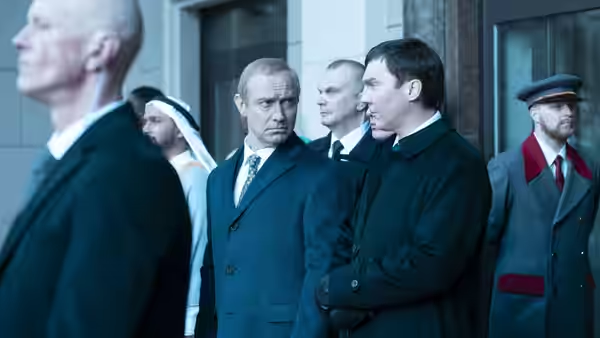
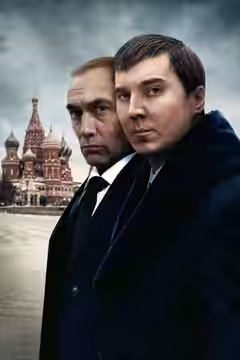
Jude Law is the reason to go. His Putin does not do the walk or the voice; he does the not-listening. When Baranov is brought in to meet him for the first time, in a plain office with nothing on the desk, Law does not look up for what feels like half a minute, and when he does he has already decided that the man in front of him is a tool. We felt the office go cold, and we felt it again every time he came back. It is a performance built on stillness and a small, contemptuous patience, and it is the one thing in the film that does not need a voiceover to explain it.
Dano is the harder case. He plays Baranov with a soft, level murmur and a smile that sits slightly to one side of his face, and for twenty minutes it is an interesting choice: a clever man who has trained himself never to raise his voice. By the end it is the only note he has, and because he narrates nearly everything, the whole film speaks in it. Rowland is there to listen and nod, and Wright, who can do a great deal with an eyebrow, is asked to do almost nothing else. Nobody in the house ever says to Baranov: that is not how it happened. So the film takes his word for it, and his word is kind to him.
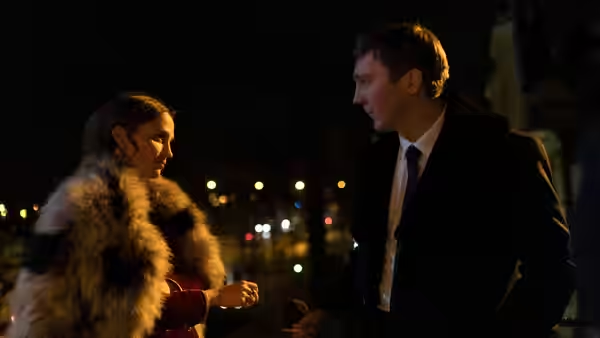
The craft is careful and rarely a pleasure. Yorick Le Saux shoots Moscow in flat grey daylight and the interiors in brown lamplight, which suits a story about men in rooms and becomes wearing across two and a quarter hours. François-Renaud Labarthe gives those rooms real weight, a Kremlin of marble and long carpets, Berezovsky’s private club, Baranov’s dacha with its books and its silence, and Jürgen Doering puts Law in suits a size too correct. Marion Monnier cuts archive news footage between the scenes, and it is the archive that carries the sense of a country coming apart. The drama around it moves from one dated episode to the next, each ending as the last did, with Baranov explaining what we have just watched.
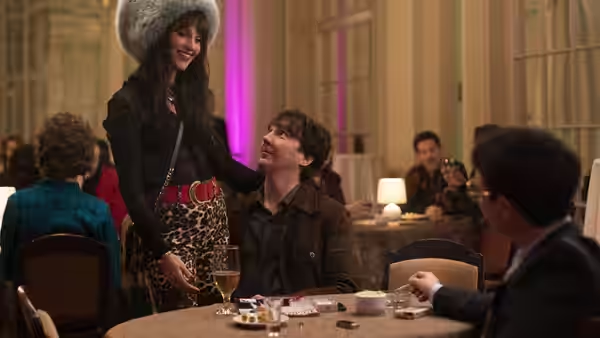
Will Keen is the best of the rest. His Berezovsky is all appetite and quick temper, a man who thinks he has bought the future and cannot understand why it will not stay bought, and his scenes with Baranov have a nasty comedy the film could have used more of. Alicia Vikander’s Ksenia is Baranov’s lover and then the measure of what he has given up, which is a thankless job, and she does it with grace. Tom Sturridge’s Dmitri Sidorov gets a few scenes of expensive unhappiness. Yevgeny Prigozhin (Andris Keišs), the biker Alexander Zaldostanov (Kaspars Kambala) and the writer Eduard Limonov (Magne-Håvard Brekke) come through like exhibits in a museum of the period, each labelled and then wheeled off. Everybody speaks English in whatever accent they arrived with, and the film has decided not to mind, which we found easier to accept than some critics have.
Assayas has done this kind of thing before and better. Carlos, from 2010, followed a man across two decades and several countries and never once stopped to explain him, because he was always doing something. Baranov is always describing something. That is the difference between a film that moves and a film that briefs, and this one briefs. We were interested for an hour, then we noticed we were waiting for Law to come back, then we noticed how long the waits were.
The second half covers events the news has already covered, and adds less to them than you would hope. See it for Law and Keen, and if you can, see it at home in two sittings, where the lecture is easier to follow and the gaps between the good scenes easier to fill.