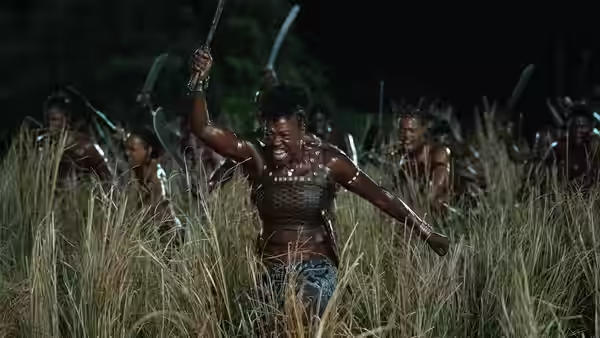
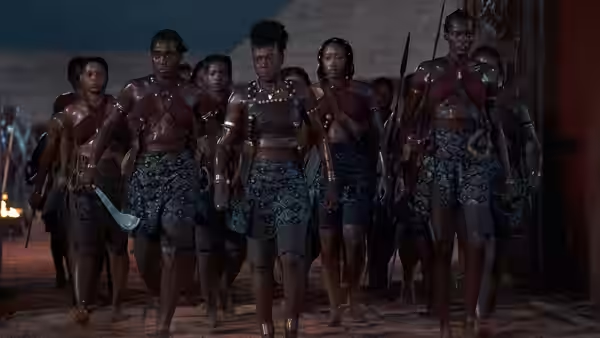
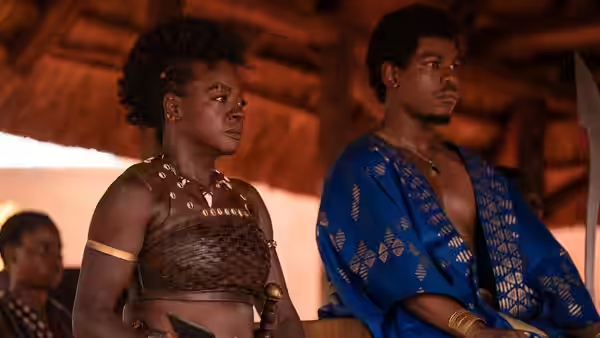
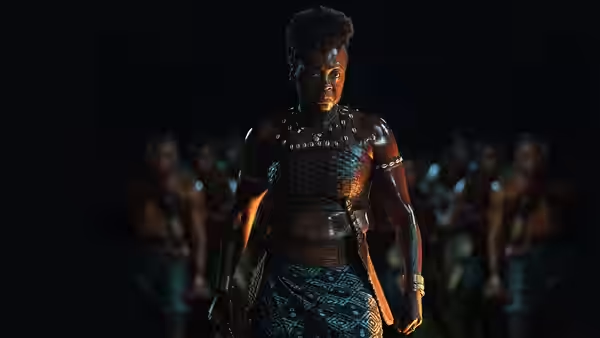
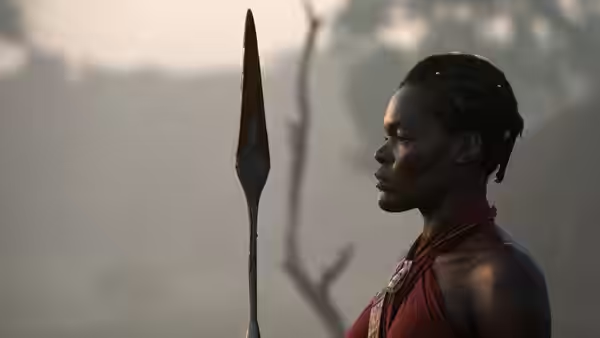
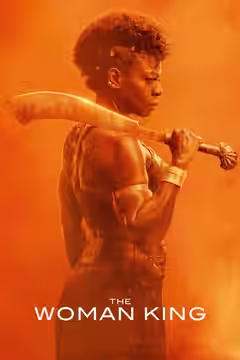
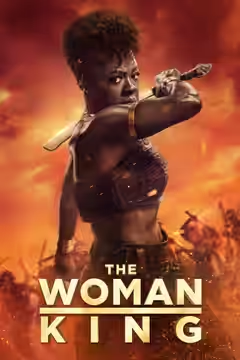
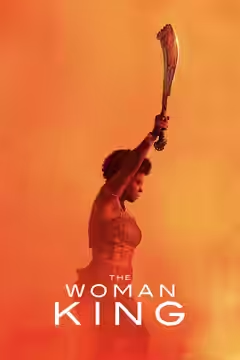
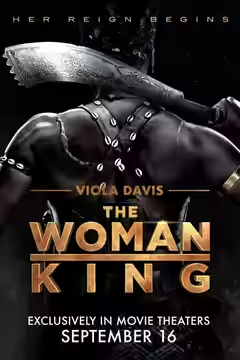
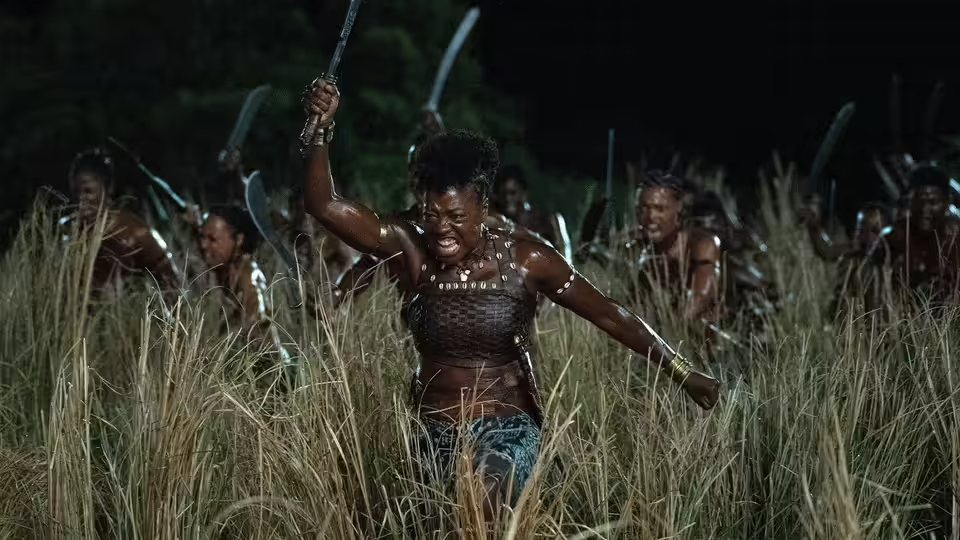
Nanisca (Viola Davis) raises her blade as Agojie warriors advance through tall grass
Film review

The Woman King

2022 · Directed by Gina Prince-Bythewood · 2h 15m · HR 15

In a sentenceViola Davis leads the finest infantry in West Africa against the Oyo, the Portuguese and a Hollywood third act, in rising order of difficulty

West Africa, 1823. The kingdom of Dahomey pays tribute to the Oyo Empire, whose raiders seize villagers and sell them to Portuguese traders at the port of Ouidah. Dahomey’s defence is the Agojie, a regiment of women commanded by General Nanisca (Viola Davis), who wants the newly crowned King Ghezo (John Boyega) to refuse the tribute and stop selling captives himself. Into the palace comes Nawi (Thuso Mbedu), delivered by a father who cannot marry her off, and she joins the recruits drilled by Izogie (Lashana Lynch) while Amenza (Sheila Atim) keeps Nanisca’s counsel. As the Oyo, led by Oba Ade (Jimmy Odukoya), gather to attack, the recruits train for their final test, and the slaver Santo Ferreira (Hero Fiennes Tiffin) lands at Ouidah with a young man, Malik (Jordan Bolger), who catches Nawi’s eye.

Plays from YouTube when you press play; nothing loads from them until then.

Fi1m review

Gina Prince-Bythewood’s account of Dahomey’s all-female regiment is handsomely built, hard-hitting in its fights and carried by Viola Davis and Lashana Lynch. The script keeps tidying the history and the romance to make things easier, and the film is smaller for it.

The Woman King is set in the West African kingdom of Dahomey in 1823, and it is about the Agojie, a regiment of women who fought for its kings. Nanisca (Viola Davis) is their general, scarred, unsmiling and aware she is near the end of her usefulness. Nawi (Thuso Mbedu) is a girl dropped at the palace gate by a father who has failed to marry her off. Between them stands Izogie (Lashana Lynch), who trains the recruits and enjoys it. Gina Prince-Bythewood, who made Love & Basketball and The Old Guard, directs it as an old-fashioned war film with a training camp in the middle, and for most of its 135 minutes it is a good one. It is let down by a script that keeps making things easier than they were.

It opens in tall grass at night. An Oyo raiding party sits around its fires with the villagers it has taken, and the grass rises. Polly Morgan shoots the raid in low firelight, the Agojie’s dark tunics nearly black against it, and Terilyn A. Shropshire cuts on the blows rather than around them, so you see the machete land. We sat up. There is no music for the first stretch, only breath and metal, and when Terence Blanchard’s drums come in the film has already told you what it is.

Davis plays Nanisca as a woman who has spent years not talking about something, and Prince-Bythewood lets the camera stay on her while she does not talk about it. The performance is mostly stillness and the occasional flinch, and it is the reason the melodrama later on does not fall over. Lynch is the best thing in the film. Izogie drinks, jokes, corrects Nawi’s footwork with a stick and kills people, and Lynch makes all of that one person without visible effort. Mbedu, who has to grow up in front of us, is stubborn and quick and never merely plucky. Sheila Atim, as Nanisca’s confidante Amenza, does a good deal with few lines. John Boyega’s King Ghezo is a young man enjoying a throne he has only just taken, and Boyega plays the vanity and the intelligence at the same time.

Gersha Phillips’s costumes are the film’s strongest evidence that it knows where it is: the regiment’s tunics are cut for running, and the palace women’s wrappers and beads mark rank without a line of dialogue. Akin McKenzie’s palace is mud walls, carved doors and courtyards of red earth, and it looks lived in rather than displayed. The training scenes, with recruits hauling themselves over thorn walls and fighting each other in the dust, are the heart of the middle hour. We enjoyed them more than most of the battles that follow.

Dana Stevens’s script, from a story by Stevens and Maria Bello, keeps reaching for the tidiest option. Nawi is given a romance with Malik (Jordan Bolger), a half-Dahomean man who arrives at Ouidah with the Portuguese slaver Santo Ferreira (Hero Fiennes Tiffin), and it plays like a scene borrowed from another film that had more time for it. The Oyo general Oba Ade (Jimmy Odukoya) is a sneer on a horse. The plotting relies more than once on the right person being in the right place with the right piece of knowledge. We noticed each time, and the film sailed on.

Then there is the history. Dahomey sold captives to European traders, and the film knows it: Nanisca spends the first act urging Ghezo to trade palm oil instead. But the story is arranged so that the Oyo do the selling and Dahomey does the resisting, and that arrangement flatters its heroes more than the record does. Some critics have found this fatal. We did not; a war film in which the good side is entirely good is the genre’s oldest habit, and Prince-Bythewood at least puts the argument on screen. It does leave the film smaller than it wants to be, a rousing story told where a harder one was available.

The last act, which we will not describe, swaps the film’s questions for a siege, and Shropshire cuts the big battle cleanly enough that you always know where Nanisca is. Against the run of films about soldiers drilled and then sent into the field, it sits comfortably: better acted than most, better dressed than nearly all, and no braver in its story than the average. Watch it for Lynch, for Davis’s face, and for the first ten minutes, which are as good as anything Prince-Bythewood has shot.

Critical consensus AI synthesised

75
Positive
23
Mixed
3
Negative
1

Most critics come away pleased. The reviews describe a rousing, old-fashioned action epic and largely mean that as a compliment. The praise lands first on Viola Davis, whose lead is called commanding and quietly melancholy in roughly equal measure, and then on the ensemble around her: Thuso Mbedu’s rookie warrior, Lashana Lynch and Sheila Atim are singled out repeatedly. The battle sequences draw consistent approval for their physical force and clear staging, and several critics admire the production design and costumes.

The reservations are about the script rather than the screen. Several reviews find the plot familiar, the romance tacked on and the middle stretch slow. The sharper dispute is over history: The AV Club says the film’s handling of slavery produces jarring shifts in tone, Vulture finds it conflicted by the tensions it raises, and The New Yorker judges its portrayal of Dahomey’s role in the slave trade seriously distorted. Slant calls it stale. The spread is narrow at the top and wide at the bottom.

Evening Standard
7 October 2022 · ★★★★★ · Charlotte O'Sullivan
100

The review finds the film a groundbreaking, rousing action epic, while acknowledging its wish-fulfilment ending. It especially praises Viola Davis’s subtle performance and the depth added by the outstanding ensemble cast.

Read the full review →
Little White Lies
7 October 2022 · 4/5/5 · Rógan Graham
100

The review calls the film a quietly radical, crowd-pleasing action epic and a rare cinematic event. It especially praises Viola Davis’s raw lead performance and the relationship between her character and Thuso Mbedu’s rookie warrior.

Read the full review →
The i Paper
7 October 2022 · Christina Newland
85*

Newland finds the film a vivid, unusually affecting historical action drama. She praises its forceful portrayal of Black womanhood and its breathtaking combat sequences.

Read the full review →
Radio Times
29 September 2022 · James Mottram
80*

The review presents the film as an entertaining historical epic that deserves a lively audience response. It singles out the performances as terrific.

Read the full review →
Time Out
15 September 2022 · ★★★★ · Anna Smith
80

The critic calls the film epic entertainment. She singles out Viola Davis as a mighty warrior woman.

Read the full review →
Empire
7 October 2022 · Kambole Campbell
78*

The review finds the film an entertaining, sumptuous throwback to classic Hollywood epics, despite some script and pacing stumbles. It particularly praises the cast’s performances and the thrilling, physically forceful action choreography.

Read the full review →

Straight answers AI written, from our review

Is The Woman King worth watching?
The Woman King is worth watching if you like an old-fashioned war film with a training camp in the middle, and we scored it 72. Viola Davis and Lashana Lynch carry it, the opening raid is as good as anything Gina Prince-Bythewood has shot, and the script keeps making the history and the romance easier than they were.
How long is The Woman King, and what is it rated?
The Woman King runs 2h 15m and is rated 15 by the HR in Croatia. It is an action and drama film.
Where can I watch The Woman King in Croatia?
The Woman King is available to rent from Amazon Prime Video from HRK 3.99. Availability is checked daily; the links above go straight to each service.
How violent or frightening is The Woman King, and is it suitable for children?
The Woman King is a 15 in the UK, and its fights are hard-hitting: the editing cuts on the blows rather than around them, so you see the machete land. It is a war film about a regiment defending its people from slave raiders, with battles, a siege and drilled recruits fighting in the dust. It is not for young children, but older teenagers used to war films should manage it.
How does The Woman King compare to Black Panther?
The Woman King and Black Panther both put an all-female royal guard at the centre of a kingdom arguing about its past, but one is history and the other is Marvel. Prince-Bythewood's film is better acted and its fights are the more physical; Coogler's is the larger, more inventive world. Both are let down by their final battles.
What should I watch after The Woman King?
After The Woman King, try Black Panther (2018, Fi1m 80): Another all-female royal guard, and a kingdom arguing with itself about its past. Then Gladiator (2000, Fi1m 84): The old model: a scarred general, an arena, a script that flatters the hero; and Yeelen (1987, Fi1m 84): Souleymane Cissé’s Malian quest film, slower and stranger, with the landscape doing the talking.

Cast

If you liked this, try…

  1. The Old Guard (2020) · not on Fi1m yetPrince-Bythewood’s previous film: immortal soldiers, the same clean fight staging, less history to smooth.

  2. Black Panther (2018, Fi1m 80)Another all-female royal guard, and a kingdom arguing with itself about its past.

  3. Gladiator (2000, Fi1m 84)The old model: a scarred general, an arena, a script that flatters the hero.

  4. Yeelen (1987, Fi1m 84)Souleymane Cissé’s Malian quest film, slower and stranger, with the landscape doing the talking.

  5. Zulu (1964) · not on Fi1m yetThe colonial war film from the other side of the wall, worth watching against this one.