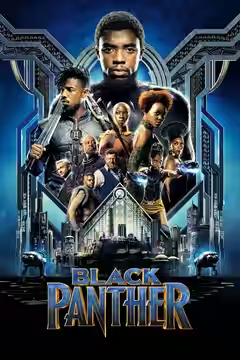
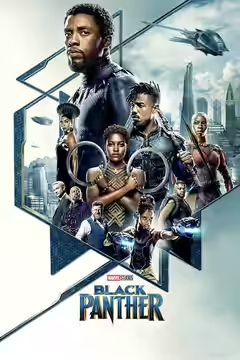
Ryan Coogler builds a kingdom Marvel has not had before, Hannah Beachler and Ruth E. Carter dress it, and Michael B. Jordan gives it a villain with a case. The final battle is the weakest thing in it.
Marvel films tend to happen in cities that have been emptied so they can be knocked down. Black Panther happens in a country, and it wants you to care about it. Wakanda is an African nation that has hidden its wealth and its technology from the world for centuries, and Ryan Coogler’s film is about what a new king owes to the people outside its borders. That is a more serious question than these films usually carry, and for most of its 135 minutes Coogler carries it. We recommend it warmly, with one large caveat about the last twenty minutes.
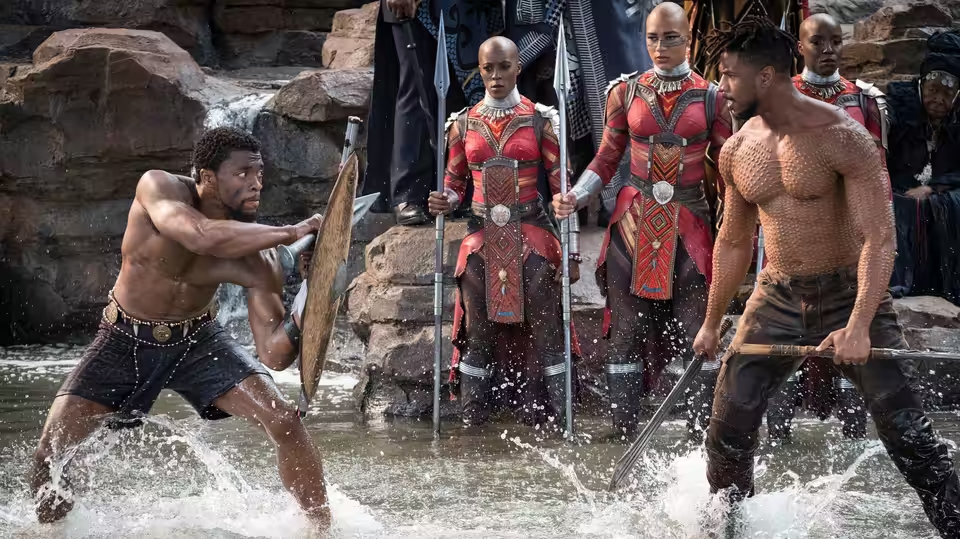
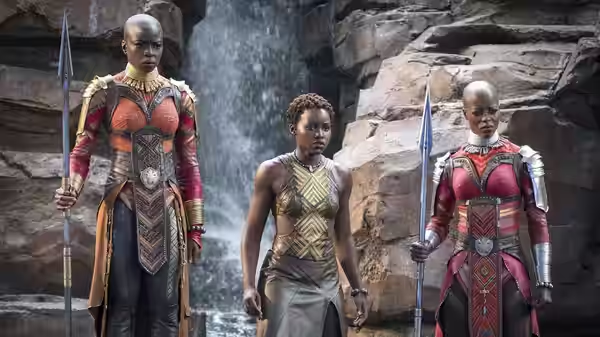
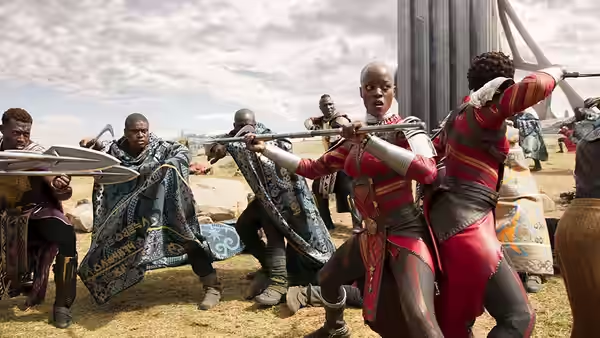
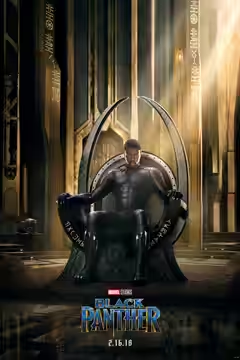
Hannah Beachler’s Wakanda is the first Marvel setting we could draw from memory. The capital is towers of red earth and glass with thatch on top, trains running between them and market stalls at the bottom. When T’Challa’s ship comes through the hologram of a forest and the city is simply there, we felt a lift we had not expected from a film with a producer credit for Kevin Feige. Ruth E. Carter dresses each tribe so you can tell them apart at a glance: the Dora Milaje in red, the Border Tribe in blue blankets, the Jabari in fur. Rachel Morrison lights the throne room in purple and gold like a cathedral, and her Busan casino is neon and fish tanks, with a long tracking shot up a staircase that is the best-staged fight in the film.
Ludwig Göransson’s score does the rest of the work of making the place real. Drums and a wooden flute go with the Wakandan scenes, a chant swells whenever the king walks into a room, and a low, itchy bass follows Killmonger, so you know from the sound alone which man is on screen. Kendrick Lamar’s songs arrive over the Oakland scenes and the casino, and for once the pop on a Marvel soundtrack sounds as if it belongs to the film rather than to a marketing plan.
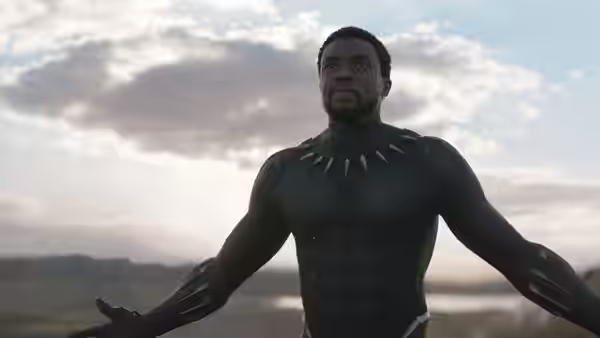
Chadwick Boseman plays T’Challa as a man who is not sure he wants the job and is too well brought up to say so. It is a quiet performance in a loud film, and the film needs a still centre. Around him the women get the better lines: Danai Gurira’s Okoye, a general who throws away a wig mid-fight because it is slowing her down; Letitia Wright’s Shuri, the kid sister who runs the laboratory and teases the king in front of his guards; Lupita Nyong’o’s Nakia, who wants Wakanda to open its doors and argues the case before the villain does. Winston Duke’s M’Baku has about six minutes and keeps most of them.
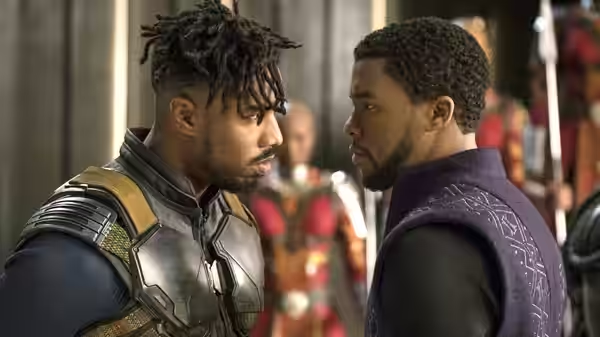
Michael B. Jordan’s Erik Killmonger is the reason the film holds up. Coogler has directed Jordan twice before, in Fruitvale Station and Creed, and he knows to let him stand still. Killmonger’s first scene, in a London museum, has him asking a curator how her employers came by an African axe and what they paid for it, and it made us sit up, because we cannot remember a Marvel villain saying something we agreed with. He is angry about the right things and wrong about what to do with the anger, and the script, by Coogler and Joe Robert Cole, does not pretend otherwise. Andy Serkis cackles through the first hour as the arms dealer Klaue and is good fun. Martin Freeman’s Everett K. Ross exists so someone can have Wakanda explained to him, and Freeman does bafflement well.
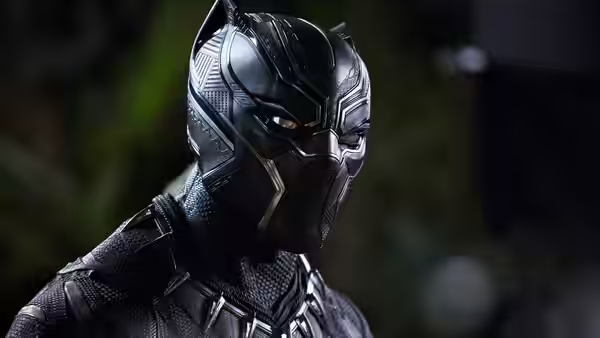
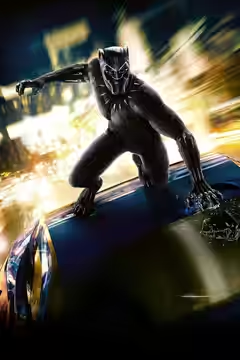
The last act is where the studio takes back the wheel. There is a battle on a plain, with tribes charging each other and armoured rhinos, and beneath it two men in near-identical suits fight in a rendered tunnel while a train goes past. The effects have not caught up with what Coogler asked for. The suits look rubbery, the rhinos look pasted in, and Michael P. Shawver and Debbie Berman cut it so fast that you cannot tell which panther is which. After two hours in a place we believed in, it is a shame to finish in a place that plainly does not exist.
Against the studio’s own standards this sits near the top, alongside the first Iron Man and above nearly everything else. Against Coogler’s, it is less controlled than Creed, which had one fight to stage and staged it properly. Most critics have put it a little higher than we have, and we understand why; the country is the achievement, and it is a real one. Watch it for the throne room, the casino and every scene Jordan is in. When the rhinos arrive, put the kettle on.