Alfred Hitchcock makes mistaken identity frightening by staying close to the man who cannot correct it. Henry Fonda gives this severe, humane thriller its force, though the unrelenting helplessness can make it a punishing watch.
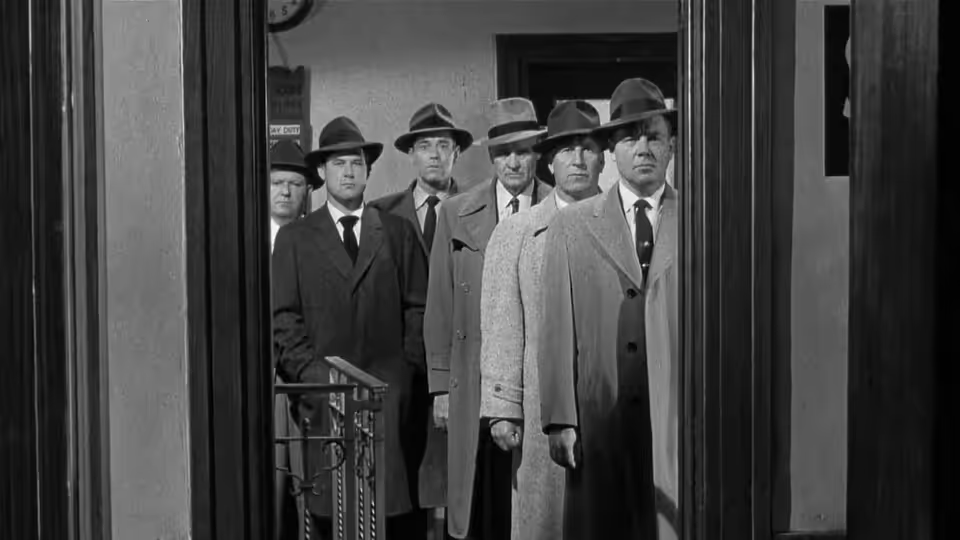
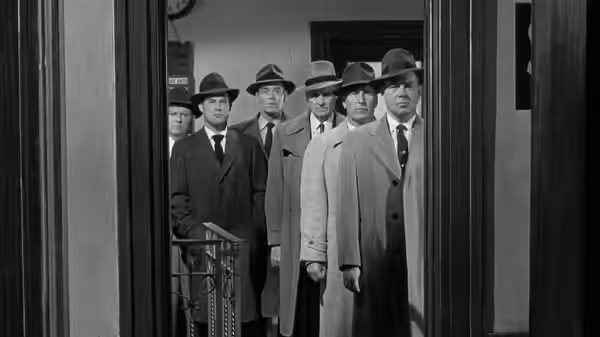
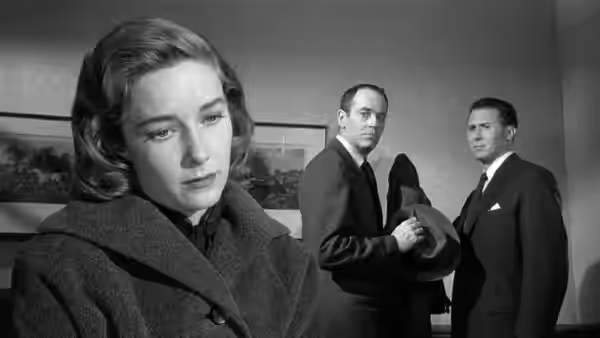
The Wrong Man is a fine thriller that offers remarkably little pleasure in being right. Alfred Hitchcock takes a true story of mistaken identity and refuses to make innocence feel reassuring. Manny Balestrero, played by Henry Fonda, is a family man wrongly identified as a robber; knowing he is innocent gives us no comfortable advantage. Hitchcock wants us to understand how little that knowledge helps the person accused, and he succeeds almost too well.
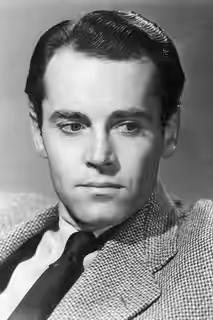
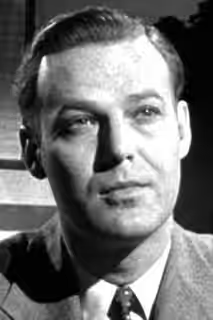
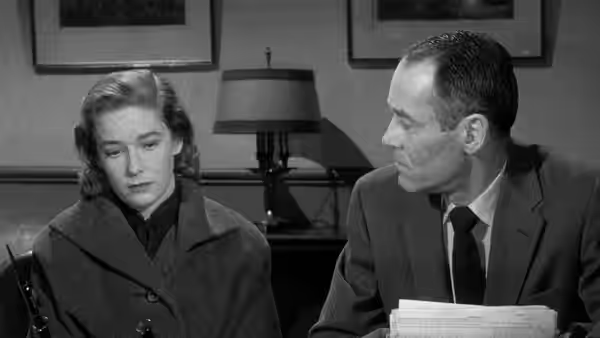
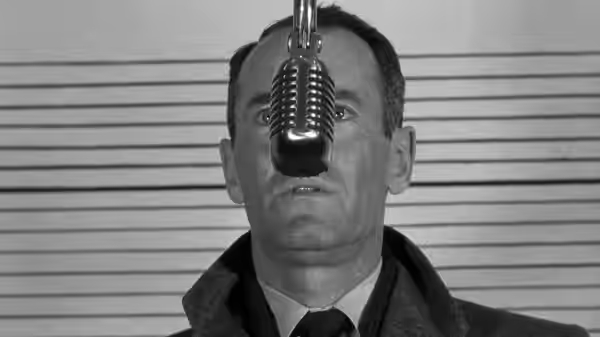
Fonda’s casting is crucial because he makes Manny’s innocence seem ordinary, something the man himself has never needed to consider. We found the mistaken identification frightening because his bewilderment is so persuasive: he cannot understand how other people can be certain of something he knows is wrong. The performance does not ask us to admire a heroic victim. Fonda makes us worry about a person who seems poorly equipped for the attention he is getting.
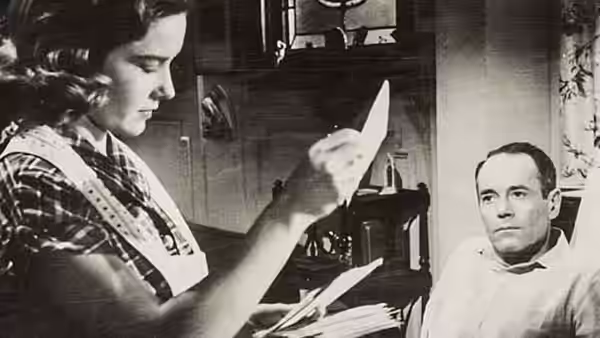
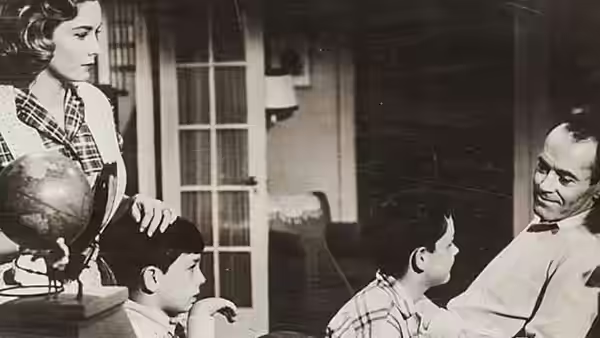
The concern for family life makes the experience harder to shrug off. Vera Miles plays Rose Balestrero, and her contribution gives the psychological cost a seriousness that a more narrowly procedural film might have avoided. The suffering around Manny matters in its own right, rather than merely adding to the list of things he must endure. Hitchcock allows that suffering to trouble our expectations of what putting a mistake right could accomplish.
Robert Burks’s photography gives the New York locations a useful ordinariness. The city feels insufficiently interested in Manny’s trouble, which makes it more disturbing than an obviously threatening backdrop would be. We can believe that other lives are continuing nearby, untouched by what has happened to him. The locations support the true-story approach without making the film feel like an illustrated account of a case.
George Tomasini’s editing serves the decision to stay close to the helpless accused. The suspense depends on sharing Manny’s uncertainty, and the cutting makes that restricted perspective uncomfortable without rendering it confusing. Bernard Herrmann’s music contributes to the pressure, although Fonda’s performance is what makes the anxiety difficult to put aside. These contributions work together particularly well because they keep our attention on what the ordeal feels like to the person undergoing it.
The reservation is the persistence of that pressure. Maxwell Anderson and Angus MacPhail’s screenplay gives the ordeal moral seriousness, but its concentration on helplessness can become wearing. We wanted more variation in the emotional demands being made on us. That is not a request for jokes or reassurance; a little more breathing space would make the changes in intensity easier to feel. The severity occasionally makes the film seem more uniform than its performances are.
Within the crime thriller, being wrongly accused can provide the excuse for an entertaining adventure. Hitchcock takes the accusation seriously enough to make that expectation seem uncomfortable here. We recommend it for Fonda, for its concern with the damage done to ordinary people, and for suspense that does not require us to doubt the accused. Choose it when being thoroughly unsettled sounds like a worthwhile use of an evening.