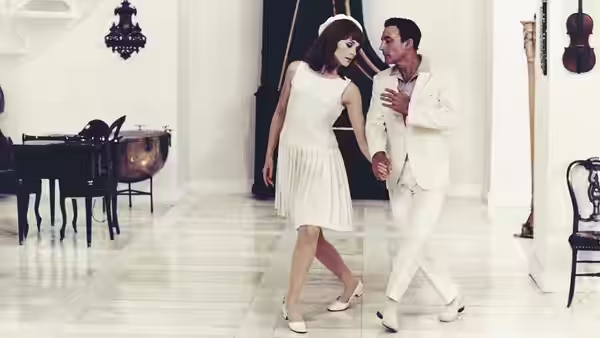
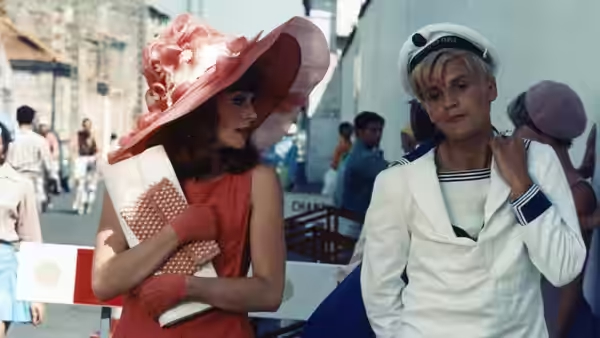
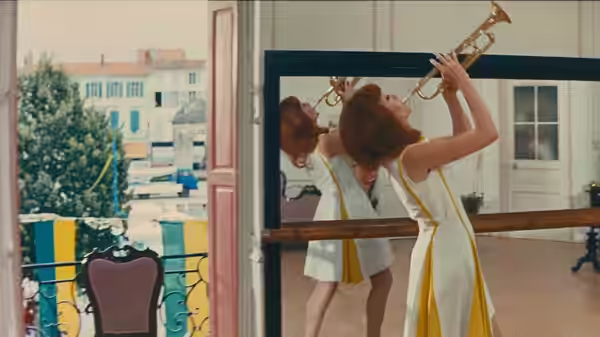
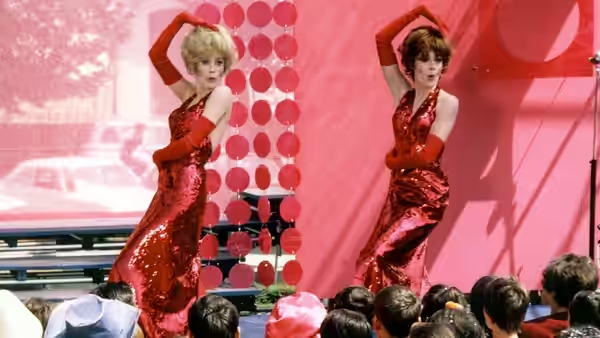
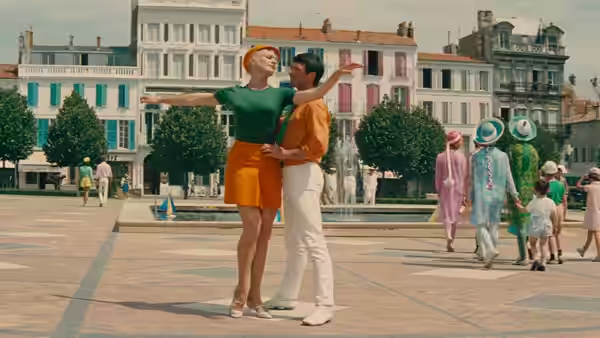
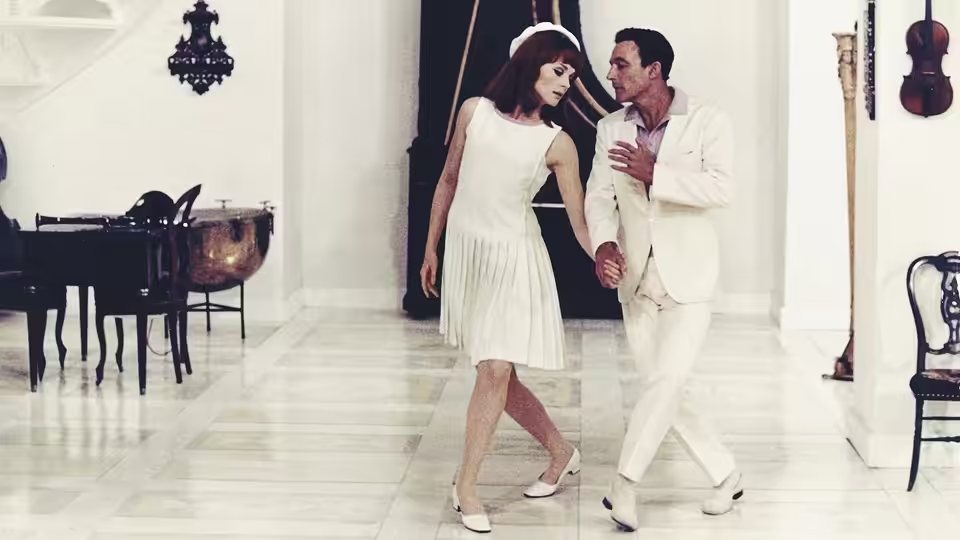
A woman in a white dress dances with a man in a white suit inside a music room
Film review

The Young Girls of Rochefort

1967 · Directed by Jacques Demy · 2h 06m · IGAC M/6

In a sentenceIf every neighbour sang Michel Legrand’s songs, we might finally make an effort to know them

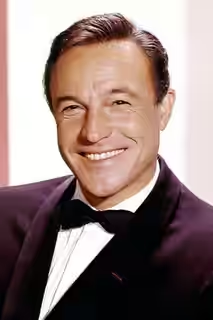
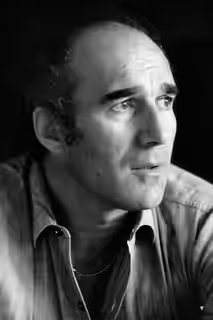
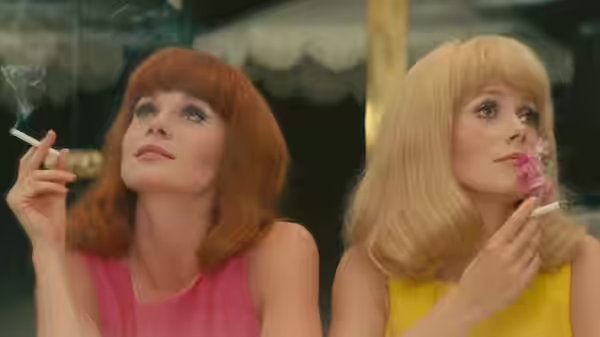
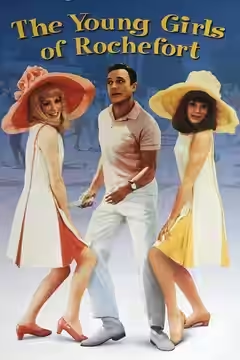
Delphine Garnier (Catherine Deneuve) and Solange Garnier (Françoise Dorléac) are at the centre of a romance in which conversation gives way to song. Around them are Maxence (Jacques Perrin), Andy Miller (Gene Kelly) and Yvonne Garnier (Danielle Darrieux). The townspeople take part in the musical numbers, with dancing in the streets and open-air settings in pastel colours. Romantic hopes shape the encounters, while desperation runs beneath the outward cheer. Simon Dame (Michel Piccoli) also belongs to this ensemble, whose private feelings play out amid the singing and dancing.

Fi1m review

Jacques Demy’s musical is a warm, spacious pleasure, with Michel Legrand’s songs giving its romantic hopes real urgency. Some dancing is merely pleasant, but the colour, company and music make the occasional slackness easy to forgive.

Jacques Demy makes an unusually companionable musical out of romantic longing, and we recommend it with one reservation: the dancing does not always match the songs. The Young Girls of Rochefort is most persuasive when conversation becomes music and the townspeople are allowed into the number. There is pleasure in how readily everyone accepts this, without the film asking us to applaud its own invention. Its cheerfulness leaves room for people who need romance rather badly.

Michel Legrand’s songs are the strongest reason to stay. They give ordinary romantic hopes a little grandeur without making the people who hold them ridiculous, and their sweetness seldom becomes oppressive. We were cheered more than we expected when the townspeople joined the musical action; seeing the film make room for them gave those numbers an extra warmth. Their participation makes the songs feel like something a whole town might share, and helps the shifts out of conversation seem natural.

Bernard Evein’s production design gives the open-air settings a pastel brightness that suits this social ease. The colour makes the surroundings seem welcoming enough for someone to start singing in them, which is a useful achievement in a musical. Ghislain Cloquet’s cinematography makes those colours inviting without letting them overwhelm our interest in the performers. The airy settings work particularly well when the musical numbers involve the townspeople: there is room for the dancing, and the surroundings remain worth looking at.

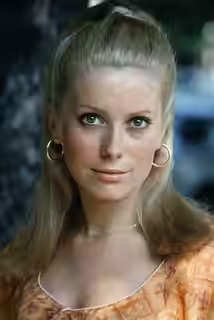
Catherine Deneuve and Françoise Dorléac, as Delphine Garnier and Solange Garnier, give the film spirited company at its centre. Their appeal does not depend on making every romantic hope look sensible; there is enough urgency in the performances to suggest how much these hopes matter. Gene Kelly, playing Andy Miller, fits comfortably into the film’s affection for Hollywood musicals. The cast takes the feelings seriously while accepting the freedom that a musical gives performers to express them, without becoming coy about the singing.

The reservation is that the choreography sometimes settles for being agreeable. After the opening number, there are stretches where the dancing has less character than the music, and our attention shifts towards the songs when it ought to be held by both. Jean Hamon’s editing makes the movement between dialogue and musical performance feel easy, but cannot give a routine the bite it lacks. At 126 minutes, the film allows enough time for that unevenness to become noticeable, even with so much else to enjoy.

The blend of Hollywood musical exuberance and French New Wave freedom works because Jacques Demy stays attentive to people. The desperation beneath the romantic hopes keeps the pastel surroundings from making everything feel too comfortable. It also makes the optimism more affecting: these people have reasons to want their lives to change, and the music lets that desire be heard. Within a genre that can become pleased with its own prettiness, that attention to dissatisfaction matters, even when the film is being thoroughly cheerful.

Choose it for an evening when romance sounds appealing but solemnity does not. Allow for a few dances that pass pleasantly without making much of an impression, and give Michel Legrand’s songs your attention. We would happily spend another evening with these singing neighbours.
Critical consensus AI synthesised

79
Positive
6
Mixed
1
Negative
0

Most critics greet The Young Girls of Rochefort warmly, with praise clustering around its colour, music and ease of movement. The reviews admire the pastel atmosphere and sunny, open-air production design, while Michel Legrand’s songs earn praise for their sweetness without becoming sugary. Several critics find its romantic escapism persuasive, and the musical numbers draw particular appreciation for growing naturally out of dialogue and bringing the townspeople into the action.

The spread runs from wholehearted enthusiasm to qualified pleasure, with one mixed assessment and no outright rejection. Radio Times supplies the clearest dissent: it enjoys the songs and spirited performances but finds the choreography disappointing after the opening number, leaving the film short of fully enchanting. That puts it at odds with reviews praising the dancing’s grace, while another reading notices desperation and militarism beneath the cheerful surface.

Time Out
7 April 2014 · ★★★★★ · Keith Uhlich
100

Uhlich presents the film as a sublime musical masterpiece. He singles out the restored version’s eye-popping vibrancy.

Read the full review →
Slant Magazine
28 April 2017 · ★★★★½ · Eric Henderson
90

Henderson argues that Demy’s follow-up surpasses The Umbrellas of Cherbourg in elevating ordinary lives into dreamlike cinema. He praises the film’s breezy confidence and sunny, open-air production design.

Read the full review →
Empire
29 July 2009 · Patrick Peters
85*

Peters says the film remains an appealing blend of Hollywood musical and French New Wave. He praises its spontaneous musical numbers, which emerge directly from the dialogue and involve even the townspeople.

Read the full review →
The Guardian
5 December 2023 · Indigo Bailey
80*

Bailey finds the film an enchanting, deeply pleasurable musical whose romantic idealism makes its escapism compelling. The review especially praises its rippling choreography and pastel atmosphere, while noting an undercurrent of desperation and militarism.

Read the full review →
The New York Times
14 August 1998
70*

The critic presents the film as a warmly appealing revival. Its sunny French charm is singled out for praise.

Read the full review →
Variety
31 December 1966 · Variety Staff
70*

The review finds the musical charming and graceful, with sustained human observation. It especially praises Legrand’s sweet, never-syrupy music and the deft choreography.

Read the full review →

Straight answers AI written, from our review

Is The Young Girls of Rochefort worth watching?
The Young Girls of Rochefort is well worth watching for its warm romantic company and Michel Legrand’s songs; we score it 84 out of 100. We recommend it for an evening of romance without solemnity, provided a few merely pleasant dances and occasional slackness across its 126 minutes will not spoil the pleasure.
How long is The Young Girls of Rochefort, and what is it rated?
The Young Girls of Rochefort runs 2h 06m and is rated M/6 by the IGAC in Portugal. It is a romance and comedy film.
Where can I watch The Young Girls of Rochefort in Portugal?
The Young Girls of Rochefort is not on any streaming or rental service in Portugal at the moment. It is available in 34 other countries; change your country at the top of the page to see where. Availability is checked daily.
How does The Young Girls of Rochefort compare to Top Hat?
The Young Girls of Rochefort offers a more spacious, communal musical pleasure than Top Hat, though we favour Top Hat for the dancing. Demy’s townspeople join in songs that give romantic hopes real urgency, while Top Hat combines elegant dancing with misunderstandings a plain conversation could fix. Choose Rochefort for warmth and colour, Top Hat for its finest routines.
What should I watch after The Young Girls of Rochefort?
After The Young Girls of Rochefort, try Top Hat (1935, Fi1m 87): Romance, dancing and misunderstandings, with elegance that never requires anyone to behave sensibly. Then Singin' in the Rain (1952, Fi1m 93): Another musical that takes its songs and its jokes equally seriously.

Cast

Awards

Academy Awards, 1969

Nominated
Best Original Musical Score

If you liked this, try…

  1. Top Hat (1935, Fi1m 87)Romance, dancing and misunderstandings, with elegance that never requires anyone to behave sensibly.

  2. Singin' in the Rain (1952, Fi1m 93)Another musical that takes its songs and its jokes equally seriously.

  3. French Cancan (1955) · not on Fi1m yetColour and choreography turn theatrical work into a warm, bustling communal pleasure.

  4. Lagaan (2001) · not on Fi1m yetSong, dance and collective effort, with a whole community given something to hope for.

  5. The Green Ray (1986) · not on Fi1m yetRomantic longing without musical numbers, for anyone drawn to the unease beneath the cheer.