John Carpenter’s alien-invasion satire makes consumer culture look properly sinister, even when the storytelling wanders. Roddy Piper’s awkward charm and a sharp visual premise carry it through some clumsy dialogue and rather too much gunfire.
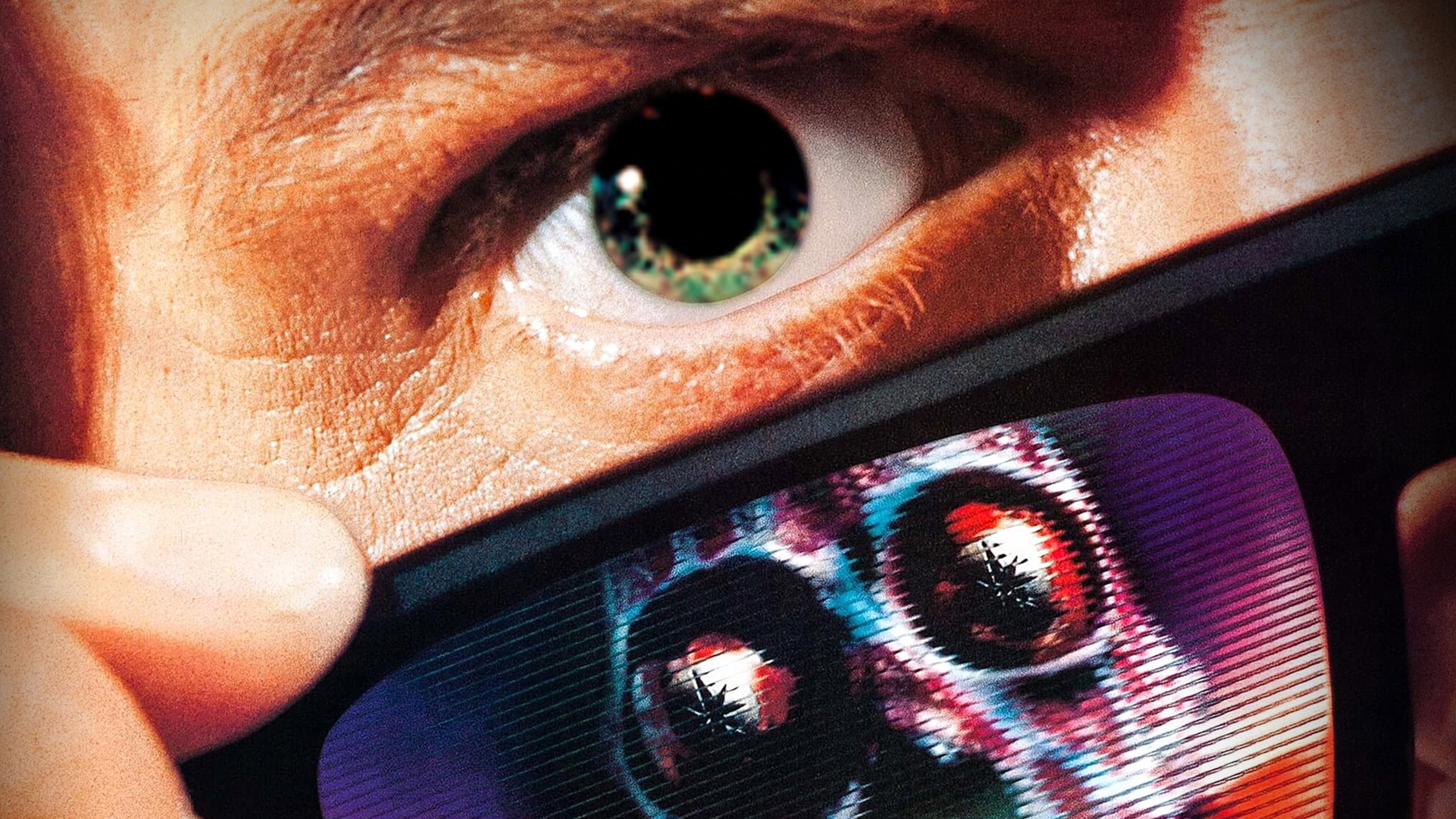
John Carpenter’s They Live is a funny, angry science-fiction film with a simple complaint: people are being told what to want by those who profit from their obedience. Its aliens control the economy through subliminal messages, which gives a familiar invasion story something specific to be cross about. Carpenter enjoys the fighting enough to let it crowd out the satire, and the story has some awkward joins. Even so, the discovery that special sunglasses can expose the whole arrangement is enough to make the film worth an evening.
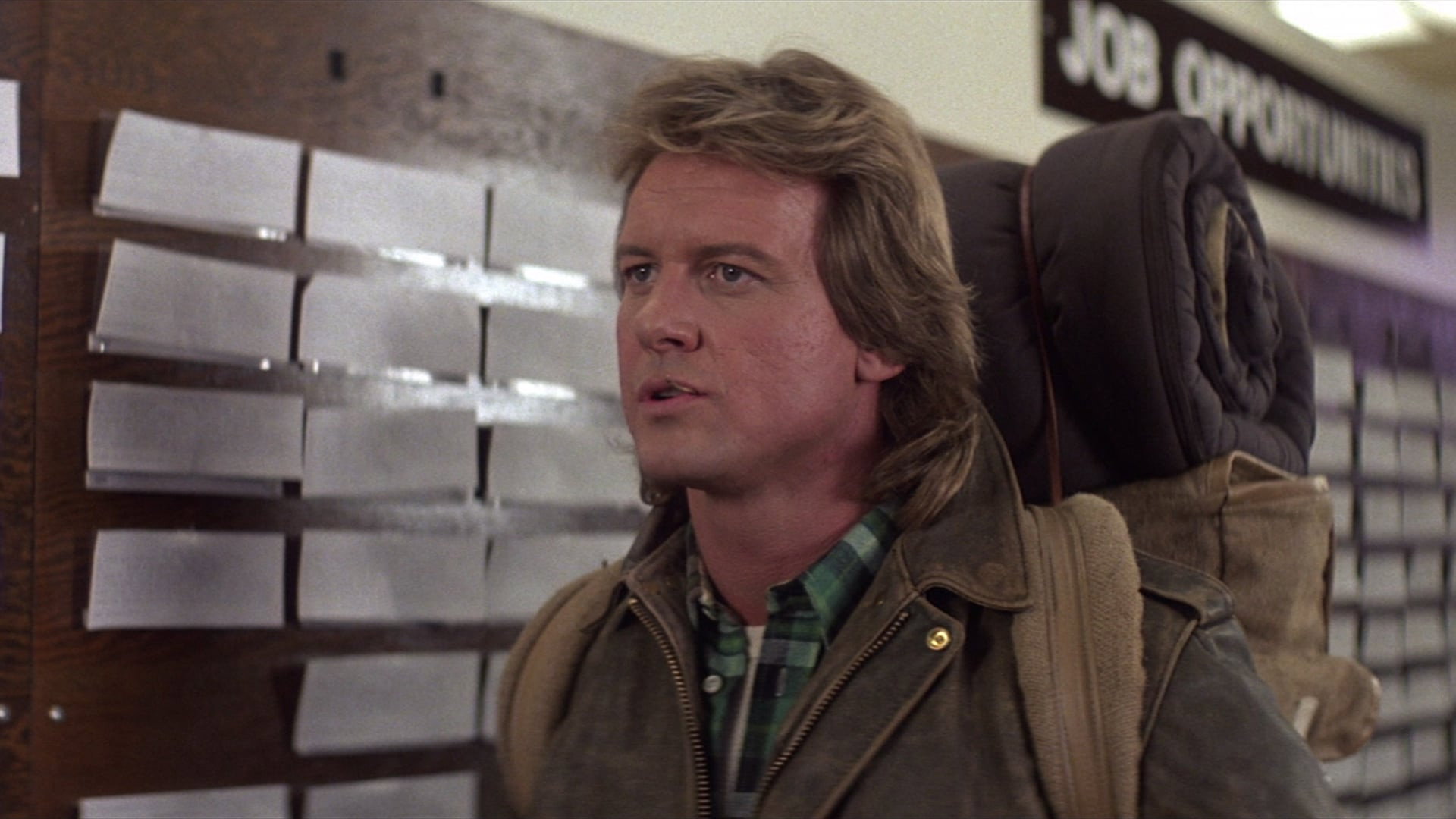
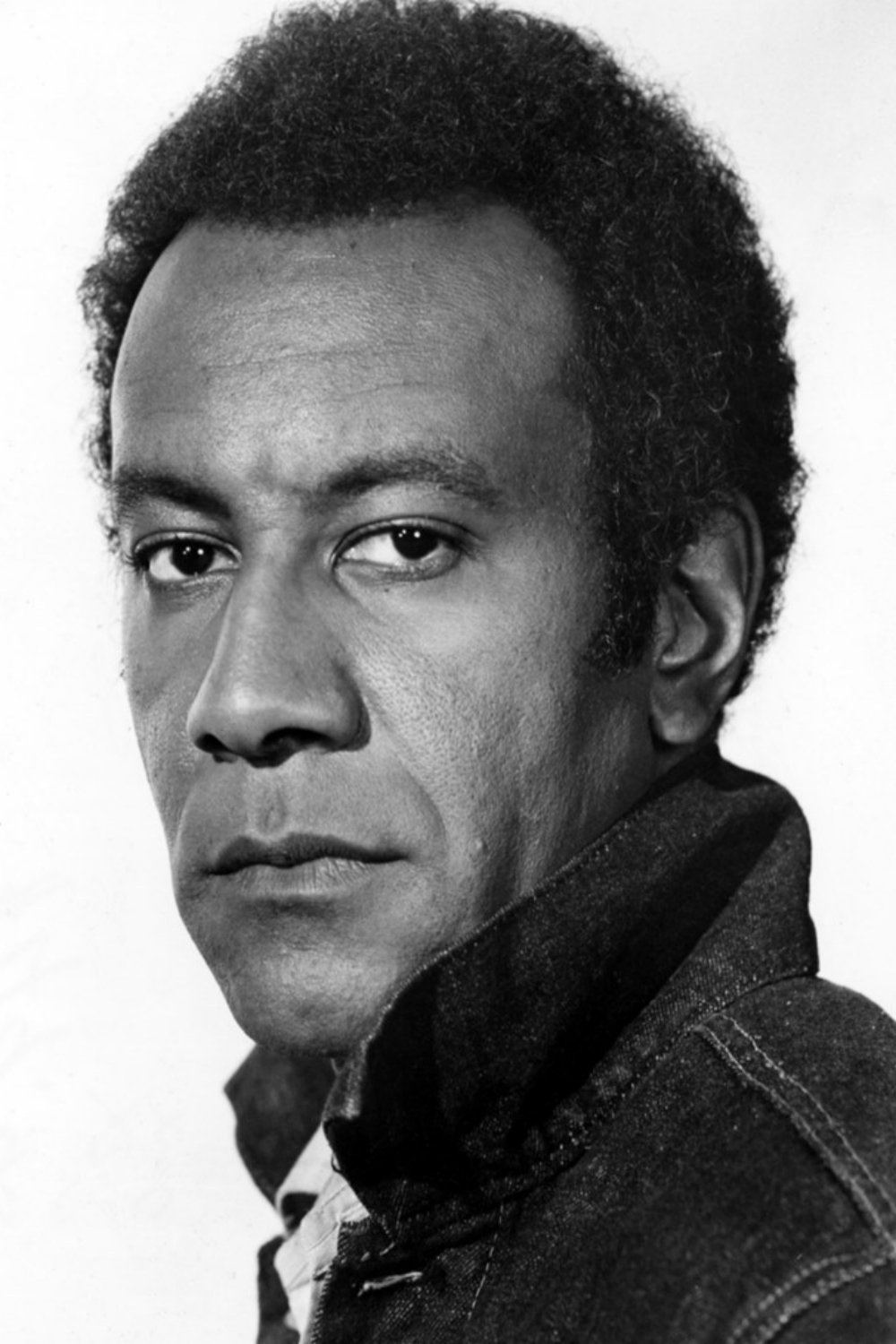
Roddy Piper plays John Nada, the man who gets to see what everyone else is missing. Piper is better at being physically indignant than at delivering dialogue, and some lines sound as though he is still deciding where to put the emphasis. Yet his lack of polish helps: this is an appealing lead who seems equipped to hit a problem before he can explain it. Keith David, as Frank Armitage, brings a welcome firmness to the performances. Together they make the move towards action feel natural, even when it is not particularly helpful.
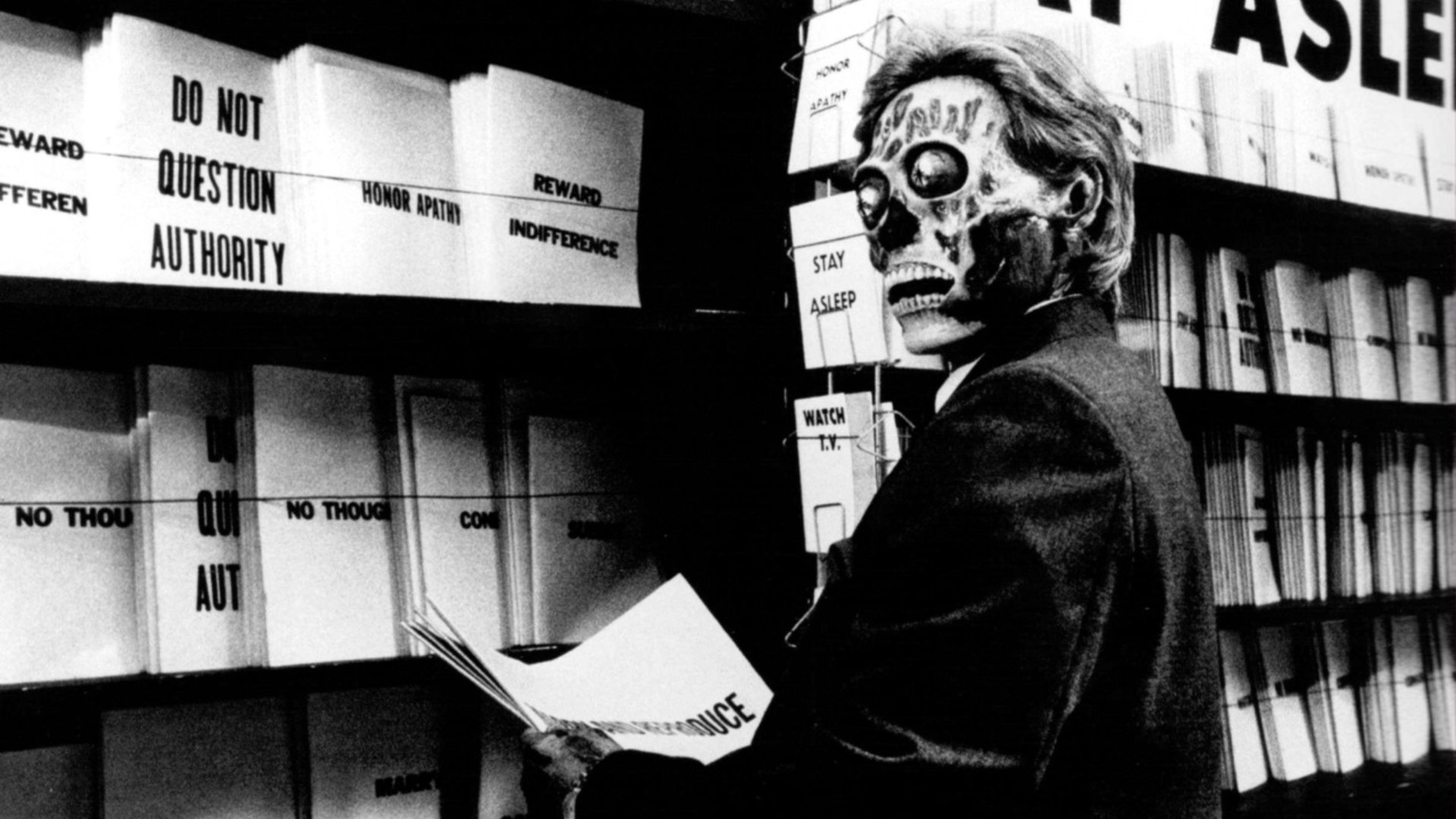
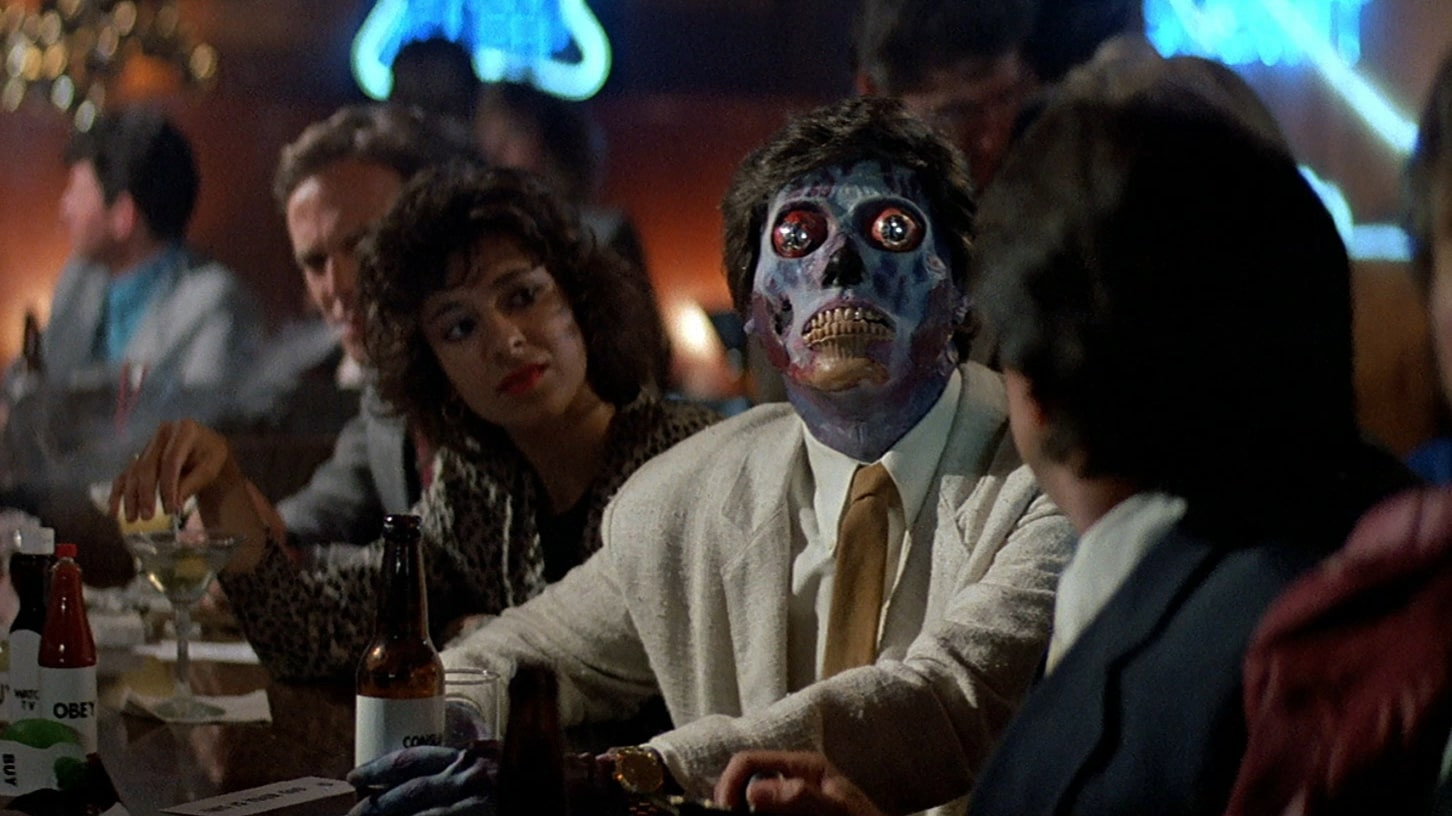
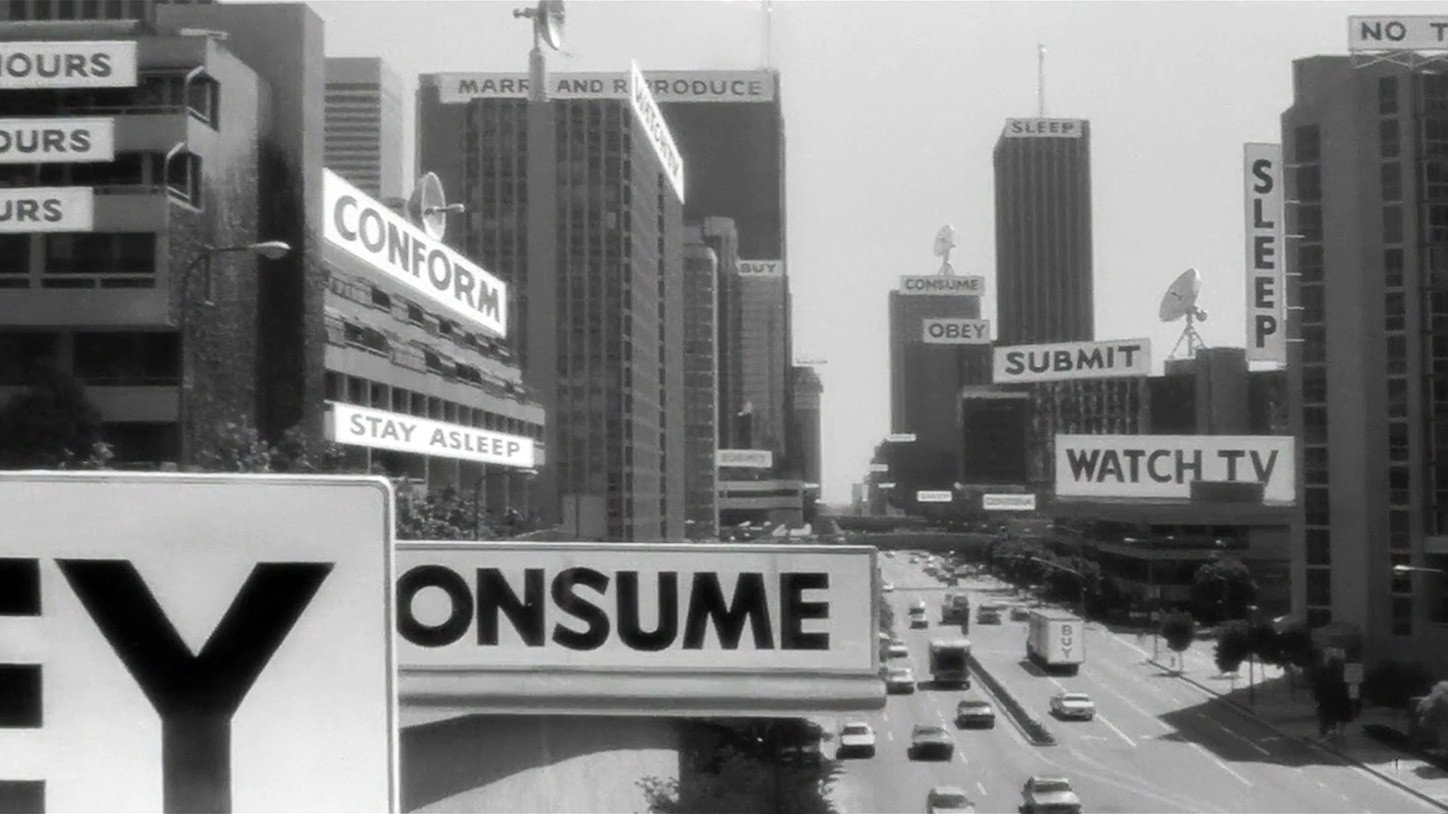
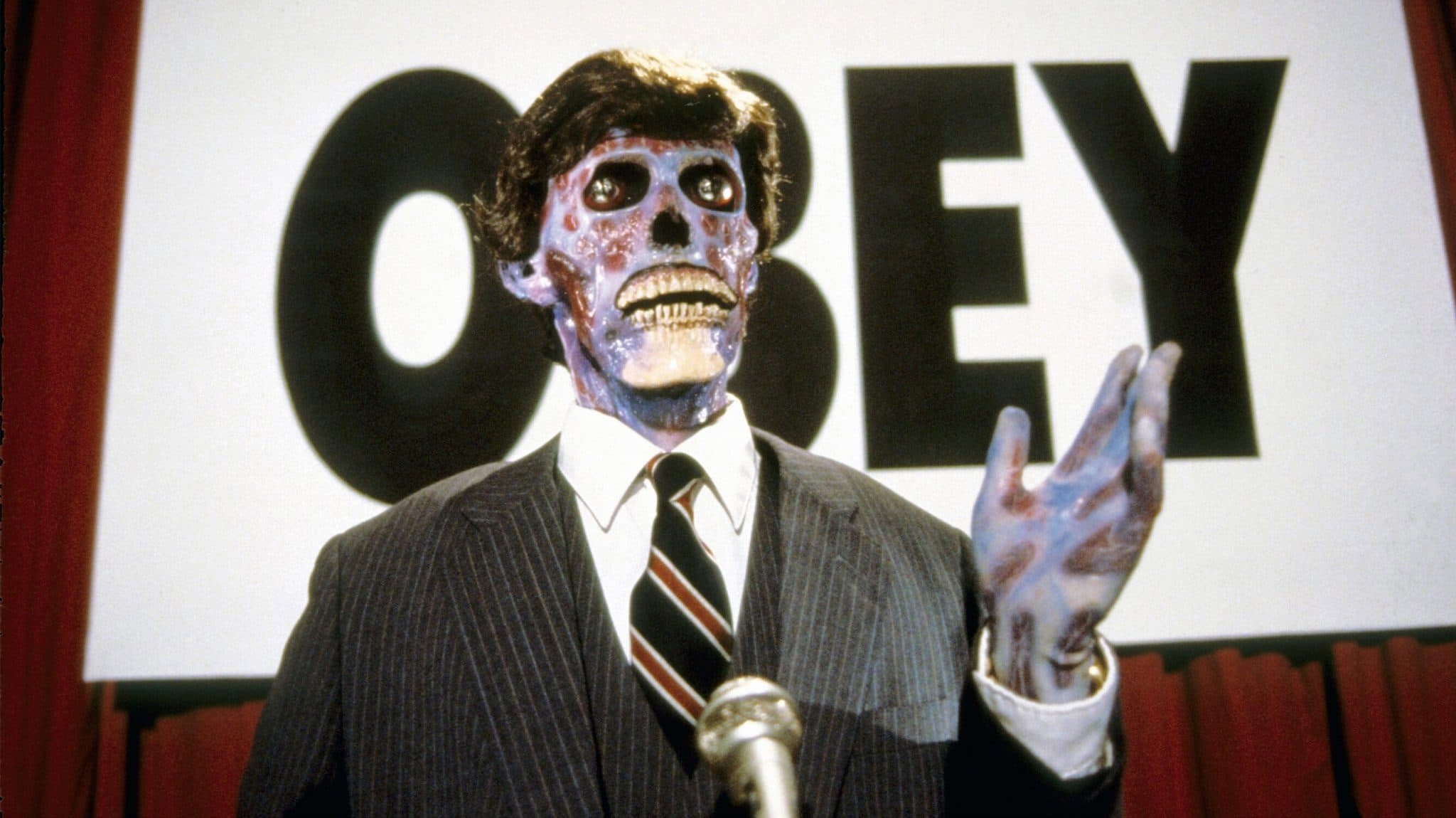
The sunglasses are the film’s strongest piece of storytelling. Advertising gives away its concealed instructions, and people in positions of power reveal what they are. We were unsettled by the advertising’s concealed instructions, because they scarcely exaggerate what advertising already asks us to do. Gary B. Kibbe’s cinematography keeps that discovery legible, so we can take in the joke without waiting for an explanation. The advertising also gives the production design a clear job, making the everyday business of buying things sufficient to suggest a threat.
Carpenter and the editors, Gib Jaffe and Frank E. Jimenez, take their time over the prolonged back-alley fight. They let it continue well past the point at which the need to establish anybody’s toughness has been met. We laughed at the sheer amount of effort involved, as the fighting continued after any reasonable opponent might have asked for a chair. It is a good joke about the exhausting business of winning a fight, and the editing gives it room to become ridiculous.
The trouble comes when gunfire starts to seem like the film’s answer to every question. Carpenter’s screenplay has given us an enemy worth thinking about, but the loose plotting and increasingly routine action leave less room to think about it. John Carpenter and Alan Howarth’s music keeps the action moving without making the shift feel much less abrupt. We start waiting for another discovery, rather than another opportunity for Nada to demonstrate that he can take care of himself.
As an alien-invasion film, it is pleasingly interested in who already has power before the invaders are exposed. The satire aims at consumerism and class, and Carpenter makes no attempt to hide whom he dislikes. That bluntness can wear thin: once we understand the connection between buying things and doing as we are told, the film has limited ways of developing it. But its willingness to take ordinary people’s discontent seriously gives the fighting a reason beyond the usual business of defeating an unpleasant visitor.
At 93 minutes, They Live does not demand much patience, although it sometimes spends that patience carelessly. The clumsy stretches are easier to forgive because Carpenter finds things to be angry about that we recognise without explanation. If polished dialogue is a condition of the evening, choose something else.