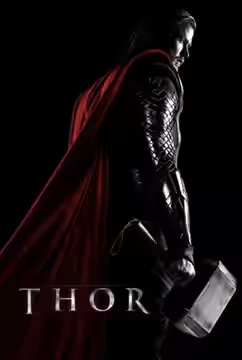
Kenneth Branagh gives a Norse god’s family quarrel the seriousness he once gave Shakespeare’s kings, and the Asgard half works. The Earth half is thin, the romance thinner, and Tom Hiddleston walks off with the film.
Kenneth Branagh, who made his name filming Shakespeare, was hired to introduce a Norse god with a hammer to a series that had so far kept to a billionaire in a metal suit. His answer is to treat Asgard as a court: a king, two sons, a throne, and a war the old man ended that the young one wants to start again. The jokes are saved for Earth. Thor runs 115 minutes, split roughly in half between the gold city and a desert town in New Mexico, and the gold half is the better one.
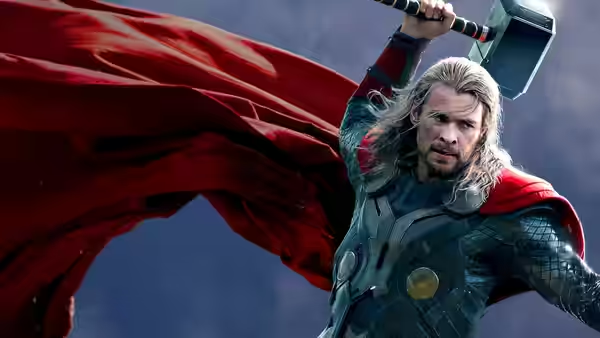
Bo Welch builds Asgard as a city of gold organ pipes on a black sea, with a walkway of lit glass running out to the gate where Heimdall (Idris Elba) stands guard in gold armour. Jotunheim is blue-black ice, broken pillars and no daylight. Alexandra Byrne dresses Odin in gold, Thor in red and silver, and Loki in green under a horned helmet that ought to be absurd and is not, because Tom Hiddleston wears it as though he had been waiting for it. Patrick Doyle’s score is brass and choir, loud and unashamed, and it suits the palace far better than the desert.
Haris Zambarloukos lights the throne room in amber and then tilts the camera. The tilt is the film’s one visual habit: half the conversations in Asgard are shot with the horizon leaning, so the pillars lean and the actors stand at a slant, as if the palace were a ship. By the fortieth minute we had stopped being unsettled and started waiting for the next one. Paul Rubell cuts around it as neatly as anyone could.
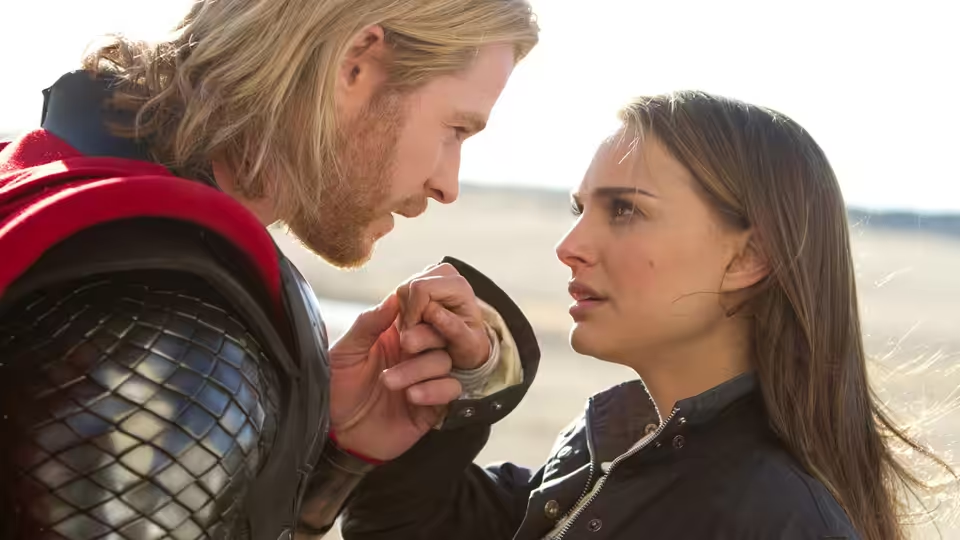
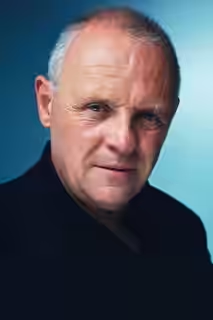
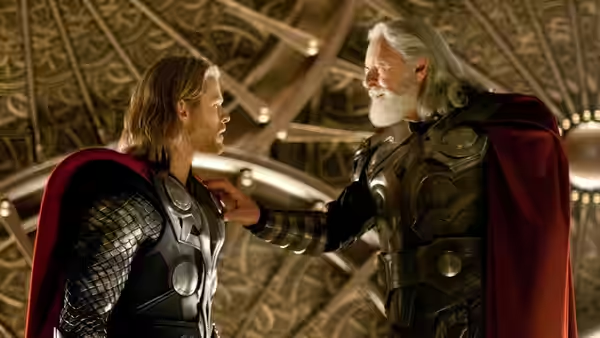
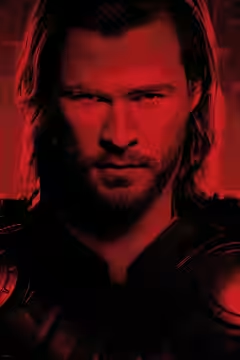
What steadies Asgard is Anthony Hopkins. He plays Odin at full volume, and the banishment is the film’s best scene: he tears the discs from his son’s armour one by one, roaring that he is unworthy, and Chris Hemsworth, enormous, stands and takes it with the face of a boy who has never been told no. We were more moved than we expected to be by a scene about a fictional god being posted to New Mexico. It was Hopkins, playing a father’s rage at a son he knows he has spoiled. Hiddleston stands at the edge of the frame throughout, saying nothing, and we found we were watching him.
Loki is the second son, quieter and cleverer. Hiddleston plays him hurt rather than wicked; he whispers where everyone else shouts, and the screenplay by Ashley Miller, Zack Stentz and Don Payne gives him the only storyline with a turn in it, which we will not describe. Whenever the film cut from the desert back to the palace we were glad, mostly to see what he was up to.
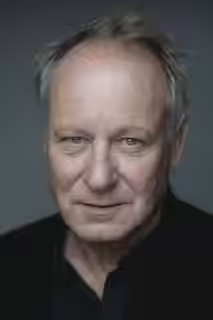
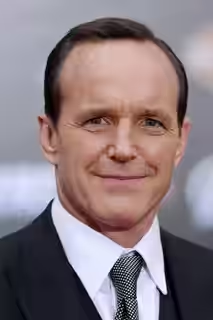
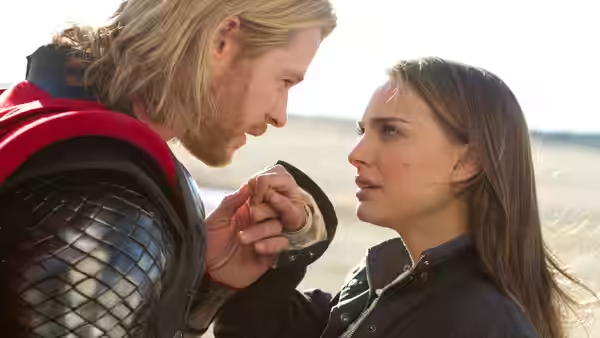
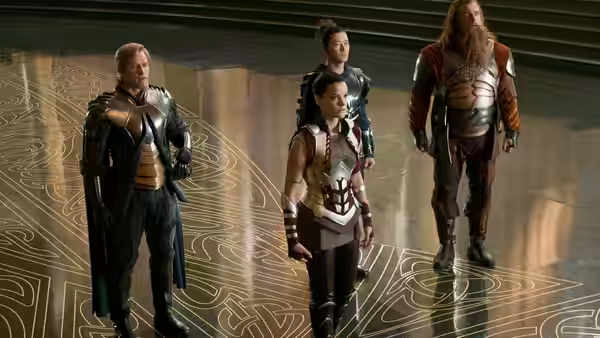
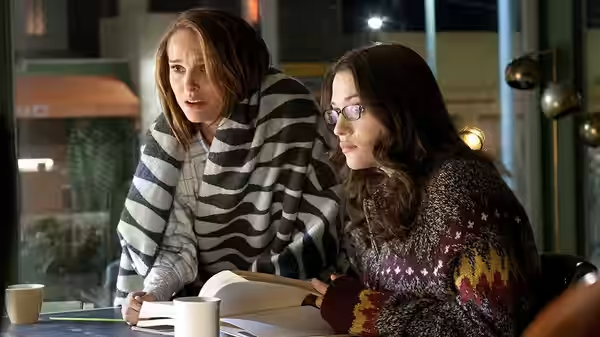
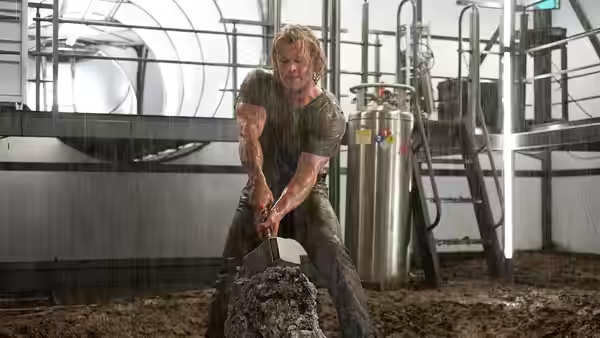
The desert is where it thins. Thor is hit by a van driven by Jane Foster (Natalie Portman), an astrophysicist chasing storms with her mentor Erik Selvig (Stellan Skarsgård) and her intern Darcy Lewis (Kat Dennings). Dennings gets the good lines and a taser. Hemsworth, it turns out, can do comedy: he drains a mug of coffee in a diner, smashes it on the floor and demands another, and we laughed out loud. But the town is three streets and a diner, Agent Coulson (Clark Gregg) arrives to fence off the hammer and say little, and the romance is written in an afternoon. We did not believe Jane loved him. We believed she found him tall. The Warriors Three (Ray Stevenson, Tadanobu Asano and Josh Dallas) turn up in the last third and get a scene each.
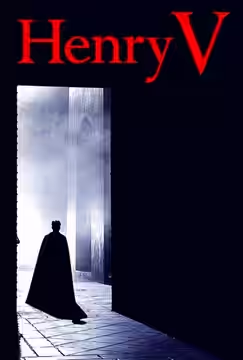
Set against Iron Man (2008), which began this run of films, Thor is stiffer and much stranger, and stranger counts in its favour. Set against Branagh’s own Henry V (1989), about a young royal learning what a crown weighs, it is the same story told with a hammer and more gold. The desert scenes keep reminding you that the man in charge would rather be back in the palace, and so would we.
Worth an evening if the genre is yours. The 12A is fair: the fighting is loud and bloodless and the jokes are for everyone. Watch it for Hopkins, for Hiddleston, and for a director who thought the whole thing was tremendous fun and made no attempt to hide it.