Taika Waititi finally works out what to do with Thor, which is to laugh at him, and for its middle hour on Sakaar this is the loosest, funniest thing Marvel has made. The end of the world it keeps promising arrives as an afterthought.
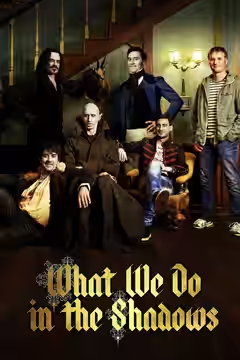
The first two Thor films never settled whether a golden-haired god who speaks in capital letters is meant to be funny. Taika Waititi, who made What We Do in the Shadows and Hunt for the Wilderpeople, decides that he is. Thor: Ragnarok is a comedy with an apocalypse attached. For about an hour in the middle it is the most enjoyable film the studio has made. The rest is a Marvel film, competently done, and we felt the drop every time it cut back to Asgard.
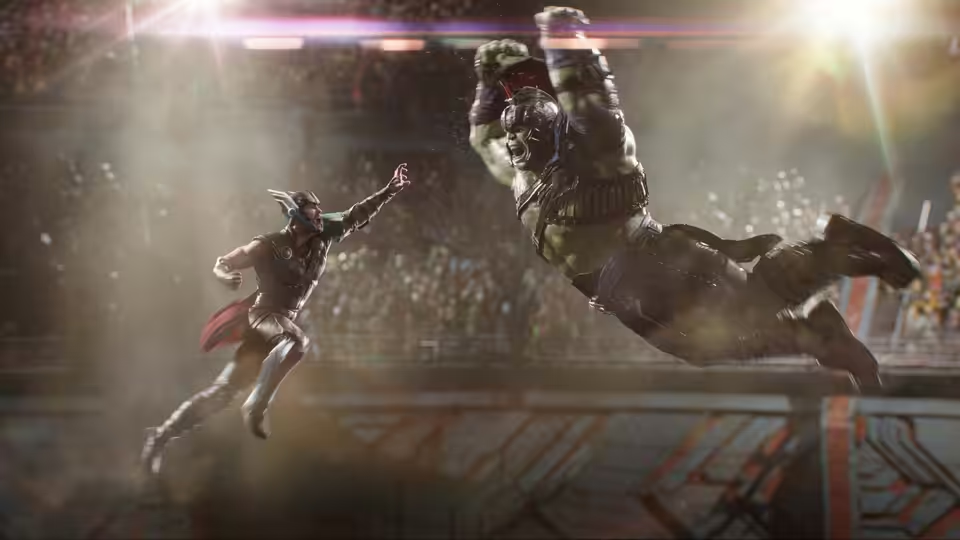
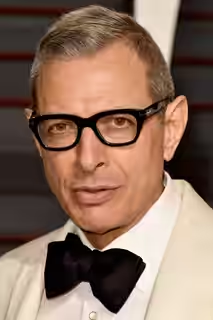
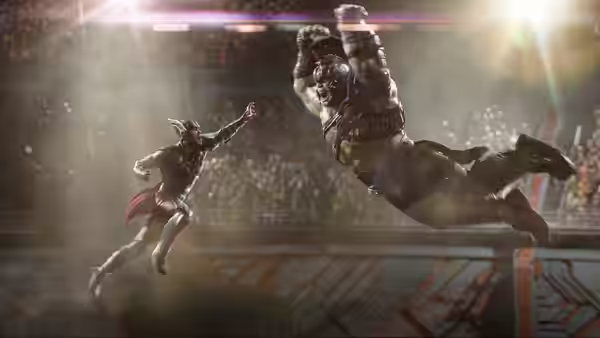
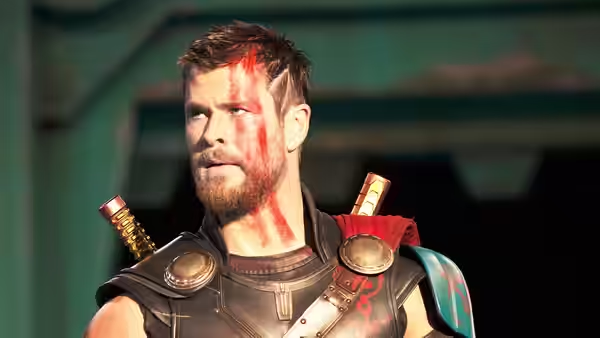
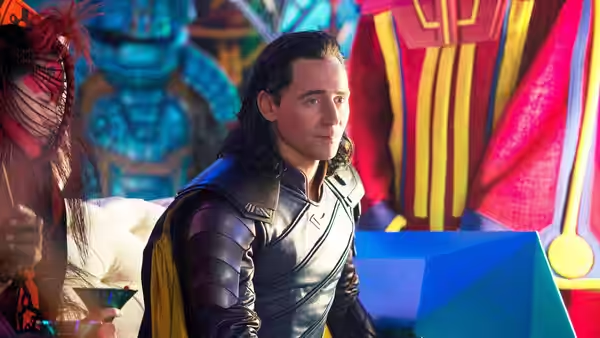
The script, by Christopher Lee Yost, Eric Pearson and Craig Kyle, clears the decks fast. Thor is dumped on Sakaar, a planet built from other people’s rubbish where the main entertainment is an arena. Waititi surrounds Chris Hemsworth with people who are not impressed by him. Tessa Thompson’s Valkyrie is drunk when she captures him and treats him as a parcel. Jeff Goldblum’s Grandmaster hums and murmurs through his scenes and is more frightening for never raising his voice. Korg, a rock creature voiced by Waititi in a New Zealand accent, explains the revolution he failed to start for want of leaflets. We laughed, often and without shame, because the jokes are about character rather than references; Hemsworth is playing a man slowly realising that nobody around him thinks he is the hero.
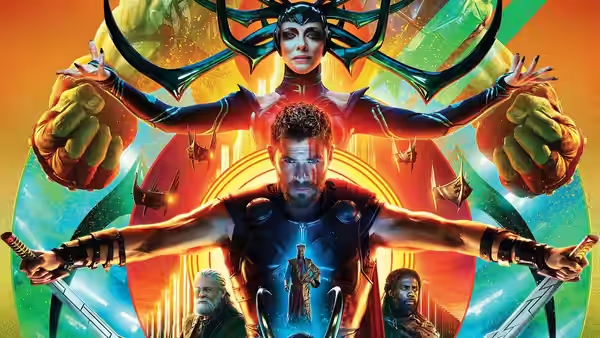
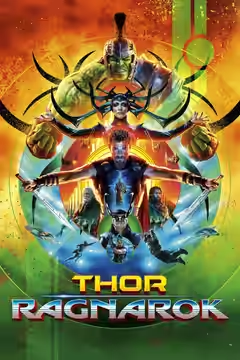
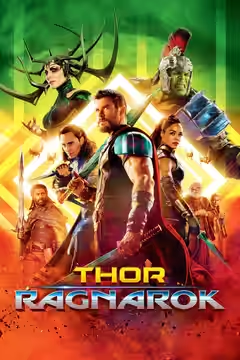
Dan Hennah and Ra Vincent build Sakaar out of the covers of 1970s comics: towers in orange and teal, a throne room the colour of a boiled sweet, scrap piled to the horizon. Mayes C. Rubeo gives the Grandmaster a gold robe and a blue stripe on his lip, and gives Hela a headdress of black antlers that unfolds like a hand. Javier Aguirresarobe lights it all flat and bright, so the colours do the work rather than the shadows, and Mark Mothersbaugh scores the arena and the escape on synthesisers, so they sound like a game from 1983.
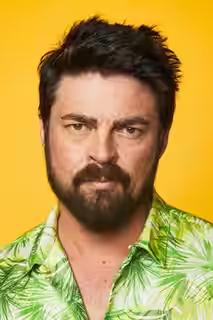
The trouble is the other film. Cate Blanchett’s Hela arrives, breaks the hammer like a biscuit and takes Asgard in an afternoon, and Blanchett plays her with a bored, amused contempt that is the right choice. Then the script leaves her walking about a hall, explaining her history to Karl Urban’s Skurge, who has been given an axe and a shrug, and waiting for the plot to come back. Every cut from Goldblum’s court to Blanchett’s throne room is a cut from a scene where something is happening to one where somebody is announcing that something will. Joel Negron and Zene Baker keep both halves moving; they cannot make the Asgard half matter.
The bill comes late. The title means the end of the world, and when the film gets near to delivering one we found we did not feel anything, and that bothered us. Waititi has spent two hours teaching us that nothing here is serious. Tom Hiddleston’s Loki betrays and is betrayed as a running gag. Anthony Hopkins’s Odin gets one quiet, rather good scene on a Norwegian cliff, and the film is out of it within a minute because a joke is due. Mark Ruffalo’s Banner, who spends much of the film afraid the Hulk will not let him back, is the one person allowed to be frightened, and his fear was the only one in the picture we shared.
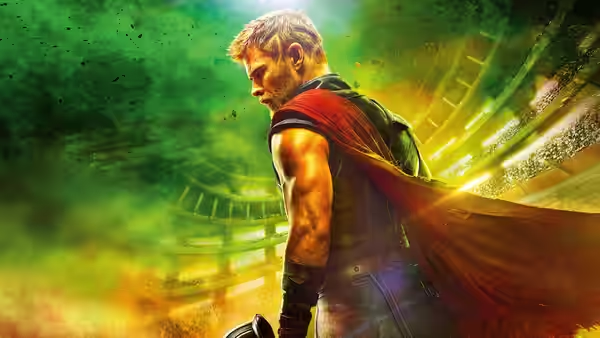
The last twenty minutes are the studio’s usual: a bridge, a crowd, a big grey thing and computer-generated soldiers falling over in numbers. Aguirresarobe’s bright palette holds up in this stretch, and a shot of Thor arriving in a storm, cut to Led Zeppelin, got a cheer from the cinema we saw it in and half of one from us. Against Waititi’s own work it is his broadest and least personal, though the affection for idiots that ran through Hunt for the Wilderpeople survives in Korg.
It runs 131 minutes and would be better at 115, the loss taken from Asgard. See it for Sakaar, for Goldblum, for Thompson, for a rock man discussing leaflets, and treat the end of the world as an interval. Waititi has proved that Thor is funny. Whether anyone can make him matter, this film has decided not to ask.