Henry Koster’s first American film is a sunny comedy about three sisters scheming to reunite their parents, built to put Deanna Durbin, fourteen and unhurried, in front of a camera. The story is thin, but the company is good.
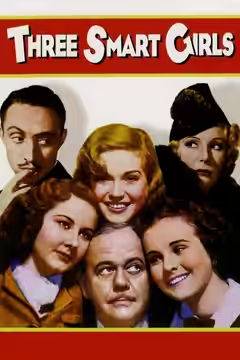
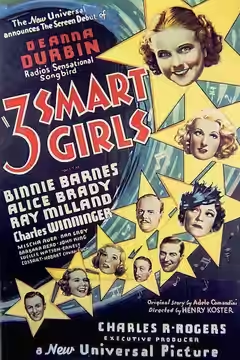
Three sisters in Switzerland read that their father in New York is about to marry a woman half his age, and they sail across the Atlantic to put a stop to it. That is the plot, all of it, and Adele Comandini’s script never pretends there is more. Three Smart Girls was Henry Koster’s first film in America after leaving Germany, made for the producer Joe Pasternak, another émigré, and it was built for one purpose: to introduce Deanna Durbin, a fourteen-year-old soprano, to people who had never heard of her. It does that job with more grace than the story deserves. It is a pleasant 84 minutes, and worth an evening if this kind of thing is yours.
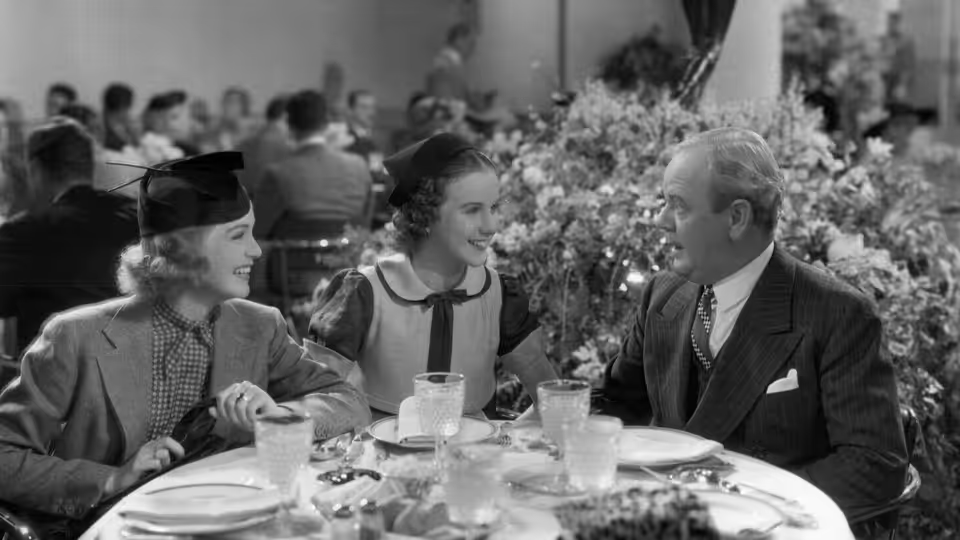
Durbin sings in the first minutes, from a sailing boat on the lake, and again in the New York house, and we will admit we braced ourselves. A child soprano in a 1936 comedy is not something we generally look forward to. Instead we sat back. It was the lack of fuss that did it: she sings as though it costs her nothing, looks at whoever is nearest rather than at the lens, and stops when the song stops. When she is not singing she is bossy, quick and impertinent, and the film has the sense to let her be a nuisance rather than a saint. The other characters are forever trying to send her upstairs and failing.
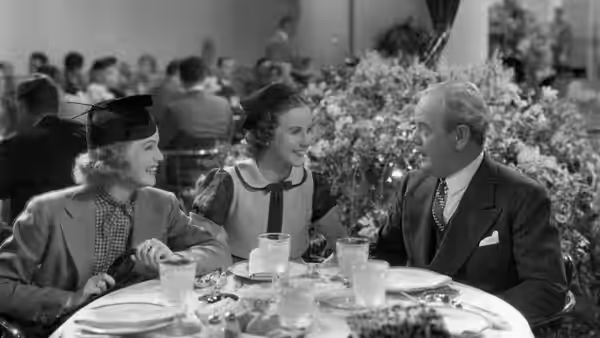
Joseph A. Valentine shoots the Swiss scenes bright and open and the New York interiors glossy and enclosed, and in every scene Durbin gets the softest light on the set, which is the studio telling you where its money is. Heinz Eric Roemheld’s score stays out of her way while she sings and swells politely when she has finished. Ted J. Kent cuts fast; when a scene has made its point it is gone, and the film never lingers on anything, including its own jokes. Albert Nickels dresses Donna Lyons in satin that catches the light and the sisters in plain frocks and berets, so you can tell the schemer from the schemed-against from across the street.
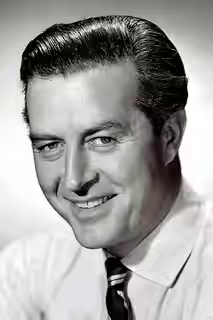
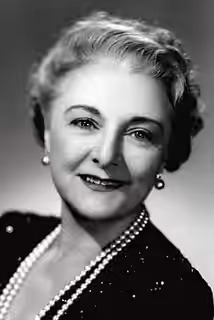
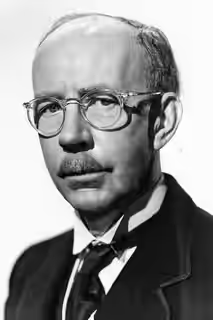
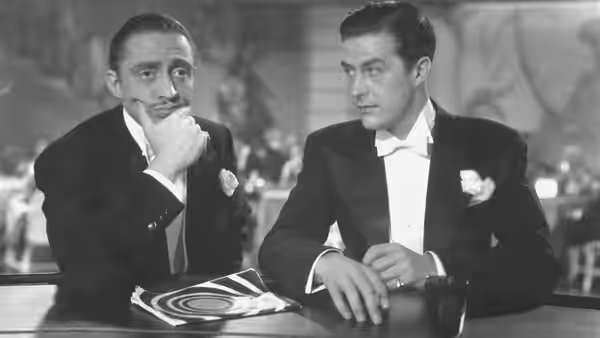
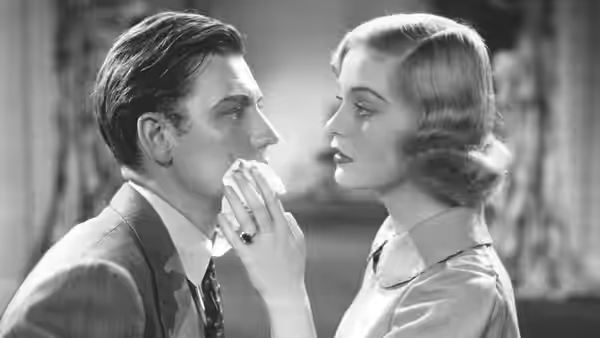
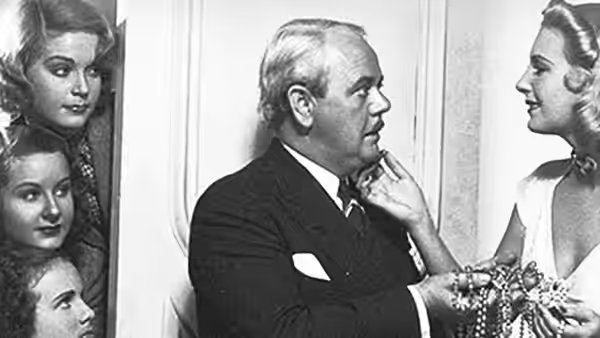
The adults are better than they needed to be. Charles Winninger plays Judson Craig as a fool who has not noticed he is one, bewildered by his own daughters and flattered by his fiancée, and he is funny without being pitiable. Binnie Barnes is sharp as Donna and best when she is being awful. Alice Brady, as her mother, gives the film’s neatest comic turn: a woman who has done the arithmetic on Judson Craig and is not going to let three children spoil the sum. Ray Milland is easy and likeable as Lord Michael Stuart and has little to do until a mix-up in the middle that we will not describe. Mischa Auer, as a penniless Hungarian count, is on screen for perhaps ten minutes and takes most of them home with him.
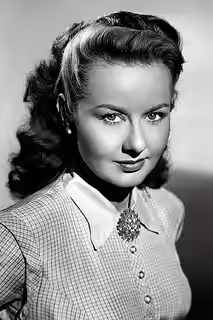
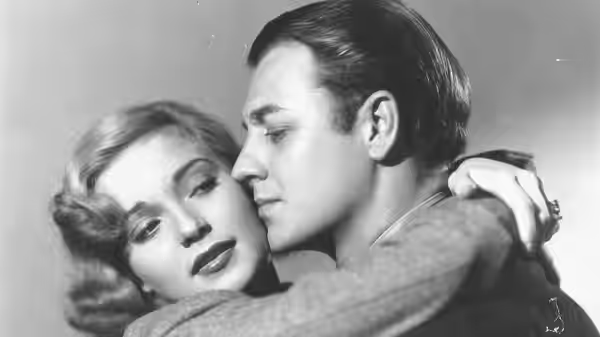
The weaknesses are structural and they are all the same weakness. The father’s blindness must last exactly as long as the plot requires and not a scene longer. Barbara Read and Nan Grey, as the elder sisters, are given suitors rather than characters; they are pretty, worried and hard to tell apart, and the film knows it, because it keeps cutting back to Penny. In the middle stretch, when the sisters’ plan depends on two grown men being mistaken for each other, we noticed the time. It passed. The ending is fixed from the first reel, and the last twenty minutes are the machinery turning over until it arrives.
The idea outlived the film. The story of children plotting to reunite divorced parents became a template, and later versions have done it with more feeling and more plot. What this one has that they do not is the sense of watching a studio discover a star in real time, and of a director new to the country keeping everything light because he did not yet know what else the audience would take. Most critics at the time were warmer than we are, and we understand why: the film means you well. Universal made it to sell a singer, and it sold her. That the comedy around her is agreeable was a bonus nobody was counting on. Watch it on a wet Sunday afternoon; it asks for nothing more than that.