Raúl Ruiz’s adaptation of Marcel Proust is rich, strange and often absorbing, with Marcello Mazzarella holding it together. The shifting relationships can be hard to follow, but the visual invention makes the effort worthwhile.
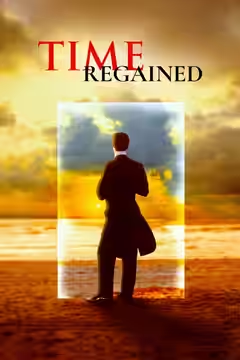
Time Regained is a rewarding, sometimes baffling adaptation that asks us to accept considerable uncertainty about who belongs where. Raúl Ruiz takes Marcel Proust’s final volume and lets memory determine how the film proceeds, without tidying its recollections into a convenient chronology. The shifts are often absorbing even when we have lost track of the relationships. We recommend it for the freedom of its filmmaking, with the warning that it offers less help with introductions than a newcomer might reasonably want.
Marcello Mazzarella gives Marcel enough presence to hold our attention through those changes. He observes his remembered world as a writer and also appears within it, unable to stand entirely apart from what he recalls. We were unexpectedly moved by that uncertain position, which makes remembering seem difficult rather than comfortably nostalgic. Marcello Mazzarella keeps this personal, giving us someone to care about while Raúl Ruiz experiments with the way a life can be put on screen.
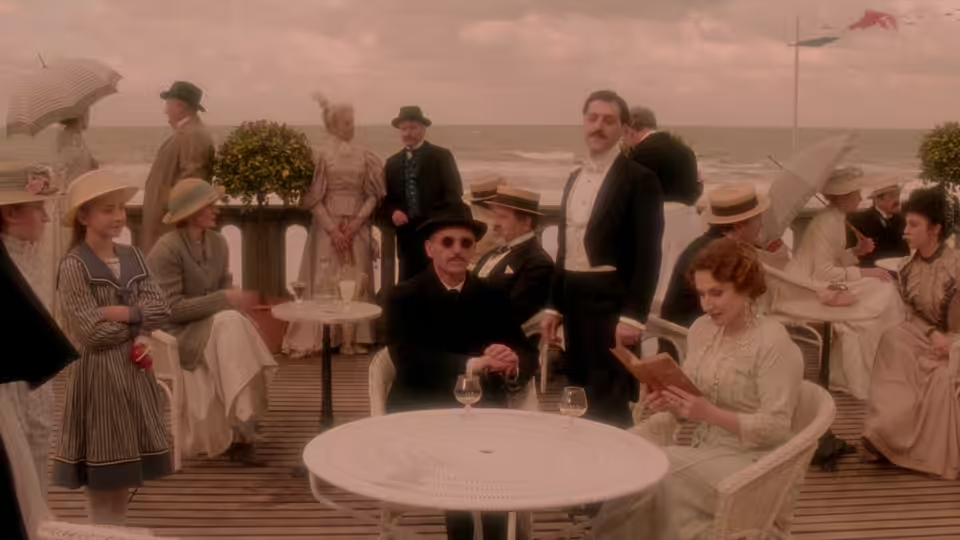
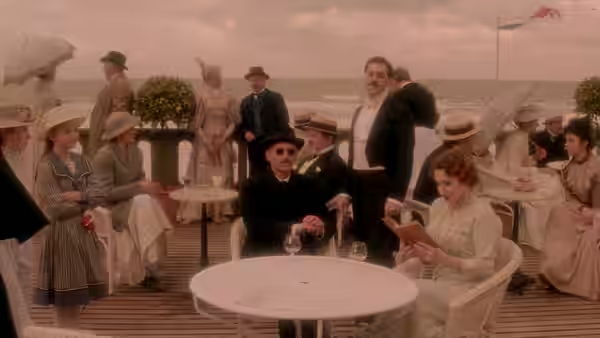
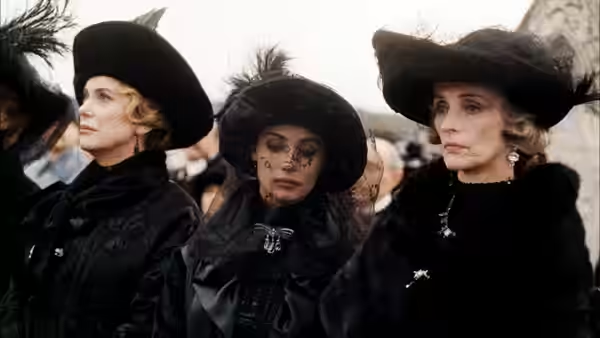
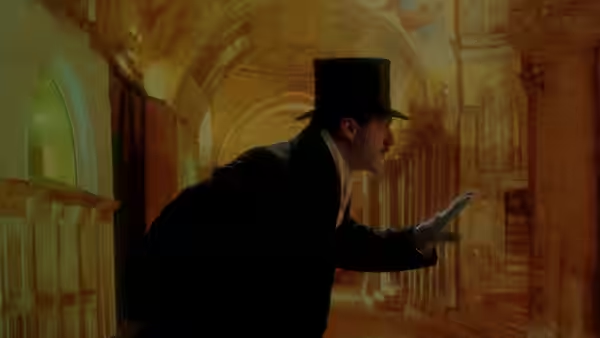
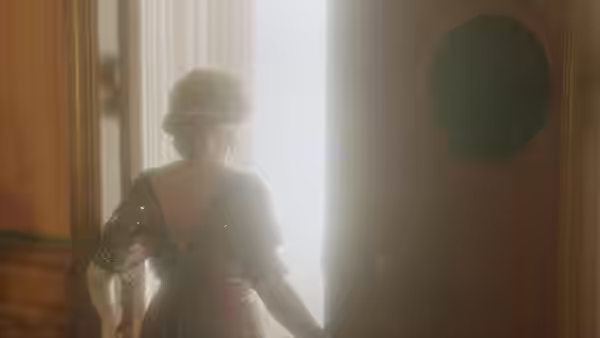
Ricardo Aronovich’s cinematography gives the period setting a richness worth attending to even when we have lost track of the people. Bruno Beaugé’s intricate production design makes the social world persuasive before we have sorted out its inhabitants. Raúl Ruiz then uses visual effects to unsettle that carefully recreated past, letting the shifts of time affect the way we look at it. The period detail gives us something to recognise as the film’s sense of time keeps changing.
Denise de Casabianca’s editing is crucial to keeping that approach watchable over 163 minutes. Individual passages have enough coherence to be absorbing, although the connections between them are often harder to establish. Jorge Arriagada’s music helps maintain continuity through these interruptions, encouraging us to stay with a passage before its place becomes clear. The film works particularly well when we can enjoy a scene without immediately demanding to know where it belongs in the larger story.
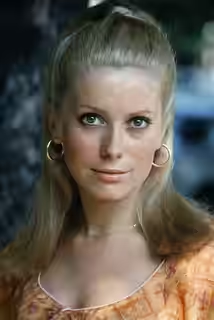
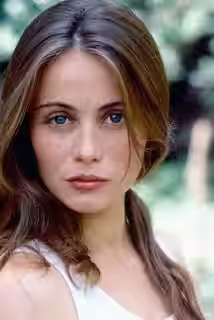
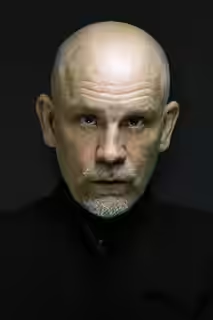
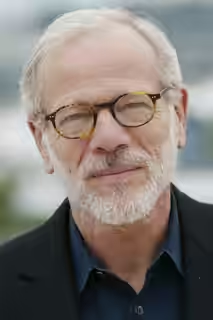
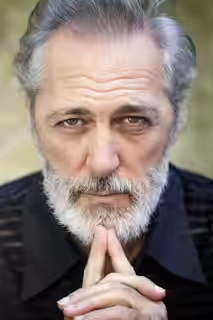
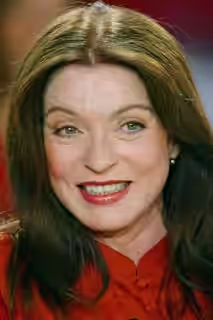
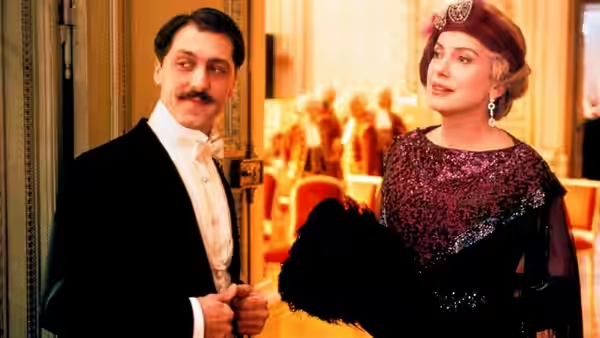
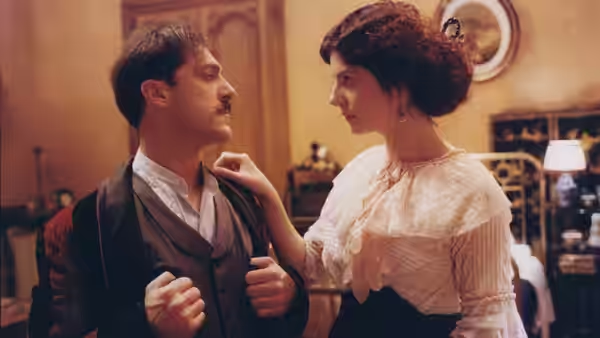
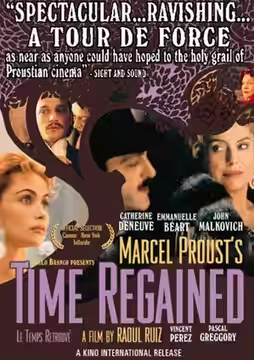
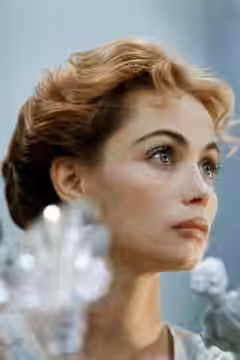
John Malkovich plays Baron de Charlus with restraint, giving us someone to watch closely amid the continual changes of focus. Catherine Deneuve’s Odette and Emmanuelle Béart’s Gilberte also draw attention, though having recognisable performers does not solve the problem of establishing their characters. Sometimes the film moves away from a person just as we begin to feel we know them. That is frustrating, particularly when the faces are easier to remember than the relationships between them.
The film belongs to the more adventurous end of literary adaptation, where a director does something beyond preserving dialogue and costumes. Raúl Ruiz’s treatment of memory justifies that freedom because the shifts in time change how we watch, making us question our understanding of what we have seen. This also saves the period recreation from becoming a procession of things to admire. There is considerable pleasure in watching such careful work put to use in a film willing to be peculiar.
We would not make reading the novel a condition of seeing the film, though familiarity plainly makes some of the introductions easier. Its individual scenes offer enough pleasure to keep it from becoming a test of literary preparation. Give it an unhurried evening, and allow a few people to remain strangers for a while. If losing track of a relationship makes it impossible to enjoy a film, choose something else.