A lockdown two-hander that gives James McAvoy and Sharon Horgan a kitchen and a camera to argue in front of. One speech of Horgan’s is as good as anything made about that year; the rest is a play that has not noticed it is being filmed.
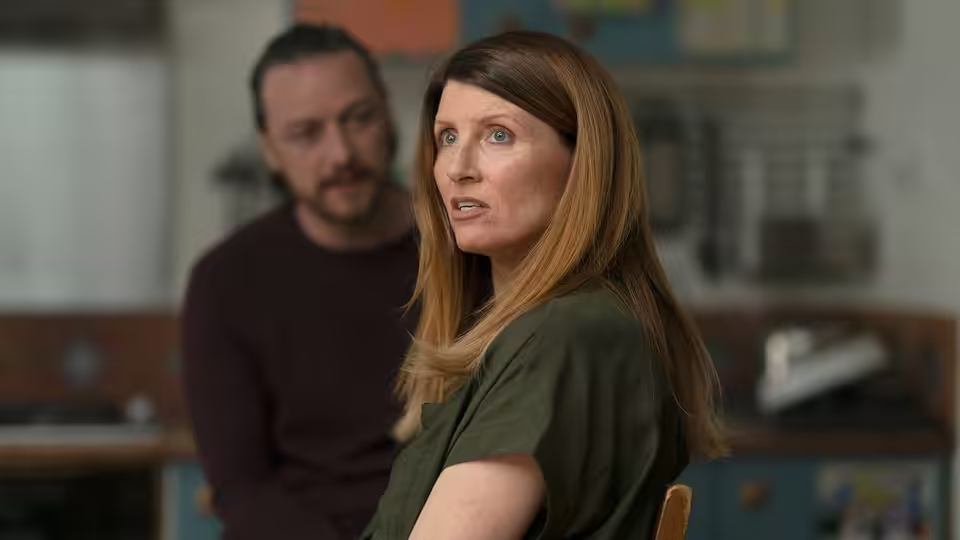
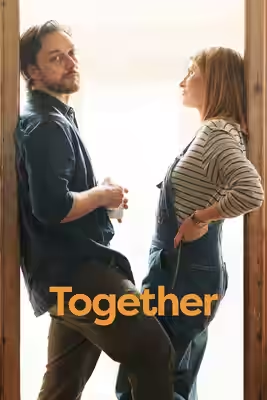
Stephen Daldry and the writer Dennis Kelly made Together about the year most of us were trying to forget while it was still going on. A couple credited only as He (James McAvoy) and She (Sharon Horgan) are shut into their house for lockdown with their son Artie (Samuel Logan) and with each other, and they turn to the camera to tell us how much they mind. It runs 92 minutes, nearly all of them in one kitchen. The performances are big and alive, and one passage of Horgan’s got to us badly. The film around it is a play, and it stays a play.
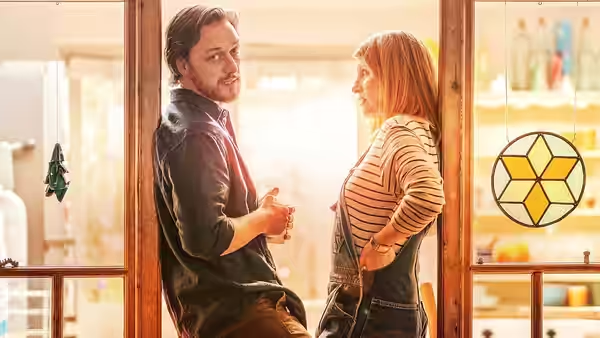
Kelly’s device is direct address. The two of them talk to us, together and in turn, finishing each other’s insults and correcting each other’s version of events, and the writing is at its best when it is nastiest. McAvoy plays He as a man who has mistaken confidence for being right, loud, delighted by his own comparisons, and suddenly small when a point goes against him. Horgan gives She a dry patience that keeps giving way. For the first half hour we laughed a good deal, mostly at how exactly each of them knows what will hurt the other.
Iain Struthers keeps the camera where the actors can look at it, usually across the kitchen counter, and Úna Ní Dhonghaíle cuts seldom, so speeches run whole and a flinch is left on screen until it stops being funny. Karen Wakefield’s house is comfortable and cluttered and plainly lived in, and it does not change, which is true to the year and wears thin on screen. By the hour mark we knew every cupboard. Daldry made Billy Elliot (2000) and The Hours (2002), and knows how to put a camera somewhere that tells you something; here he has decided, with some honesty, that there is nowhere else to put it.
Then there is the speech. Somewhere in the middle Horgan has a long passage about her mother, said mostly straight into the lens, and we will not describe where it goes. We can say that it is the one stretch in which the film stops being about this couple and becomes about the country, and that we sat still through it and were back in that spring, with its rules and its phone calls and its waiting. Horgan does not raise her voice once. It is the best thing in the film.
The trouble is what surrounds it. Kelly has given each of them two or three grievances and they pass them back and forth for an hour and a half: they fight, they soften a little, they fight again about the same thing. The move towards each other is announced rather than shown; they tell us they have changed and the kitchen says they have not. Artie exists to be sent out of earshot so the adults can swear, and Samuel Logan is given almost nothing to do with him. By the last half hour we were tired, the particular tiredness of being stuck at a dinner party with a couple who have started, and the film seemed to take our tiredness for involvement.
There is also an anger in it that is real and well aimed. He and She are both, in their different ways, furious at how the country was run that year, and when the script lets them say so plainly the film has a pulse it otherwise lacks. It is a shame that the fury is spent in a few minutes and the bickering is given the rest.
See it for Horgan, for McAvoy at full stretch, and for ten minutes that are as good as anything made about that time. Watch it at home, where a film this stagebound loses nothing, and with someone you were shut in with; you will recognise more than you would like, and you may find yourselves arguing about which of you is He.