Film review

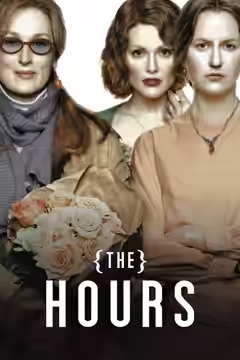
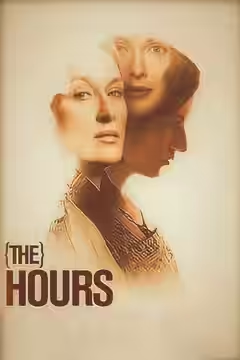
The Hours

2002 · Directed by Stephen Daldry · 1h 54m · MPA PG-13

In a sentenceThree women, three kitchens, and a Philip Glass arpeggio that follows them all home

Drama

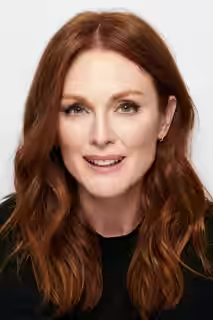
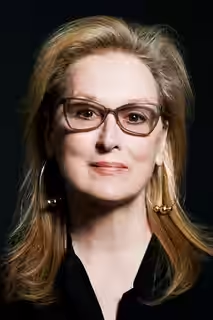
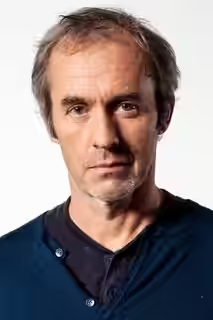
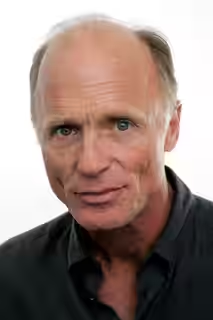
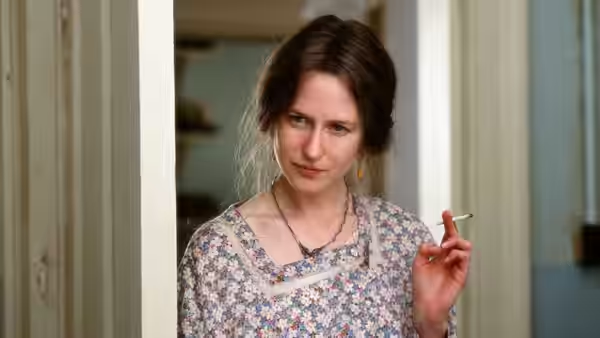
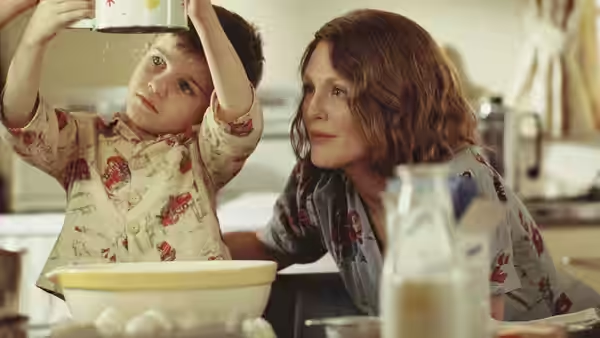
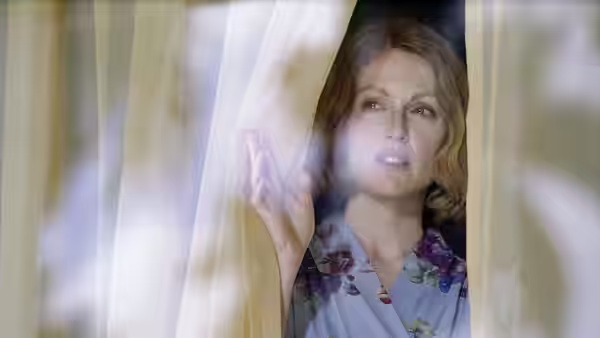
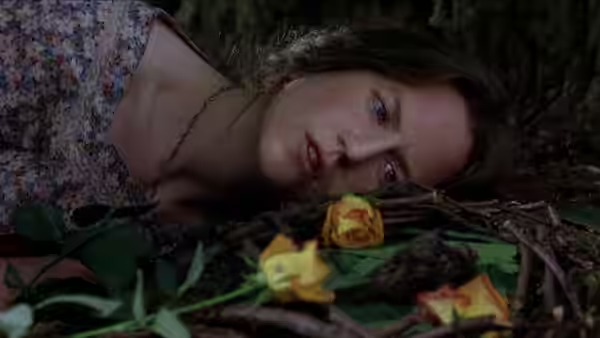
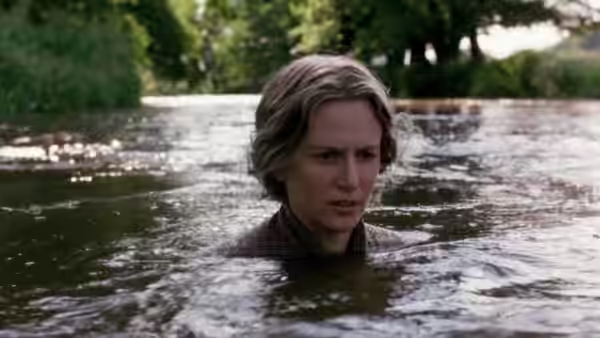
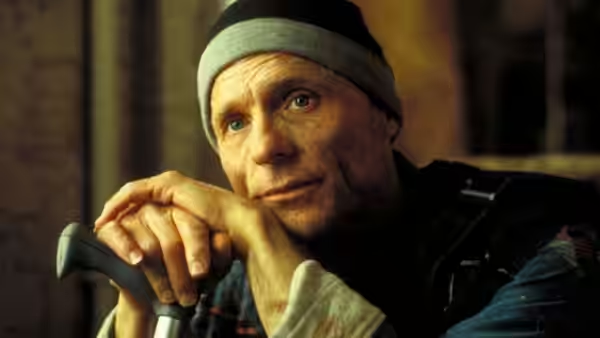
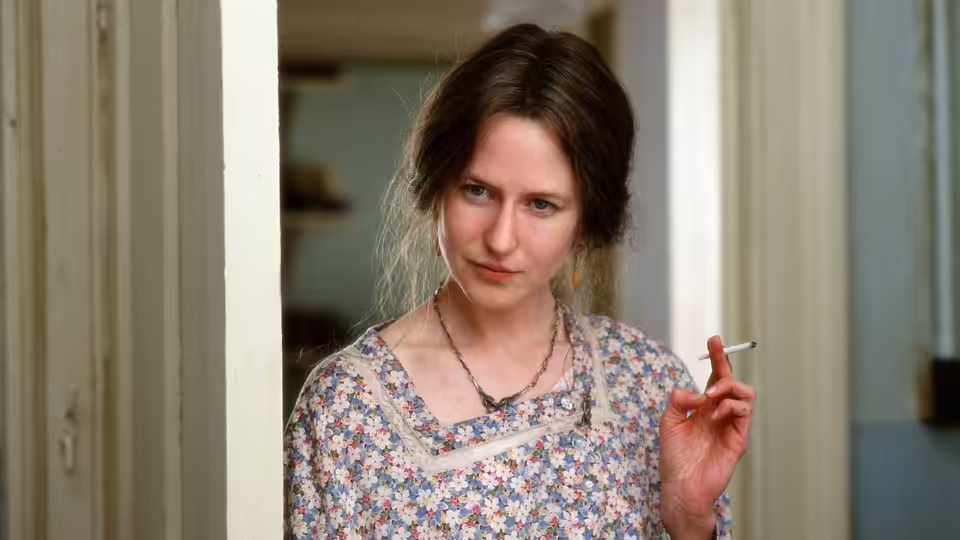
Three women, three days. In Richmond in 1923, Virginia Woolf (Nicole Kidman) wakes with the first line of Mrs Dalloway in her head and a husband, Leonard (Stephen Dillane), who counts what she eats and keeps the doctors at bay. In Los Angeles in 1951, Laura Brown (Julianne Moore) is reading that novel in bed, and has a birthday cake to bake for her husband Dan (John C. Reilly) while their son Richie (Jack Rovello) watches from a kitchen stool. In New York in 2001, Clarissa Vaughan (Meryl Streep) goes out early to buy the flowers herself, for a party in honour of Richard (Ed Harris), a poet who is ill and does not want a party. Stephen Daldry cuts between the three as each morning goes wrong.

Plays from YouTube when you press play; nothing loads from them until then.

Fi1m review

Three women, three single days and one novel running through all of them. Stephen Daldry’s adaptation is handsomely made and acted with real care, Julianne Moore especially, but David Hare’s script keeps saying the point aloud and Philip Glass’s piano never lets it breathe.

Michael Cunningham’s novel gives three women a single day each and lets Virginia Woolf’s Mrs Dalloway run through all of them: Woolf writing it in Richmond in 1923, a Los Angeles housewife reading it in 1951, a New York editor in 2001 nicknamed after its heroine. David Hare’s screenplay keeps that shape, and Stephen Daldry cuts between the three days so that the women wake together, wash together and look into mirrors together. It is a serious, well-acted film about depression, and it is worth your evening. It is a film that keeps telling you what it means, and by the end we wanted it to stop.

Seamus McGarvey gives each period its own light. Richmond is brown wood and grey window, Los Angeles is lemon yellow and turquoise, New York is the flat blue of a winter morning. Maria Djurkovic’s three houses tell you what each woman has been allowed: a study with the curtains half drawn, a new kitchen, a flat stacked with books. Ann Roth puts Laura Brown in a housedress she cannot quite breathe in and Clarissa in trousers and a big coat. Peter Boyle cuts on matched actions, three faces turning from a mirror, three vases set down, and the first few times the trick is exciting. By the tenth it is a tic.

Kidman plays Woolf with her face lengthened and her voice dropped low. She barely moves. It is a good, careful piece of work that never lets us forget how careful it is. Streep, as Clarissa, is the opposite, all errands and lists, buying flowers and arranging a party for a man who would rather be left alone; she is best when the busyness runs out and she has to sit down. Ed Harris, as Richard, in a dim flat in a dressing gown, supplies the film’s only real anger. Stephen Dillane’s Leonard Woolf is the quietest good performance in it, a man counting his wife’s meals and pretending not to.

It is Julianne Moore who got at us. Laura Brown has a new house, a kind husband (John C. Reilly), a second child on the way and a cake to bake, and Moore plays her as a woman doing a convincing impression of someone who is fine. The scene in the kitchen with her son Richie (Jack Rovello), in which the cake goes wrong and the boy watches his mother’s face rather than the cake, moved us more than anything else in it. Rovello does almost nothing. He looks, the way small children look at a parent who is somewhere else, and we had not expected to be undone by sponge.

The trouble is Hare. He is a fine dramatist who does not trust the pictures. Every so often a character stops and says what the film means, about facing a life, about choosing, and the lines sound like a summary of the novel read aloud. Philip Glass’s score does the same job in music: one rolling piano figure over and over, rising whenever anyone looks out of a window, flattening three quite different women into a single mood. Richard Strauss is also credited, for a song on a record in Richard’s flat, and those seconds are more affecting than the whole of Glass.

The New York strand is the weakest. Woolf’s day and Laura’s day are held in check; Clarissa’s tips into speeches and slammed doors, and a late scene in Richard’s flat is staged for effect in a way the rest of the film would not allow. There is a late flourish that we will not describe, except to say it ties a bow on a story that did not need one.

It is braver than most literary adaptations: it is about three women who are not sure they want to go on living, and it says so plainly within a 12A. Watch it at home and turn the volume down when the piano starts; the faces carry it, and at 114 minutes it does not overstay. The reviews were warmer than we are; the difference is the score and the script. The women are as good as anyone said.
Critical consensus AI synthesised

75
Positive
14
Mixed
0
Negative
1

Most critics admire The Hours, and the praise gathers in the same places. The three lead performances are singled out almost everywhere, with Nicole Kidman’s inward, brooding Virginia Woolf the one most often named as the film’s finest work. Beyond the acting, reviewers credit Stephen Daldry and David Hare with turning a difficult, layered novel into a drama that moves people through precise editing and quiet parallels rather than flashbacks or voice-over, and several remark that the tears it draws feel earned rather than engineered.

The reservations are modest and scattered. Some find it slow and a little precious; Variety thinks it plays as a collection of fine scenes rather than a whole, and Empire feels the modern strand slides into melodrama. The Guardian is cooler than most on Kidman and on a flourish in the ending. The spread is narrow, with one outright dissenter: Slant dismisses the film as a faux-feminist manifesto with spoon-fed dialogue.

Los Angeles Times
27 December 2002 · Kenneth Turan
90*

The film has turned out to be a splendid work that uses all the resources of cinema to deliver cumulative emotional power that takes viewers by surprise. It singles out the fearlessness of its emotionality, strong performances by Kidman, Streep and Moore, and the way it embraces strong feelings while maintaining intelligence and restraint.

Read the full review →
The New York Times
27 December 2002 · NYT Critic’s Pick · Stephen Holden
90*

The deeply moving film is an amazingly faithful adaptation of the novel, with Nicole Kidman delivering a performance of astounding bravery as Virginia Woolf that evokes the torment of mental illness as never shown before. It praises the layered, delicate reflection that blends three women's stories across time.

Read the full review →
Screen Daily
13 December 2002
85*

Hare and Daldry have turned the novel into an elegant, intense and perhaps profound drama that will be a major awards player and must-see prestige picture. It succeeds as a rare tear-jerker driven by emotional impact rather than manipulation, with strong performances from the lead actresses.

Read the full review →
Sight and Sound
· Sheila Johnston
80*

The film is a sophisticated treat with a complex layering of three women's stories. It praises the outstanding performances, especially Nicole Kidman's, and notes its mainstream arthouse ambitions based on a postmodern novel.

Read the full review →
The Times
13 February 2003 · Barbara Ellen
80*

The critic praises the film's excellent acting across the board, clever production design, and empathetic handling of its themes of despair and resilience, calling it a welcome highbrow literary drama about women's interior lives despite some slowness and preciousness.

Read the full review →
Variety
10 December 2002 · Todd McCarthy
80*

Considerable intelligence and strategic finesse have been brought to bear on this handsomely mounted adaptation, with fine performances and expert work from the director and cast. It singles out Kidman's brooding, inward portrait of Woolf as especially rewarding, while noting the film feels like a collection of scenes rather than a full synthesis.

Read the full review →

Cast

Awards

Academy Awards, 2003

Nominated
Best Costume Design
Nominated
Best Director
Nominated
Best Film Editing
Nominated
Best Original Score
Nominated
Best Picture
Nominated
Best Supporting Actor
Nominated
Best Supporting Actress
Nominated
Best Writing, Adapted Screenplay
Won
Best Actress

Amanda Award for Best Foreign Feature Film, 2003

Won
Amanda Award for Best Foreign Feature Film

Silver nugget for the best foreign film, 2003

Won
Silver nugget for the best foreign film

If you liked this, try…

Mrs Dalloway poster

Mrs Dalloway

1997 · The novel itself, filmed straight, with Vanessa Redgrave buying her own flowers.

Far From Heaven poster87

Far From Heaven

2002 · Julianne Moore in another 1950s kitchen, in colours even brighter and sadder.

Cléo from 5 to 7 poster

Cléo from 5 to 7

1962 · One woman, one Paris afternoon, waiting for news; ninety minutes, no wasted ones.

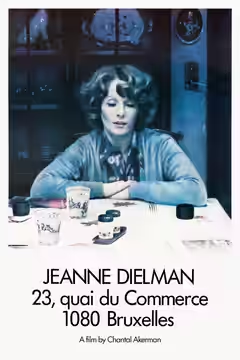
Jeanne Dielman, 23 quai du Commerce, 1080 Bruxelles poster

Jeanne Dielman, 23 quai du Commerce, 1080 Bruxelles

1975 · Three days of housework in real time, and the moment the routine slips.

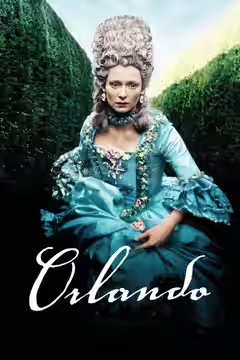
Orlando poster81

Orlando

1992 · Sally Potter’s Woolf adaptation is playful where Daldry is solemn; Tilda Swinton across centuries.