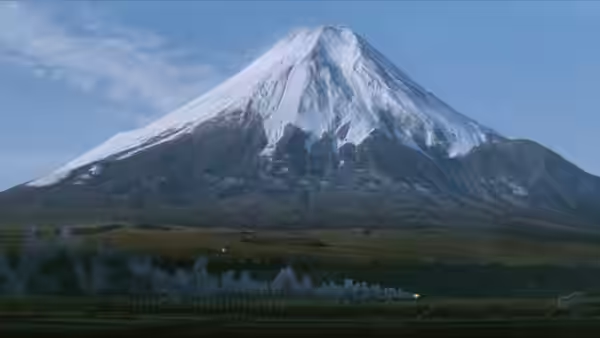
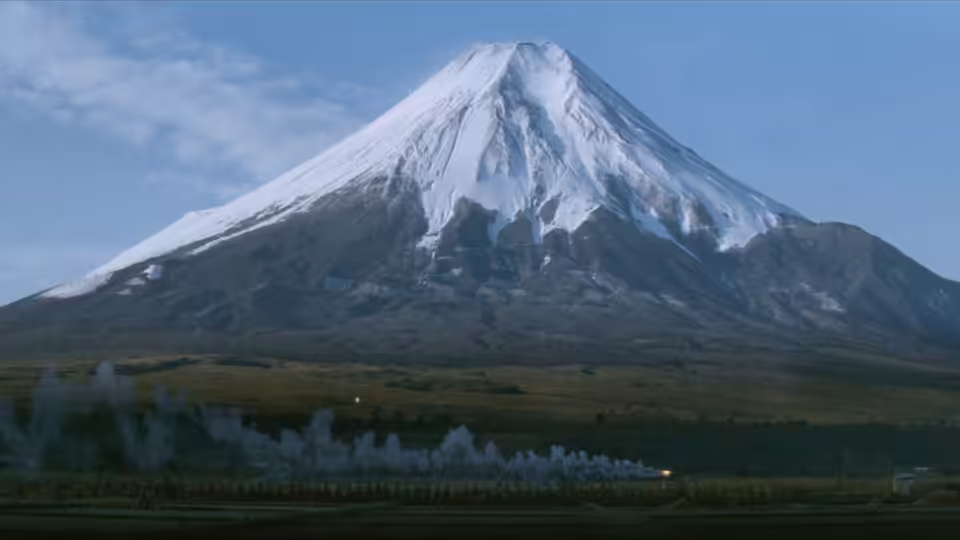
Mount Fuji rises above a dark shoreline and calm water
Film review

Tokyo Olympiad

1965 · Directed by Kon Ichikawa · 2h 50m

In a sentenceA wrecking ball, a torch, ten thousand faces, and a director who keeps wandering off from the winners to look at the crowd

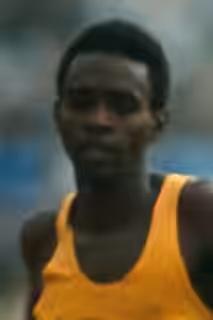
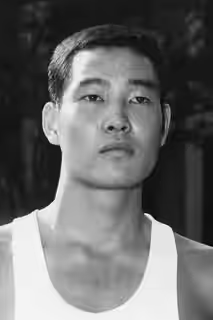
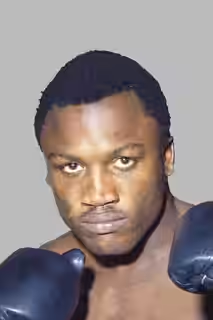
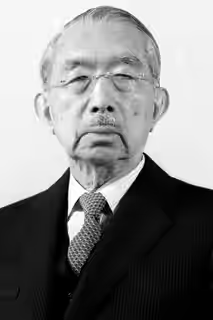
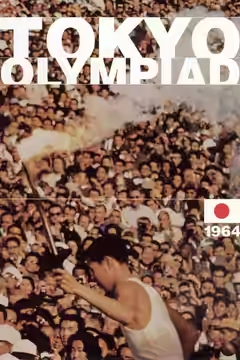
Tokyo, October 1964. A wrecking ball swings into the side of an old building; the city is being cleared to make room for the Games. The Olympic torch crosses Japan by relay and Yoshinori Sakai carries it up the stadium steps to light the cauldron. Emperor Hirohito declares the Games open, jets draw five rings above the stadium and the doves are released. The competition begins: the men’s 100 metres, the shot put, the hammer, the gymnasts and the swimmers. Ahmed Issa, a middle-distance runner from Chad, lines up for his heat of the 800 metres and afterwards walks back through the athletes’ village. Later in the fortnight the marathon field, Ethiopia’s Abebe Bikila among them, leaves the stadium for the streets of the city, and Joe Frazier fights in the heavyweight boxing.

Fi1m review

Kon Ichikawa was hired to make a record of the 1964 Tokyo Games and made a film about faces, feet and waiting instead. It is long and it sags in the middle, but its best passages have not aged a day.

Kon Ichikawa had spent the previous decade making fiction films about soldiers, among them The Burmese Harp and Fires on the Plain, when he was handed the official film of the 1964 Tokyo Games. The brief was a record of who won what. What Ichikawa delivered runs 170 minutes and spends a surprising share of them on people who did not win, and on people who were not competing at all. It is a fine film and, in perhaps three long stretches, a great one. It also has an hour in the middle where it behaves like the record it was meant to be.

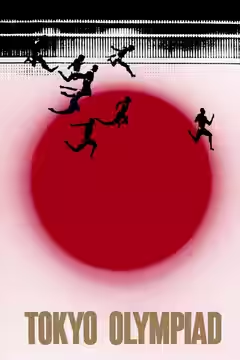
It opens with a red sun filling the frame, then a wrecking ball swinging into the side of an old Tokyo building. The city is being knocked down to make room. The torch comes across Japan by relay, Yoshinori Sakai carries it up the stadium steps to the cauldron, jets draw five rings in the sky and the doves go up in a clatter. Hirohito stands in his box and declares the Games open. Shuntarō Tanikawa’s narration says little about any of it, and what it does say is short.

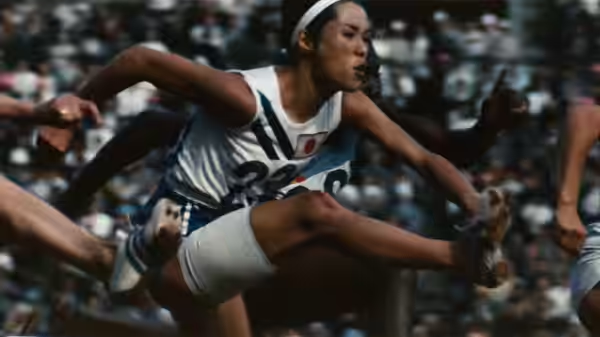
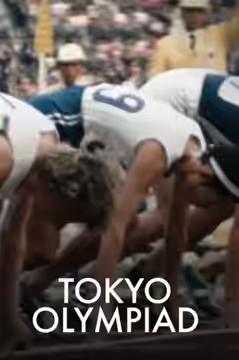
Five cinematographers are credited, among them Kazuo Miyagawa, who had shot Rashomon, and the house style is the long lens. Ichikawa’s cameras sit far back and pick out a face in the stands, an official’s hands on a starting pistol, a shot putter’s mouth as the throw goes. The men’s 100 metres final is given several minutes of athletes shaking out their legs and settling into the blocks before the race itself, which arrives in slow motion and lasts longer on screen than it did on the track. Tatsuji Nakashizu’s editing holds shots well past the point a newsreel would have cut. Toshirō Mayuzumi’s score comes and goes; for long stretches the only sound is feet on cinder and a crowd breathing in.

The sequence we will remember is not a final. Ahmed Issa runs the 800 metres for Chad, competing at a Games for the first time, and does not get past his heat. Ichikawa follows him afterwards into the athletes’ village and watches him eat, alone, at a long table, and walk back to his room. Nothing is said. It moved us more than anything in the medal events did, and it was the meal that did it: a young man a long way from home, finished with his Olympics by lunchtime, chewing. A committee film would not have known he was there.

The middle hour is where the committee gets its due. Swimming, gymnastics, weightlifting and the rest go past in order, competently shot and no more, and the narration starts telling us who is ahead. The 50-kilometre walk is treated as the comedy it looks like, which is a relief. We noticed the time around the ninety-minute mark and did not stop noticing it until the marathon started.

The marathon is the third great stretch. Abebe Bikila and the field leave the stadium for the streets, and Ichikawa films the road, the crowds on the pavements, the sponges and paper cups at the water stations, and above all feet, dozens of pairs of them, in close-up, for what feels like the entire distance. Where a broadcast would stay with the leader, the cameras keep drifting back down the field to the men who are struggling. What happens at the finish is a matter of record and we will leave it there. The closing ceremony follows, and we will not describe that either, except to say it is unlike any ceremony we have seen filmed.

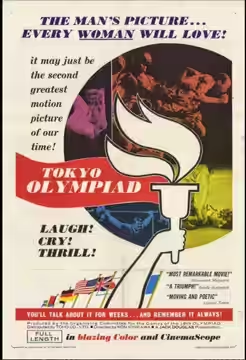
Leni Riefenstahl’s Olympia (1938) is the film this is always set against. Riefenstahl filmed athletes as statues; Ichikawa films them as tired people. Set against Ichikawa’s own fiction, the interest is the same one: what a body does when it has been asked for too much. It opened in Britain on 7 October 1965 under the tagline “The Man’s Picture… Every Woman Will Love”, which is hard to square with anything on screen. See it in one sitting if you can manage it, and on the biggest screen you have; the long lenses want room.
Critical consensus AI synthesised

3 of 6
Positive
2
Mixed
1
Negative
0

With only 3 reviews in so far, the lean is warm but the sample is thin. The two full reviews, from Vulture and Slant Magazine, agree on what matters: Ichikawa’s interest is less in medals than in the people chasing them, and both single out his attention to the struggling and overlooked competitors and to the crowds watching them. Both also admire the playfulness of the camerawork and cutting, treating it as an unusually inventive piece of sports documentary. The third, from Time Out, is only partly available and notes that Ichikawa was an unexpected choice for the job, so its verdict cannot yet be counted with any confidence.

Slant Magazine
18 June 2020 · ★★★★½ · Derek Smith
90

The review regards Ichikawa’s film as a thrilling, humane, and unusually inventive sports documentary. It especially praises the film’s compassionate attention to struggling and overlooked athletes, as well as the Criterion release’s extensive extras.

Read the full review →
Vulture
26 May 2021 · Chris Vognar
90*

The critic calls the film one of the greatest sports documentaries and a lasting visual symphony. He particularly praises its humanist focus on athletes and spectators, along with its playful camerawork and editing.

Read the full review →
Time Out
· TR
64*

The page identifies this as a review, but its article body is unavailable. The description notes Ichikawa was an unexpected choice to document the Olympics, without revealing the critic’s verdict or specific praise or complaint.

Read the full review →

Straight answers AI written, from our review

Is Tokyo Olympiad worth watching?
Tokyo Olympiad is worth watching for anyone with patience for a 170-minute documentary that cares more about faces and feet than about who won, and we scored it 88. Kon Ichikawa's best passages, the 100 metres, Ahmed Issa's lonely lunch, the marathon, have not aged a day. The middle hour behaves like the dutiful record it was meant to be, so choose an evening when you can sit through it in one go.
How long is Tokyo Olympiad, and what is it rated?
Tokyo Olympiad runs 2h 50m. It is a documentary film.
Where can I watch Tokyo Olympiad in Greece?
Tokyo Olympiad is not on any streaming or rental service in Greece at the moment. It is available in 2 other countries; change your country at the top of the page to see where. Availability is checked daily.
What should I watch after Tokyo Olympiad?
After Tokyo Olympiad, try Hoop Dreams (1994, Fi1m 92): Two Chicago teenagers and five years of waiting to find out if they are good enough. Then Senna (2010, Fi1m 84): Built entirely from archive footage, and as interested in the face as the car.

Cast

If you liked this, try…

  1. Olympia (1938) · not on Fi1m yetRiefenstahl’s Berlin Games, the film Ichikawa was quietly arguing with for three hours.

  2. Visions of Eight (1973) · not on Fi1m yetEight directors split the Munich Games between them; uneven, but Lelouch’s losers are worth it.

  3. Zidane: A 21st Century Portrait (2006) · not on Fi1m yetSeventeen cameras on one footballer for ninety minutes; the long-lens idea taken to its end.

  4. Hoop Dreams (1994, Fi1m 92)Two Chicago teenagers and five years of waiting to find out if they are good enough.

  5. Senna (2010, Fi1m 84)Built entirely from archive footage, and as interested in the face as the car.

Tokyo Olympiad (1965) review: faces, feet and the long wait (Greece) | Fi1m