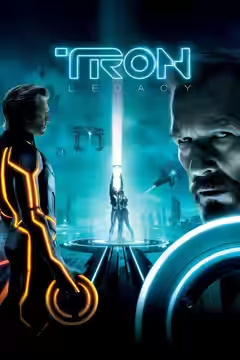
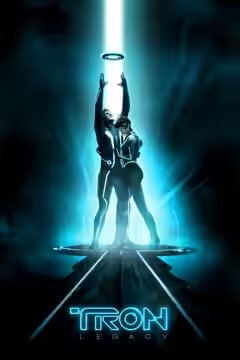
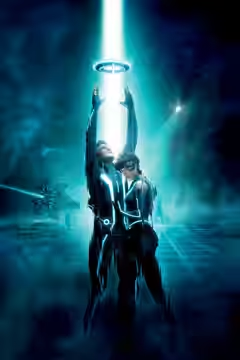
Joseph Kosinski’s world of black glass and neon is worth the ticket on its own, and Daft Punk score it as if their lives depended on it. The people walking through it have a thin story and tell it to each other slowly.
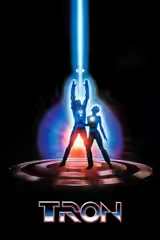
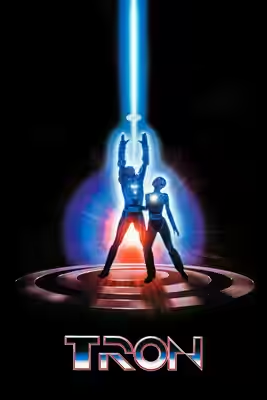
Steven Lisberger’s Tron, from 1982, was a clunky, sincere film about a man who fell into a computer, and it has been loved out of proportion to its merits ever since. Twenty-eight years on, Lisberger produces and Joseph Kosinski directs a sequel that sends the man’s son in after him. The script, by Lee Sternthal, Brian Klugman, Adam Horowitz and Edward Kitsis, wants this to be a story about a father who stayed away too long. The film itself is better at being a showroom.
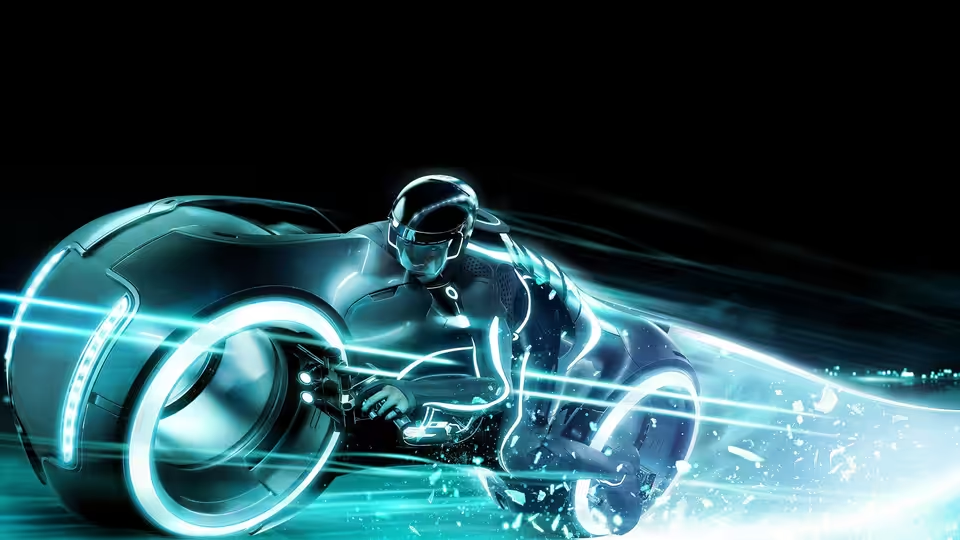
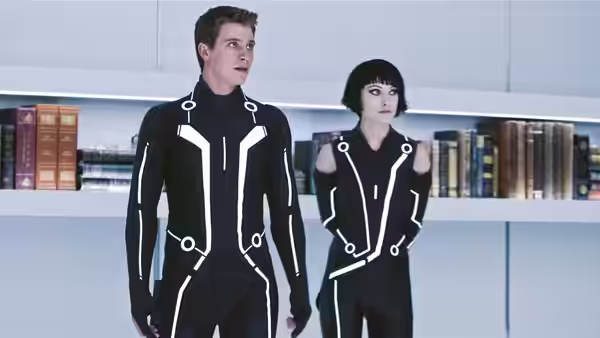
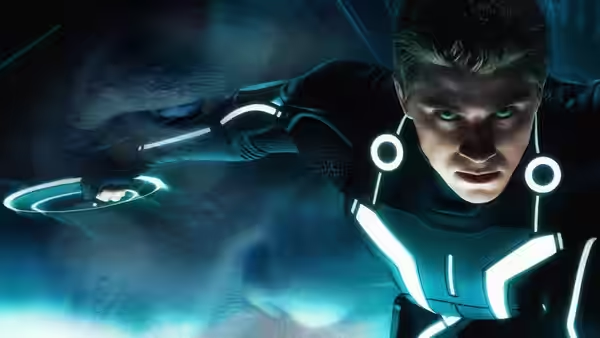
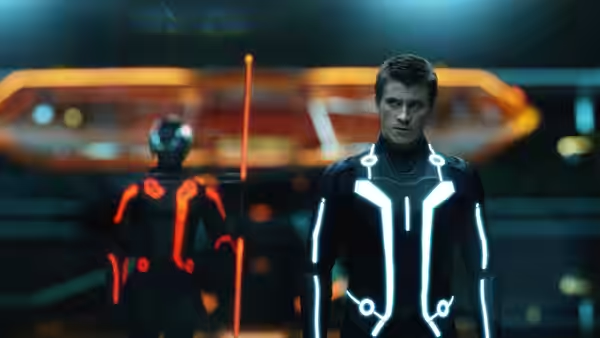
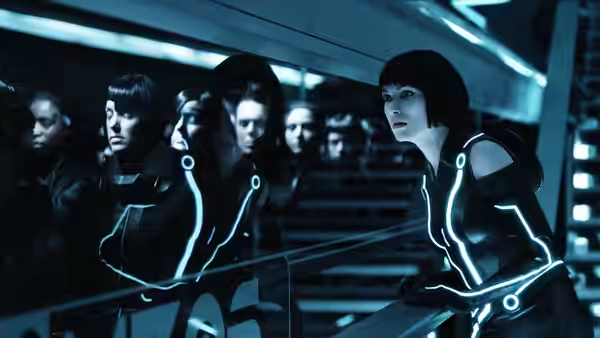
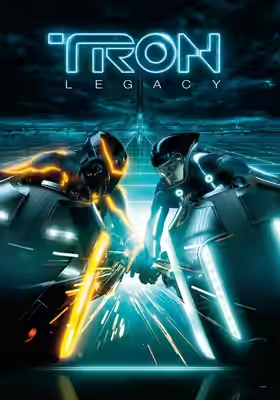
It is a fine showroom. Darren Gilford’s Grid is a city of black floors and black towers with every edge picked out in white or orange light, and Claudio Miranda lights it almost entirely from what is in frame: the glowing strips on Michael Wilkinson’s suits, the headlamps of the vehicles, the lines on the ground. The actors are the lighting rig. When the first of the hovering police craft drops out of the sky to collect Sam and the music comes in underneath it, low strings and a synthesiser pulse, we sat up straight, and we did not slump again until the light cycles were over. That score is by Thomas Bangalter and Guy-Manuel de Homem-Christo, the two men who are Daft Punk, and it is the best thing in the film by a distance.
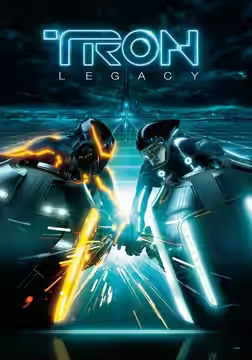
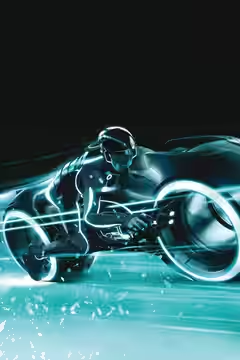
The light cycle match is the sequence everyone remembers, and it earns it. The bikes leave solid walls of light behind them, the arena is built on several levels of glass, and James Haygood cuts it so that we always know where the walls are and who is about to hit one. It lasts a few minutes. The disc games before it are nearly as good. Then the film takes Sam off the Grid proper and into a long middle section of people sitting in rooms, and that is where it stays.
Jeff Bridges plays both the missing father and Clu, the program Kevin built in his own image, and the two performances are on different planets. Kevin is an ageing hippy in a white robe who has spent twenty years meditating in a house out in the dark and talks like a man who has read half of one book about Zen; Bridges is plainly enjoying himself, and so did we. Clu is the Bridges of 1982, rebuilt digitally, and he does not work. The eyes are dull, the mouth is a beat behind the voice, and the skin has the finish of a candle. Kosinski puts him in close-up often, which does him no favours. We found that whenever Clu spoke we had stopped listening to him and started watching his upper lip. There is an argument that a flawed copy of a man ought to look like one, but meaning it to look slightly wrong is not the same as it looking right.
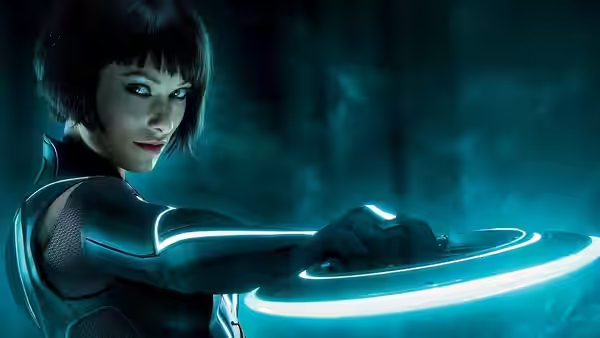
Garrett Hedlund has the shoulders for Sam and little else to work with. The script gives him a grievance and a motorbike and no interior, and he reads his lines as if someone off camera is holding them up. Olivia Wilde is better as Quorra, Kevin’s apprentice, who reads Jules Verne and looks at Sam with the open curiosity of someone meeting her first stranger. James Frain’s Jarvis fusses about at Clu’s elbow to decent effect. And Michael Sheen, as the club owner Castor, arrives in a white suit with a cane that lights up and a laugh like a cash register, and for ten minutes the film has a pulse that is not coming from the speakers. We were grateful to him. He is on screen for one scene and a bit.
The trouble is the writing, and it is the trouble in every room. Characters explain the history of the Grid to each other over dinner. They explain it again on the long ride afterwards. The second half takes a turn we will not describe, but we can say that at 126 minutes the film has time for perhaps three conversations too many and one chase too few. The tagline says the game has changed. The plot is the old film’s with a son swapped in for the father, and a new coat of lacquer.
Most critics landed somewhere in the middle, half dazzled and half bored, and so did we. See it on the biggest screen you can find, with the sound up, for the Grid and for the score; it is a PG, and children who like machines will be happy. At home it becomes an album with slides, and the slides are good ones.