Terry Gilliam’s time-travel thriller is worth the occasional struggle to follow it. Bruce Willis gives the complications a painful human centre, though the restless images and overextended script sometimes make the work harder than necessary.
Terry Gilliam’s Twelve Monkeys is a gripping science-fiction thriller that occasionally makes us work harder than we should have to. Its time-travel mystery has a coherence that the film’s busy manner can obscure, but there is pleasure in finding our way through it. More importantly, Bruce Willis gives us someone worth following. His James Cole is so withdrawn and distressed that questions about what has happened, and when, never quite become a game we can solve at a comfortable distance.
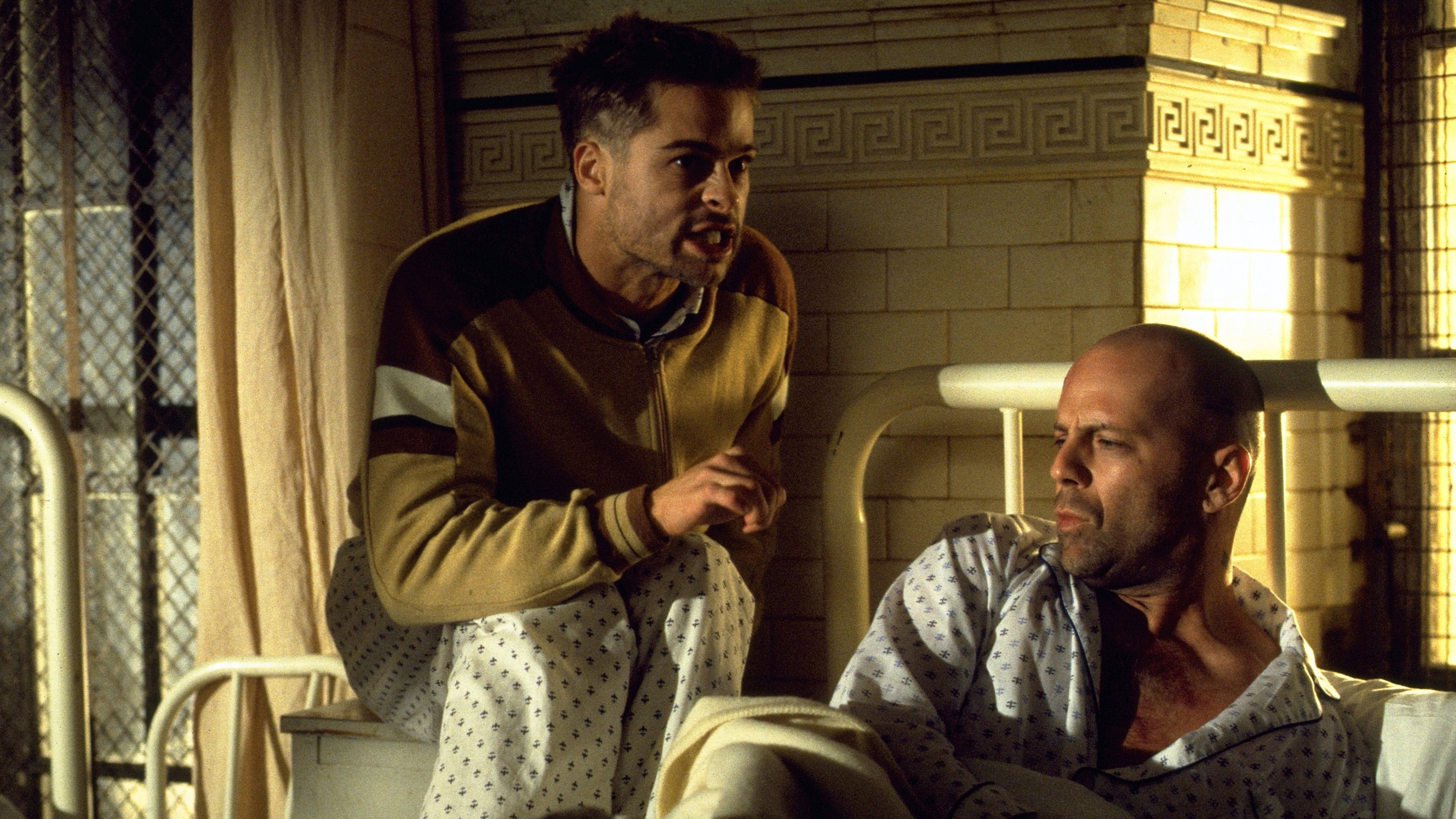
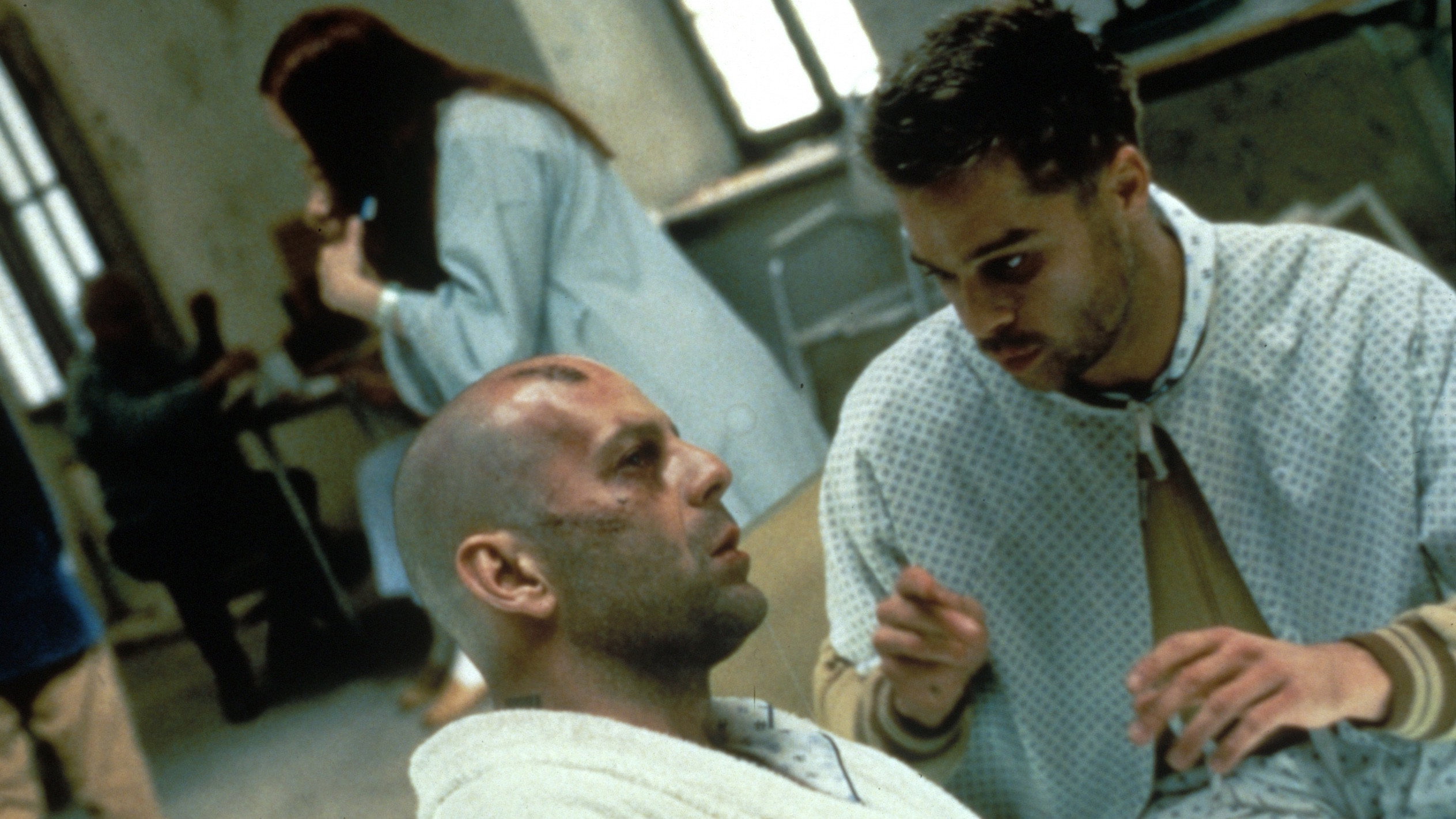
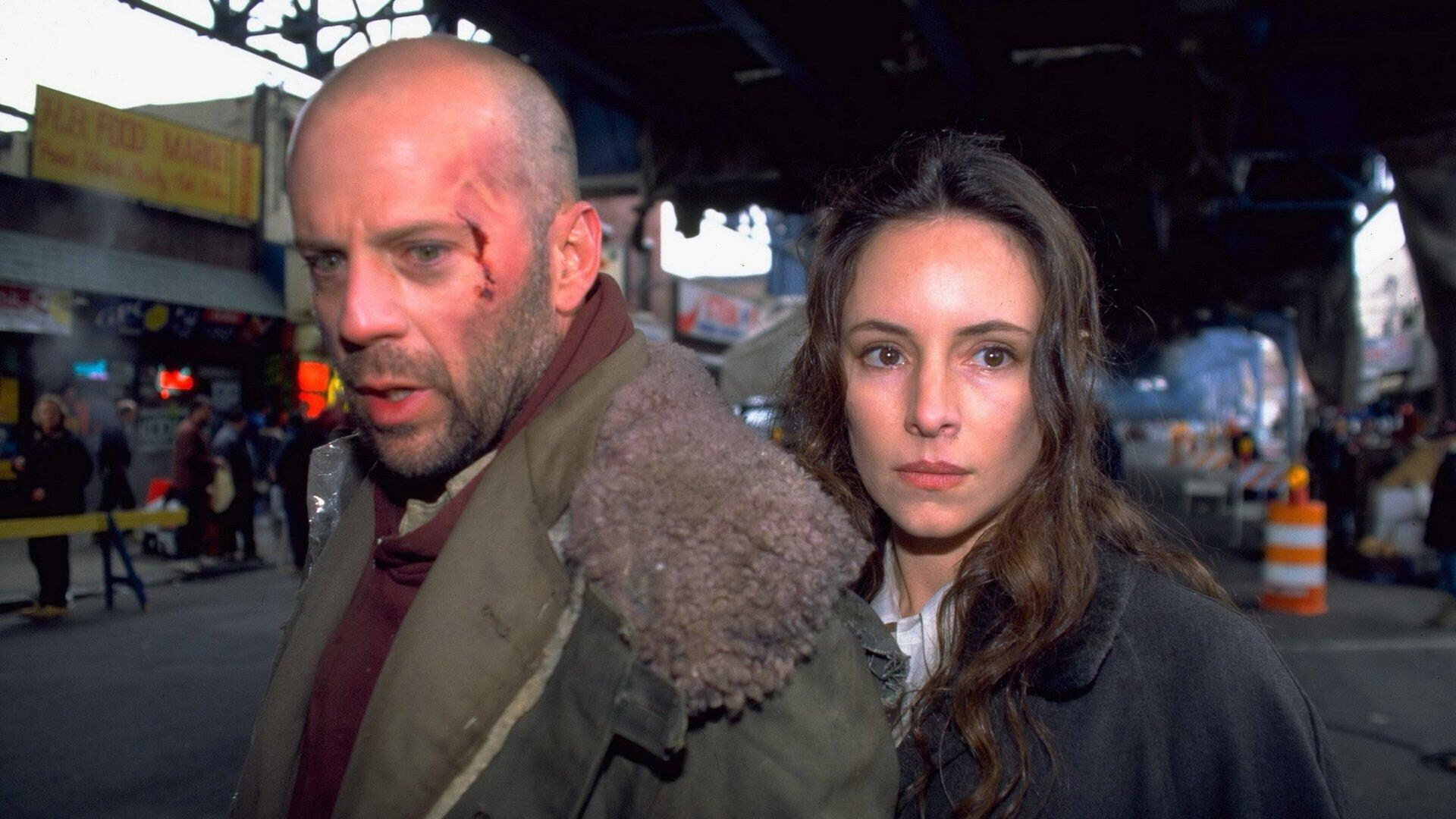
Willis is the reason the film’s tenderness survives its busyness. He keeps Cole’s anguish turned inward, making the effort to understand his circumstances seem exhausting before we have worked out much ourselves. We felt protective of him, because that confusion looks painful in Willis’s performance, and because he offers so little of the reassurance a thriller’s leading man usually provides. The uncertainty about Cole’s sanity consequently has something at stake beyond the next surprise.
Roger Pratt’s cinematography makes even looking at Cole an unsettled experience, with disorienting views that keep us from getting comfortable. The effect suits the character’s confusion, though it sometimes becomes difficult to concentrate on an actor when the image is drawing so much attention to itself. Jeffrey Beecroft’s production design gives Gilliam a densely detailed world that feels oppressive before anyone has explained much. It is persuasive as a place in which an already troubled man could feel overwhelmed.
The screenplay by Janet Peoples and David Webb Peoples has a sound grasp of its time-travel complications. The questions about sanity belong to Cole’s experience, and do not feel like a cheap excuse to keep us guessing. Mick Audsley’s editing helps the story gather momentum without pretending that the route through it is straightforward. At 129 minutes, though, the film has stretches where our bewilderment lasts longer than our interest in being bewildered. Some tightening would have left the mystery intact.
Brad Pitt, as Jeffrey Goines, is much less restrained than Willis, and his performance tests how much more agitation the film can accommodate. We prefer him when the energy makes an exchange feel unpredictable to the moments when the performance itself is all we notice. Madeleine Stowe’s Dr Kathryn Railly provides a welcome steadiness. She gives us a directness that the surrounding fuss can make surprisingly valuable, and helps the human relationships remain worth attending to.
Paul Buckmaster’s score maintains a useful continuity of mood as the story complicates itself. It keeps the unease alive without drawing as much attention to its methods as the images do. In a genre that often finds reassurance in explaining its rules, Gilliam is unusually interested in how helpless his characters feel. That makes the film a more affecting experience than its elaborate puzzle might suggest, and allows the quieter work from Willis and Stowe to count.
Allow it an evening without interruptions, and resist the temptation to stop every time a question occurs. There is pleasure in putting the story together, but the drive to account for everything immediately can make us miss what Willis is doing. The confusion is sometimes tiring, and we would forgive anyone who needed a quieter film. Save the diagrams for afterwards.