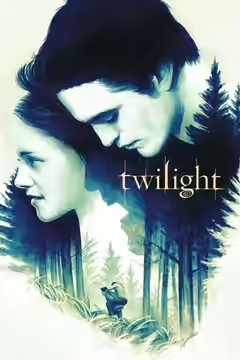
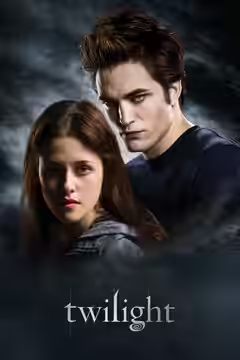
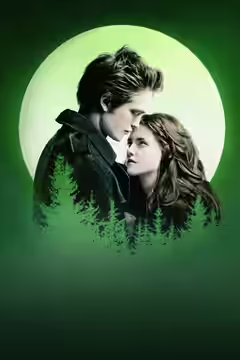
Catherine Hardwicke makes teenage longing convincing enough to carry Twilight through some clumsy dialogue and uncertain effects. Kristen Stewart gives the romance a human centre, though the vampire danger is considerably less persuasive.
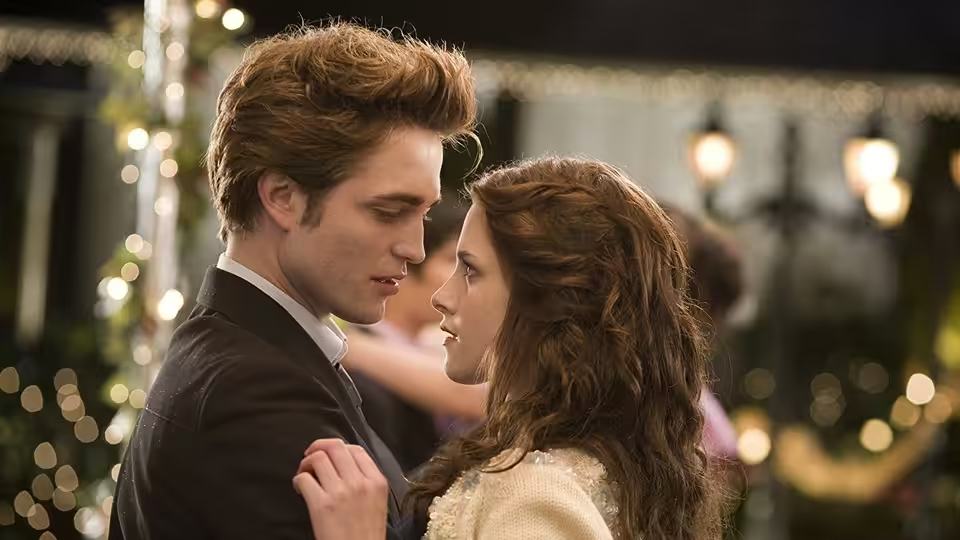
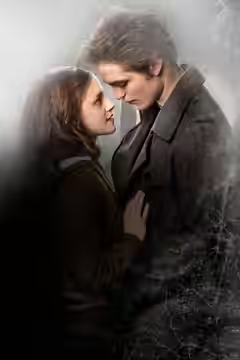
Catherine Hardwicke’s Twilight is a good teenage romance with a less convincing vampire film attached. Adapting Stephenie Meyer’s novel, the director takes the business of wanting someone with a seriousness that adult viewers may have forgotten they once possessed. Nobody is standing outside these feelings, encouraging us to laugh at the young people having them. That respect matters: the film gives a school crush enough room to become absorbing, even when its supernatural machinery looks faintly ridiculous.
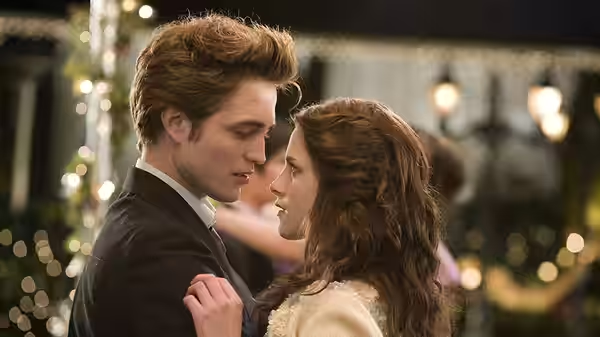
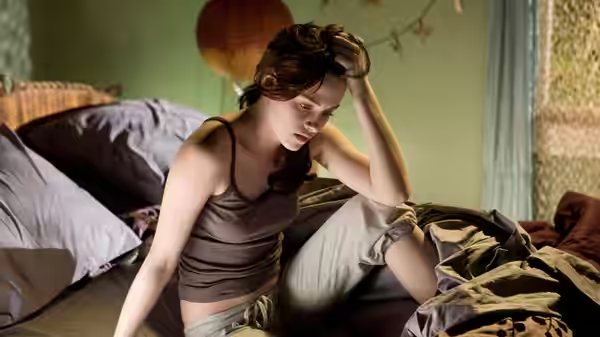
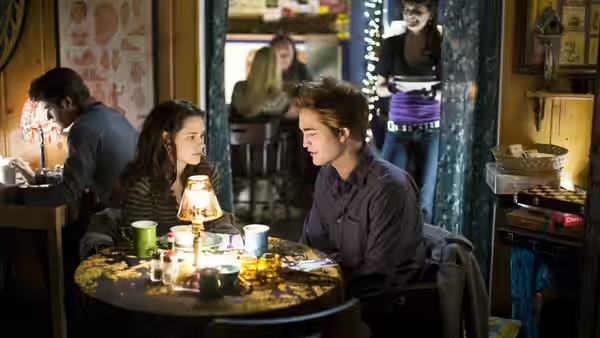
Kristen Stewart makes Bella Swan’s uncertainty worth watching. The hesitations and uneasy exchanges can be mannered, but they also suggest someone for whom being looked at is both welcome and uncomfortable. We felt unexpectedly protective of Bella during the long, uncomfortable exchanges with Edward Cullen; Stewart makes her difficulty speaking to someone she wants painfully recognisable. Robert Pattinson is less consistently persuasive, although his stiffness has a use here. The two convey the effort of being near somebody when every small movement suddenly feels consequential.
Melissa Rosenberg’s screenplay does not always give that attraction enough substance. The script gives us little sense of what these two enjoy about one another, and the clumsier dialogue makes a few pauses seem merciful. Bella could do with interests that survive Edward’s arrival in a scene; too much of her character is left for Stewart to supply. Pattinson, meanwhile, has to make solemnity attractive for long stretches, and his performance becomes repetitive when another meaningful stare is all the scene offers him.
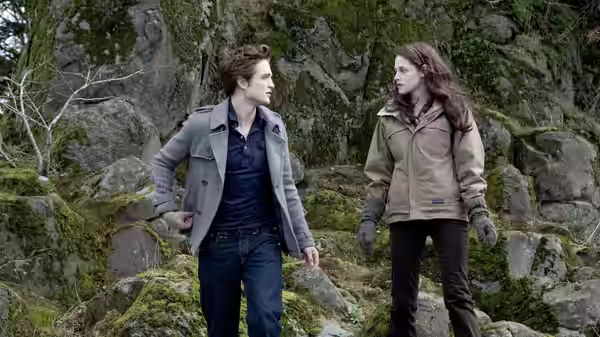
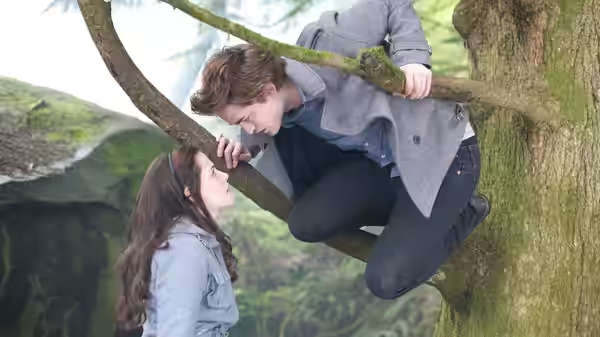
Elliot Davis’s cinematography is a considerable help. The overcast landscapes and misty mountains make withdrawal from ordinary life seem tempting, and their chill suits a romance conducted at such a cautious distance. The images make the lovers seem isolated without requiring the actors to explain their feelings again. The effects are less secure: their visible artificiality can puncture a scene just when the film needs us to accept its supernatural rules.
Nancy Richardson’s editing is most effective when it leaves space for the tentative exchanges between the leads. As the pace accelerates, the film becomes less assured, hurrying material that needs more weight while having spent generously on repeated looks. Carter Burwell’s music gives the romantic passages a welcome seriousness. That helps hold our attention through exchanges that the dialogue alone would struggle to sustain.
Against the demands of vampire horror, this is a mild proposition. The threat never feels strong enough to justify the anxiety surrounding the romance, and the rival vampires make for a thin secondary story. Viewers looking for sustained fear will have a long wait. The actors keep us interested in the prospect of a relationship, even when its dangers fail to convince.
We recommend it to anyone willing to take that attraction seriously, with a warning about the dialogue and effects. There is pleasure in a film that lets young people feel this much without treating them as a joke. If the attraction between the leads does nothing for you, though, there is not much else here to sustain an evening.