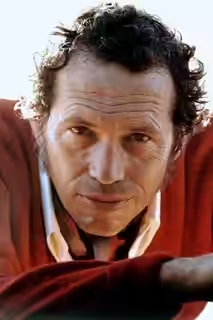
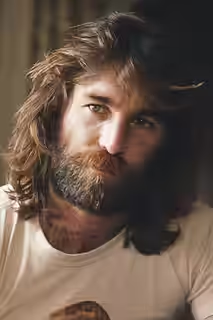
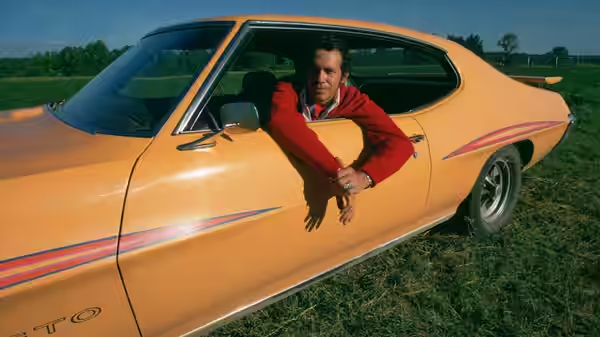
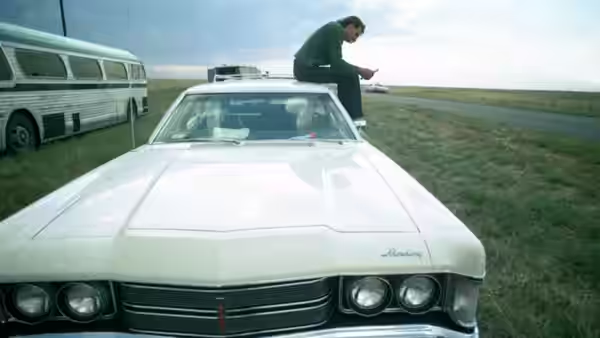
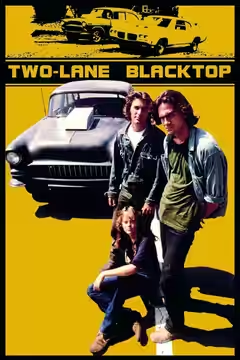
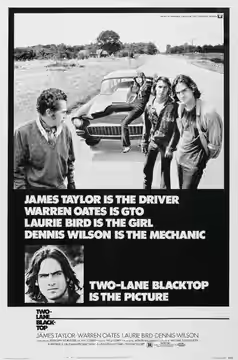
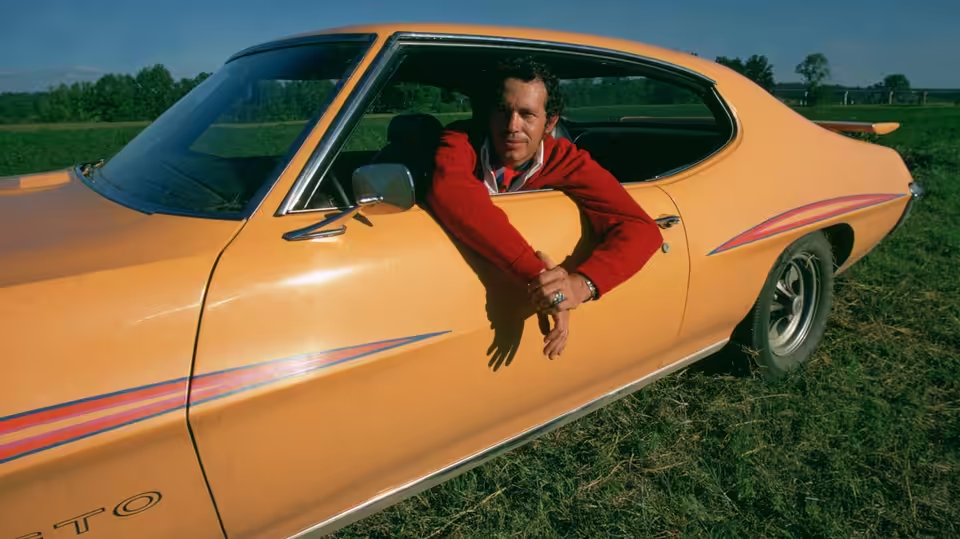
G.T.O. (Warren Oates) leans through the window of his orange car
Film review

Two-Lane Blacktop

1971 · Directed by Monte Hellman · 1h 42m

In a sentenceThe race can wait; Warren Oates has another story

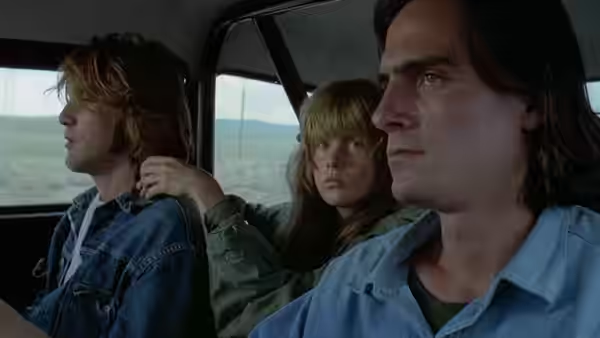
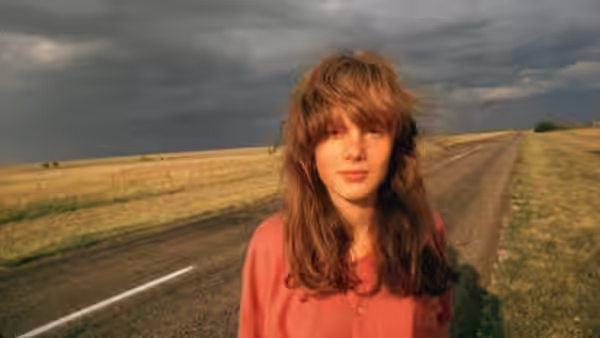
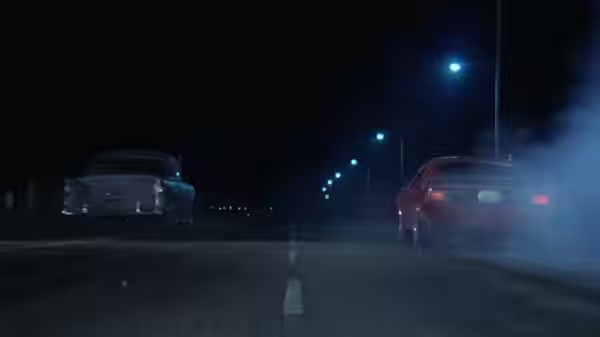
The Driver (James Taylor) and The Mechanic (Dennis Wilson) are on the road, occupied with street racing. G.T.O. (Warren Oates) is more inclined to tell stories about himself, while The Girl (Laurie Bird) completes the central group. A race gives these travellers an immediate purpose, but says little about what any of them wants beyond the driving. The Driver and The Mechanic offer few explanations. G.T.O. offers rather more, building a picture of himself that keeps shifting as the road carries them on.

Fi1m review

Monte Hellman’s street-racing drama is quietly absorbing, with Warren Oates giving its loners some welcome warmth. We recommend it, with fair warning that the thin story sometimes makes the silences feel long.

Two-Lane Blacktop is a road film that gradually lets its race become less important. That can sound like a warning, but we recommend it: Monte Hellman makes the driving and the company worth our attention even when the story slackens. His interest is in people who keep moving without becoming much easier to know. At 102 minutes, the film has time to test our patience, and occasionally does. Mostly, its unhurried pace lets us notice differences between people who seem to have little to offer one another.

James Taylor’s The Driver and Dennis Wilson’s The Mechanic make that patience necessary. Their blankness is arresting, and both have the odd appeal of people who seem uninterested in being watched. The restraint suits a film so reluctant to explain its people, though the two performances can begin to feel too similar. We do not need a confession from everyone on screen, but we sometimes wanted another flicker of curiosity or irritation. There are quiet passages where the effort of wondering about them starts to feel like work.

Warren Oates prevents that reserve from taking over. His G.T.O. tells stories about himself with the apparent hope that enough talk will make him interesting company. We felt unexpectedly sad watching him: the more he supplies, the more exposed his loneliness seems. Oates gives those stories enough life that we want to hear them, even while doubting that they explain him. His performance provides some welcome humour, without making G.T.O. seem any less troubled.

Jack Deerson and Gregory Sandor’s landscape photography is a substantial reason to stay with the journey. The outdoor colour gives the eye plenty to attend to while the central group remains so guarded. We can enjoy looking at the land without being asked to believe that these people are enjoying their freedom. As editor, Monte Hellman lets the race lose momentum instead of continually restoring a sense of urgency. It is an effective choice, though some stretches could be shorter without costing the film its peculiar calm.

The screenplay by Floyd Mutrux, Rudy Wurlitzer and Will Corry keeps explanation sparse. That restraint leaves room for Oates, but it also places a heavy burden on the cast to make thinly drawn people interesting. Laurie Bird’s The Girl has less chance to compete with G.T.O. for our attention. A little more detail would help her feel less marginal. The long pauses are easier to accept when we have someone as expressive as Oates to watch.

Within the road-film tradition, this is an unusually patient treatment of people whom speed does not seem to satisfy. The street racing matters, but Monte Hellman declines to make every encounter another step towards a decisive contest. That will frustrate anyone expecting the driving to supply a dependable sequence of thrills. We think the gamble pays off because Oates gives us a person to care about, and Taylor and Wilson remain strange enough to keep us looking. Choose it for the company, and allow for the silences.

Critical consensus AI synthesised

74
Positive
5
Mixed
4
Negative
0

The reviews lean positive on Two-Lane Blacktop, with praise clustering around its hypnotic road atmosphere, landscape photography and sense of loneliness. Warren Oates receives repeated attention: critics find his damaged, storytelling character a human anchor in a film whose race gradually loses momentum. The New Yorker also champions James Taylor and Dennis Wilson, finding their blank charisma well suited to the film’s landscape and its reworking of screen stardom.

The available reservations concern the low-key script and a journey that can feel joyless even to admirers. Radio Times finds that the direction, quirky charm and Oates’s performance compensate for the writing, offering a more qualified endorsement than the strongest notices. The recorded ratings range from mixed to warmly positive, with none negative. Three entries lack enough accessible review text to establish their reasoning, however, so the precise grounds for some of that caution remain unclear.

Empire
18 May 2007 · Damon Wise
85*

Wise presents the film as an underrated, beautiful and hypnotic road movie. He singles out its mysterious brilliance in capturing loneliness and life on the road.

Read the full review →
Los Angeles Times
9 December 2007 · Dennis Lim
85*

Lim regards the film as a bleak, beautiful, hypnotic road movie whose race deliberately loses momentum. He singles out Warren Oates’s damaged, fabulist character as its all-too-human anchor.

Read the full review →
Variety
31 December 1970 · Variety Staff
85*

The review praises the film as an engaging portrait of street-racing and human nature. It especially singles out Warren Oates’s performance as outstanding.

Read the full review →
Slant Magazine
7 January 2013 · ★★★★ · Joseph Jon Lanthier
80

The critic regards the film as a joyless but compelling post-apocalyptic road trip, and calls its Criterion Blu-ray a strong presentation. The review particularly praises the vivid landscape photography and the transfer’s rendering of outdoor colors and textures.

Read the full review →
The New Yorker
20 May 2014 · Richard Brody
80*

Brody regards the film as a distinctive reworking of the movie-star tradition. He especially praises Dennis Wilson and James Taylor for performances whose powerful, blank charisma suits the film’s mythic landscape.

Read the full review →
RogerEbert.com
65*

The page shows a browser verification screen, so the critic’s verdict cannot be determined. No praise or complaint from the review is available.

Read the full review →

Straight answers AI written, from our review

Is Two-Lane Blacktop worth watching?
Two-Lane Blacktop is worth watching for its patient observation of restless travellers and Warren Oates’s warmth; we score it 81 out of 100. We recommend it to anyone who enjoys quiet, character-led road films, with the warning that its thin story and long silences can test patience rather than deliver dependable racing thrills.
How long is Two-Lane Blacktop, and what is it rated?
Two-Lane Blacktop runs 1h 42m. It is a drama film.
Where can I watch Two-Lane Blacktop in Italy?
Two-Lane Blacktop is not on any streaming or rental service in Italy at the moment. Availability is checked daily.
How violent or frightening is Two-Lane Blacktop, and is it suitable for children?
Two-Lane Blacktop carries a US R certificate, so we would not recommend it as a children’s film. That rating indicates adult material, but we cannot offer a specific warning about violence or frightening scenes: our review does not describe those elements, and no UK certificate is supplied.
How does Two-Lane Blacktop compare to The Straight Story?
Two-Lane Blacktop is the more guarded road film; we favour The Straight Story for warmth and a more direct emotional connection. Both reward patience, but The Straight Story finds feeling in the practical details of a slower journey and Richard Farnsworth’s unforced performance. We recommend Two-Lane Blacktop for its harder-to-read travellers, with Warren Oates making their loneliness felt.
What should I watch after Two-Lane Blacktop?
After Two-Lane Blacktop, try The Straight Story (1999, Fi1m 88): A slower road journey whose practical details carry considerable feeling. Then Taste of Cherry (1997, Fi1m 86): Another car, another guarded man, and conversations worth giving time to.

Cast

If you liked this, try…

  1. Vanishing Point (1971) · not on Fi1m yetThe fast driving comes with a similarly uneasy sense of freedom.

  2. Alice in the Cities (1974) · not on Fi1m yetA more tender journey with strangers who slowly become necessary company.

  3. Wendy and Lucy (2008) · not on Fi1m yetTravel stripped of romance, with close attention to money and loneliness.

  4. The Straight Story (1999, Fi1m 88)A slower road journey whose practical details carry considerable feeling.

  5. Taste of Cherry (1997, Fi1m 86)Another car, another guarded man, and conversations worth giving time to.