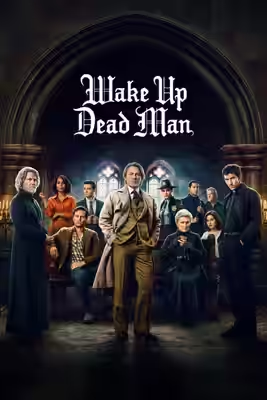
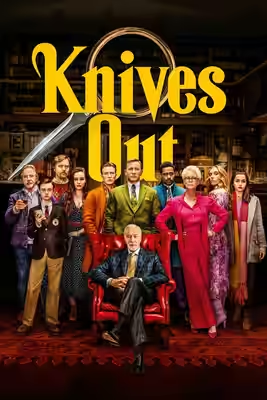
Rian Johnson’s third Benoit Blanc mystery is colder and more serious than the last, and Josh O’Connor’s young priest gives it a heart. It is also 145 minutes long, and half a dozen good actors spend most of them waiting for a line.
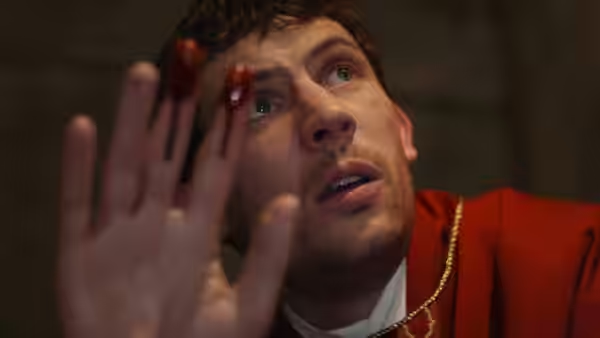
Rian Johnson has made two films about Benoit Blanc, the gentleman detective with the Louisiana vowels, and both took place in good light: a New England mansion in Knives Out, a Greek island in Glass Onion. The third is set in winter, in a small stone church, and it opens not with Blanc but with a priest. Father Jud Duplenticy (Josh O’Connor) is sent to assist Monsignor Jefferson Wicks (Josh Brolin), who preaches grievance from the pulpit and enjoys it. Wicks dies in front of his congregation in a way that appears to be impossible, and Jud is the obvious suspect. This is a good film, the most serious of the three, and it takes nearly two and a half hours to be good in.
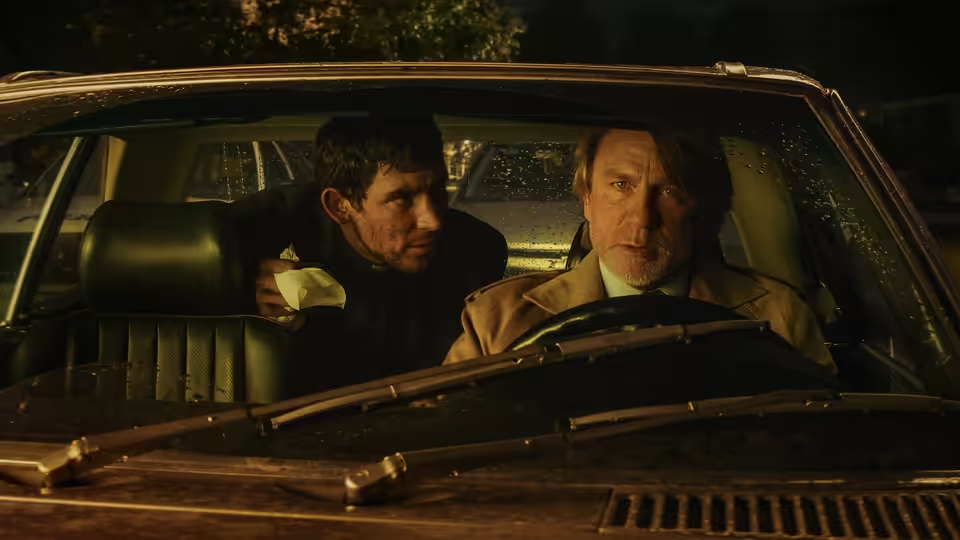
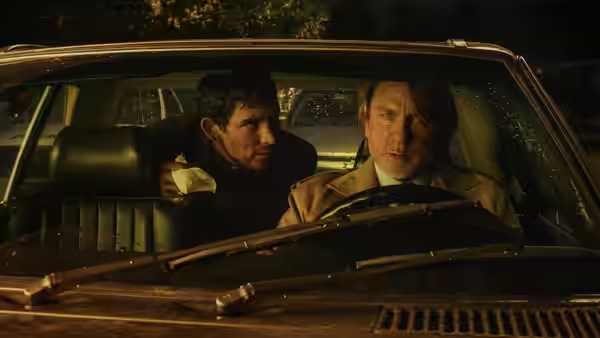
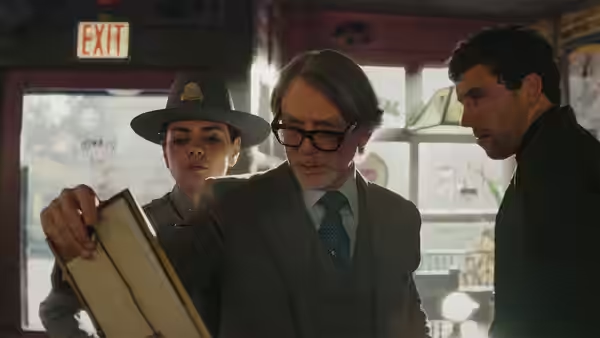
O’Connor is the reason to watch. He plays Jud as a man who believes and is a little embarrassed by how much, who wants his parishioners to like him and knows the wanting is a fault. He is funny without appearing to try. When Craig’s Blanc turns up, a good way into the film, the two settle into a partnership that is the best thing Johnson has written for this character, because for once Blanc has someone to argue with rather than someone to catch. Craig is quieter here. Blanc has less to do and does it with less flourish, and there is a running argument between a man who trusts only evidence and a man who has staked his life on something he cannot prove. We expected to find that argument decorative. It is not; it is the plot.
Brolin gives the film its cold. Wicks preaches to a congregation that has come to be told whom to hate, and Brolin does not wink at us or soften him. We were, for the length of that first sermon, uneasy in the way one is uneasy in a room where a man is enjoying his own anger, and the whole mystery is built on that unease. It is the film’s clearest satire and its least subtle, and it sits close enough to the news to sting.
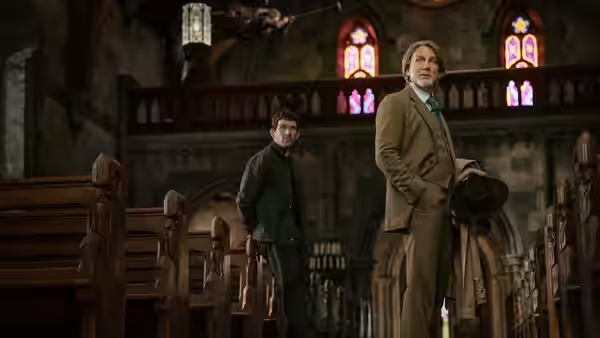
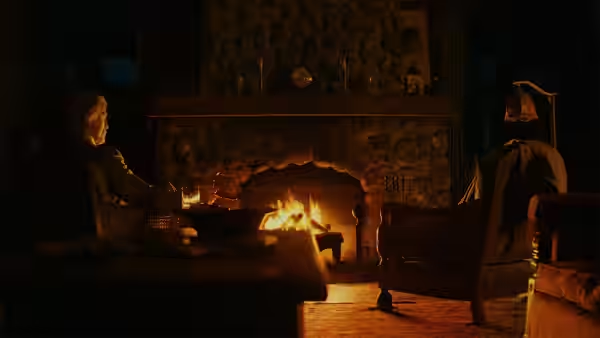
Steve Yedlin, who shot the first two, drops the bright palette of the last one. The church is lit by candles and by grey daylight through coloured glass, so faces are half in shadow and the snow outside looks like the only clean thing for miles. Rick Heinrichs’s production design fills the rectory with worn wood and old paper and keeps the nave tall and bare, so the people in it look small. Jenny Eagan’s costumes do quiet work: Wicks’s vestments are a little too rich for the parish, and Blanc’s tweeds look like a man dressed for a different sort of case. Nathan Johnson’s score is heavier than in the earlier films and mostly knows when to stop.
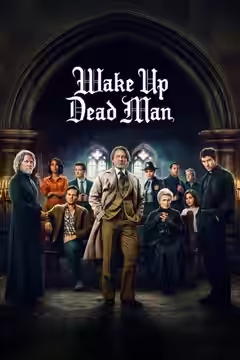
The trouble is the crowd. Johnson has assembled a dozen well-known actors and given perhaps four of them a character. Glenn Close, as Martha Delacroix, the parishioner who has given her life to the church and to Wicks, gets the best of the rest and takes it. Mila Kunis’s police chief has a good running exchange with Blanc about whose case this is. But Jeremy Renner, Kerry Washington, Geraldine Scott, Cailee Spaeny, Daryl McCormack and Thomas Haden Church spend long stretches sitting in pews waiting to be suspected, and one or two of them could be lifted out without leaving a hole. Bob Ducsay cuts patiently, which suits the first hour and not the second. We were restless somewhere around the ninety-minute mark, during a round of interviews that told us things we had already gathered, and the film runs 145 minutes.
Against Johnson’s own work, this sits between the two earlier films. It lacks the clockwork pleasure of Knives Out, where every object in the house turned out to matter, and it is a great deal better than Glass Onion, which mistook a large set for a plot. The solution, when it comes, is fair, which is the least a whodunnit owes you and more than most deliver. We will say nothing about it except that the last twenty minutes explain slightly more than they need to.
Watch it on a dark evening with someone who will argue with you afterwards about whether Jud is right. The murder is settled by the end. The argument is not.