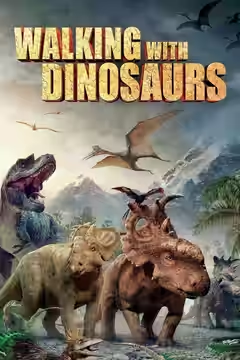
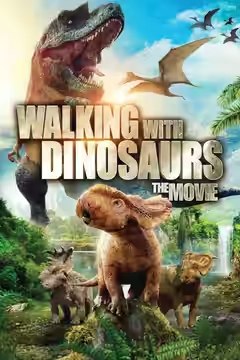
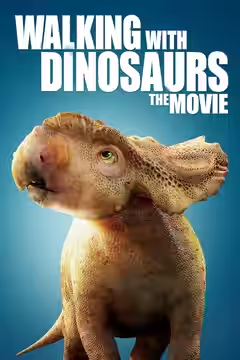
The dinosaurs are lifelike and the Alaskan hillsides are real, and over all of it someone has laid a running commentary of dung jokes and pop songs. Small children will not mind. Anyone who loved the BBC series will want to turn the sound off.
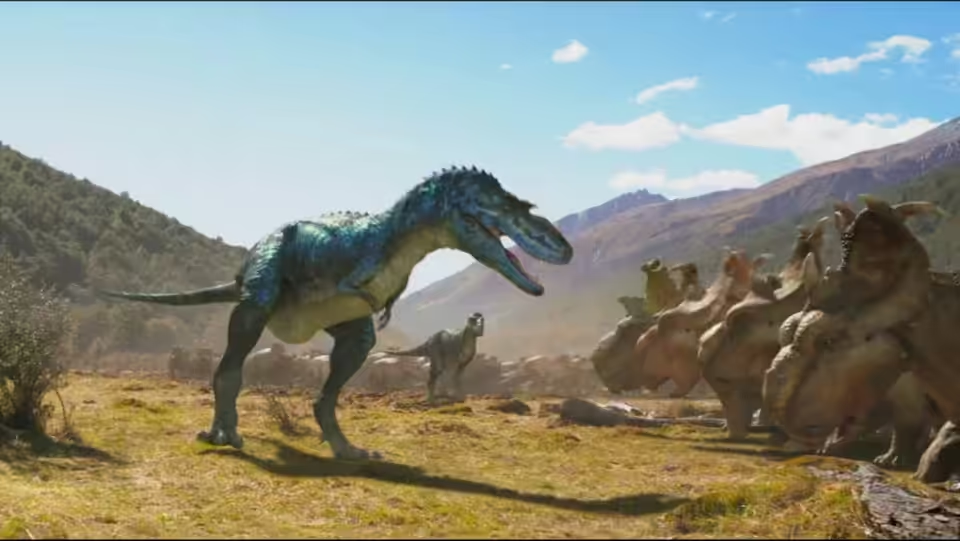
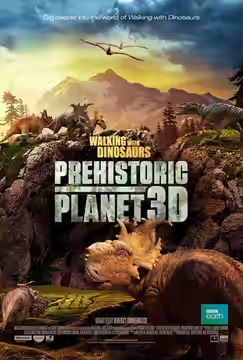
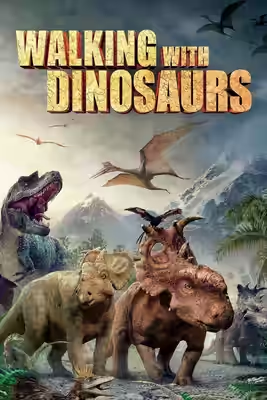
Walking with Dinosaurs takes the name of the BBC series from 1999 and almost nothing else. The series put computer-made animals into real landscapes and had a narrator explain, in a reasonable voice, what they were doing. The film puts its animals into Alaska, which is the right idea, and then gives them American schoolyard voices and a joke every fifteen seconds, which is the wrong one. For 87 minutes the pictures and the soundtrack fight, and the soundtrack wins because it is louder.
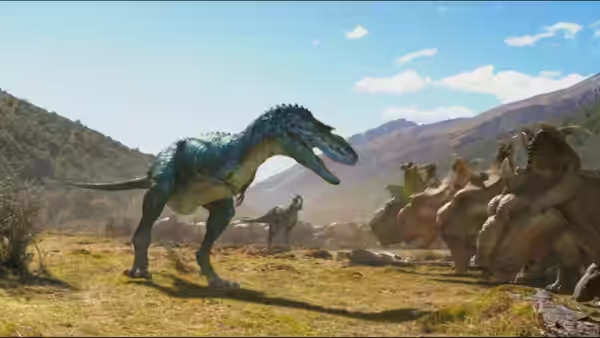
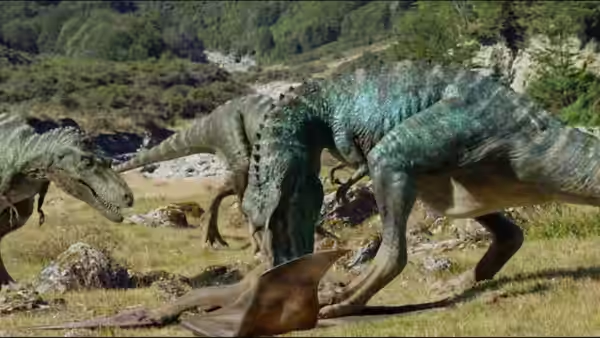
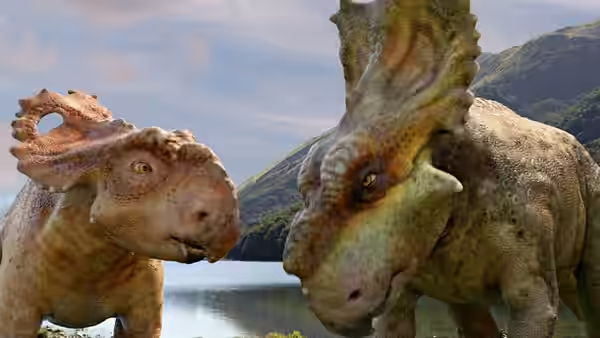
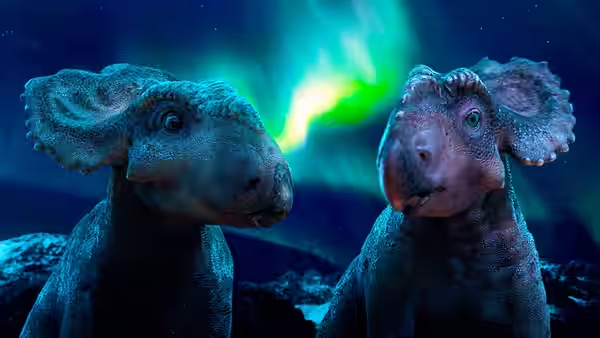
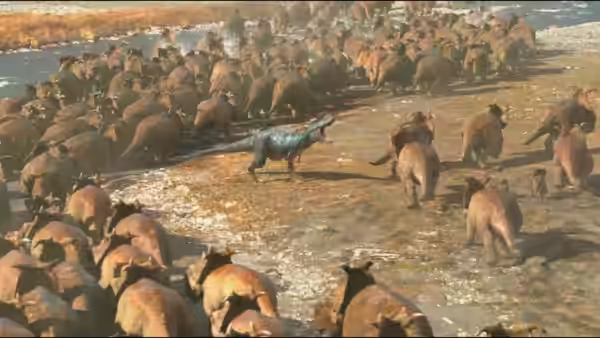
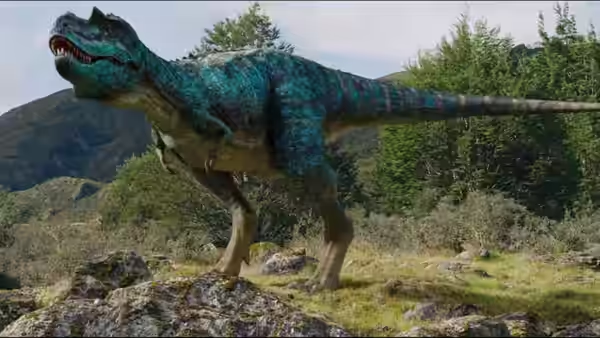
The animals are good. Patchi and his herd are Pachyrhinosaurus, heavy horned plant-eaters with a frill, and the effects team has given them weight: feet sink into mud, breath shows in cold air, snow settles on their backs and slides off when they move. When the herd comes over a ridge in low sun and a Gorgosaurus waits in the trees below, it looks like something filmed rather than something built. John Brooks has the cinematography credit, and the dinosaurs stand in his hillsides as if they had always been there.
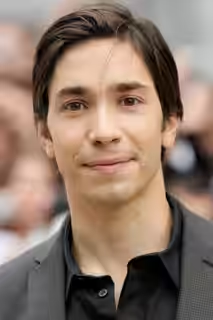
We were, for a stretch near the beginning, quietly happy. A hatchling pushes its nose out of an egg on a riverbank, the camera low in the grass, and for a minute or two the film is content to watch. Then the hatchling speaks, in the voice of Justin Long, and it does not stop speaking for the next hour and a quarter. By the second river crossing we were irritated, then irritated with ourselves for being irritated by a U-certificate film about a dinosaur, then irritated again, because the thing underneath the noise deserved better.
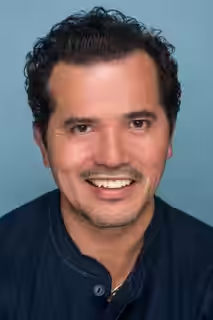
The script is credited to Gerry Swallow, John Collee and Richard Dale, and its dinosaurs talk like twelve-year-olds at a bus stop. Patchi is the runt who wants to lead the herd; his brother Scowler (Skyler Stone) is the bully who does; Juniper (Tiya Sircar) is the girl from the other herd. Every scene is talked over, and the talk runs to “dude” and “gross”, with dung at regular intervals. Alex (John Leguizamo) narrates on top of all this, so an image often carries two layers of chat. Because the animals’ mouths do not move, a choice we approve of in principle, it is frequently unclear which of them is speaking, and we stopped trying to work it out.
Paul Leonard-Morgan’s score swells in the right places and would do the job on its own. It keeps being interrupted by pop songs, dropped in whenever a sequence threatens to become stirring. The film also stops dead for a freeze-frame and a child’s voice announcing the species, how to pronounce it and what it ate, a museum label pasted over a window. Those labels are all that survives of what the series was for, and they are handled as homework. John Carnochan cuts briskly, and the 87 minutes do not drag.
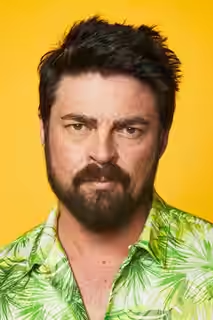
There is a live-action frame. Uncle Zack (Karl Urban) drives his nephew Ricky (Charlie Rowe) and niece Jade (Angourie Rice) to a dig, Ricky sulks in the truck, and Alex tells him the story. It takes a few minutes at either end. Urban, who can carry a film, is given a fossil to hold and little else; Rowe does the sulking well enough. Grant Major has the production design credit, and on a picture shot against real hills the truck and the dig site are about all there was to build.
Neil Nightingale and Barry Cook share the directing credit, and Cook co-directed Mulan for Disney in 1998. The pull between a nature film and a cartoon is visible in every scene. Most critics have landed near where we have, and almost every review says the same two things: the dinosaurs are good and the voices are not.
Take a child of five or six, who will enjoy it and will not see the problem. The U certificate is right; the Gorgosaurus is frightening the way a storybook wolf is frightening, and no more. If you are going for the animals, the pictures survive having the volume turned to nothing, and we would not blame you for trying.