Film review

In a sentenceBeethoven gets the centaurs and Mussorgsky gets the devil, and only one of them is well served

AnimationFamilyFantasy

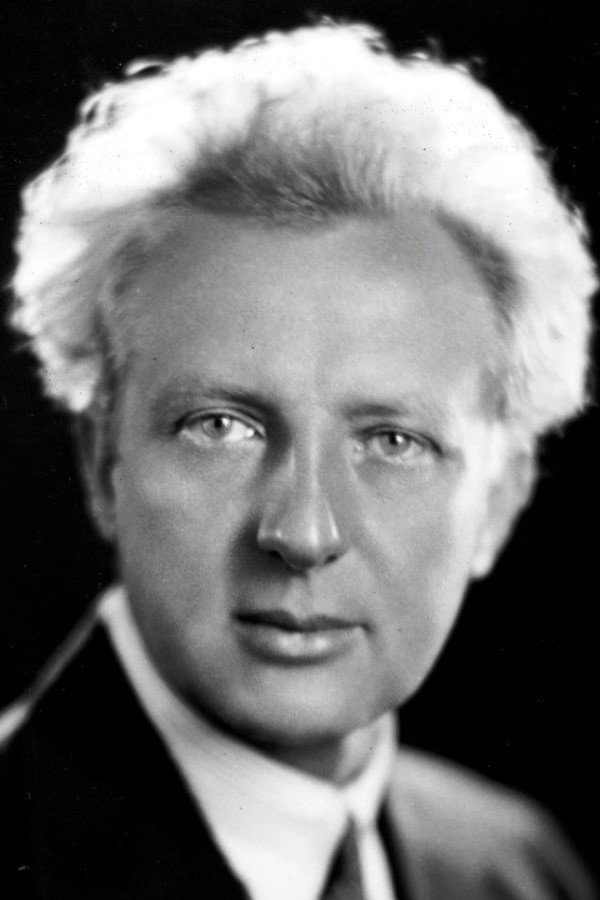
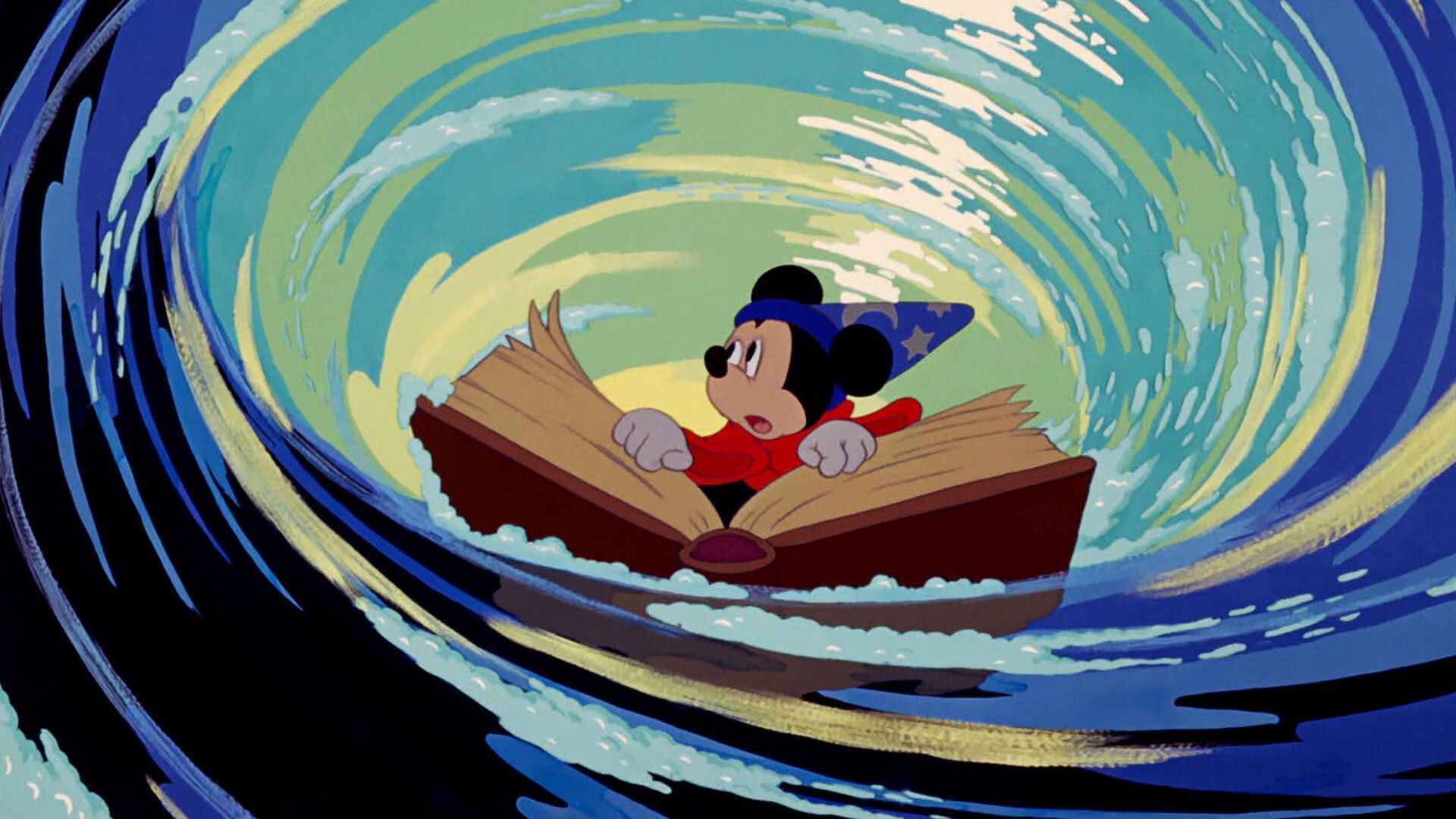
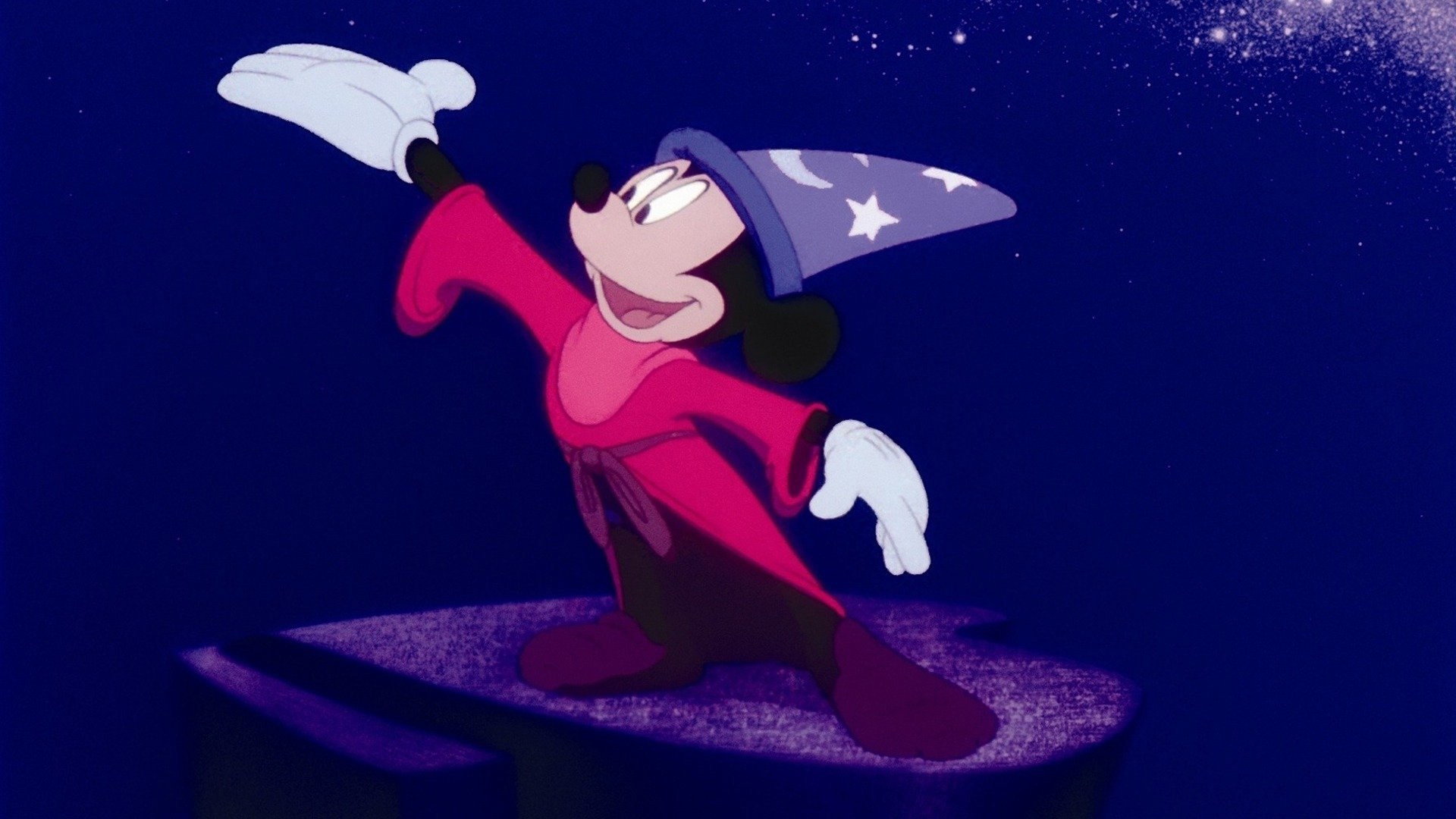
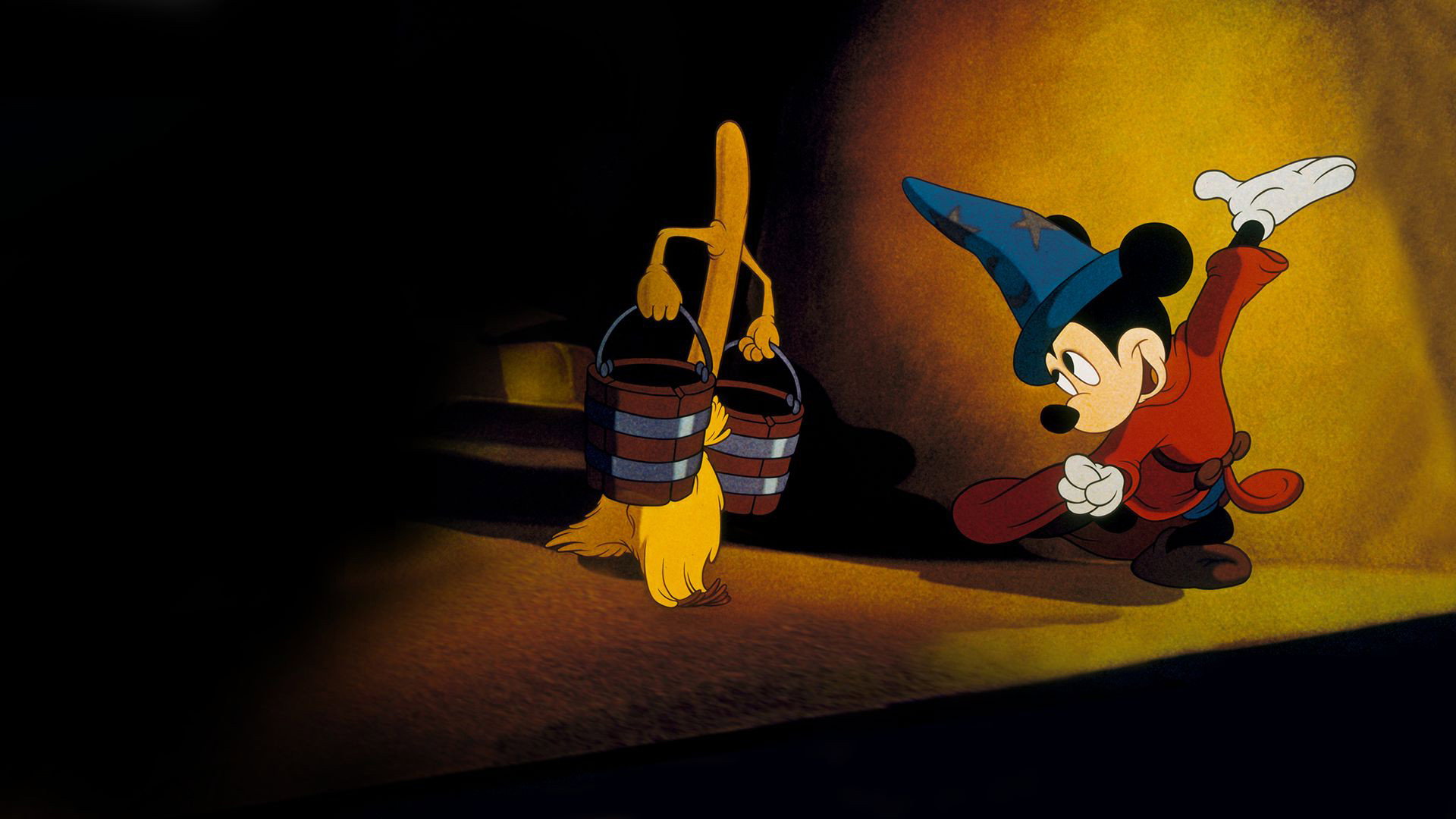
On a bare concert stage, the players lit as blue and gold silhouettes, Leopold Stokowski conducts the Philadelphia Orchestra while Deems Taylor stands at a lectern to explain what we are about to hear. Eight pieces of concert music follow, each drawn by Disney’s animators as the music suggests. Johann Sebastian Bach’s Toccata and Fugue becomes streaks of light and drifting shapes. Pyotr Ilyich Tchaikovsky’s Nutcracker Suite becomes dew fairies, dancing mushrooms and fish in veils. Then, to Paul Dukas’s The Sorcerer’s Apprentice, Mickey Mouse (Walt Disney) puts on his master’s pointed hat, orders a broom to carry his water buckets and falls asleep while the water rises through the sorcerer’s cellar. There is no story linking the pieces, only Taylor, the orchestra and an interval.

Fi1m review

Disney’s concert film is as uneven as its eight pieces: the mouse, the hippos and the devil on the mountain are as good as anything the studio drew, and the Beethoven is a chocolate box. See it for the good three quarters.

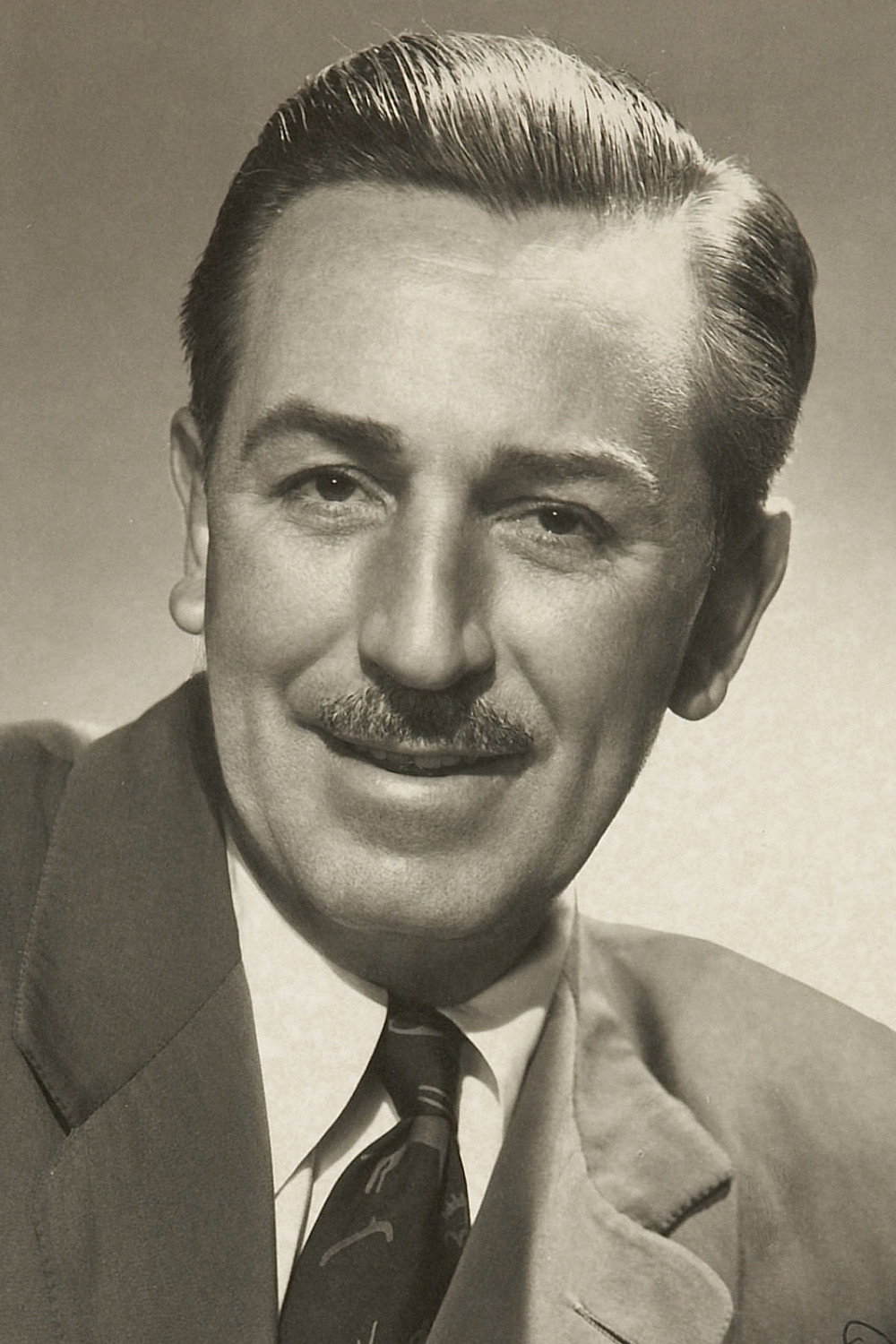
Walt Disney, producing, takes eight pieces of concert music, hands them to Leopold Stokowski and the Philadelphia Orchestra, and asks a dozen credited directors to draw whatever the music puts in their heads. Deems Taylor introduces each piece from a lectern, like a man who suspects we have not been to many concerts. There is no story, and it runs 124 minutes with an interval. It is the most ambitious thing the studio had made and the least even, and about three quarters of it is as good as animation has been.

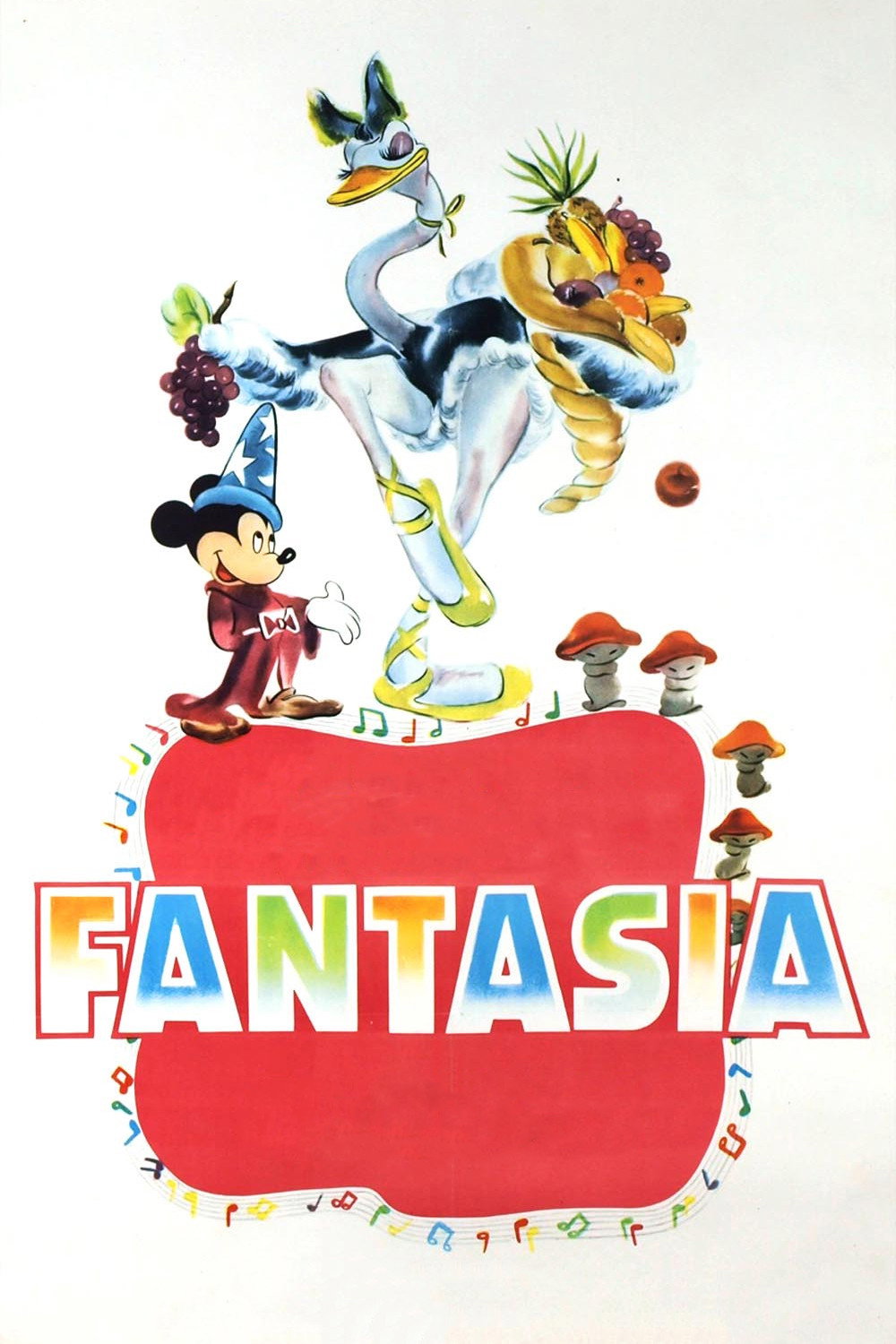
James Wong Howe photographs the orchestra as shadows against washes of blue, red and gold, the players lit from behind so that we see bows and bells and bald heads. Bach’s Toccata and Fugue, which opens the programme, carries on from there: the bows become streaks of light, the streaks become shapes, and for ten minutes there is nothing on screen you could put a name to. Tchaikovsky’s Nutcracker Suite brings things back. Fairies hang dew on a spider’s web, thistles and orchids dance a Cossack number, and a ring of mushrooms shuffles round with one small one always a half-beat late and hurrying to catch up. That small mushroom is the whole studio in a single drawing.

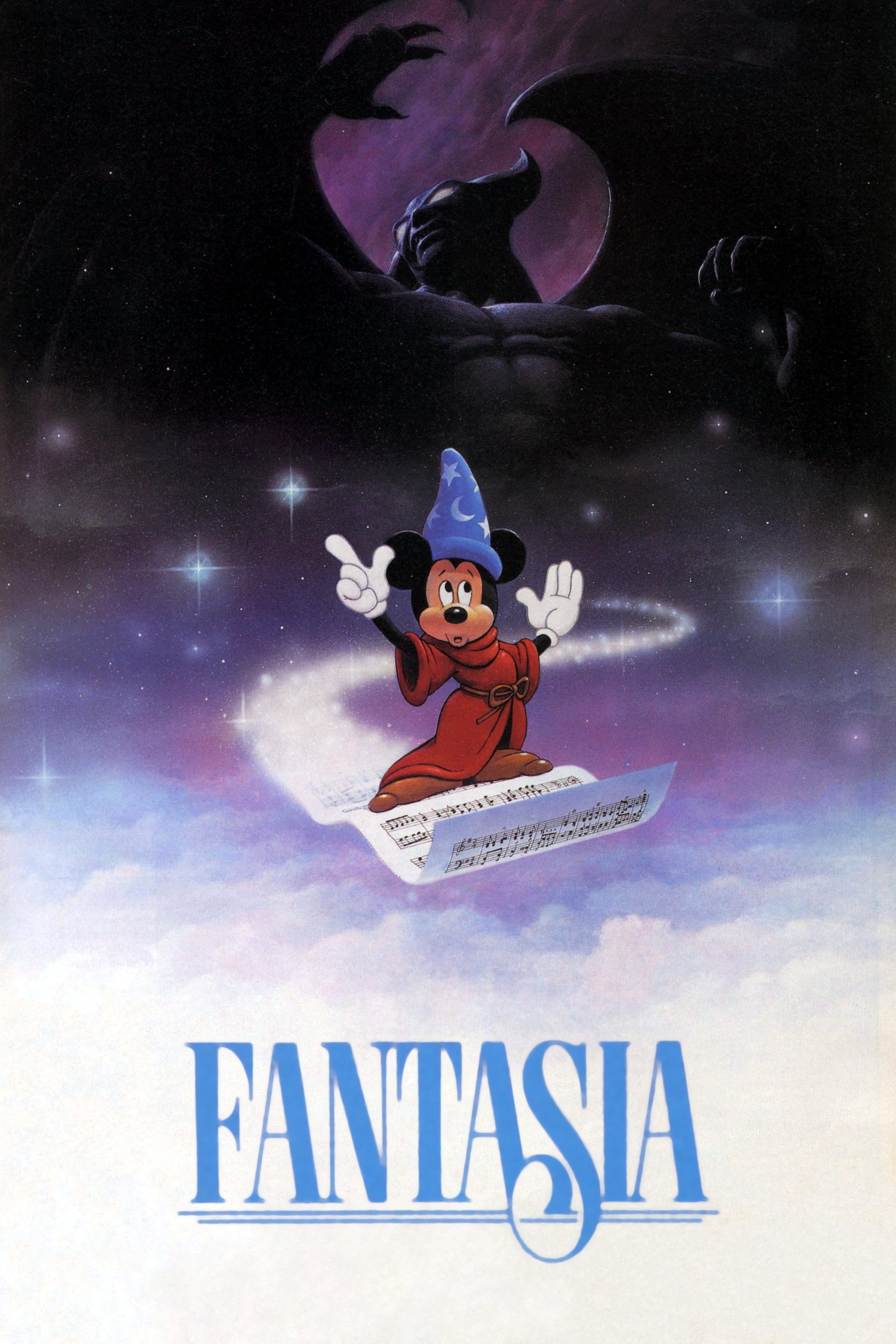
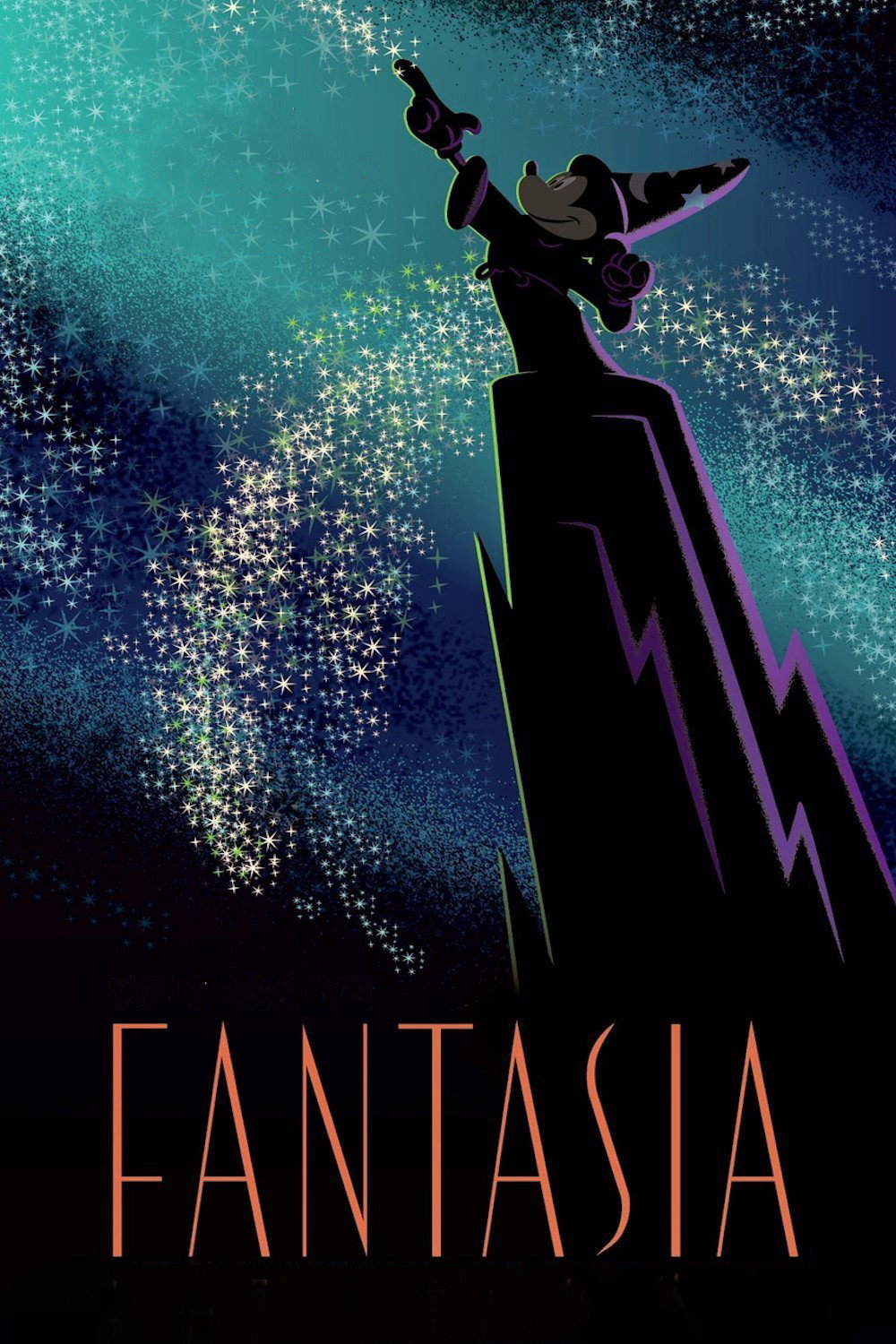
Mickey Mouse, voiced by Walt Disney, borrows the sorcerer’s hat, sets a broom to carrying water and falls asleep while the cellar fills. Paul Dukas’s music might have been written for it: every splash lands on a beat, and the brooms multiply in step with the strings. Joe Grant and Dick Huemer’s story keeps it to one room and one bad idea. Stravinsky’s Rite of Spring follows and is the film at its most solemn, a planet cooling, volcanoes, dinosaurs in the rain, then drought and dust. It is long and grand, and the Tyrannosaurus arriving in a storm is frightening. We would not cut a second of that fight and we would cut most of the lava.

After the interval comes the stretch the film’s detractors mean. Beethoven’s Pastoral Symphony is set on a pastel Olympus with centaurs, cherubs, a drunk Bacchus on a donkey and a storm. The colours are sugared almonds. The animators, who a reel earlier made a mushroom funny by timing alone, are given nothing to time; the centaurs pose and flirt and the music goes on without them. We sat through it faintly embarrassed, as if a relative had started singing at the table. It is the longest twenty minutes in the film.

Ponchielli’s Dance of the Hours is a proper comic ballet, with ostriches, elephants, alligators and a hippo in a tutu who is lighter on her feet than anyone in the Beethoven. Then Mussorgsky’s Night on Bald Mountain, in which the peak of a mountain unfolds into a pair of wings and a devil the size of the mountain calls the dead up from the churchyard below, pours them into his palm and turns them into fire. We were frightened, by a U certificate from 1940, because the drawing has weight: he moves like something heavy and the flames move like flames. Schubert’s Ave Maria, sung by Julietta Novis, closes the evening as a slow line of lights through a forest, the film apologising for having scared us. It is lovely and a little dull.

Stephen Csillag’s editing keeps the orchestral interludes short, so they rest the eye rather than test it, and there is a good joke at the interval in which a nervous line on the soundtrack is asked to play the harp and the bassoon. Twelve directors are credited, James Algar, Samuel Armstrong, Ben Sharpsteen and Wilfred Jackson among them, and the film looks like twelve films.

Snow White and the Seven Dwarfs (1937) and Pinocchio (1940) each told one story. This tells eight, one of them badly. Most critics land near where we do; the ones who call the whole thing kitsch have been looking at the centaurs and not at the mountain. Watch it with a child if one is available, make the tea during the Beethoven, and be back in your seat before the devil wakes.
Critical consensus AI synthesised

72
Positive
8
Mixed
3
Negative
1

Most critics take Fantasia on its own terms, as an experiment in setting animation to concert music, and admire the nerve of it. The praise gathers around the ambition first and the drawing second, and the Rite of Spring segment is named more often than any other as the one where reach and craft meet. The Sorcerer’s Apprentice is the other fixed point, liked even by those who like little else. The 1940 notices are among the warmest, treating the film as a new kind of entertainment rather than a cartoon.

The reservations cluster on taste. Several critics find whole stretches kitsch, and the spread is wide, running from plain enthusiasm to outright dismissal. Time Out is the sharpest dissenter, calling most of the film embarrassing and sparing only Mickey Mouse, while Empire finds the whole thing kitsch with a few sequences still working. The Guardian’s early notice thinks it dallies and lacks the unity of earlier Disney films, a complaint later reviewers echo when they call it uneven.

RogerEbert.com
5 October 1990 · Roger Ebert
90*

The critic praises the 50th-anniversary re-release for restoring the film's original look, sound, and aspect ratio after years of poor presentations. He highlights Disney's pioneering ambition in illustrating classical music with innovative animation techniques.

Read the full review →
The New York Times
14 November 1940 · Bosley Crowther
90*

The review calls the film an exciting new departure in entertainment that captivates the senses and stimulates the imagination through its novel combination of music, color, and animation. It deems the experiment original and provocative, recommending it as enchanting for those open to its fanciful approach.

Read the full review →
Variety
12 November 1940 · John C. Flinn Sr.
90*

The review describes the film as a successful experiment lifting animated cartoons and classical music into a higher realm of appeal, with strong segments like the Nutcracker Suite and Rite of Spring. It notes the technical innovations in sound and the wide-ranging entertainment value across its musical selections.

Read the full review →
Vulture
23 July 2025
90*

The critic calls Fantasia a true cinematic masterpiece with gorgeous, painstaking hand-drawn animation that serves as ideal, thoughtful screen time for children. They single out its integration of classical music, including the Rite of Spring segment depicting evolutionary history and the Pastoral Symphony Greek mythology sequence.

Read the full review →
Evening Standard
5 April 2012 · Derek Malcom
80*

The critic credits Fantasia with introducing him and many others to classical music, noting how its once-derided or kitsch segments now seem camp or innovative despite changing fashions.

Read the full review →
Slant Magazine
5 December 2010
70*

The review praises Fantasia's ambition as Disney's grand folly and one of its masterpieces for introducing children to classical composers like Stravinsky, despite some uneven segments. It notes the Blu-ray transfer looks excellent with strong filmic representation and colorful animation.

Read the full review →

Cast

If you liked this, try…

Allegro Non Troppo poster

Allegro Non Troppo

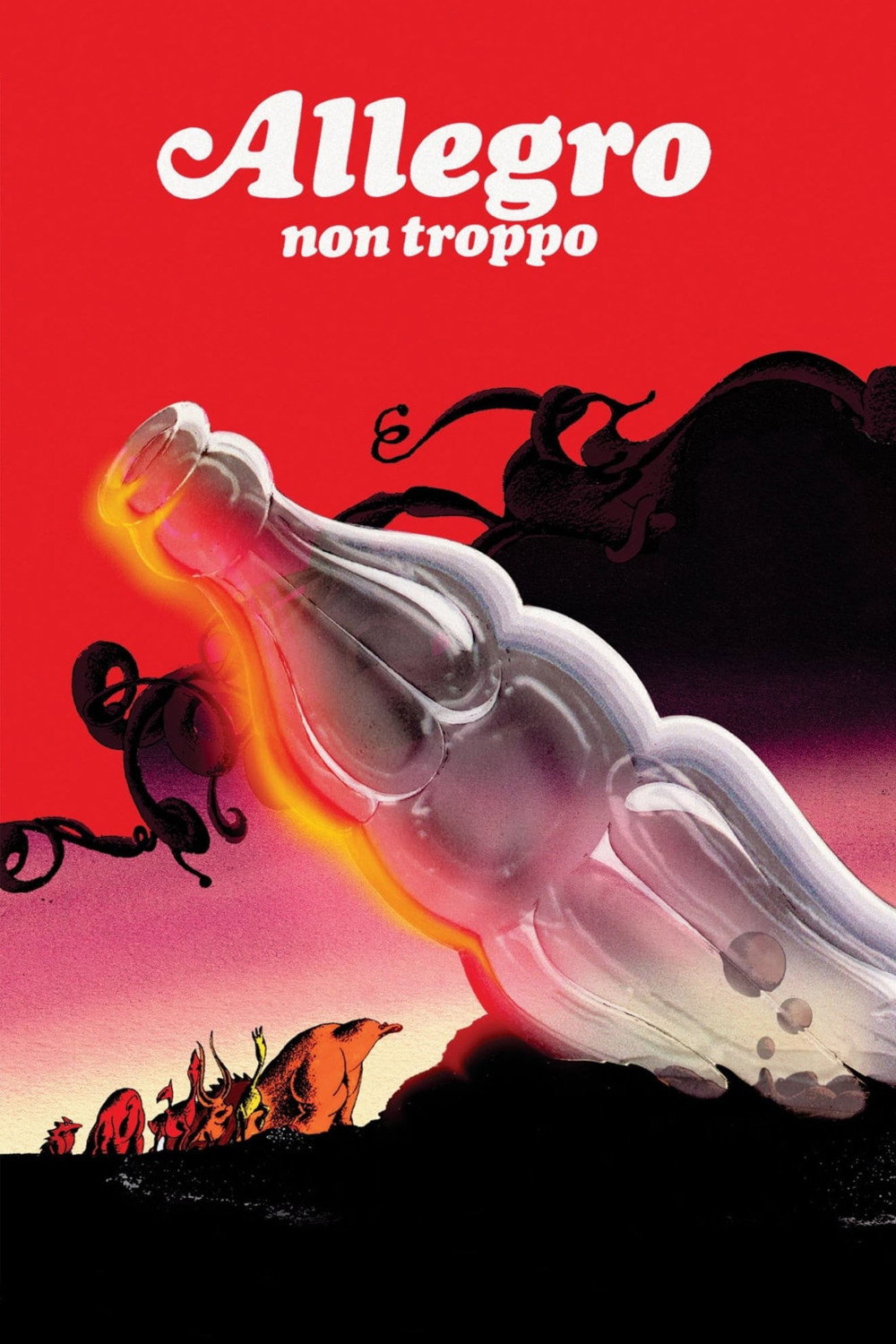
1976 · Bruno Bozzetto’s Italian answer, ruder and sadder, with a Ravel segment that outdoes Disney

Fantasia 2000 poster

Fantasia 2000

1999 · The belated sequel keeps the mouse and adds a Gershwin New York worth the wait

The Red Shoes poster92

The Red Shoes

1948 · Powell and Pressburger stage a ballet as fever dream; the closest live action gets

Yellow Submarine poster

Yellow Submarine

1968 · Pop music drawn as shapes and colours, with the Beatles as amiable passengers

The Tale of the Princess Kaguya poster

The Tale of the Princess Kaguya

2013 · Takahata’s brush-and-ink drawing moves like music and ends on a procession too