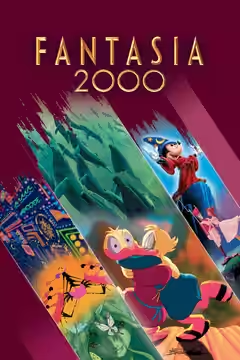
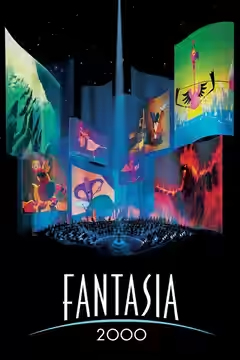
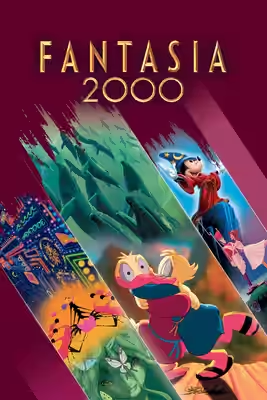
Sixty years on, Disney’s concert film returns with eight pieces, three of them lovely and none of them dull, in under 75 minutes. The cartoons are the point; the celebrity hosts between them are the price, and it is steep.
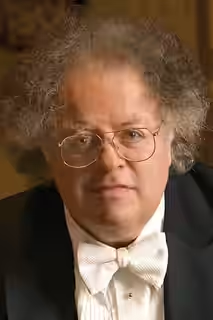
Sixty years after Fantasia, Disney has done what the first film always promised and nobody got round to: a new concert programme, seven fresh pieces and one old one, with an orchestra under James Levine and a famous person in evening dress between each item. It runs 74 minutes, which is short, and most of those minutes are well spent. Eight directors are credited, and the film is best thought of as a portfolio rather than a picture. Some of it is lovely, a little of it is thin, and the bits in between are a trial.
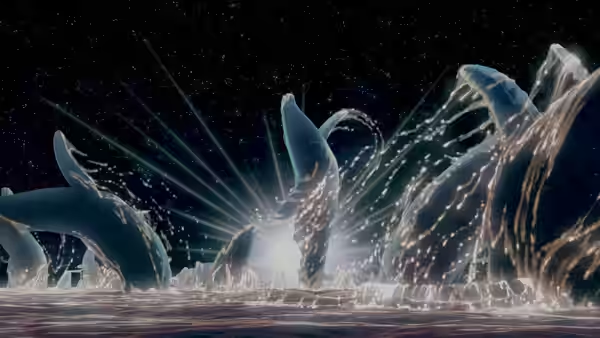
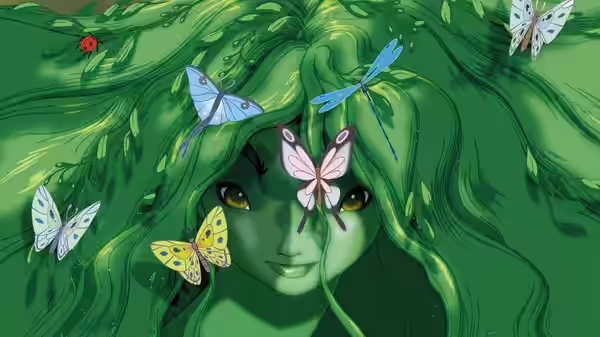
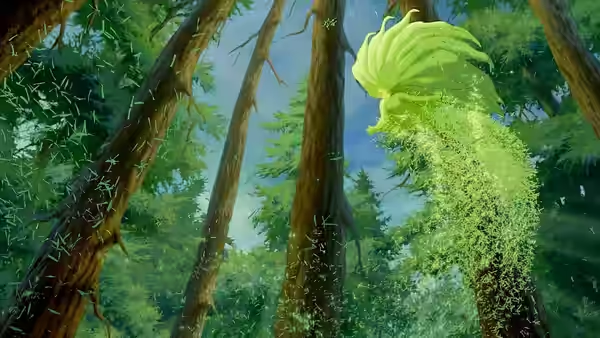
Start with what is good. Hendel Butoy sets Respighi’s Pines of Rome to a pod of humpback whales who leave the sea and swim up into the sky, and the moment the calf breaks through the cloud into the aurora is the film’s best image, held with a patience most studio animation has lost. Eric Goldberg takes Gershwin’s Rhapsody in Blue and draws Depression-era New York in the single looping line of Al Hirschfeld: four unhappy people crossing one day in Manhattan, a construction worker who wants to be a drummer, a girl marched between lessons by her nanny. We laughed out loud at a line of commuters folding into a subway car like a strip of paper. Gaëtan and Paul Brizzi close the programme with Stravinsky’s Firebird Suite, a spring sprite, an elk and a volcano, and its second half, which we will not describe, moved us more than we expected a cartoon about a mountain to manage.
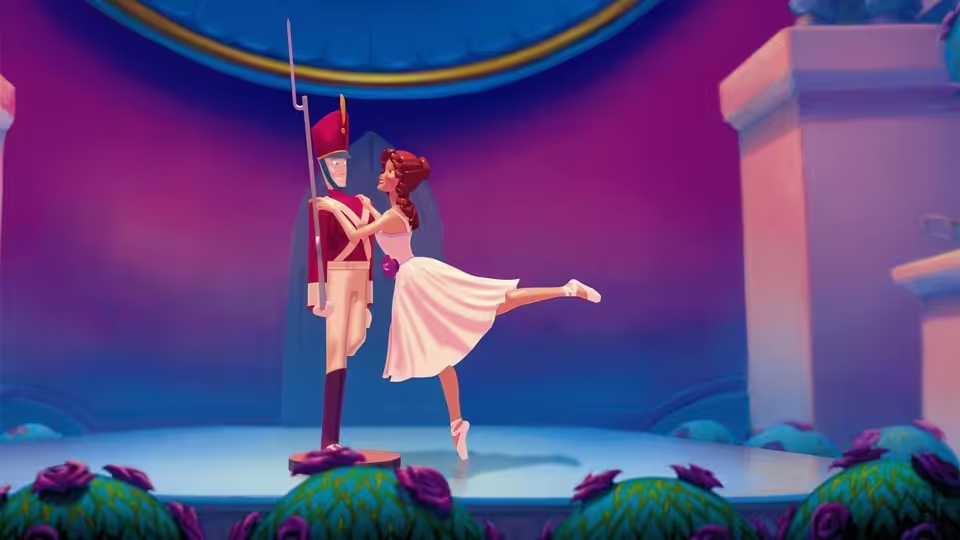
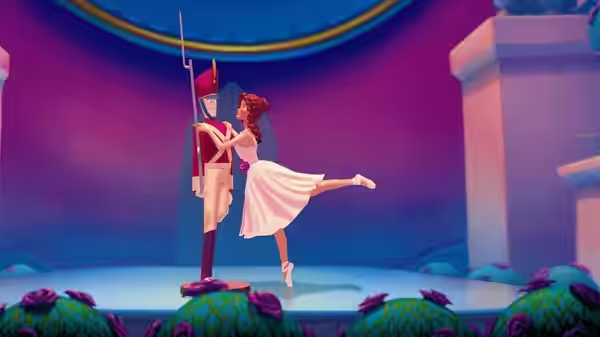
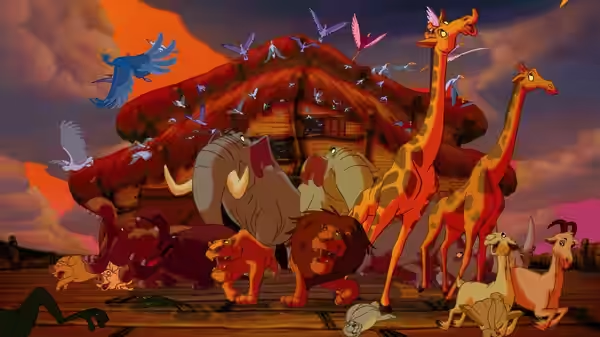
The middle of the programme is decent. Butoy again does Shostakovich’s Second Piano Concerto as Andersen’s The Steadfast Tin Soldier, with a jack-in-the-box villain who is properly nasty and computer-made toys that sit a little stiffly beside the drawn ballerina. Goldberg’s Carnival of the Animals is one joke, a flamingo with a yo-yo among flamingos who disapprove, told in under three minutes and then over, which is the right length for it. Francis Glebas puts Donald Duck (Tony Anselmo) and Daisy (Russi Taylor) aboard Noah’s ark to Elgar’s Pomp and Circumstance, and it is cheerful, slightly sticky, and the one piece where the music seems to have been chosen for the brand rather than the pictures. The Sorcerer’s Apprentice, James Algar’s 1940 original with Mickey (Wayne Allwine) and the brooms, is reprised whole, and it still outclasses everything around it because it has a story with a beginning, a middle and a punishment.
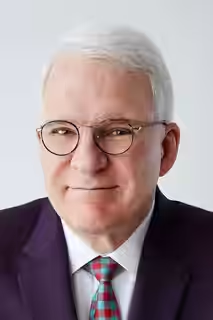
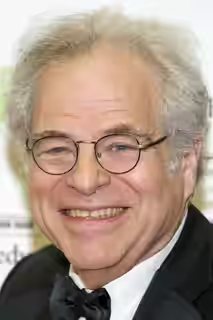
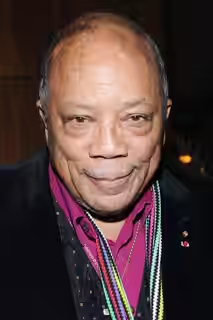
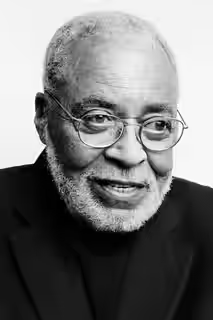
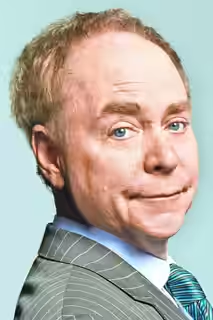
Then there are the hosts. Steve Martin opens the film with a bit about how long the sequel took, and it is the last joke that lands. Itzhak Perlman, Quincy Jones, Bette Midler, James Earl Jones, Penn Jillette and Teller, and Angela Lansbury each walk to a podium, say something about the piece to come, and are wafted away. Don Hahn directs these and Tim Suhrstedt shoots them, flat and bright against the orchestra, and they have the air of a charity gala nobody could get out of. We winced through nearly all of them. The links, written by Irene Mecchi, David Reynolds and Hahn, cannot decide whether they are explaining the music to children or apologising to adults for the interruption, so they do both.
The opener is the other weak spot. Pixote Hunt’s Beethoven’s Fifth is abstract triangles, some light and some dark, chasing one another across black, and it looks like what it is, a nervous go at what the 1940 film did with Bach. Five editors are credited and the joins show: each piece ends, the lights come up on a podium, and the film has to get going again from a standing start, eight times.
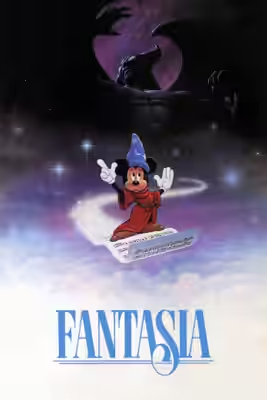
Against the 1940 film this is lighter, faster and far less pompous, and we mean that as praise; the original ran past two hours and felt it. It also has nothing as grand as the original’s dinosaurs or as frightening as its devil on the mountain. That is the trade, and we think it a fair one, though three first-rate pieces out of eight is not a ratio to be proud of.
See it for the whales, the city, the firebird and the brooms. At home you can step over the hosts, which a cinema will not let you do, and what remains is about an hour, and an honest hour. Bring children; they will not notice the gaps, and the music is better for having nobody talk over it.