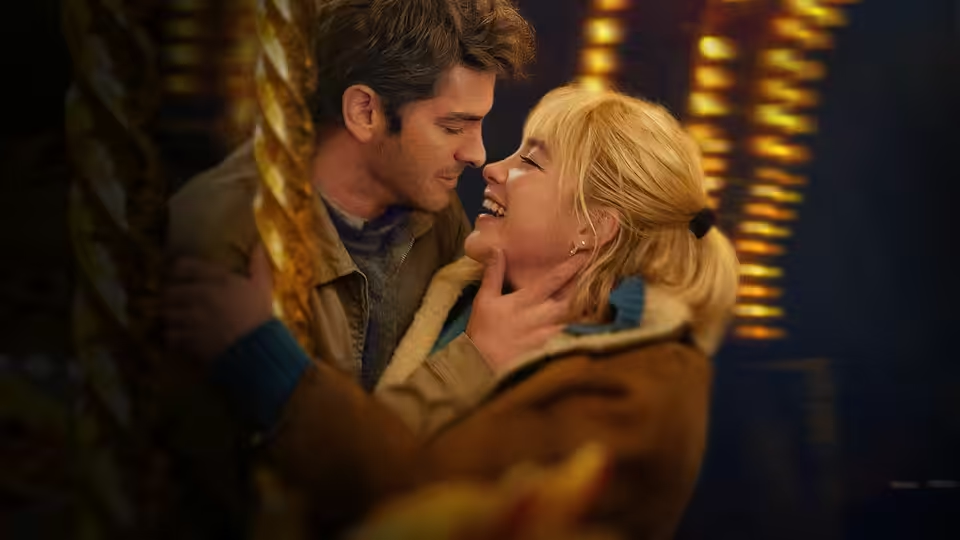
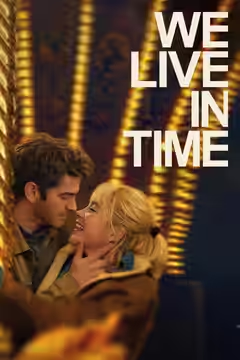
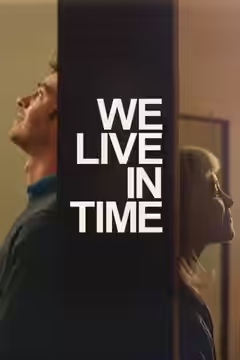
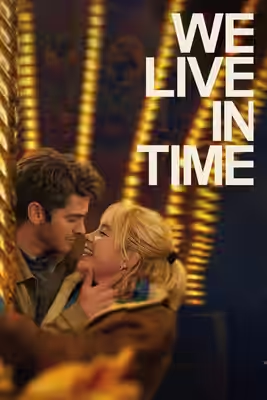
Pugh and Garfield are the film, and they are good enough to make you forget, for minutes at a time, how ordinary the story around them is. Crowley’s shuffled timeline hides that ordinariness rather than deepening it, and we came out feeling handled.
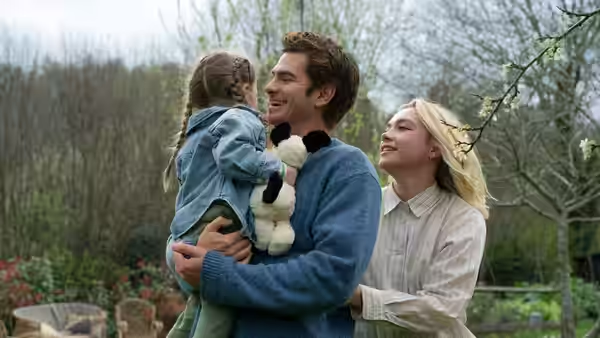
John Crowley made Brooklyn (2015), which told a plain story in order and trusted it. We Live in Time, written by the playwright Nick Payne, is a plainer story still. Almut (Florence Pugh), a chef, knocks Tobias (Andrew Garfield) down with her car one night. They fall in love, argue about children, have a daughter, and somewhere in there Almut is told she has cancer. Payne deals these years out shuffled, so that a hospital consultation sits beside a first kiss and a child’s birthday beside a chemotherapy chair. The idea is that a love looked at from every end at once will show us something a straight telling would not. The film has the idea and does not do much with it.
What it does have is the two of them. Pugh plays Almut as somebody who works with knives for a living and talks the same way: quick, unsentimental, quite unwilling to be admired for being ill. She does not soften as the news gets worse, and the film is at its most honest when it lets her be difficult about it. Garfield’s Tobias is the sort of man who reads the leaflet before he takes the tablet, and Garfield gets a great deal out of a face that hears bad news and rearranges itself while we watch. Their early argument about whether they want children is the best-written scene in the film: two people who had each assumed the other agreed with them, finding out otherwise.
Then there is the birth. It happens in a petrol station toilet, with Garfield taking instructions shouted through the door and Pugh on the floor telling everyone to shut up, and for about five minutes the film stops arranging itself and simply happens. We laughed, and then we were crying, and we had not seen either one coming. It is the one stretch of the 108 minutes that does not feel arranged. Justine Wright then cuts to a different year, as the structure requires, and the feeling drains out.
Stuart Bentley shoots London in low warm light, table lamps and kitchen extractors and late sun through blinds, and keeps the focus shallow so the backgrounds go to soft colour and the faces sit in front of them like portraits. It is handsome and it is never once surprising; every room looks like the same expensive candle. Alice Normington’s flats and restaurant kitchens are lived in without being untidy. Liza Bracey keeps Almut in whites and outsized coats and Tobias in cardigans, which tells you who is who before either speaks. Bryce Dessner’s score is piano and strings, and it arrives, on cue, at the point in each scene where the actors might have been left to finish it themselves.
The trouble is the shuffle. Payne’s play Constellations put the same two people through dozens of versions of the same conversation, and the repetition was the meaning. Here there are no versions, only one story dealt out of sequence, and nothing we learn in a later year changes what we saw in an earlier one. After a while we could feel the cuts coming: a scene would start to hurt and the film would leave it for somewhere safer. The structure does not sharpen the story; it numbs it. There is also a breakfast cereal that turns up often enough that we started counting the boxes, which is not the state of mind a film about dying should leave you in.
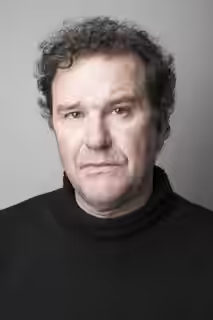
The back half hands Almut a decision about her work that the film plainly wants us to find brave. We will not describe it. We will say that we did not believe it, that it is the kind of choice a screenplay makes so its last act has somewhere to go, and that Pugh has to carry it almost alone against the writing. She nearly does. Adam James, Douglas Hodge and Niamh Cusack fill in a family and a workplace with the few lines each is given, and Grace Delaney, as Ella, is allowed to be a child rather than a symbol.
Brooklyn trusted us to feel a story told straight. This one trusts the edit instead, and the edit keeps intervening. See it for Pugh and Garfield, who are worth the evening, and for one toilet floor in a petrol station. By the end we felt handled, and we could name the cuts that did it. It runs 108 minutes and carries a 15 certificate.