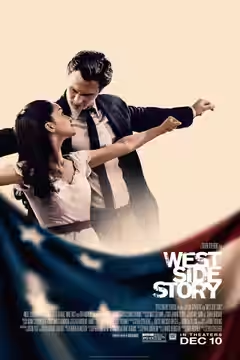
Steven Spielberg’s first musical is staged with more confidence than anything he has made this century, and Ariana DeBose and Mike Faist are superb in it. It falls short where a love story can least afford to: the boy at the centre.
Steven Spielberg’s West Side Story is a new film of a stage musical that already had a famous one, made in 1961, and Tony Kushner’s screenplay is the reason for making another. He keeps Leonard Bernstein’s score, Stephen Sondheim’s lyrics and the late-1950s West Side, and rebuilds everything around them. The blocks both gangs are fighting over are being flattened for Lincoln Center, so the war is for a place that will not exist by Christmas. And the drugstore where Tony works now belongs to Valentina (Rita Moreno), who was Anita in 1961 and watches the story from the other side of the counter.
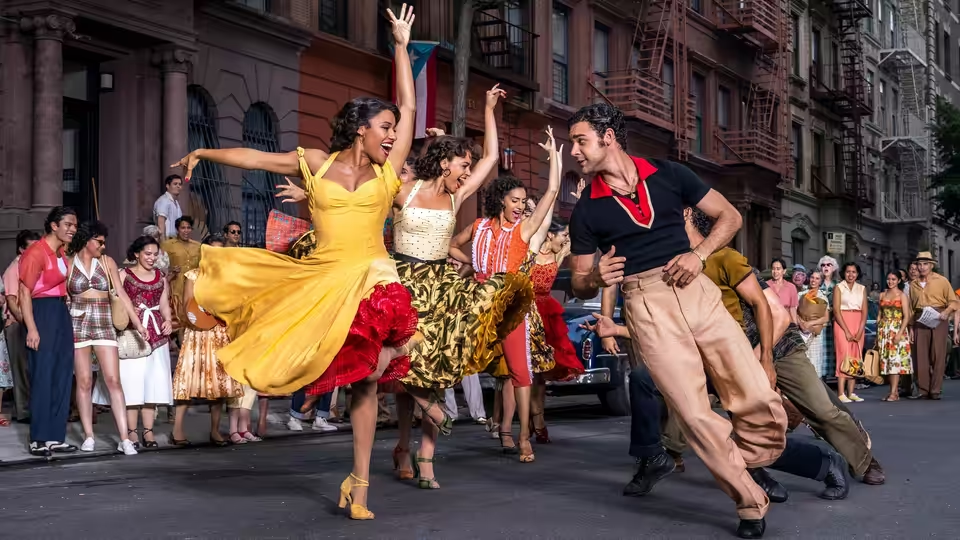
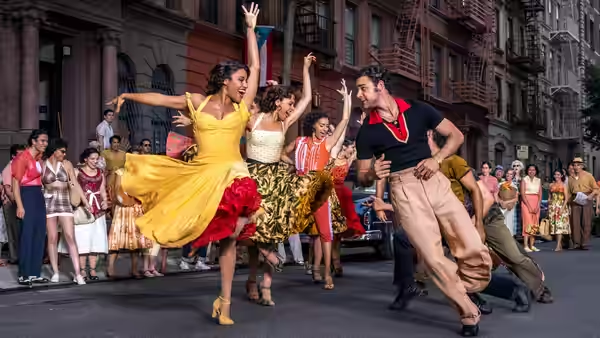
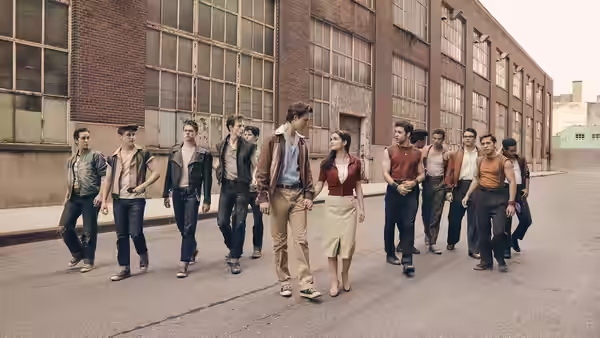
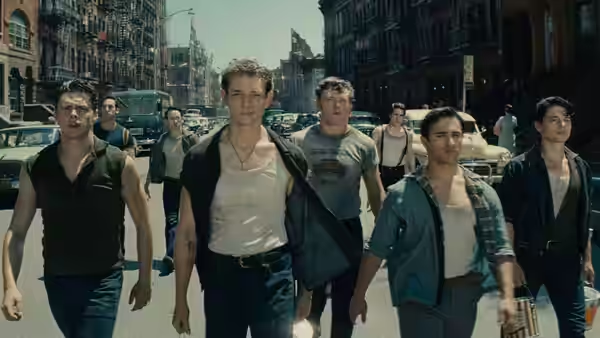
The first hour is as well staged as anything Spielberg has made this century. Janusz Kamiński opens on rubble and a wrecking ball, and the Prologue that follows is shot in hard sunlight on streets that look lived in. Adam Stockhausen’s production design gives every block a half-demolished building at the end of it, so the dancing always has a ruin behind it. Michael Kahn and Sarah Broshar cut the numbers on the beat but let the shots run long enough to see the dancers are dancing. When Ariana DeBose leads “America” out of a courtyard and into the street, we grinned for the length of it and did not care who saw.
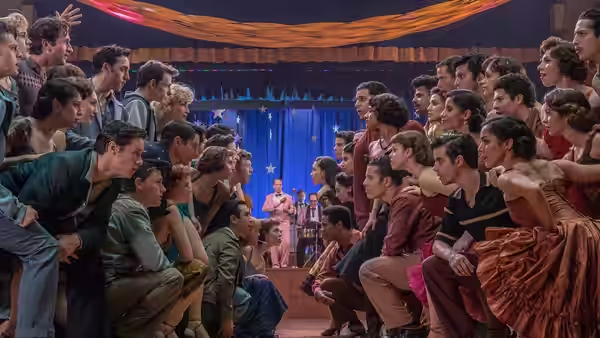
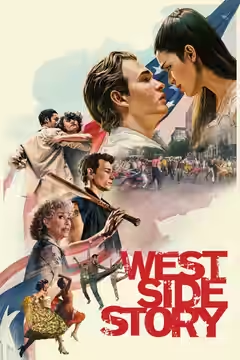
DeBose is the film’s engine. Her Anita is quick, funny and in charge of every room, and she carries one scene near the end, which we will not describe, with a fury that hushed the cinema. Mike Faist is nearly her equal as Riff, a thin, grey-faced boy who has decided the gang is the only thing that will ever be his. David Alvarez’s Bernardo is a boxer and moves like one. Paul Tazewell dresses the Sharks in reds and mustards and the Jets in washed-out blues and denim, and at the gym dance the two colours spiral round each other under Kamiński’s circling camera.
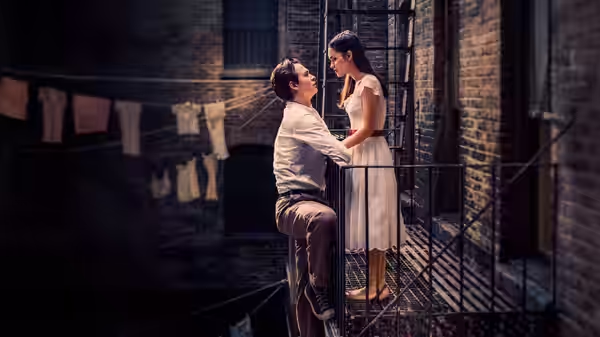
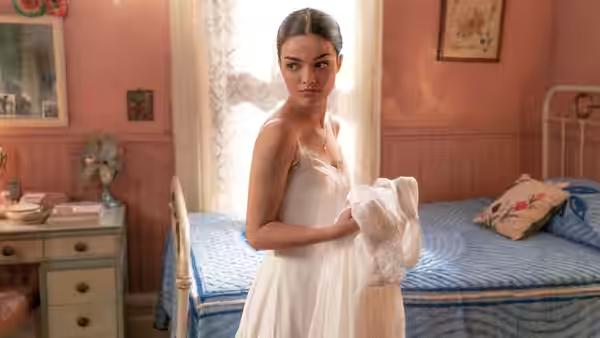
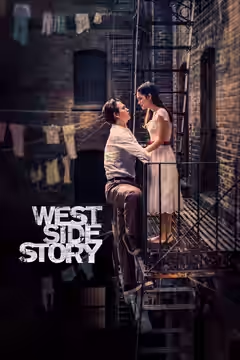
And then there is the middle of it. Rachel Zegler, in her first film, sings María with a clear, unforced soprano and plays her as a girl with a temper. Ansel Elgort’s Tony is the problem. Kushner has written him as a young man a year out of prison, frightened of who he used to be, and Elgort plays him as somebody who has never done anything. His voice is pleasant. His face gives nothing back. When the two sing “Tonight” on the fire escape, with Kamiński threading the camera through the ironwork so they are always half hidden from each other, we admired the shot and felt nothing.
The film runs 156 minutes and the second half is mostly Tony and María. The gang story darkens after the rumble; the light turns grey and the streets empty, and the “Tonight Quintet”, cut between five sets of people waiting for the same night, is the best-edited stretch in the film. But every time it returns to the couple the temperature drops. What moved us most came from the oldest person on screen. Moreno sings “Somewhere” alone in the shop, in a voice that has sung better and does not pretend otherwise, and what the film has been saying about this neighbourhood, that it will be gone, became something we felt rather than something we noted.
Most critics have gone further than us and called it one of Spielberg’s best. It is lavish, it is serious, and the dancing is filmed by a director who knows where to put a camera for a body in motion. But this is a love story, and the love is the weakest thing in it.
It is a 12A, and the violence is felt rather than shown. See it on the biggest screen you can find, sit close, and watch the corners of the frame. That is where the film keeps the people it is most interested in.