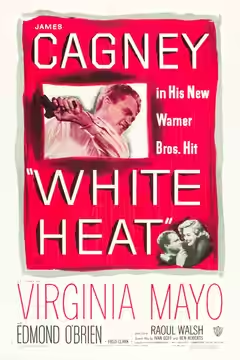
Raoul Walsh’s crime thriller is worth seeing for James Cagney’s frightening performance alone. Thin psychology and an underused Virginia Mayo hold it back, but the mother-son relationship is difficult to shake.
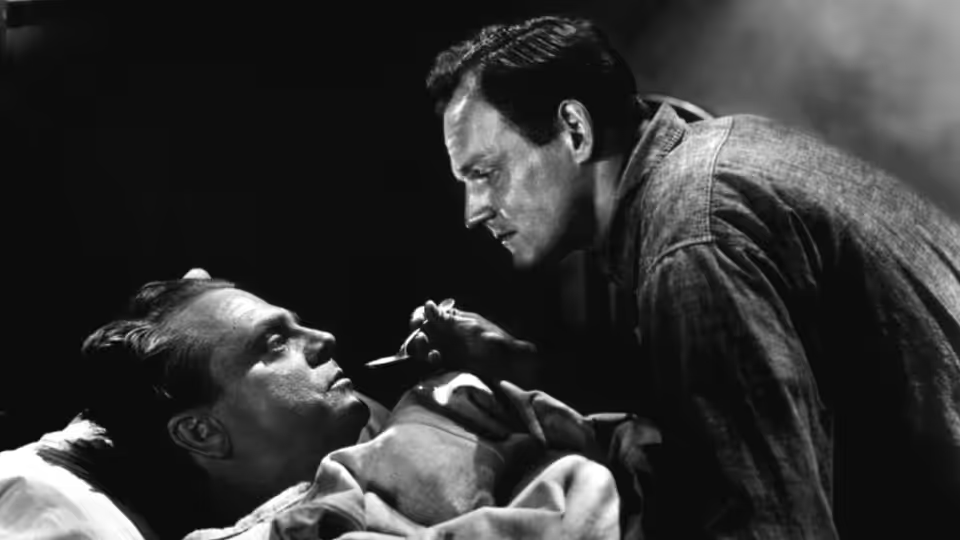
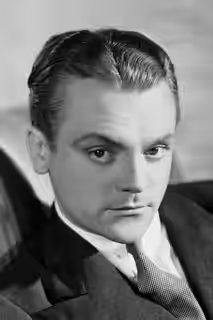
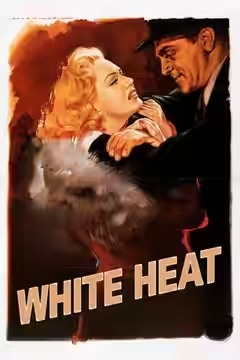
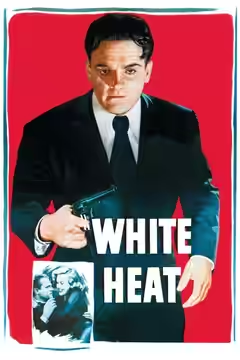
Raoul Walsh’s White Heat is a frightening gangster film, and we recommend it despite its rather easy psychology. James Cagney gives Arthur ‘Cody’ Jarrett enough force to make familiar criminal business feel unsafe. The fascination lies in watching a man who can intimidate others yet depends so heavily on his mother. That dependence is central to the film, and the performance makes it disturbing enough to survive the screenplay’s eagerness to explain him.
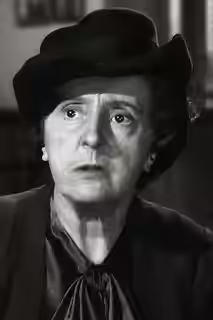
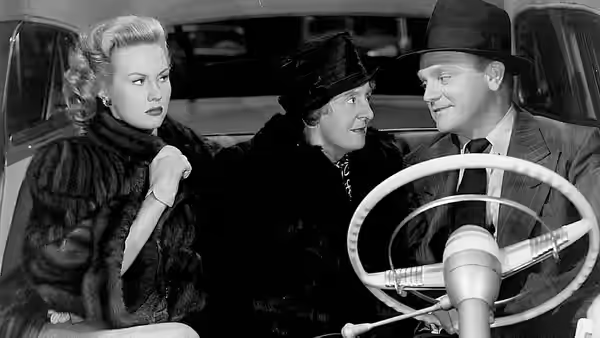
Margaret Wycherly’s Ma Jarrett matters because she makes that attachment convincing without making it comforting. There is something troubling about seeing maternal devotion beside criminal aggression, with neither cancelling the other out. We were unnerved by that closeness, because the need for comfort does nothing to curb his aggression. James Cagney allows the dependence to remain embarrassing, and trusts us to feel the danger in it without needing to like the man.
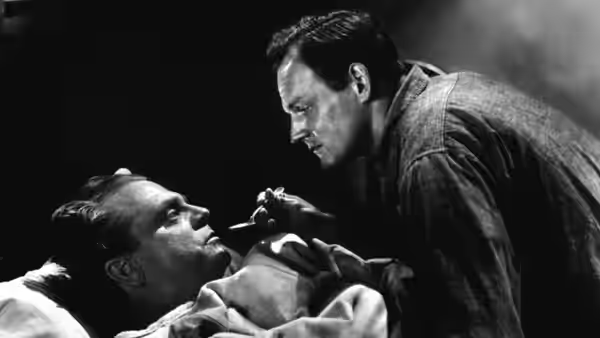
Sidney Hickox’s cinematography gives the central performance the attention it needs, keeping us alert to a face that never seems entirely settled. We kept watching for the next change of expression, sometimes with more anxiety than the criminal business itself prompted. Owen Marks’s editing helps sustain that vigilance; the pace has purpose without making every pause feel like a delay. The film runs 114 minutes, and its strongest stretches hold our attention through the uncertainty of how Jarrett will respond.
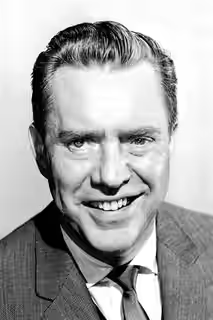
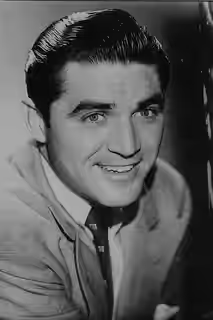
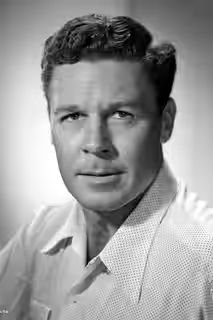
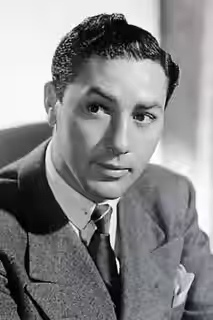
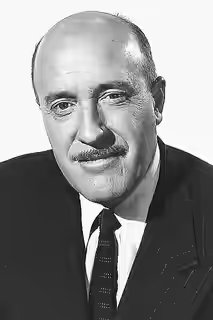
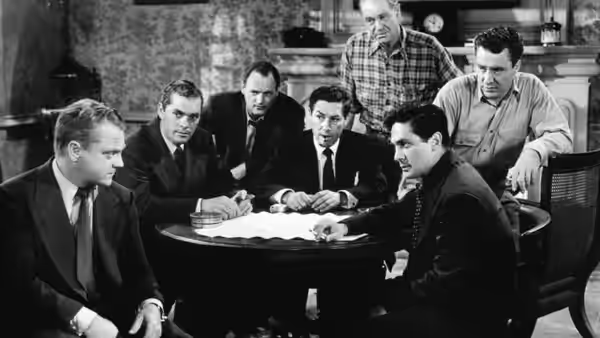
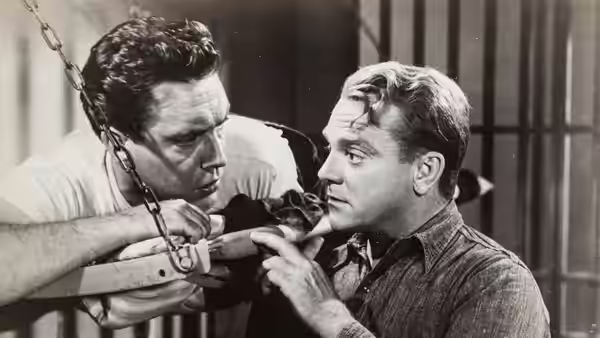
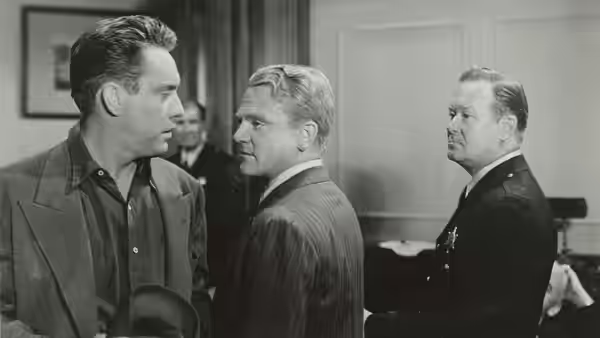
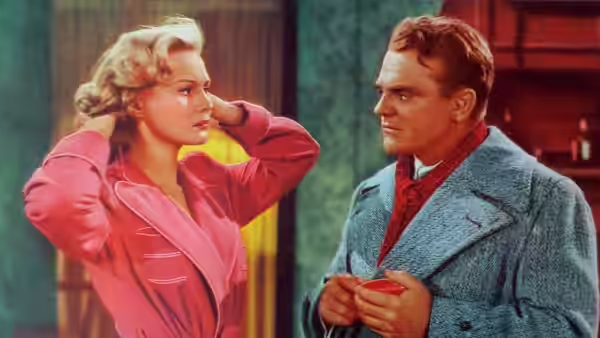
Edmond O’Brien is important to that tension as Vic Pardo, giving the film someone whose care for Jarrett can bear comparison with Ma’s. His steadiness prevents James Cagney’s performance from making everybody else seem incidental. Steve Cochran also registers firmly as ‘Big Ed’ Somers, though Virginia Mayo has far less to work with as Verna Jarrett. She holds our attention, but the writing gives her too little opportunity to make that attention count for much.
The weakness is in how readily the screenplay by Ben Roberts and Ivan Goff treats the mother-son attachment as an explanation. It is a compelling relationship to watch, but it can make a complicated man seem too easily accounted for. The performances suggest feelings that this psychology cannot comfortably explain. That limitation matters because the film asks us to examine Jarrett closely, then seems too satisfied with what it has found in his dependence on Ma.
Max Steiner’s music is effective at sustaining the pressure, though its insistence sometimes feels unnecessary beside such an emphatic lead performance. Raoul Walsh is more persuasive when he lets the people supply the threat. The gangster film’s attraction to forceful men can become an excuse for enjoying their cruelty without much thought. Here, the uncomfortable need for motherly care makes that enjoyment harder, and the film benefits from the discomfort.
This is one to watch when there is time to pay attention to the actors, especially the people sharing a scene with James Cagney. Their responses help us judge how far Jarrett might go, and how much they understand about him. The familiarity of the crime story should not be a deterrent. Choose it for the performances, without expecting a persuasive explanation of what makes a man dangerous.